

Eisenkot lays groundwork for a minority government, if necessary, to oust Netanyahu
The Yashar party head is exploring the idea of a 58-seat coalition as an alternative to partnering with Ra’am, arguing a fragile government is preferable to another Netanyahu term

 Add ToI as a Preferred Source on Google
Tal Schneider is a Political Correspondent at The Times of Israel
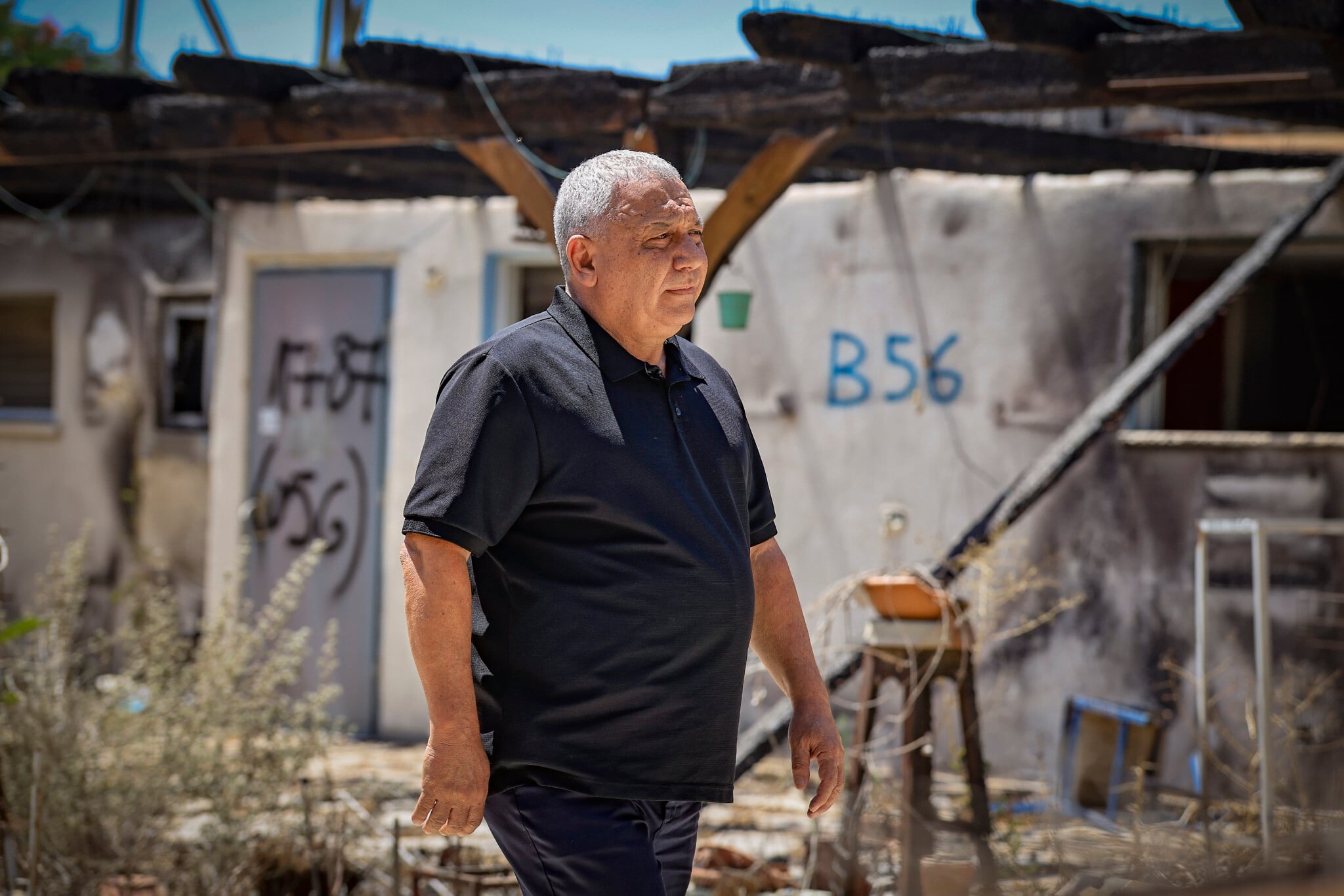
Gadi Eisenkot, leader of the centrist Yashar party and currently the frontrunner in the polls, faces a complex political dilemma ahead of the October 27 election.
The bloc he spearheads, which includes former prime minister Naftali Bennett and Yair Lapid’s joint B’Yachad faction, Avigdor Liberman’s Yisrael Beytenu, and The Democrats (the united Labor-Meretz list led by Yair Golan), is projected by most surveys to win 58 or 59 seats. That is tantalizingly close to yet still short of a 61-seat majority in the 120-member Knesset.
If the polls are right, Eisenkot would lack the seats to form a coalition backed by a parliamentary majority. His preferred move is clear: win over additional voters from the right to comfortably cross the 61-seat threshold. However, if that fails, an alternative route exists.
Israeli law does not require 61 lawmakers to swear in a government; a simple majority of those present for the vote is sufficient. A government could theoretically be established by a vote, say, of 59 to 50.
Naturally, a majority of 61 or more remains preferable, as it provides a stable legislative foundation to navigate Israel’s complex realities — particularly after Prime Minister Benjamin Netanyahu and his Likud party’s lengthy grip on power. But in recent weeks, Yashar has been quietly preparing for a contingency scenario: swearing in a government with 58 or 59 MKs. The consensus taking shape around Eisenkot is that even a fragile minority government would be preferable to Netanyahu remaining in office.
Those close to Eisenkot speak of a firm determination to end Netanyahu’s rule. Even if a minority government struggles to survive, and even if the Knesset dissolves shortly afterward to trigger yet another election, the political landscape would have fundamentally shifted. Notably, the caretaker prime minister in such a scenario, until another election is held, would be Eisenkot, not Netanyahu.
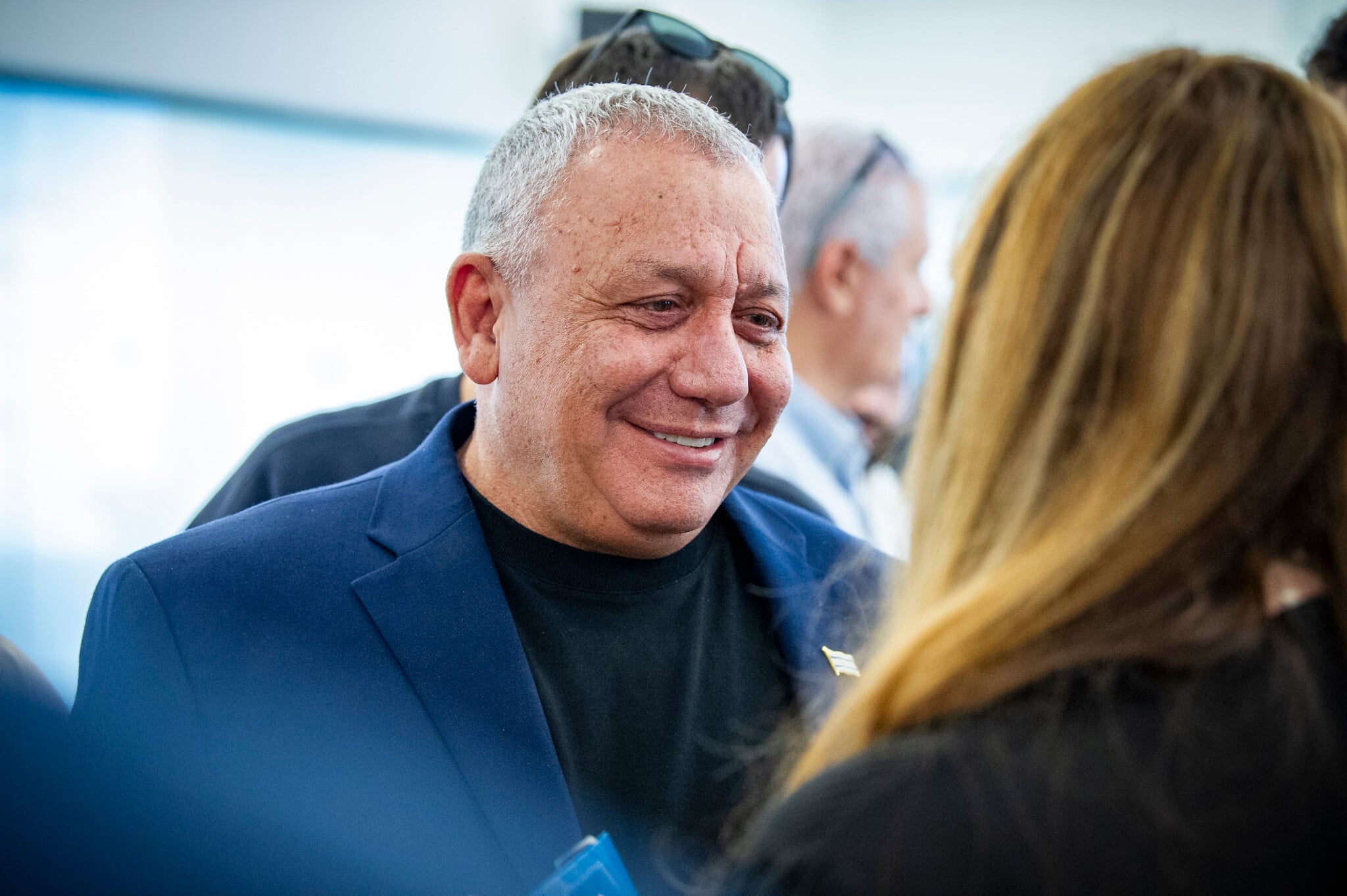
The Israeli public generally dislikes the prospect of a minority government, and it is easy to see why. A coalition supported by 59 seats represents, very roughly, only about 49 percent of the electorate. Critics could easily argue that such a government lacks a sufficient public mandate to make any significant moves.
But what is the alternative? If Eisenkot narrowly misses being able to form a majority government and Netanyahu remains a whopping roughly 10 seats shy of a majority, Israel could be dragged straight into another grueling election campaign. Throughout that interim period, Netanyahu would continue serving as caretaker prime minister. If his right-wing bloc musters around 50 seats, he would be leading the country while representing a mere 41% of voters.
Hence the dilemma that Eisenkot could place before the public: Is a minority government supported by 58 or 59 lawmakers inherently less legitimate than a caretaker prime minister whose backing is substantially smaller?
Israel already endured a prolonged version of this situation between 2019 and 2021. Through four consecutive deadlocked elections, Netanyahu failed to secure a majority for his right-wing, religious bloc. Yet, under the principle of governmental continuity, he remained in office until mid-2021. His hold on the premiership stemmed not from a parliamentary majority, but simply from the fact that he was already sitting in the chair.
Eisenkot aims to prevent a repeat of that paralyzing scenario. From his perspective, if voters grant his bloc a clear lead that falls just short of 61 seats, there is no justification for Netanyahu to retain the built-in advantage of incumbency.
The Ra’am option
There is, of course, another alternative: bringing Mansour Abbas’s Ra’am (United Arab List) party directly into the government. Among opposition voters in the anti-Netanyahu “change bloc,” 56% support such a move; 55% of voters in Netanyahu’s bloc strongly oppose it.
Incorporating Ra’am into the coalition could add four or five crucial seats, easily helping Eisenkot cross the required threshold. However, the inclusion of an Islamist faction in the government may prove even harder for the public and the political establishment to digest than a minority coalition. Ra’am was a core member of the 2021-22 coalition led by Bennett and Yair Lapid (and had previously been unsuccessfully wooed by Netanyahu), but in post-October 7, 2023, Israel, Bennett has said he would not resume that partnership were he to win in October.
The core difficulty lies in Ra’am’s identity. The party grew out of the Southern Branch of the Islamic Movement in Israel. Despite Abbas’s persistent efforts to distance the faction from the movement’s religious and spiritual guiding body, the Shura Council, a significant portion of the Jewish public still views a formal political partnership with it as deeply problematic.
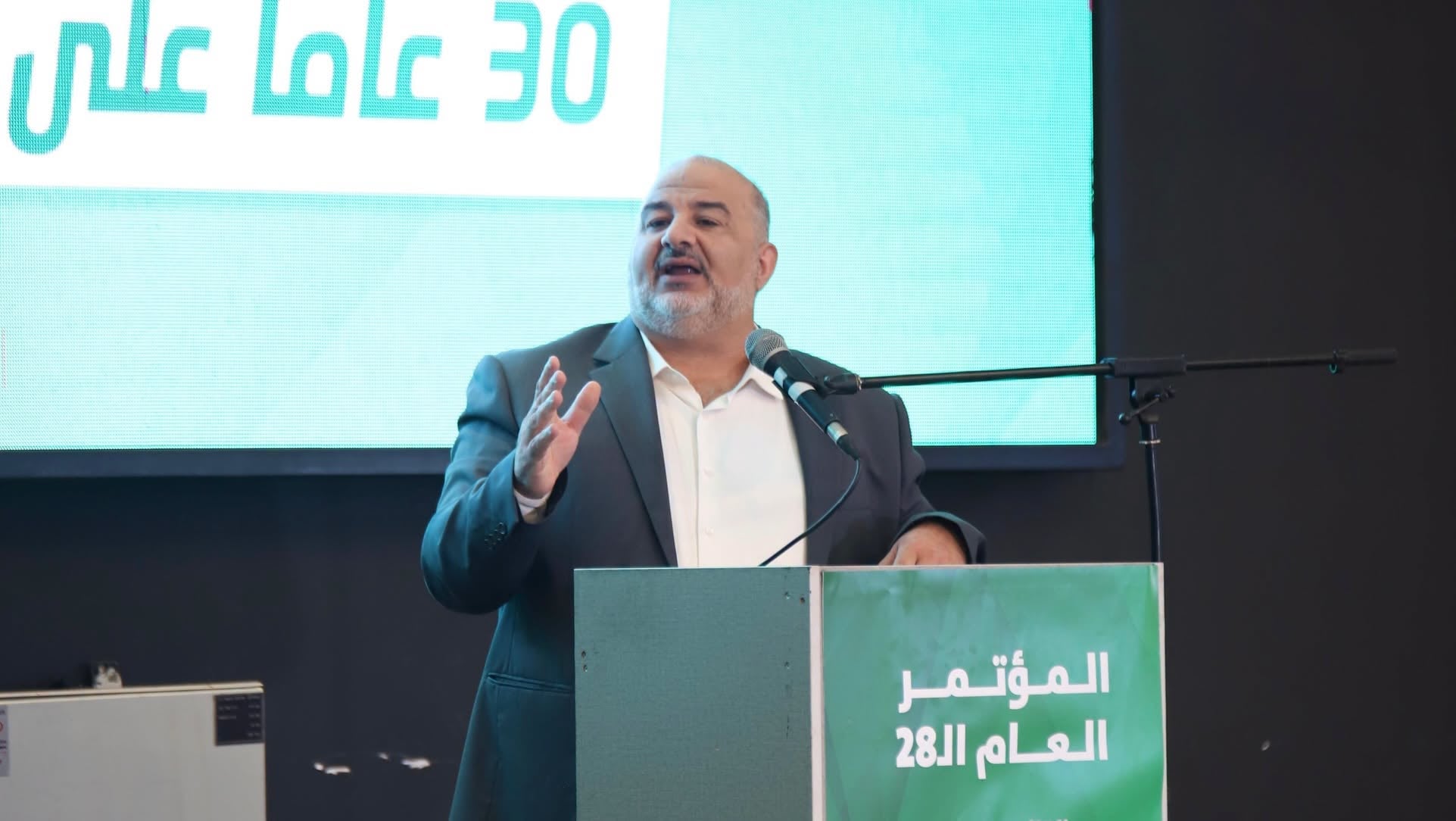
In a speech at Ra’am’s party convention on Saturday, Abbas stated that he wants Ra’am to be part of the “change bloc” seeking to defeat Netanyahu. But he also ruffled Zionist feathers by declaring that an “independent Palestinian state” is already “a reality, which most of the world recognizes,” urging Israel and the US to recognize it, and pledging to “work to achieve peace, rapprochement and an end to the occupation and conflict” with Arab Israelis serving as “a bridge for achieving peace.”
Netanyahu quickly branded Ra’am as beyond the political pale: “The price of a left-wing coalition with the Muslim Brotherhood has been exposed once again,” he declared. But Eisenkot, too, rejected Abbas’s remarks, insisting that “there is no Palestinian state, and in the government we form, a Palestinian state will not be established.”
Concurrently, negotiations are advancing to place a prominent Jewish candidate on Ra’am’s slate: former MK Yoav Segalovich, who until recently was a senior member of Yesh Atid. Segalovich notably served in the upper echelons of the Israel Police, attaining the rank of deputy commissioner.
For the Arab Muslim electorate, adding a former senior Israeli security official to the ballot is far from a natural step. On the flip side, the Jewish public is being asked to accept the idea that Ra’am is attempting to transform into a genuine party of Arab-Jewish cooperation. The faction still has a long way to go before being universally accepted as a natural coalition partner, but Abbas has until the October 27 election to reshape public opinion.
Precedents
There is a recent precedent for swearing in a minority government. In 2021, leaders of the so-called change government — Bennett, Yair Lapid, Gideon Sa’ar, Benny Gantz, Liberman, and Merav Michaeli — were planning to swear in a coalition supported by exactly 61 MKs, including Ra’am’s four lawmakers. Shortly before the fateful vote, however, Ra’am MK Said al-Harumi announced he would abstain rather than vote in favor of the new government, in protest of home demolitions in unrecognized Bedouin communities in the Negev.
Ultimately, the government secured the Knesset’s confidence by a razor-thin vote of 60 to 59, allowing Bennett to assume the premiership.
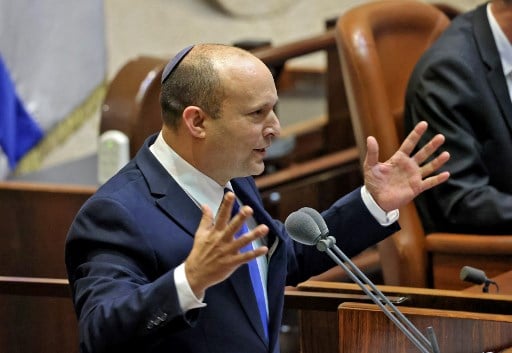
That swearing-in ceremony in June 2021 is remembered as one of the ugliest spectacles in the Knesset’s history. Likud lawmakers relentlessly shouted down Bennett’s speech, attempting to delegitimize the democratic transfer of power. Likud struggled to accept its sudden transition to the opposition, dedicating its energies to undermining the Bennett government throughout its 18 months in office, and eventually persuading enough members of Bennett’s own party to defect in order to bring down the coalition.
Eisenkot was not in the Knesset at the time. Today, he is bracing for the likelihood that, should he succeed in unseating Netanyahu, he will encounter the same ferocious resistance. A minority government would undoubtedly amplify the political battle.
There are several other historical precedents for minority governments in Israel, though most deteriorated into that status over time rather than being sworn in that way from the outset.
Yitzhak Rabin’s first government became a minority coalition in late 1976 following a religion-and-state crisis. A welcoming ceremony for the arrival of Israel’s first F-15 fighter jets from the United States ran past sundown on a Friday, violating Shabbat. The ensuing crisis prompted the ministers of the National Religious Party to bolt the coalition, leaving Rabin without a parliamentary majority until the next election.
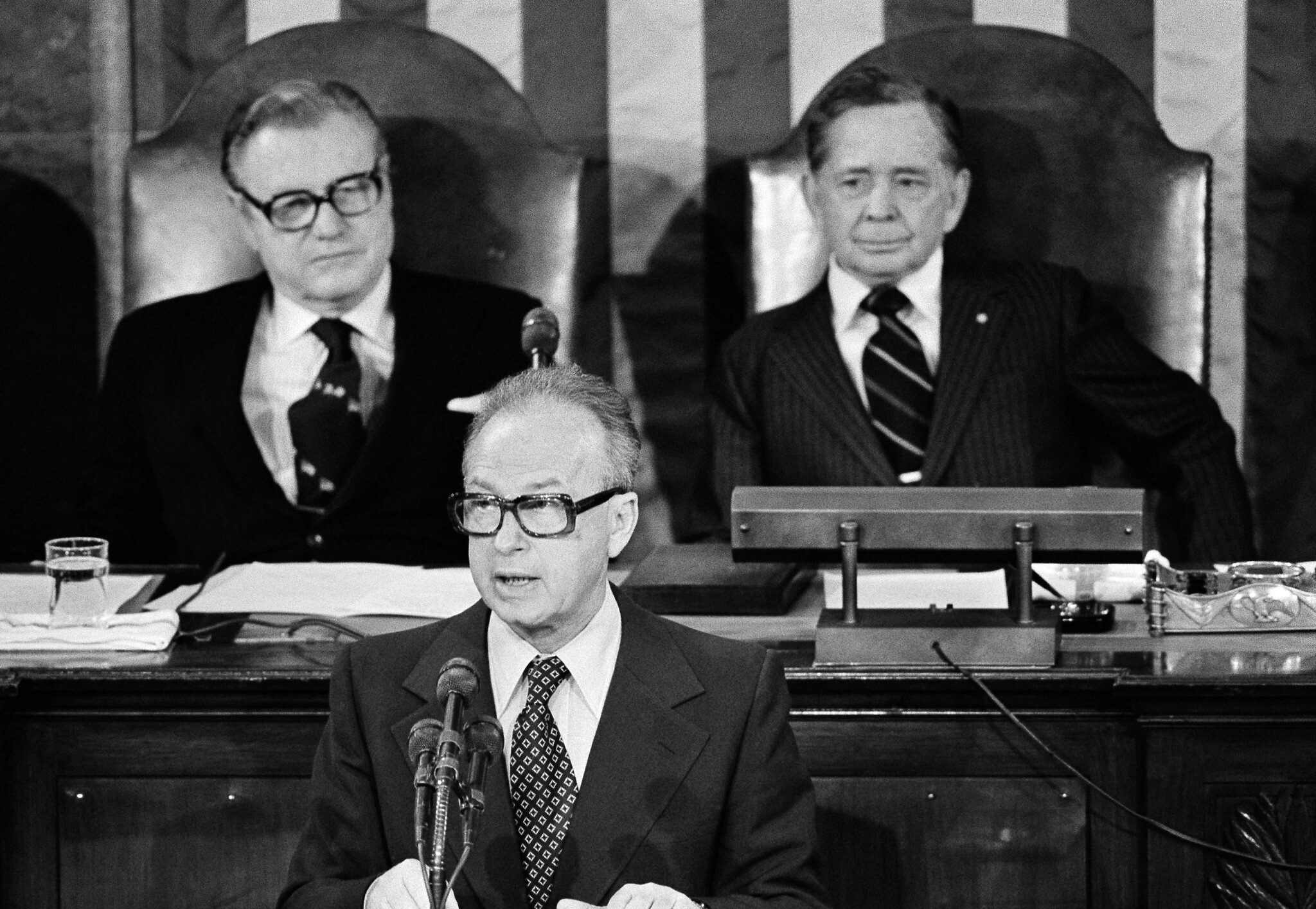
In 1981, Menachem Begin swore in his second government. While not technically a minority government, it rested on a fragile majority of 61 MKs. Nevertheless, that coalition made some of the most dramatic decisions in Israel’s history: extending Israeli law to the Golan Heights, completing the withdrawal from the Sinai Peninsula, and launching the First Lebanon War. The coalition later broadened, neutralizing the immediate threat to its survival.
In 1993, Rabin’s second government lost its majority after the ultra-Orthodox Shas party withdrew amid criminal investigations into its chairman, Aryeh Deri, and soaring tensions with the left-wing Meretz party.
The government was left with 56 MKs and relied on outside support from the Arab factions — an arrangement whereby the Arab parties did not accept cabinet positions but voted with the government on no-confidence motions to prevent its collapse. It was this minority government that executed some of the most consequential diplomatic moves in Israel’s history: the Oslo Accords and the peace treaty with Jordan.
Three right-wing defectors from the Tzomet party later joined the coalition, boosting it to 59 MKs. Following Rabin’s assassination in November 1995, Shimon Peres was sworn in as prime minister and continued to lead a minority government until the May 1996 election, when he was defeated by Netanyahu, winning office for the first time.







The Times of Israel Community.