

AIPAC and J Street wage proxy battle in Ohio via rival pro-Israel candidates
Lobby groups have each backed a Senate contender, Republican incumbent Sen. Jon Husted or Democratic challenger Sherrod Brown, both of whom have record of backing Israel
 Add ToI as a Preferred Source on Google
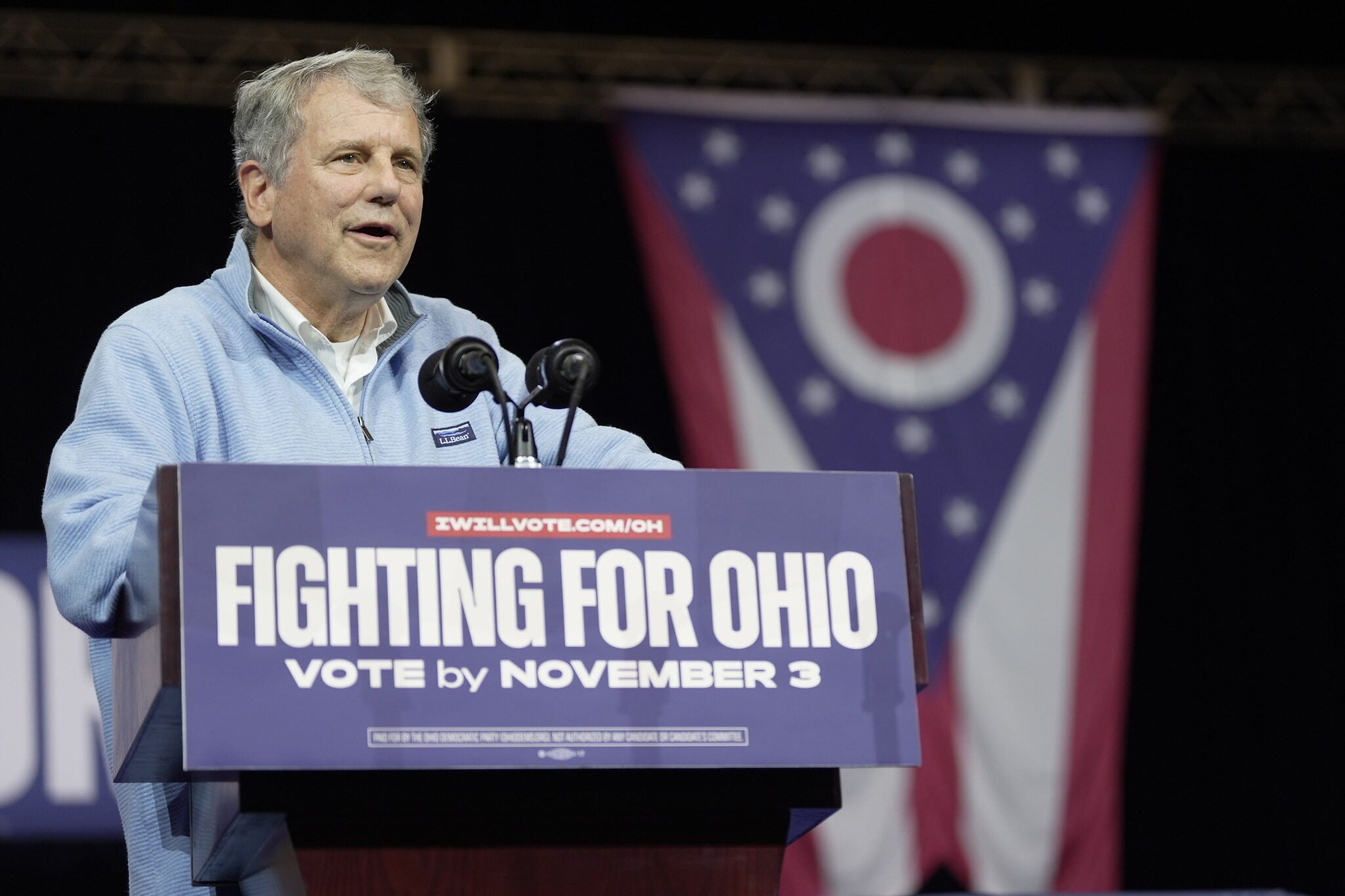
JTA — A tight race in Ohio may play a pivotal role in determining which party controls the US Senate, with the two campaigns serving as a proxy battleground for two Israel-lobbying groups with different ideologies.
While Republican Sen. Jon Husted is technically the incumbent, in the eyes of many voters, so is Democrat Sherrod Brown. Husted was appointed by Ohio Gov. Mike DeWine to fill the seat vacated by JD Vance when he became vice president in January 2025. He is now running to fulfill the remaining two years of that term. Brown, meanwhile, served three terms in the Senate before losing Ohio’s other Senate seat to Republican Bernie Moreno in 2024.
In the background of this close race are two pro-Israel lobbying forces: the American Israel Public Affairs Committee, the powerful pro-Israel lobby supporting Husted, and the liberal J Street, a frequent critic of the Israeli government that backs Brown.
For this general election cycle, Husted has earned more than $544,000 in individual contributions earmarked for him through AIPAC, according to Federal Election Commission filings. During the May special primary election, he amassed more than $306,000 in such contributions.
Husted received a direct $5,000 contribution from AIPAC’s political action committee in April, according to both FEC filings and a federal lobby disclosure. Another $5,000 in February was earmarked through AIPAC, meaning that the lobby forwarded a third party’s contribution to the campaign. Husted also received a $5,000 donation from the Republican Jewish Coalition PAC.
Asked why Husted received AIPAC’s backing, Deryn Sousa, a spokesperson for the organization, wrote that “Husted is endorsed because of his support of the US-Israel relationship.”
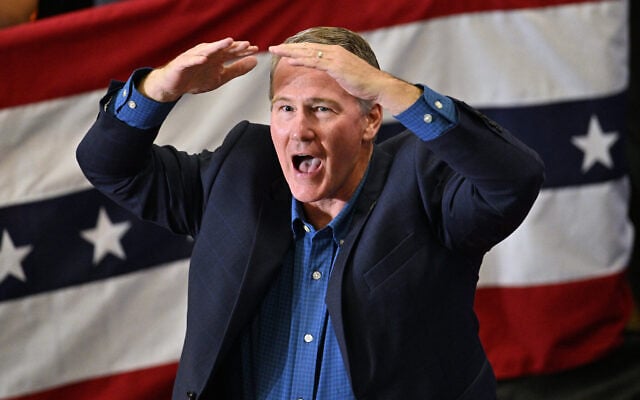
During his short time in the Senate, Husted has voted against measures to block arms sales to Israel and joined efforts to combat antisemitism.
In April, he voted against advancing two resolutions proposed by Vermont Independent Sen. Bernie Sanders, seeking to restrict sales of certain military equipment – including 1,000-pound bombs and bulldozers – to Israel. That same month, he joined the Senate Bipartisan Task Force for Combating Antisemitism, and a year before, he questioned university leaders about the safety of Jewish students on campus.
Brown has likewise been a staunch supporter of Israel and Jewish Americans, voting against advancing a previous resolution to restrict arms sales, proposed by Sanders in 2024.
In 2018, Brown sponsored the United States-Israel Security Assistance Authorization Act, which would have authorized military assistance for Israel through fiscal year 2028. He also spoke out on behalf of Jewish students amid campus protests in 2024 and warned of the dangers of antisemitism after a 13-year-old was charged with allegedly planning a mass shooting at an Ohio synagogue in 2023.
Brown has been “one of the biggest recipients of J Street bundled funds for this cycle,” according to Jordan Steinberg, a spokesperson for the group. Describing Brown as “a long-time J Street champion,” Steinberg told the Jewish Telegraphic Agency that the Democrat has received more than $800,000 from supporters of J Street in this race.
The biggest chunk of the funds, Steinberg continued, came via JStreetPAC, which operates as a conduit for individual donors who make contributions to candidates on J Street’s website. These contributions are then reported to the FEC as donations from individuals. The group also has a super PAC, J Street Action Fund, but Steinberg said that most donations come from individuals who contribute through the traditional PAC.
J Street in September announced that it would be stepping up lobbying efforts, investing $3 million to defeat certain Republican candidates backed by AIPAC.
“He is one of the top three recipients of our bundled dollars, and we couldn’t be more invested organizationally in his victory in November,” Steinberg added. “Brown has been a longtime champion of pro-peace, pro-democracy values, and we’re proud to stand with him this cycle.”

Other differences in financing have separated the two rivals, with each campaign accusing the other of linkages to the late convicted sex offender Jeffrey Epstein.
Brown has run ads slamming Husted for taking more than $116,000 from Ohio billionaire Les Wexner, a financial client of Epstein, with the most recent $3,500 gift occurring in July 2025, according to the Federal Election Commission.
A campaign spokesperson for Husted, Tom Evans, told JTA in a statement that “the Wexners have given to dozens of candidates from both sides of the aisle – including Sherrod Brown.” Evans noted that Husted’s campaign donated all available funds, totaling $34,000, to an anti-human trafficking charity, adding that the senator voted to release the Epstein files.
While Husted did support such legislation passed in November 2025, he supported tabling an amendment requiring disclosure of Epstein file documents to the public in September 2025.
Following Brown’s attack ads, Husted fired back with allegations that his opponent took contributions from people whose names appeared in the Epstein files. Those people included Wexner’s wife Abigail, former Harvard president and US Treasury secretary Larry Summers, and former Google CEO Eric Schmidt. FEC records show, however, that Brown never took money from Wexner himself.

The Husted campaign has accused Brown of taking more than $150,000 from a dozen people listed in the Epstein files. Evans deemed the Democrat’s ads “hypocritical,” slamming him for sitting on the files while serving in Washington for 32 years.
The Brown campaign did not respond to JTA’s request for comment.
Apart from the clashes over contributions to each campaign, the Ohio Senate race has also included a controversy over a Husted campaign hire. The former staffer, Stephen Woytek, once used a photo of SS soldiers as his Facebook profile picture and added a playlist celebrating Rhodesia, a former white-minority-ruled state often used as a symbol by white nationalists, The Washington Post reported in September. Woytek at the time told the Post that he rejects “the racist and antisemitic ideology the SS and Nazi Germany represented,” adding that although he participates in historical reenactments for educational purposes, he should have “exercised better judgment.”
After the Post contacted the campaign about the posts, Husted reportedly dismissed Woytek.
Following the Post’s report, Ohio Democratic Party leadership said that Jewish and Black community leaders joined hands in condemning the senator “for hiring a Nazi enthusiast as a member of his senior campaign team.”
“Jewish Americans and our allies need to take action to combat the rise of antisemitism and hatred and defend our values,” Adam Rosen, Ohio chapter leader of the Jewish Democratic Council of America, said in a statement.
Rosen accused Husted of showing “poor judgment” in hiring Woytek, raising doubts as to whether Jewish Ohioans should trust his judgment “when he can’t choose people for positions of power who aren’t Nazis.”
Stephen Woytek, a graduate of the Citadel, was fired by Republican Sen. Jon Husted following a WaPo report that revealed his Nazi obsession.
More on #NewsOne.com —> https://t.co/VdP9eeqzxi
????: Stephen Waytek / facebook
✍????: Angela M. Bronner pic.twitter.com/hFrzNZJKeA— NewsOne (@newsone) September 12, 2026
Evans, Husted’s campaign spokesperson, cited Woytek’s service in the US Army and described him as a student of military history who “routinely reenacts historical battles.”
“While he denies negative intent, his social media activity displays a complete lack of judgment and disregard for its impact on others,” Evans added. He stressed that Husted “demands better of those who represent him,’ noting that the senator “made the immediate decision to part ways.”
Addressing this incident, Josh Kramer, president and CEO at Ohio Jewish Communities, emphasized that “Ohio Jewish Communities has a long history of working constructively with both sides of the local aisle, and we’re fortunate to have relationships with both Senator Husted and former Senator Sherrod Brown.”
“The controversy surrounding the former member of Senator Husted’s campaign is troubling,” Kramer added, noting, however, that “Husted acted to remove the individual once the matter was brought to his attention.”
Overall, Kramer said he believes that “Ohio has demonstrated itself to be a more moderate state, or less open to extremism, than other states.”
Looking at the election from a broader perspective, Ohio Jewish Communities’ Kramer said he was grateful that Ohio’s Jewish community has long worked with both Democrats and Republicans. While he recognized a rising tendency to link antisemitism to partisan politics, Kramer said that this race is “an opportunity for candidates to demonstrate their commitment to the safety and well-being of Ohioans, including the state’s Jewish population.”







The Times of Israel Community.