The ban on Arab parties will likely be reversed. To its critics, that isn’t exactly a relief
Often, the most extreme measures — like banning Arab-led parties from the election — get tossed, but their impact can live on
Gambling on Israeli politics is usually a risky proposition. But it’s a safe bet that on October 27, voters will be able to cast ballots for the Joint List and Ra’am, the two main parties representing Israel’s Arab citizens.
Right now, however, one might get the opposite impression. That’s thanks to a pair of 18-5 votes last week in the Central Elections Committee, a body controlled by the right-wing government, which barred both parties from running, alleging they back armed struggle against the country and negate its existence as a Jewish state.
The decisions have gained global media attention and sparked outcry on Israel’s left and among some supporters of the country abroad, lamenting another blow to its democratic system. For opponents of Israel, the bans are one more exhibit in the case that the Jewish state is a fundamentally racist society.
By the end of the week, this will likely all be moot. The Supreme Court has the final say on which parties are allowed to run, and is expected to overturn the bans, just as it did to similar ones in 2019 and 2022.
The votes, and their fallout, exemplify a process that has long bedeviled Israeli politics. Time and again, controversial or extreme ideas gain initial momentum in the Knesset, spark a flurry of global debate and condemnation — then end up being shelved.
It’s led to a split reality: To Israeli political mavens, the fact that the most radical bills often (but not always) fail seems like a testament to the country’s democratic immune system. But more casual observers, reading the headlines about the extreme idea without paying attention to the follow-up, could take it as proof that Israel is anti-democratic.
That’s what’s happening here, as politicians and commentators are lambasting the election bans, all while understanding that they almost definitely won’t last. Arab lawmaker Ahmad Tibi, for example, who is subject to the ban as a senior member of the Joint List, called it racist and undemocratic. Then he predicted that Arab voters would turn out in high numbers — presumably to vote for his party, once it’s reinstated in the running.
The parties that supported the bans likely don’t expect them to hold up, either. Given the unsuccessful track record of these disqualifications, coalition politicians may have been willing to play fast and loose with democratic rights in order to throw some red meat to their base and delegitimize the Arab parties — all while counting on the Supreme Court to maintain the status quo.
But while those in the know assume the bans will fail, many more people, unfamiliar with the intricacies of Israel’s political system, almost certainly went to sleep last week assuming Israel’s 2 million Arab citizens had been permanently disenfranchised.
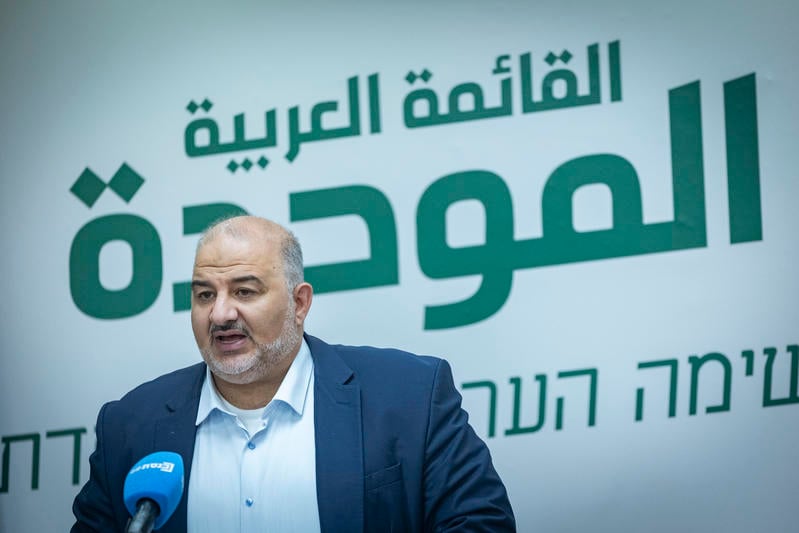
Of course, it isn’t only the uninformed who are worried about the election bans. First of all, the Knesset has passed plenty of controversial measures, especially under the outgoing government. Even if those measures get struck down, critics have described the election committee’s votes as the latest example of a growing undemocratic tendency on Israel’s right.
And the reliance on the Supreme Court to overturn the decisions isn’t exactly a great sign, even for the left that has relentlessly defended the court. It shows, once again, that the judiciary is one of the only real checks on Israel’s government — one that right-wing politicians have vowed to remove if they’re reelected.
A familiar song and dance
Since Prime Minister Benjamin Netanyahu took office back in 2009, a pattern has played out: Officials, usually but not always on the right, will propose a controversial or extreme measure. The measure will advance in an initial vote in the Knesset, drawing the world’s attention and sparking a stream of negative press and activist protest.
Then, quietly, the bill will die. Maybe it gets held up in committee. Maybe it gets softened by amendments and revisions. Maybe the government moves on to other priorities. In some rare cases, maybe Netanyahu feels that the public relations disaster is so bad that he needs to quash it himself.
The past 17 years are littered with examples of contentious bills that drew global condemnation and never became law. Remember the loyalty oath bill of 2010, which would have required new non-Jewish citizens to pledge loyalty to the country? How about a conversion bill from that same year, which would have officially cemented the Chief Rabbinate as the authority over all Jewish conversion in Israel, angering Diaspora Jewish leaders? What about the muezzin bill of 2017, banning the use of loudspeakers for the Muslim call to prayer at night? Or the override bill of 2023, allowing the Knesset to disregard Supreme Court rulings with a simple majority? All of these prompted outcry, at times massive. None of them became law (though an updated version of the muezzin bill advanced in an initial vote a few months ago).
The same is true with votes by the Central Elections Committee. The committee’s name makes it sound like it’s an independent agency tasked with apolitically overseeing Israel’s votes. And while it does have an apolitical staff tasked with administering elections, in reality its voting plenum is a thoroughly political body, not too different from a committee in the Knesset. While it’s chaired by Supreme Court Justice Noam Sohlberg, the body that voted to ban the Arab parties is made up of politicians, and Netanyahu’s coalition holds the majority.
The votes it took last week were similarly political. And except for a decision to ban one particular Arab lawmaker, Balad’s Sami Abu Shehadeh — which had support across the aisle, and from Sohlberg — all of them are probably going to be struck down by the Supreme Court. That’s what happened in 2019, when the court overturned a ban on the Balad-Ra’am party, and in 2022, when it again allowed Balad to run.
In the past half-century, in fact, the only faction successfully banned was Meir Kahane’s right-wing extremist party.
Some bills do, in fact, become law
Of course, alongside those failed bills, Netanyahu’s various governments have passed a series of controversial laws, especially under the current outgoing government. In 2018, for example, after previous failed attempts, the government passed a quasi-constitutional Basic Law declaring Israel the nation-state of the Jewish people, which, according to critics, alienated and discriminated against Israel’s Arab and Druze citizens and undercut the country’s claim to be a pluralistic democracy.
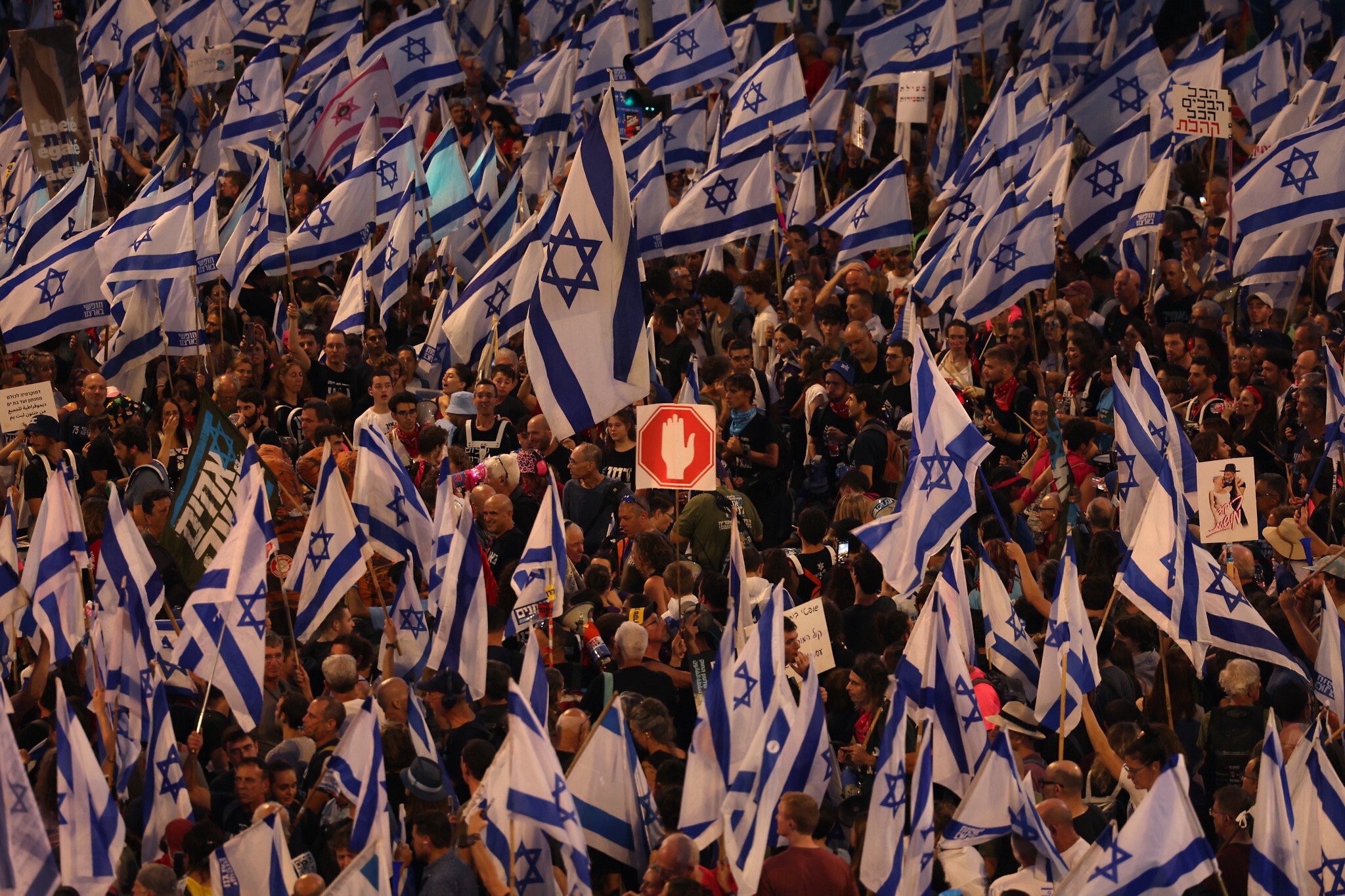
And the 2023 judicial override bill was stymied — but only after an unprecedented campaign of mass protests that roiled the country and shut down its highways. Moreover, the overall project of weakening the judiciary is very much alive, with its proponents pushing one bill after another to curb the power of the courts.
Before the Knesset recessed this year, lawmakers passed a series of controversial laws limiting the power of the attorney general and appealing to ultra-Orthodox parties, which are fighting to safeguard the blanket exemptions from military service that Haredi men have long enjoyed. It also passed a law mandating the death penalty for Palestinians convicted of lethal acts of terror, which attracted global criticism. In those cases, no moderating counterweights halted the legislation.

Almost as a rule, controversial laws — including the ones passed this year — face court challenges. But the Supreme Court has allowed some of them, like the Nation-State Law, to stand. When it comes to striking down contentious decisions, court precedent is a guide, but not a guarantee.
‘So utterly depressing’
If the Supreme Court breaks with past precedent, and Israelis go to the polls without the option of casting ballots for the Joint List or Ra’am, it will mean that the country’s largest minority, comprising millions of citizens, has been deprived of the ability to vote for parties focused on representing it.
That would be an unprecedented challenge to Israel’s claim to be one of the only stable democracies in the region — if not the only one. For decades, facing accusations of apartheid, Israel and its supporters have pointed to the active participation of Arab politicians in the Knesset. That argument will fall apart if those politicians aren’t allowed to run.
Even if the court does strike down the law, some Israelis and Jews abroad are making the case that Wednesday’s Central Elections Committee votes were still dangerous to the country. That’s because, to opponents of the decisions, they indicate that the people governing Israel are losing faith in the country’s diverse democracy — and are out to disenfranchise its Arab citizens.
“I find this so utterly depressing,” Phil Rosenberg, president of the Board of Deputies of British Jews, the UK’s umbrella Jewish organization, wrote on X. “My Zionism is one that celebrates Israel as a state that grants equality to all its citizens. Israel’s Arab-led parties should be viewed as partners towards national healing and regional peace, not disqualified on flimsy pretexts.”
He added, “Israel’s Supreme Court will likely overturn most if not all of these bans. But it should not come to this. A basic moral compass should be enough.”

Karim Emile Bitar, a French international relations scholar who is often critical of Israel, posted on X, “The fact that such a sweeping exclusion was actually approved speaks volumes about the radicalization of Israeli politics.”
This affair also underscores the power, and precarious position, of the Supreme Court. Right now, many seem to take it as a given that the court will overturn the bans, but there’s no guarantee that the court will retain that power indefinitely.
Netanyahu’s government has tried for years to weaken the court, and one of its far-right parties, Religious Zionism, has promised an even more radical judicial overhaul if it stays in power. After another recent court decision on the election, which was seen as a defeat for Netanyahu’s coalition, Justice Minister Yariv Levin pledged to “finish the [judicial] reform and put an end to the control a small group of judges wields over our lives.”
When the next election rolls around, the Central Elections Committee may again vote to ban the Arab parties. And when that happens, will the Supreme Court still be able to stop them?