Gallant pans Netanyahu’s ‘atmosphere of defeatism’ in days after Oct. 7 massacre
Former defense minister says he didn't see PM until 3.5 hours after Hamas onslaught began; is unaware of prior warning from UAE leader, but notes that when PMs 'don't want people to know, they don't know'
Former defense minister Yoav Gallant on Wednesday charged that Prime Minister Benjamin Netanyahu fuelled an “atmosphere of defeatism” in the country in the days after the Hamas-led October 7, 2023, onslaught.
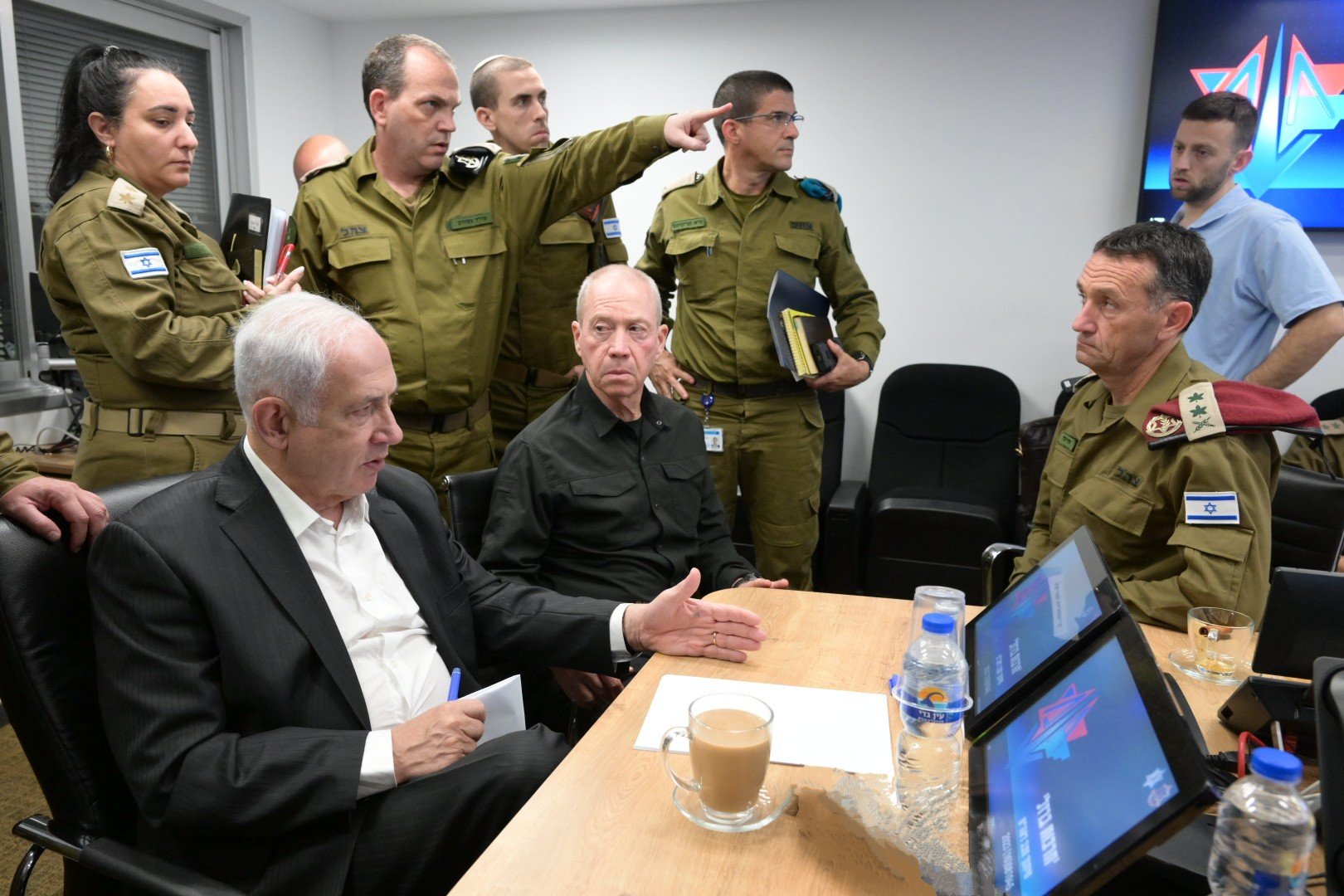
“I, by the way, was not in makeup,” Gallant told Channel 12 News, in a dig at Netanyahu. “I saw a prime minister who was either producing or feeling and bringing an atmosphere of defeatism. It really worried me.”
He told the network to look at pictures from meetings at the time to determine “who looked how.”
Gallant also told Channel 12 that he was unaware of the alleged warning from UAE President Mohammed bin Zayed to Netanyahu ahead of the October 7 Hamas-led attack. Haaretz first reported this week that bin Zayed personally warned the prime minister days before the attack was launched that Hamas was planning major offensive action against Israel, but that Netanyahu was dismissive and did not update security officials about the call.
Netanyahu has vehemently denied such a call took place and has threatened to sue Haaretz for libel. He’s said his records show he did not speak to the Emirati leader at the time. The paper has stood by its reporting.
An Emirati source familiar with the conversation confirmed the Haaretz report to The Times of Israel, and Abu Dhabi has not refuted it.

Gallant said the premier could have kept such a conversation off the published records of his calls.
“I don’t know whether there was such a conversation or not,” Gallant said. “I know one thing: When a prime minister does not want something to be published, it isn’t published. When they don’t want people to know, people don’t know.”
He cited his experience as both a prime minister’s military secretary and as defense minister.
Gallant added that while serving under Netanyahu, he learned on “more than 10” occasions of conversations between the premier and senior US officials that he had not previously known had taken place.
“Every so often [American officials] would call me and say, ‘Your prime minister told us an hour ago, or two hours ago, such and such.’ And I’m talking about senior levels, below the president. Whether it was true or not, of course I represented the Israeli position as best I could, but that’s how I would learn about those conversations,” he said.
Derides Netanyahu’s claim he’d have acted immediately if woken hours before attack
Gallant said that on the day of the attack, he didn’t see Netanyahu at the IDF’s Tel Aviv headquarters until 10 a.m., some 3.5 hours after Hamas launched its devastating invasion of Israel.
His claim came amid conflicting details over the prime minister’s movements on the morning of the massacre. A timetable from the day published by Netanyahu’s office last week stated that the premier arrived at the Kirya base at around 8 a.m. However, Channel 12 news reported that unpublished minutes from the prime minister’s office diary placed his actual time of arrival at the Kirya as 9 a.m., while an unidentified “credible source” told the network that his true arrival time was not until 9:30 a.m.
Asked if the two spoke by phone that day before seeing one another, Gallant, who was ousted from his position a year after the massacre amid mounting disagreements with the prime minister over the handling of the war and ultra-Orthodox military conscription, told Channel 12 news that he can’t remember, “but in any case there was not a significant [call].”
Recounting his morning on October 7, Gallant told Channel 12 that after a one-hour drive from his home, he was at the Kirya by 7:45 a.m. for a security assessment by then-IDF chief of staff Herzi Halevi, and then held his own assessment at 8 a.m.
“At 10 a.m., [Netanyahu and I] spoke; believe me, I wasn’t idle between 6 a.m. and 10 a.m.,” he said.
Gallant was dismissive of Netanyahu’s claim that “everything would have looked different” if he had been woken up before the attack, as security chiefs held discussions overnight about concerning signs coming from Gaza.
“Okay, they woke him up at 6:30, and he arrived [at the Kirya] at 10. If they’d woken him up during the night, he [still] apparently would’ve gotten there around 3.5 hours later,” he said.
Hamas-led terrorists launched a cross-border, multipronged assault, catching Israel by complete surprise on October 7, 2023. Terrorists brutally massacred some 1,200 people in southern communities, mostly civilians, took 251 hostages to Gaza, and sparked years of conflict that has spread across the Middle East.
The ruling Likud party, in response to Gallant, accused the former minister of lying. It insisted that Netanyahu was at the Kirya by 8:22 a.m. “and waited for Gallant and the chief of staff until 9:55,” without specifying what the premier did in the interim.
“In any case, for hours there was no relevant situational assessment to present to the prime minister,” Likud added.
A former general, Gallant was defense minister on the day of the Hamas-led October 7 onslaught, and led the security establishment during the first year of Israel’s war in Gaza and conflict with Hezbollah in Lebanon. He has taken responsibility for his part in failing to stop the shock attack.
He was removed from his post by Netanyahu in November 2024 as their relationship grew increasingly acrimonious.
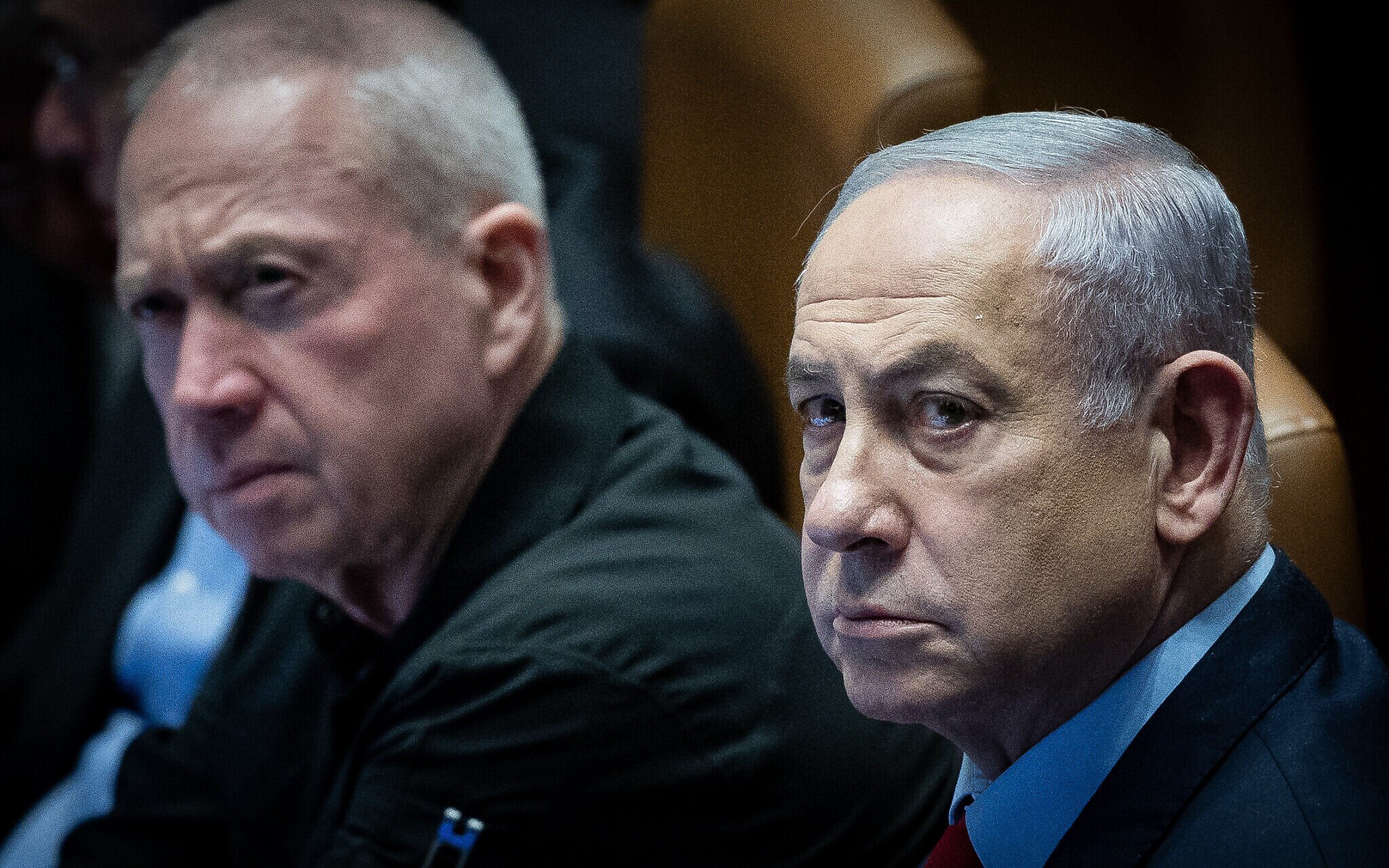
The premier said he fired Gallant due to a lack of mutual trust. The former defense minister has said he was sacked over his insistence that ultra-Orthodox men be drafted to mandatory military service, that the government strike a hostage deal with Hamas, and that a state commission of inquiry be opened into the October 7 attack.
He was replaced in the role by Israel Katz.
It was the second time the premier had moved to fire Gallant. The two had clashed prior to October 7 when Gallant warned in March 2023 that the government’s controversial judicial overhaul agenda was creating a national rift that made the country less safe. In that instance, Netanyahu reversed the decision to remove Gallant amid intense public protest.
Gallant resigned from the Knesset in January 2025, several months after Netanyahu removed him from his cabinet post. He remains a member of Likud, but did not run in the party primary last month.