With four of his six daughters residing in Israel, Rabbi Daniel Cohen always imagined immigrating to Israel in several years, when the time felt right.
Then, in June 2025, Rabbi Cohen received a phone call that would change his timeline.
Rabbi Jacob J. Schacter, Senior Scholar at the RIETS, Yeshiva University, asked Rabbi Cohen, a longtime friend and colleague, whether he would consider becoming the head of a new Orthodox community in Jerusalem centered around The Duet, a soon-to-be-built luxury housing complex.
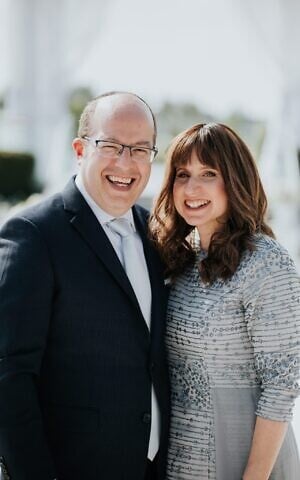
“My first reaction was, this isn’t what I had in mind, at least not right now,” said Rabbi Cohen, the senior rabbi of the Agudath Sholom synagogue in Stamford, CT, the largest shul in New England. “My wife and I weren’t planning to make Aliya so soon.”
Still, his interest was piqued. During their next visit to Jerusalem, Rabbi Cohen and his wife, Diane, learned as much as they could about the project. After examining the specs, touring the vibrant Pat (New Katamon) neighborhood, and meeting with Nissim Shibli, CEO of the HN City real estate development company, Cohen decided to accept the position.
Though immersed in the life of his Connecticut synagogue, Rabbi Cohen said the opportunity to build a strong new community of English-speaking immigrants in Jerusalem was a challenge he could not pass up. Following decades of leadership roles in the U.S., becoming the rabbi and leader at The Duet seemed like the next logical step in his life and career.
“We’ve been at Agudath Sholom for 21 years, and the community has grown exponentially,” Rabbi Cohen said. “Around 500 people daven at the shul every Shabbat.” Today, the synagogue, which offers a variety of minyanim and activities for members of every age, is thriving.
“It’s a very values-driven community that has a strong Torah core, but also deeply committed to outreach. We take seriously the idea that we are both distinct and connected. We have a responsibility to the broader society.”
Every Thanksgiving, members of Agudath Sholom cook meals for first responders. Every Christmas, they prepare meals for homeless people. The Chesed Committee offers help to those in need of food, a ride to a doctor’s appointment, or other types of support.
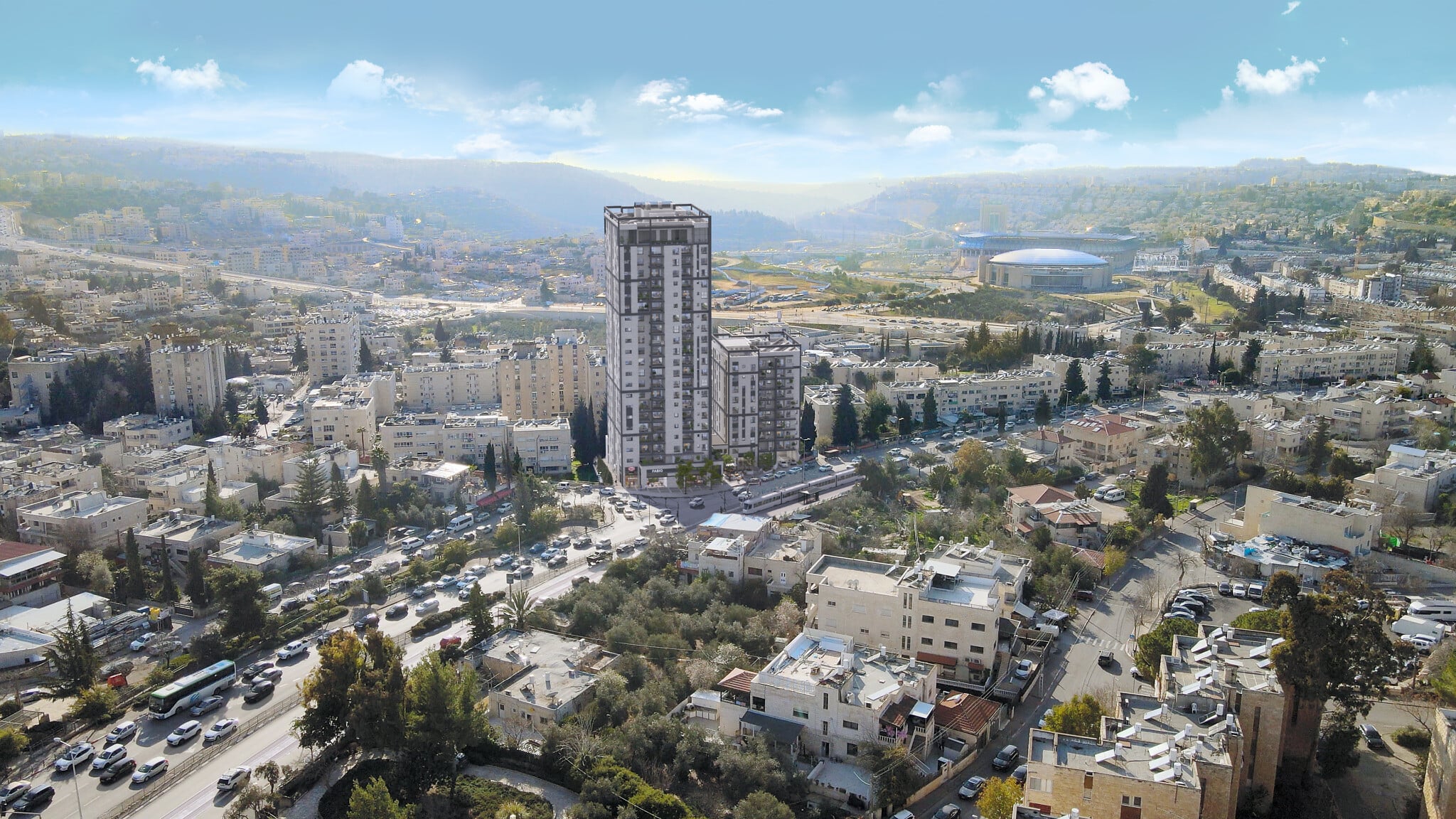
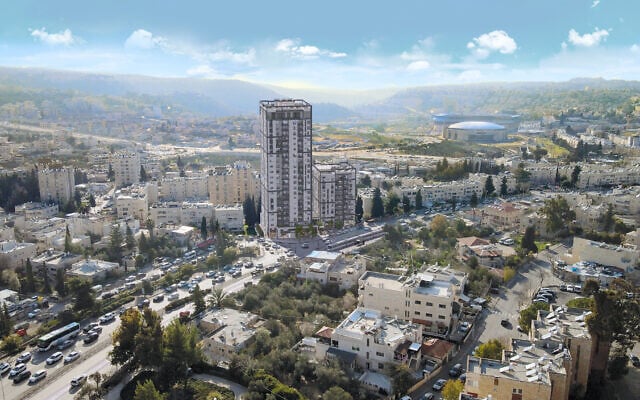
The Cohens will invest the same energy into building a caring community at The Duet, where many of the project’s 143 apartments have already been sold in the pre-sale phase. Its two residential towers (10 floors and 23 floors) are scheduled to open in January 2030.
“Community isn’t about how many people are in a building; it’s the orientation of the people inside,” Rabbi Cohen explained. “We want people not only to build relationships within the building, but to go out and impact the surrounding neighborhood.” Even if people don’t know each other personally, they become connected through giving to others. That’s what we want to build here in Jerusalem, inside and beyond the building.
The fact that The Duet is being created from scratch as part of a national urban renewal program has advantages, Rabbi Cohen said. “You’re not walking into an established social structure. You’re building it together. That creates openness, connection, and real opportunity.”
Once Rabbi Cohen moves to Israel in the summer of 2029, he will spearhead an amuta (a non-profit organization) focused on building “not just a synagogue but a full spiritual ecosystem” that will focus on prayer, Torah learning, programming, and personal mentorship – a service that Rabbi Cohen already offers in the U.S.
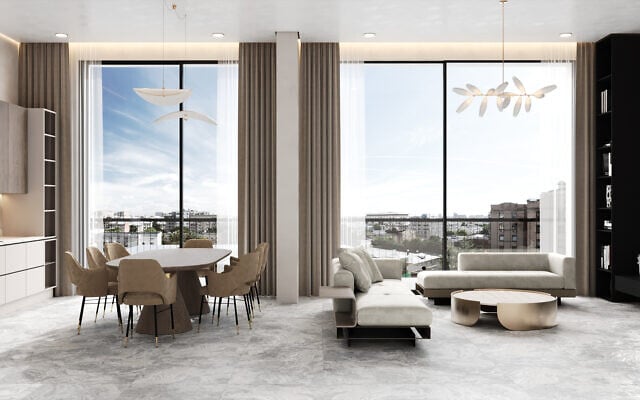
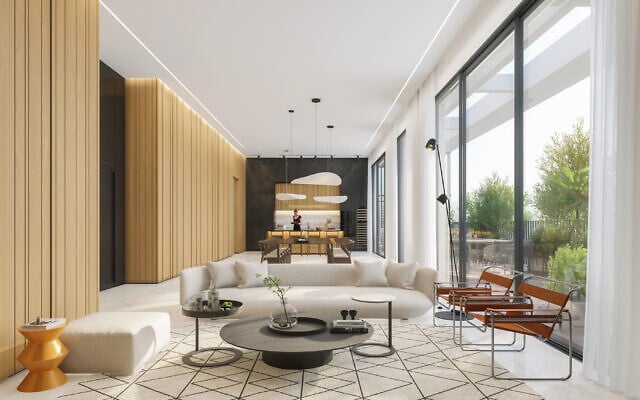
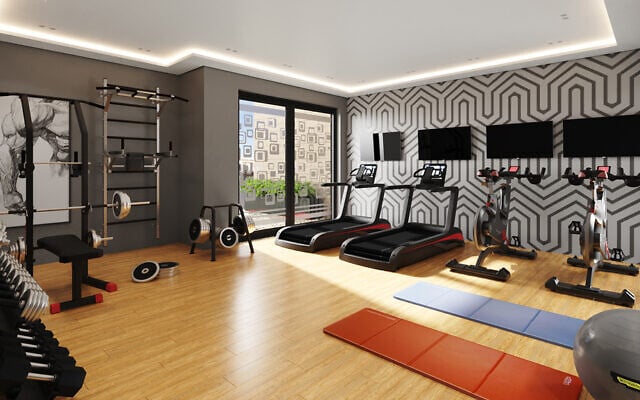
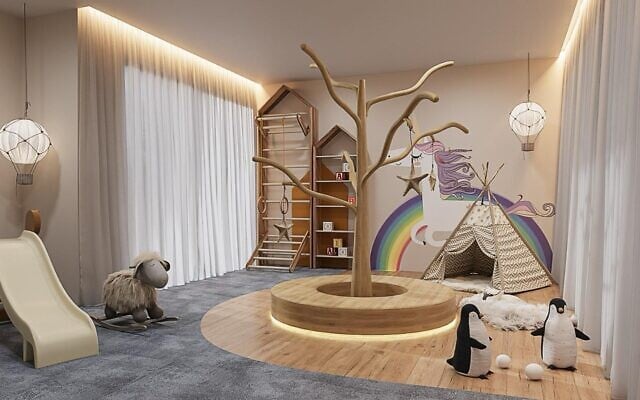
Prospective buyers can choose from one- to five-bedroom apartments. The project’s high-end amenities include an on-site synagogue, a private gym, a residents’ club, green areas, a communal space to build a sukkah, private storage rooms and parking spaces, each with an option to install an electric vehicle charger. Every apartment will have a mamad – a reinforced room/bomb shelter.
The building is being constructed according to the highest international standards, and buyers can design their apartments to their own needs and taste, says Shmuly Eisenmann, the Duet’s exclusive broker.
“We had a very successful launch and just completed presales,” Eisenmann said. Although The Duet is being built in an older part of Jerusalem, the area is undergoing rapid gentrification. “It’s in a very strategic area,” with two Light Rail lines currently under construction.
The Duet is a short commute to the Malcha Mall, the city center, and the Central Bus and Train stations. Its proximity to the Nishmat Torah learning center on the same street is a real bonus, Eisenmann said.
Eisenmann praised the project’s developer, Nissim Shibli, a member of Israel’s small Circassian community.
“He has a real Neshama, a good soul. He rose through the ranks in the IDF and built some of the biggest IDF bases in Israel. He thinks about the smallest details, from the height of the windows so children can look outside, to the insulation between apartments. He cares.”
Rabbi Cohen sees the Duet and its residents as much more than a housing complex.
“We want to help shape the character of the neighborhood, to bring light, kindness and unity to Jerusalem,” a complex city where religious and ethnic differences can strain relations between people.
Rabbi Cohen said community-building is something he saw from a young age. He grew up in Atlanta, where his father was a rabbi.
“I didn’t just hear about a warm, open Jewish home – we lived it. Our home was filled with hachnasat orchim, welcoming guests, with people coming in all the time. We grew up with doors open on all sides, trying to convey joy, responsibility for the Jewish people, and a sense that Judaism is something to be shared.”
The project is being marketed primarily to “Anglos,” or new and veteran English-speaking immigrants from the U.S., Canada, Europe, Australia.
“Many are Modern Orthodox, but not exclusively,” said Rabbi Cohen, who will transition to a rabbi emeritus role in 2028, before making aliyah a year later. “People who are Zionistic, values-driven, and community-oriented are welcome.”
Rabbi Cohen called The Duet ‘Not just real estate. It’s a chance to build a life, a community, and a future with intention.”