


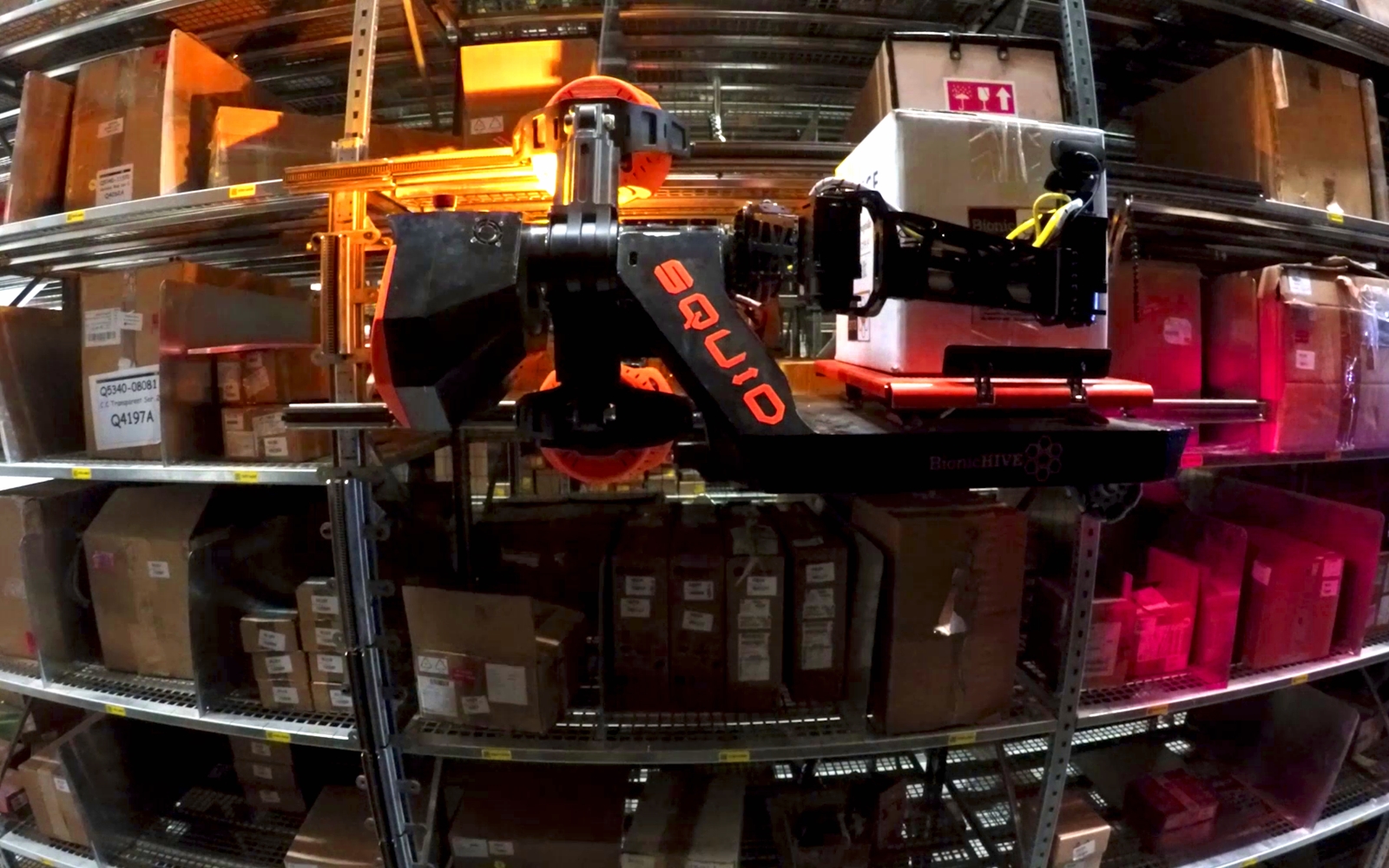
“The robot future is coming,” declared Elon Musk after watching a video of BionicHIVE’s orange and black SqUID robots drive themselves along warehouse floors, zoom up shelves, then use suction cups to retrieve boxes and distribute them.
Perhaps the future is already here.
Dozens of logistics and manufacturing companies are testing the BionicHIVE system to automate their warehouses following a Covid-fueled boom in ecommerce. The resulting shortage of warehouse workers has highlighted an urgent need for smart machines.
Companies are “looking for new innovations,” says Ilan Reingold, CEO and cofounder of BionicHIVE, based in the southern Israeli town of Sderot.
BionicHIVE stands out not just for its futuristic efficiency and artificial intelligence-powered technology, but because it can easily be installed in existing warehouses. It works on existing shelves, simply by adding its special rails that the robots grip to traverse them.
“Our rails just snap in like Lego, onto any shelf,” says Liran Raizer, cofounder and chief product officer at BionicHIVE. Warehouse shelving comes in several designs, and all are compatible with the company’s rails. The SqUID robots navigate warehouse floors using in-built cameras, learning to recognize and avoid static objects, such as walls and shelves, as well as people and other moving objects. Using their sensors and computer vision, enhanced by artificial intelligence, the robots can work safely alongside human warehouse workers.
“Our solution retrofits onto any existing warehouse infrastructure,” Reingold says. “The problem we are solving gives warehouses the ability to automate as they are. Most other solutions out there today are very specific, and often require building a whole new warehouse around the system. But ours is general, and can work for just about anyone.”
The easy installation and adaptability is key to enabling more automation in the fast-expanding sector. Amazon has its much-publicized smart warehouses. BionicHIVE allows companies lacking the resources to set up customized automation systems the opportunity to embrace robotic technology.
The robot’s ability to climb shelves up to any height is also unique. “Most industrial robots meant to replace workers can only reach human height,” Reingold says. Being able to move boxes along the ground, place them on shelves and retrieve them using the same robot eliminates the need for different types of equipment – forklifts to reach tall spaces and other vehicles to carry loads at ground level.
“This also allows tasks to be combined, because the same robots can carry items from the truck into the warehouse and also place them on shelves,” he says. “It’s really a three-dimensional solution.”
The company’s name was inspired by bee hives – just as bees traverse the complicated nooks and crannies of hives, the robot can access all the shelves and floors found in a warehouse.
“It’s the idea of being able to go anywhere and retrieve or place an item anywhere,” says Olivier Haddad, chief technology officer at the company.
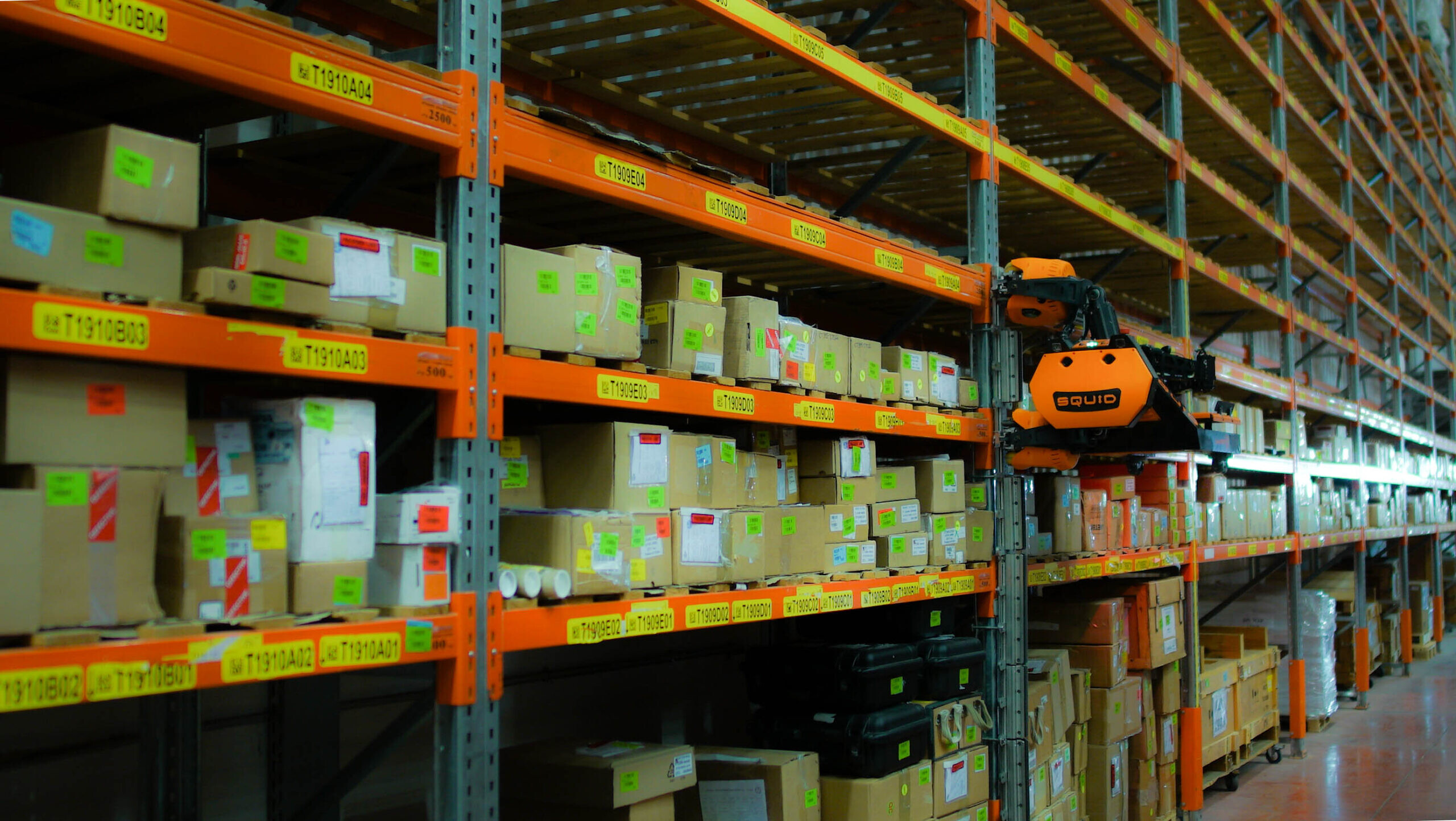
The system doesn’t just follow instructions, but runs on artificial intelligence, constantly gathering data through its cameras, sensors and software network.
“We really learn the behavior of the warehouse,” Reingold says. That allows the system to make its own decisions about how to retrieve or stack boxes, or perform other tasks. “It also learns to recognize patterns and how to predict what tasks may be coming up, and figure out how to best do them in the most efficient way. This ultimately reduces the costs of operating the warehouse.”
Early customers trialing the robots include Wincanton, Britain’s largest logistics company, and multinational energy technology company Schneider Electric, which is testing the robots in both manufacturing and distribution centers.
“There is simply no other solution on the near-term horizon with similar potential for us,” says an executive at Schneider.
A top executive at another multinational corporation considering the system says its main appeal is that it does so many different things, including climbing shelves, carrying loads along aisles, and managing the robot fleets. “These are usually three different companies doing these things,” he says. “Here, they are giving you an all-in-one.”
BionicHIVE works in all kinds of warehouses, whether for groceries, automotive parts or industrial factories.
“While we have heard a lot about the growth of ecommerce warehouses, especially during Covid, it’s important to remember that more warehouses are used in other parts of the supply chain, including manufacturing, and that the boom in ecommerce is also driving the entire supply chain,” Reingold says.
The market for automated and robotic systems for warehouses is growing about 14% a year, and is expected to be worth $30 billion globally by 2030, according to market data firm ResearchandMarkets.com.
Reingold says the increased use of robots like the SqUID will also improve the future for humans, including more economic growth and better job prospects.
“Asking if robots are replacing humans is the wrong question,” Reingold says. “Ecommerce and commerce in general create so many jobs, and the only way for that market to grow is through automation in places like warehouses, and that’s what we are doing.”
For more information about investing in BionicHIVE, click HERE.