


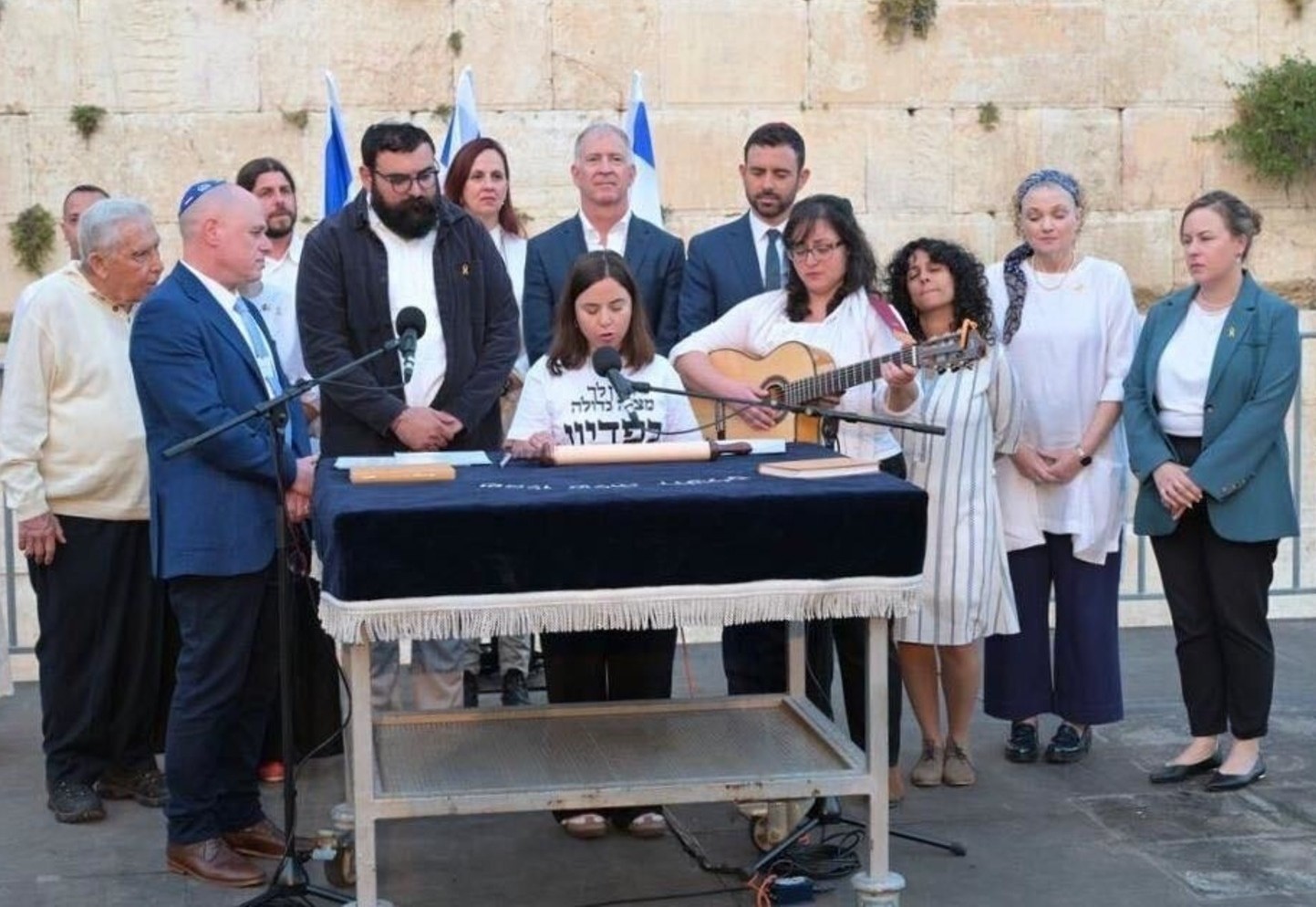
In recent years, a new tradition has taken root in Jerusalem. A custom born out of necessity that has gradually become part of our national and spiritual calendar. In the midst of the ten days between Holocaust Remembrance Day and Israel’s Independence Day; days in which Israeli society is suspended between memory and pain, between mourning and hope; we gather at Ezrat Yisrael, the egalitarian section of the Kotel, and read the Declaration of Independence together.
This year marks the sixth time that we at the World Zionist Organization have upheld this practice, and it feels more relevant than ever. In the reality we are living through, it is clear why we must return and reaffirm just how essential the Declaration of Independence is as a text around which we can, and indeed must, gather.
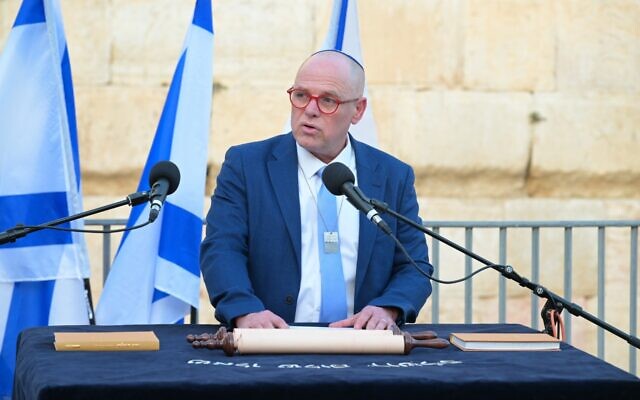
The Declaration was not written in times of calm. It was drafted in the midst of the War of Independence, not after the battles had subsided, but while the future of the Jewish community in the land was still uncertain. And precisely then, in the face of uncertainty, the leaders of the Yishuv chose to articulate a vision- not only to defend a home, but to define it.
This year, too, we mark our national days amid a security and social reality that knows little rest. In practice, we find ourselves in a ceasefire in the midst of war. Many families still carry the open wounds of recent years, and Israeli reality is far from tranquil. Precisely for this reason; perhaps especially so; this act of gathering holds deep meaning.
Reading the Declaration of Independence is not merely a ceremonial gesture. It is a statement. A statement that even in moments of upheaval, there is value in returning to our foundational text. A statement that the words written then – of freedom, of equality, of a Jewish and democratic state, are not only a historical memory, but an ongoing mission.
The choice to read the Declaration with cantillation, in a traditional melodic mode, is part of this Zionist statement. It is a subtle yet meaningful attempt to grant these words an additional dimension, not only political or legal, but also cultural, perhaps even spiritual. Not to sanctify them in a religious sense, but to deepen our sense of commitment to them.
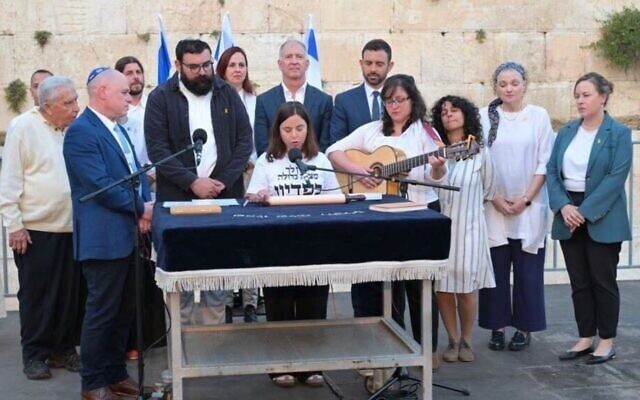
The Jewish people have been blessed with five scrolls that have attained sanctity – Shir HaShirim, Ruth, Lamentations, Ecclesiastes, and Esther. Each was composed at a particular moment in our history; each is read in its appointed time; each tells a story.
The Declaration of Independence is, of course, different in every respect, and it holds no religious sanctity. Yet it too has a story to tell. And it is worthy – worthy beyond measure – of being read aloud by the many, heard from one end of the land to the other: Jewish and democratic, democratic and Jewish in a single voice.
This ceremony takes place at Ezrat Yisrael, the egalitarian Kotel—a place that carries a broader story. A story of openness, of inclusion, of a sincere effort to allow Jews of all streams and perspectives to stand together before the same ancient wall. It is no coincidence that this location was chosen. It reflects the aspiration to see the Kotel, and Jerusalem as a whole, as a space of Jewish peoplehood in its broadest sense.
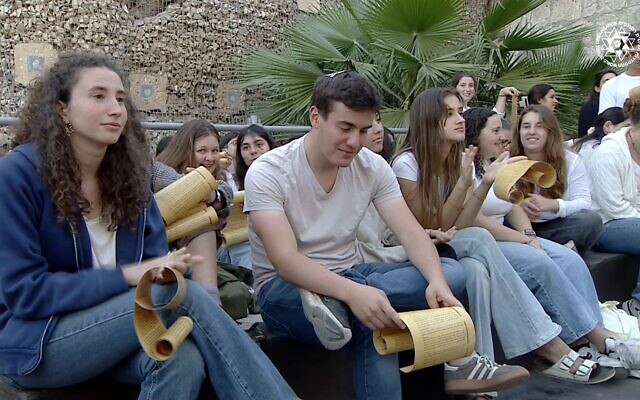
That peoplehood is present here not merely as a slogan. Those who read the Declaration come from Israel and from across the Jewish world, from the United States, Europe, and Australia. This year, a voice will even be heard from Bondi Beach in Sydney, a place where the Jewish community experienced a painful attack, and chooses to take part in this gathering. It is a living, tangible connection – between communities, between shared destinies.
For six consecutive years, we have upheld this custom, through a global pandemic and through times of war. At times joined by bereaved families, at times by those who have returned from captivity. The ceremony reflects the reality around us while offering something rare: a moment of collective meaning and hope.
Jerusalem, the city in which we gather, carries an ancient prayer: “Pray for the peace of Jerusalem; may those who love you be at peace.” It is a prayer but also a call of action. Peace and tranquility are not self- evident, certainly not in these days.
We invite the broader public in Jerusalem, across Israel, and wherever a Jewish heart beats to come take part and join us via the live broadcast on social media and The Times of Israel. To be part of this moment, a moment in which we pause, within a turbulent reality, and read together our shared story.
This Sunday, April 19th, 11:30am EST/6:30pm IST. Pre-event zoom on the story behind Israel’s founding document at 10:45am EST/5:45pm ISR with historian and podcaster Yuval Malchi.
Dr. Yizhar Hess is Vice Chairman of the World Zionist Organization.