Unless the opposition steps up its game, Netanyahu, the PM of Oct. 7, could yet survive this election
It's a combination of his own shameless efforts to rewrite history, his opponents' inability to adequately hold him to account for that blackest of days and much more besides, and, perhaps, Israel's changing demographics
With two weeks until Israel’s election, it’s anybody’s guess who’s going to win. And that’s just astounding.
The man who was running the country when thousands of Hamas-led terrorists burst through the Gaza border to gleefully massacre every man, woman and child they could lay their murderous hands on has a reasonable chance of retaining power.
And that scarcely believable reality stems from a combination of Netanyahu’s own shameless efforts to rewrite the history surrounding the October 7 Hamas invasion, the opposition’s inability to adequately hold him to account for that blackest of days and much more besides, and, perhaps, Israel’s changing demographics.
***
On October 7, 2023, Benjamin Netanyahu was the man with ultimate responsibility for keeping this country and its people safe, and yet he is the only Israeli political, military, or security official who has not acknowledged that culpability and contritely stepped aside.
Quite the reverse.
He has refused to acknowledge any direct responsibility for the worst one-day massacre of Jews since the Holocaust. He has deflected blame, with increasing disregard for the truth, to his own military and security chiefs. He has refused to enable the thorough investigation, via an independent state commission of inquiry, of everything that went wrong.
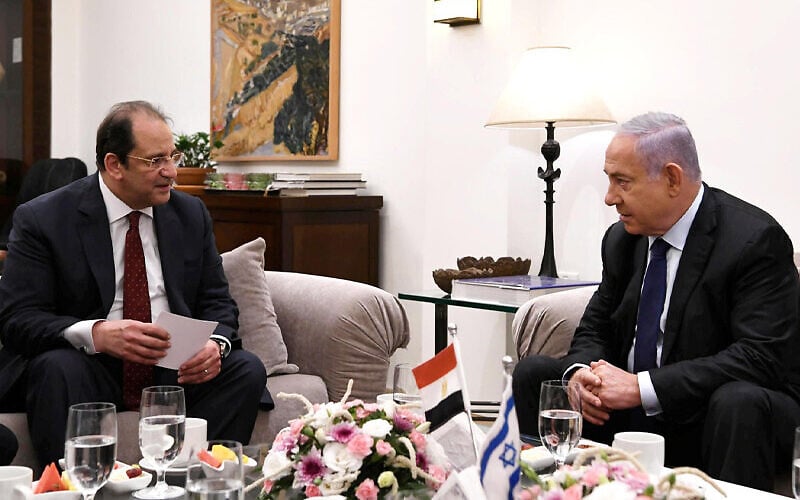
He is now absurdly claiming not only that he did not receive warnings from the UAE and Egypt of an imminent Hamas attack days before October 7, but that today, three years later, he still does not know which Israeli official met at Ben Gurion Airport on September 26, 2023 — 11 days before the massacre — with the Egyptian intelligence chief Abbas Kamel, who flew in for about an hour to, reportedly, urgently convey such a warning.
He has ignored truly desperate pleas from the current IDF chief for more combat manpower. Instead, he has insistently maintained the broad exemption from military service of almost all eligible ultra-Orthodox males, exacerbating the strain on the standing army and the reservist forces, and creating a corrosive sense of grievance and injustice among those Israelis who do serve, and work, and whose taxes subsidize the ultra-Orthodox community.
He has presided over a relentless decline in education standards, with devastating consequences for Israel’s economy and its capacity to innovate — including in the area of cutting-edge security development crucial to defense. Here, too, he has exacerbated the blight by refusing to ensure that young ultra-Orthodox men are given a schooling that would enable them to join a productive workforce.
He claims that he never accepted the terrible mis-assessment that Hamas was deterred and not interested in escalating hostilities against Israel. This, while denying that the hundreds of millions of dollars in funding he encouraged Qatar to deliver to Gaza for years helped build the Hamas war machine, denying claims supported by leaked official protocols that he rejected repeated recommendations from his security chiefs to kill Hamas leaders including Yahya Sinwar in the months before October 7, and despite having fired the defense minister who publicly warned in March 2023 that the rift in Israel over his judicial overhaul agenda was emboldening Israel’s enemies and weakening Israel’s defenses.
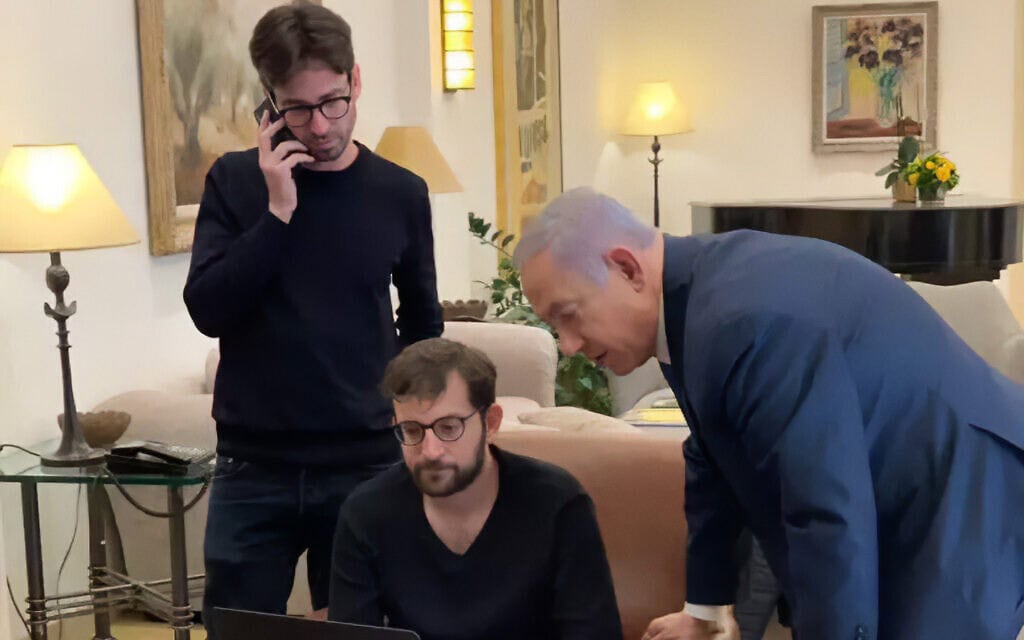
He has also continued to employ, as arguably his closest aide, a man who is charged with disseminating classified IDF intelligence information with intent to harm state security in the Bild leak affair, and who is suspected of working for pay from within the Prime Minister’s Office to promote the image of Qatar. Far from booting Jonatan Urich, as urged by the state prosecution, he continues to rely upon this suspected Qatarwashing aide. Doha’s suspected apologist is still inside the Israeli leadership’s inner sanctum, even after Netanyahu belatedly denounced Qatar from the UN podium last month for spending “untold billions to spread lies about my country,” brainwashing “young minds to hate Israel, hate America and hate the West,” and hosting “the Hamas butchers of October 7.”
***
Many people, probably most, in Israel and abroad assumed that Netanyahu was finished after October 7 — that the self-styled Mr. Security would either hang his head in shame and step away from public life for that most egregious of security failures, that the inevitable state commission of inquiry would require his resignation, or that the electorate, when the moment came, would metaphorically throw him down the stairs and out of the Prime Minister’s Office.
If the roles had been reversed, and Netanyahu had been the opposition leader, it is a fairly safe bet that he would have managed to rid Israel of the culpable prime minister.
And yet, with two weeks to go, the opposition Zionist bloc, unable even to agree on its own leader, is barely ahead of Netanyahu’s Likud and its far-right and ultra-Orthodox allies in some polls, neck and neck or even behind in others.
Netanyahu is moving effectively to maximize votes on the right, by galvanizing his supporters with TV appearances — including an hourlong performance Tuesday night on the obsequious Channel 14, where he and his wife Sarah are treated like royalty; via a tremendous investment of time and money in social media activity; and through the effective use of all the natural centrality in daily Israeli affairs afforded simply by being the incumbent.
In terms of basic political management, he has overseen the ascent from below to safely above the 3.25 percent national electoral threshold of Bezalel Smotrich’s Religious Zionism party. And he is working to crush maverick right-wing former general Ofer Winter’s People of Israel party, for fear that it might cost votes if it falls below the threshold or side with the opposition if it does make it into Knesset, including by personally targeting candidates on Winter’s slate.

The opposition Zionist bloc, by contrast, seems constrained by Gadi Eisenkot’s aversion to dramatic, declamatory campaigning, by the rivalries between its three would-be prime ministers — Eisenkot, Naftali Bennett and Avigdor Liberman — and by an apparent confidence that an understated, issues-based campaign, promoted via endless town-hall meetings and more personal outreach efforts, will win the day.
In the most basic, practical terms, it has not persuaded the Reservists party, hovering around the threshold, to drop out of the race — a difficult task, it should be said. But it has not even managed to convince Benny Gantz to give up, despite the remains of his Blue and White party polling far below the threshold.
The performances of the relatively small parties could well determine the result of the election.
The electorate is volatile, and the polls are, to my mind, extremely unreliable. How dependable can they be when they often poll a mere 500 or so respondents in a system where a few votes on election day can lift a party above the threshold, giving it four seats, while the lack of a few votes can drag a party below the threshold, costing it four seats, potentially swinging the election balance from 64-56 in favor of one grouping to 64-56 in favor of the other?
How many ultra-Orthodox women are those pollsters really reaching? How many of them answer a phone? How effective and accurate is polling in the Arab sector?
How accurately are they gauging turnout — in the usually staggeringly high-turnout ultra-Orthodox community, the often rather lower-turnout central Israel electorate, and the Arab community, all of which may prove to have been significantly motivated or demotivated by events of recent months and years?
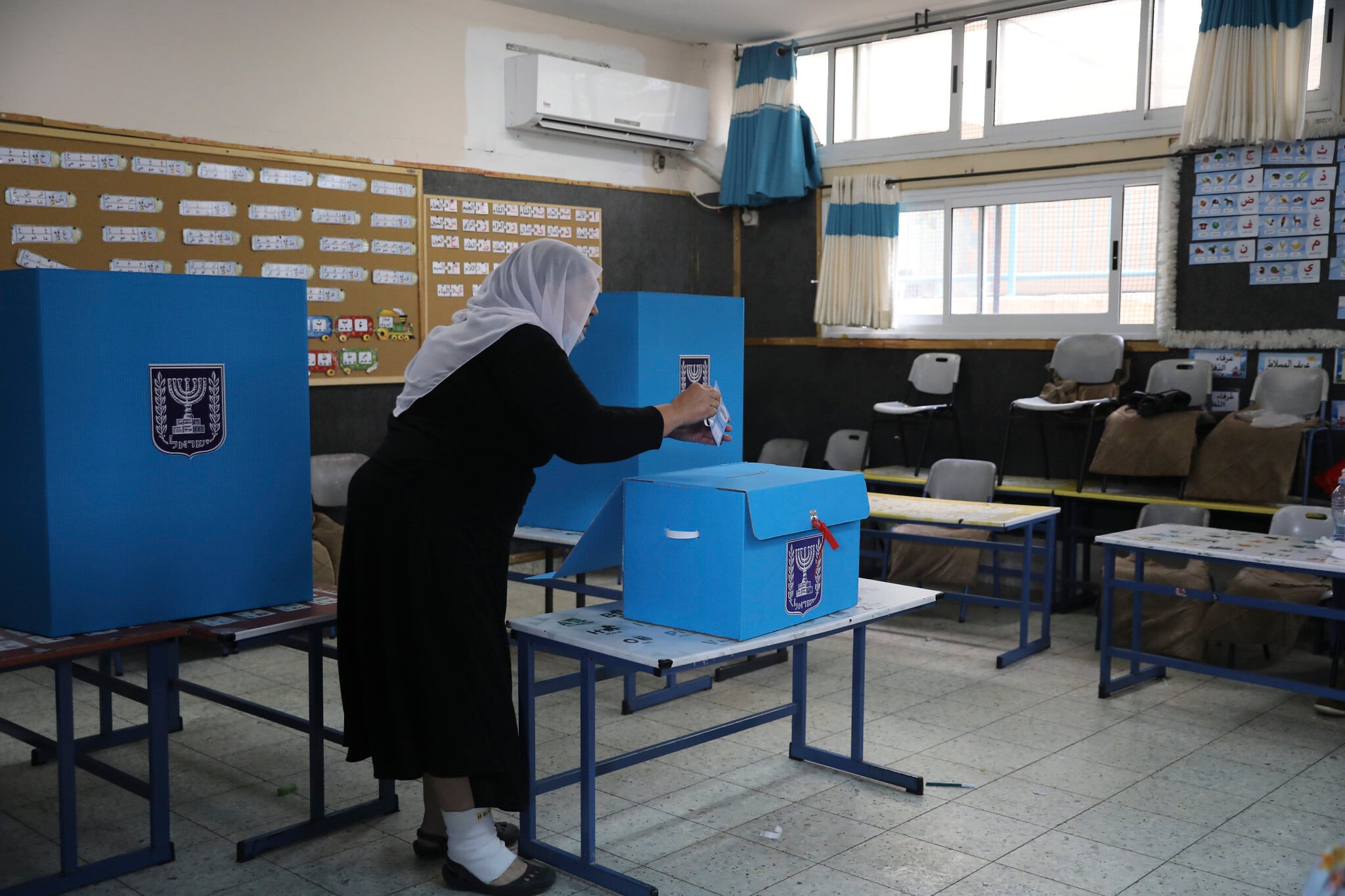
How might events just before or on election day itself impact the vote? Would a few scuffles and some cameras outside polling stations in Arab areas deter or deepen the insistence on voting, in a community beset by crime, potentially alienated or potentially determined to maximize its representation?
But for now, and for all the wide variations in polling, the opposition campaign is clearly not working well. The four-party anti-Netanyahu Zionist bloc is generally not polling anywhere near a 61-seat majority in the 120-member Knesset. And it has ruled out a repeated 2021-22-style coalition including Mansour Abbas’s mainly Arab Ra’am party — perhaps intimidated by Netanyahu, who on Tuesday carefully included Abbas on his latest list, alongside Iran, Hamas, Hezbollah and the Palestinian Authority, of enemies “who want to destroy Israel.”
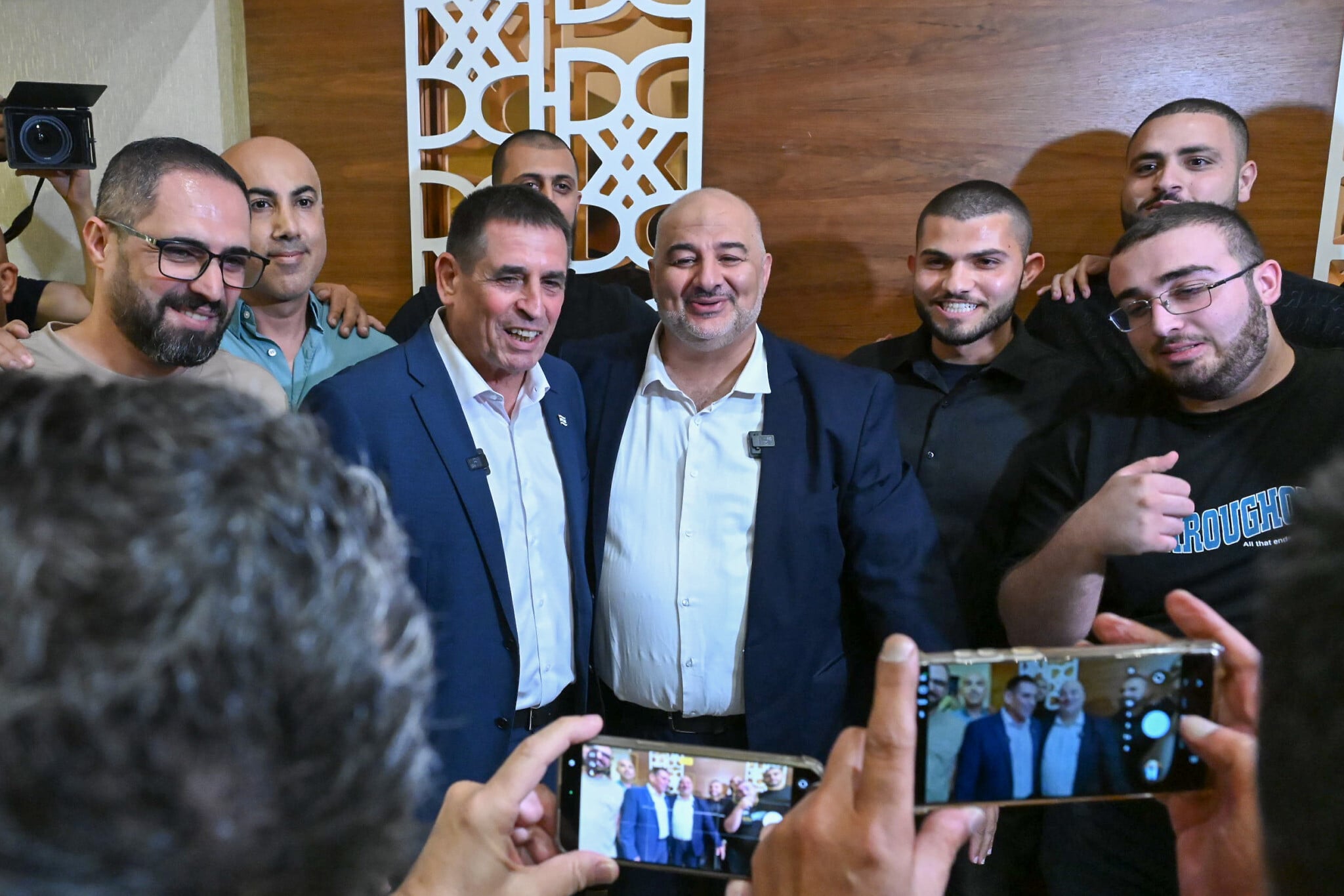
Scoring somewhere around the mid-50s in most polls, the somewhat disunited leaders of the bloc may well now be privately contemplating whether, if those poll showings prove accurate, they dare attempt to swear in a minority government, approved in part by abstentions or unasked-for support from Ra’am and the other Arab party, the Joint List, or whether too much of the public, especially among supporters of the Netanyahu bloc, would be too dangerously angered by such an attempt.
A minority government could order a state commission of inquiry and, with enough Knesset support, remake laws regarding ultra-Orthodox service, judicial selection and more, and then call fresh elections with core achievements to its name. Eisenkot has indicated that he could indeed try to do just that, but the shorter his bloc winds up from an outright majority, the more nationally divisive such a move would be.
***
It’s worth taking a moment to assess how differently Netanyahu might be campaigning if he were the opposition leader.
What impassioned political play would he have made of a prime minister refusing to step down or take responsibility for October 7? Of that prime minister refusing to establish a state commission of inquiry, ignoring the IDF chief’s pleas for more manpower, exempting the Haredim from military service at Israel’s hour of greatest need, presiding over the ongoing departure from Israel of tens of thousands of our best and brightest annually… Think of the multiple press conferences and rallies he might have organized. The personal denunciations he would have issued. The ceaseless efforts to pry defectors from that prime minister’s coalition.
Think about even the most recent fiascos. The deadly tragedy at the Lebanon border on Monday in which teenagers on a school hike were blown up by unexploded ordnance. The bitter accusations of government failure he would have leveled.

And what about the flydubai terrorist attack two weeks ago, in which almost 180 Israelis avoided certain death thanks only to their own and their Indian pilot’s extraordinary courage and resourcefulness? Can you imagine the political capital opposition leader Netanyahu would have made from that near-mass-disaster — castigating the pathetic non-oversight of foreign pilots by the corrupted Transportation Ministry, its patently incompetent minister and its allegedly moonlighting key staffers?
And when it turned out that hundreds of aircrew from countries with no diplomatic relations with Israel have been flying into Israel for years? I mean, we could all write the script: This dreadful government has allowed innumerable potential terrorists to put incalculable numbers of Israeli and foreign passengers at deadly risk for years, he would storm, sallying forth with fresh condemnations as each horrific new layer of absent vetting and inadequate security protection was exposed.
Some of this, to some extent, some in the opposition have tried to do. Some of it may have been considered, and rejected as over-the-top, too distasteful, too divisive.
***
Ultimately, the four main opposition parties appear to believe that the polls are underestimating their strength, and that their energetic nationwide direct interactions with voters will prove effective; Eisenkot, in particular, may believe that he’s doing it right since he’s risen from nowhere to frontrunning opposition candidate.
In the Eisenkot and Bennett camps, in particular, they assert confidence that they will inflict defeat upon Netanyahu and put Israel back within the spirit of the Declaration of Independence, striving to maintain a democratic state with a Jewish majority, aspiring to peace with those nations in the region who genuinely seek it while protecting itself from enemies bent on its destruction.

But Israel is a different Israel since October 7. It is bereft, grieving, widely traumatized, and yet to fully regain its former sense of security. It is also aware of its own astonishing resilience, of its courage, of the terrible cost but also the absolute necessity of its own survival.
Its Judaism is less liberal. Its younger generation, their lives on the line against enemy forces, may well be more hawkish. It is less reliably democratic, and if Netanyahu is elected, may not be a democracy at all, with all power concentrated in the elected political leadership.
The Zionist opposition parties believe in their souls that they would do an infinitely better job of running this country in every field — from its security and ongoing conflicts, to its strategic goals, its international relations, its economy, education, the delicate balance of power and authority between its executive and its judiciary, and much more besides.
They are convinced that another victory for Netanyahu, who continues to denigrate all opponents as dangerous to Israel when it is he who presided over the nation’s single biggest catastrophe, puts Israel’s very existence in peril.
They want to believe that they have done enough and are doing enough to persuade a substantial majority of the electorate of the danger posed by Netanyahu, and of their capacity to rectify the damage he has caused and, the way they emphatically see it, save the nation.
The question is twofold: Are there enough Israelis who want the Israel that the Declaration of Independence envisages? And are the Zionist opposition parties doing everything that is needed to win their votes on October 27?
—
This Editor’s Note was sent out earlier on Wednesday in ToI’s weekly update email to members of the Times of Israel Community. To receive these Editor’s Notes as they’re released, join the ToI Community here.