 Add ToI as a Preferred Source on Google
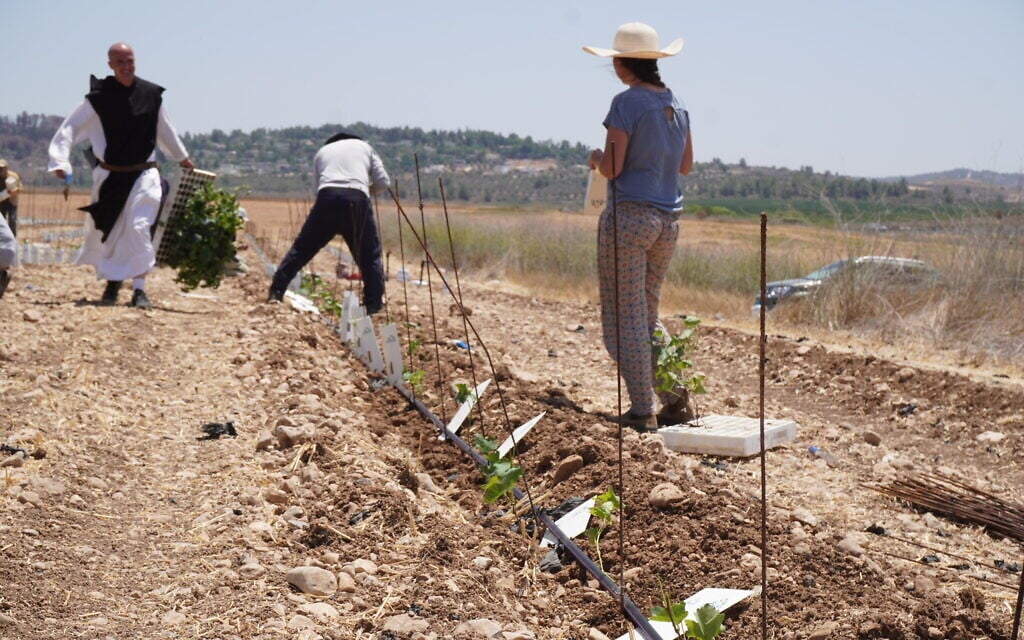
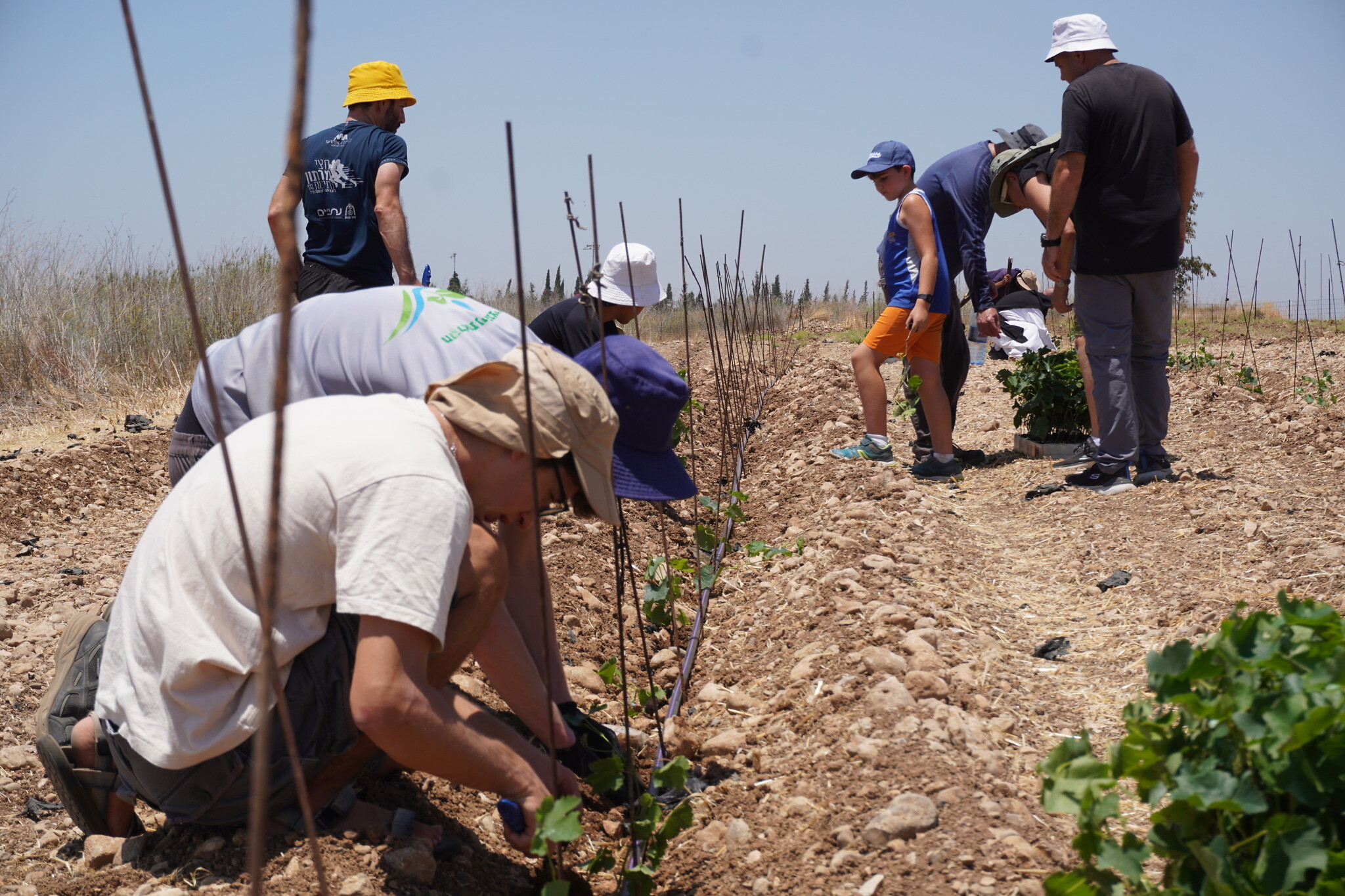
LATRUN — A few dozen Israeli volunteers knelt in the dirt on Wednesday, planting sapling vines one by one as the midday sun beat down. Toiling alongside them were two robed young men with shaved heads, carting saplings back and forth and staking metal poles in the earth for the vines to climb.
These men are Catholic monks who live and work at the Latrun Monastery. Between prayers, which take place seven times a day, they run a vineyard and olive grove belonging to the French abbey in Israel’s Judean Foothills, producing the wine and olive oil that comprise their sole livelihood.
Most years, the 20 monks at Latrun tend to the monastery’s grapevines and olive trees with minimal outside help, working the land alongside an extra six to nine hired laborers. But this summer proved much more difficult after late-April and May wildfires devastated large swaths of vegetation in the outskirts of Jerusalem.
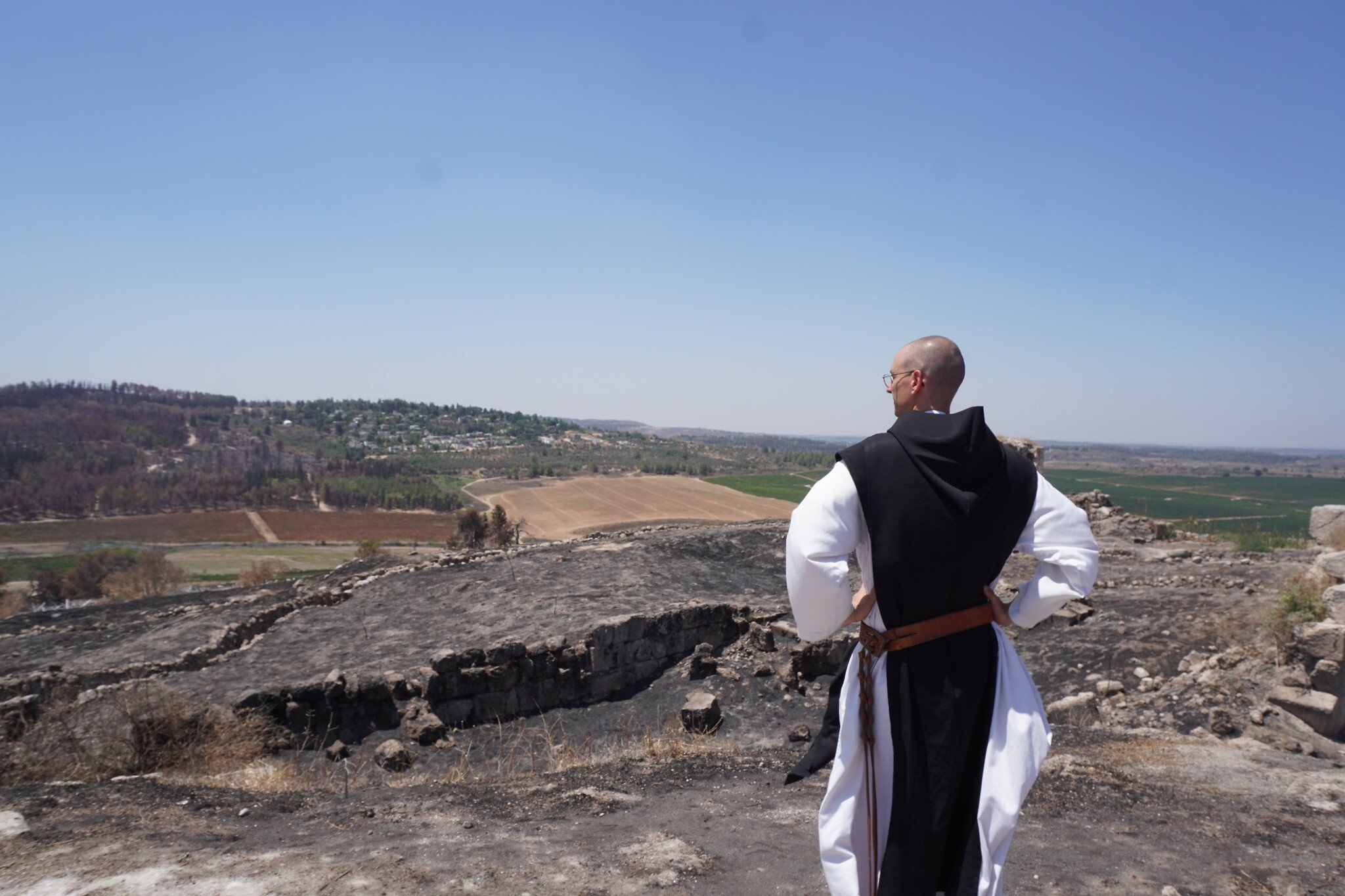
From a hilltop near the monastery, one could see patches of scorched earth dotting the surrounding vineyards and olive groves. Faced with the daunting task of replanting scores of vines and maintaining the burnt olive trees, the monks began searching for volunteers.
“In the beginning, I had found three people who previously helped us — they spread the word,” said Brother Daniel, one of the monks working in the field. “Sometimes we found people who brought groups, and it very quickly grew to more and more people.”
Brother Daniel told The Times of Israel that the monks initially started recruiting Israelis in 2023, after West Bank Palestinian laborers they had hired were barred from work when the Israeli government suspended their permits in the wake of the Hamas-led October 7 atrocities in southern Israel and the ensuing Gaza war.
But, he noted, this year has been “absolutely special” since 80 Israeli volunteers signed up to help the monastery bounce back following the devastating fires.
Rebuilding after the fires
“We’ve always had some little fires in this place, especially at the beginning of summer, but they hadn’t been as difficult as this one,” said Brother Athanase, who recalled the spread of the blazes that day while showing The Times of Israel around the monastery’s land.
Standing on a ridge near the ruins of a Crusader fortress, the monk pointed to distant rows of scorched shrubbery — grapevines that had been destroyed in the fire.
“We thought at first it was a small fire. The firemen came with a truck and started to work, but then we saw planes… with the wind, all the fire [then] jumped to the vineyard,” he said.
Brother Athanase and his fellow monks began to worry once they saw firefighters retreating from the still-raging conflagrations. Ten minutes later, the monks received a call from the fire service telling them to evacuate the monastery.
“We had to evacuate quickly, we didn’t manage to take any clothes or anything… without any idea of when or if we would come back,” Brother Athanase said. After 36 hours, firefighters managed to fend off the flames to reach the monastery itself.
But the fires laid waste to much of the surrounding area, destroying around 1,000 olive trees and causing damage to 70% of the grove. The total damage done to the vineyard was unclear.
As this week’s volunteers focused on replanting a vine, Brother Athanase said the monks plan to enlist their help in taking care of the burnt olive trees as well — bringing them water, pruning them and covering them in tree paint to protect against insects and other pests.
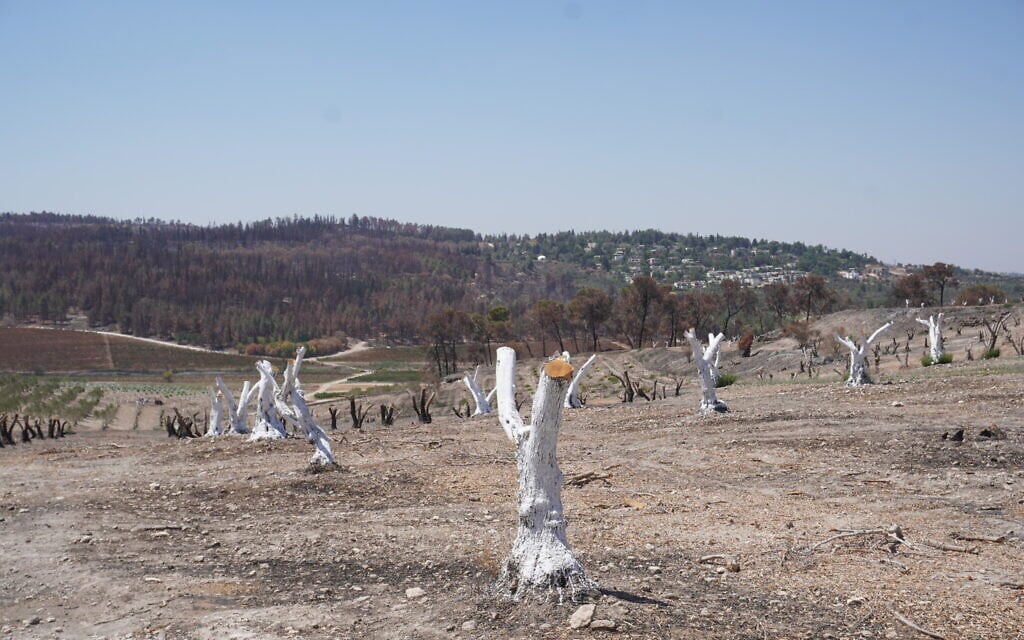
The wounded olive trees will take at least four years to once again bear fruit, according to the young monk, and that can only happen if they are well-maintained throughout this time.
‘Not something you do every day’
One of the first volunteers to sign up was Gil, a recently retired police investigator from Modi’in who has been using his newfound free time to pay frequent visits to the monks, some of whom he’s become quite close to.
This wasn’t Gil’s first time volunteering on the vineyard, but he noted that before the fires, he and others mainly helped harvest grapes and olives, rather than plant new vines.
“It’s not something that I’ve done before — they taught me this today. It’s not something you do every day, planting a new vine. Their work is normally just to harvest the grapes or the olives,” he said.
Another volunteer, who came from the south, found out about the opportunity from a posting in a WhatsApp group called “Tzav 8 for Agriculture” — referring to the call-up order IDF reservists get in times of national emergency.
And while Yisca Harani, a scholar of Christianity and well-connected activist for interfaith causes, wasn’t present on Wednesday, Brother Daniel said she was responsible for recruiting around half the Israeli volunteers. Thus, many of the Israelis working in the fields that day already had an interest in Jewish outreach to Christians living in Israel.
The work itself wasn’t particularly strenuous, but the heat took a toll. Several volunteers told The Times of Israel that one man suffered from heat stroke while in the field, causing a brief panic. He was taken back to the monastery and stopped working for the day.
At around noon, the Israelis gathered under the shade of a bridge for a break. Monks brought out food to the weary volunteers — baguettes, a myriad of cheeses, white wine and watermelon.
During the break, Brother Daniel got in his truck and drove back to the monastery. Monks were congregating in the chapel for the 12:15 p.m. prayer. Brother Athanase went to ring the bells announcing the service, and soon enough, men in white robes, black scapulars and brown leather belts began to trickle into the sanctuary.
Upon entering the 19th-century building, the monks bowed to a golden cross at the front of the prayer hall before taking their seats in one of the pews.
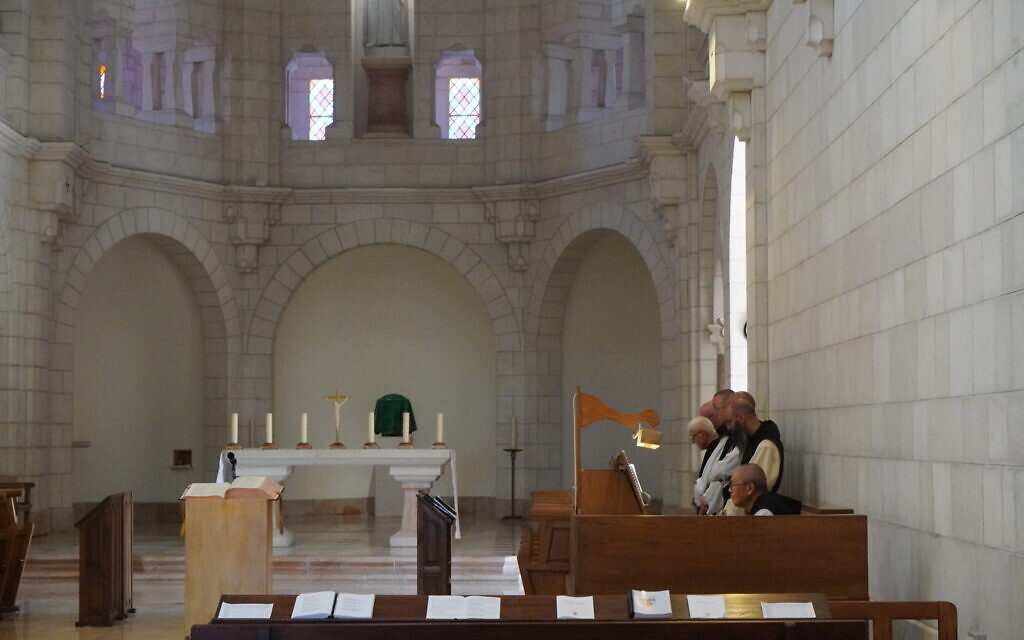
The service was held in a mix of Latin and French, consisting mostly of soft hymns and two brief readings from the Christian Bible.
After the service, the head of the monastery, Dom Patrick, spoke to The Times of Israel, explaining the service and the philosophy of this particular monastic order, whose adherents are known as “Trappists” after the French La Trappe Abbey, where the order was born.
Unlike some other orders that swear off labor, the Trappists believe in “ora et labora” — a Latin phrase meaning “pray and work.” To successfully blend prayer and physical labor, the monks must follow a tight schedule.
“Every day there is time for work and reading, but prayer comes back, over and over, to emphasize that it is the most important part of our life,” said Dom Patrick.
The monks rise each day at 3:30 a.m. for their first prayer of the day, then attend the Mass service — the core of Catholic liturgy — at 6:30 a.m. before setting out to work after sunrise.
“It’s important for us to win money with our work, not just to take money from other people,” explained Brother Athanase earlier on the hilltop, casting a glance at the burned olive trees and grapevines on the horizon. “Working is our living way; we cannot live without work.”

The Times of Israel Community.