

Mourning IDF veteran slain by police, alienated Bedouin say community souring on state
A once positive relationship between community and cops has been replaced by deep distrust of Border Police, with younger Bedouin showing signs of deepening estrangement from Jewish state amid claims of worsening discrimination

 Add ToI as a Preferred Source on Google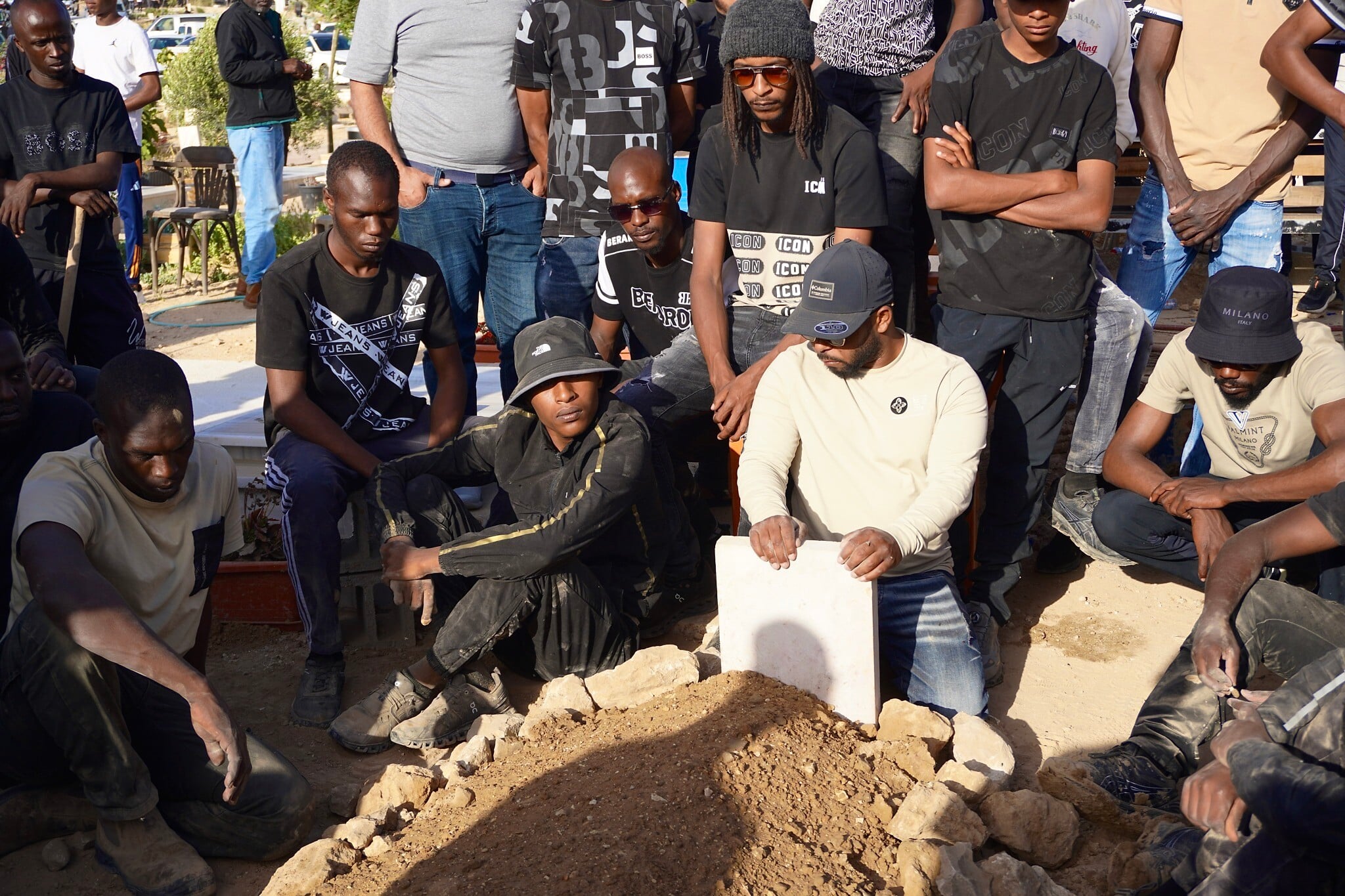
RAHAT — A steady stream of mourners slowly trickled into a pavilion just down the hill from the Bedouin city’s open-air market earlier this month, seeking to pay their last respects to a resident shot dead the day before.
As the noonday sun shone overhead, boys rode bicycles around an unpaved lot while their fathers sat in plastic chairs arrayed around the pavilion, idly sipping coffee.
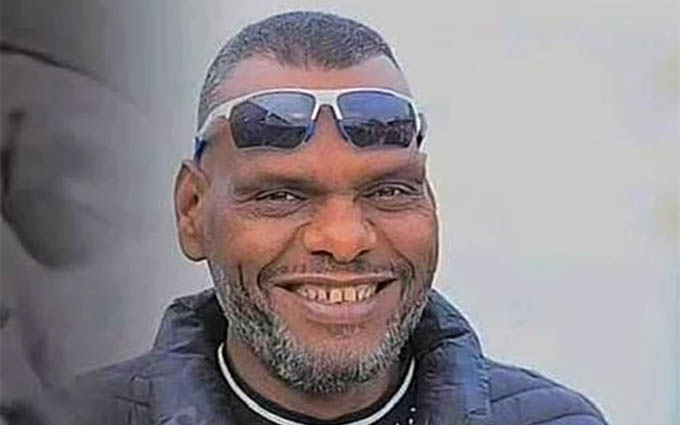
Some who arrived offered their condolences and then went on their way, but most stayed to await the arrival of the body of Ahmad al-Naami from the forensic lab where it was undergoing an autopsy. His family hoped to be able to lay him to rest later that afternoon, immediately following prayers in the mosque.
Naami, a 50-year-old IDF veteran, had been beset by a myriad of health problems, family and friends said. He had a diabetes diagnosis, suffered a stroke four years ago that left him barely able to walk and just last month, doctors found a cancerous tumor developing on his brain.
The father of seven was supposed to undergo knee surgery Saturday to alleviate his walking difficulties, but never made it onto the operating table. Hours before his appointment, he was shot dead by a reservist in the Border Police.
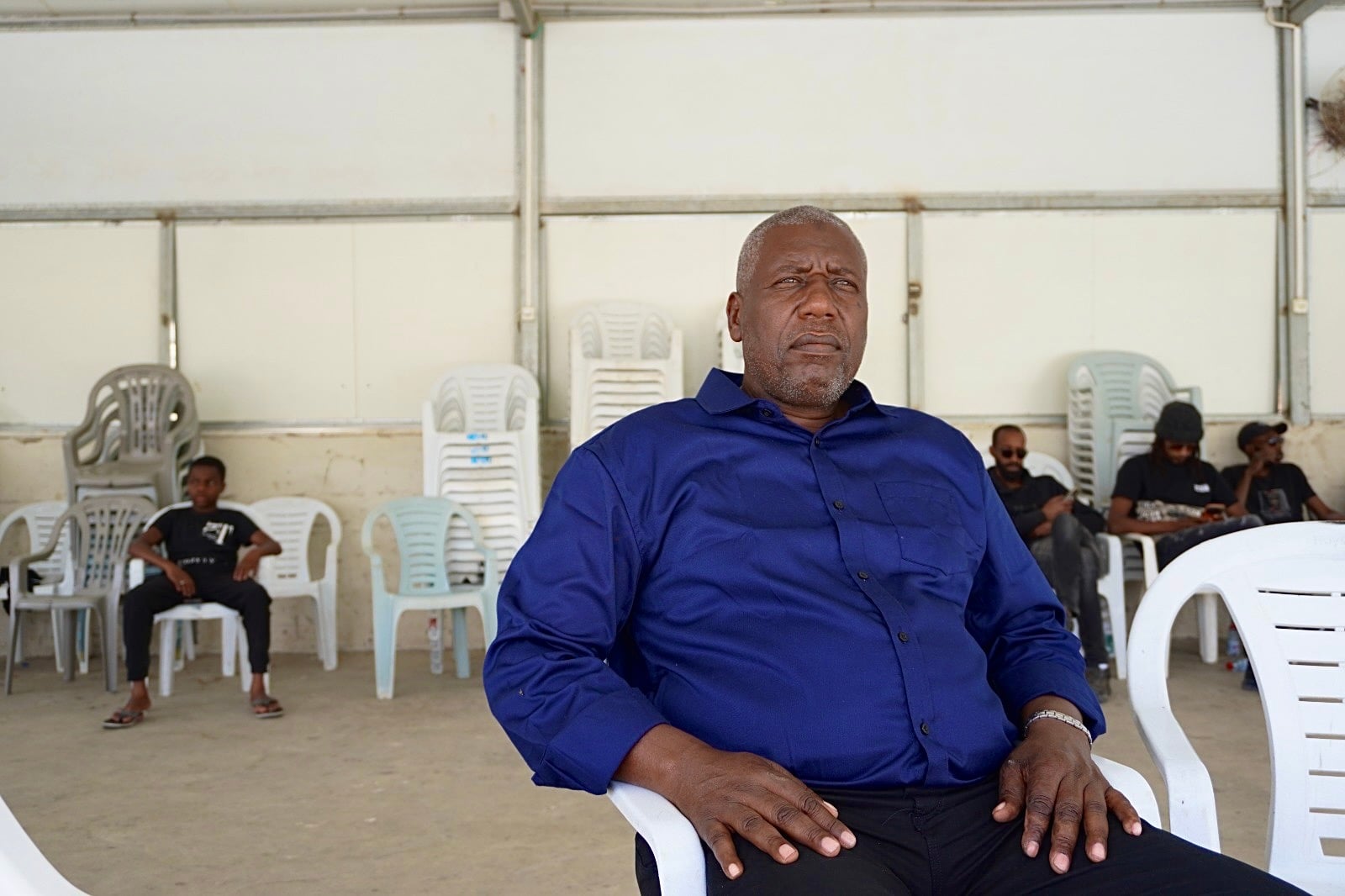
“It’s heartbreaking,” said Naami’s 52-year-old brother Srour ‘Falah’ al-Naami, struggling to refer to his slain sibling in the past tense as he spoke to The Times of Israel from the mourning tent. “To suddenly lose someone I was so close to.”
For many in the mourning tent and beyond, Naami’s killing was a tragic reminder of the community’s deepening estrangement from the State of Israel, which has become especially pronounced among younger people. Many blame inequality and rising anti-Arab sentiment for reversing decades of positive integration into Israeli society.
Srour recalled a period when a large portion of Rahat’s men would go to the army. “It’s not like this anymore, because the policy in Israel has shifted entirely. Now most young men don’t enlist,” he said. “I have nephews who are serving, but it’s a tiny percentage in Rahat, it’s not like how it once was.”
Naami is the fourth Arab man to be shot by police this year, and the second from the Bedouin community. Though the vast majority of the crime wave that has beset Arab society in recent years is based in the north of the country, where most Arab Israelis live, law enforcement units operating under ultranationalist National Security Minister Itamar Ben Gvir have concentrated their efforts on Bedouin towns in the south, sparking intense friction.
Critics say the activities, which Ben Gvir says are aimed at restoring “sovereignty” in the face of rampant lawlessness, along with other discriminatory government policies, have fueled a process that has helped drive a wedge between it and the state.
“It doesn’t matter who you are, whether you served, we’re all the same in the police’s eyes,” lamented Jamal, one of Naami’s cousins, during the car ride to the cemetery.
According to the police’s account of the shooting, the 3 a.m. incident occurred after officers flagged Naami’s vehicle as “suspicious” and told him to pull over. When Naami didn’t listen, they pursued him in his car until he disembarked, then chased him down on foot and arrested him.
Police said Naami attacked officers and “forcefully resisted arrest” and the reservist — sensing his life was at risk — shot the man.
The slain man’s brother rejected this version of events as a collection of “lies and falsehoods.”
“He is fully disabled; a 10-year-old kid could outrun him. What kind of trained police officer cannot arrest a man like this?” he said bitterly. “And what was the arrest for, in the first place? There was no reason that they gave for it.”
Initial findings from an internal Border Police probe obtained by Haaretz indicated that Naami, who was unarmed at the time, was killed by a single bullet to the back, which struck his heart.
The officer who shot him was interrogated by the Department of Internal Police Investigations, which barred him from police facilities for a period of two weeks. The probe is ongoing.
At the mourning tent, Naami’s relatives were joined by his former brothers-in-arms from the Bedouin reconnaissance unit he served in. Rahat Mayor Talal al-Qrenawi made a brief appearance and later showed up at the funeral. Female relatives, meanwhile, were cloistered in the home of the deceased.
Naami, according to his brother, ran a cosmetics shop with his wife and children in the city. Before the onset of his health problems, he worked at an ice cream factory in Beersheba.
“It’s not easy for his kids, his wife, his siblings and certainly not his mother,” Srour said. “His youngest and only son, a 12-year-old, would always go with his father to the mosque at 4 a.m. for the maghreb prayer.”
It was not the first time he had gone out on a pre-dawn drive around the neighborhood, according to his brother, who insisted that police had no concrete reason to arrest him.
Even if they did have a reason, he insisted, “Police have so many means to arrest a person without killing him, so why shoot him?”
‘We felt comfortable with police a few years ago’
The fatal shooting occurred less than a week after officers were filmed beating an Arab public prosecutor, breaking his nose during a house raid over a noise complaint. The investigation into the cops is ongoing, but footage from the raid appeared to show officers had pounced on the lawyer unprovoked.
Of the four Arab citizens killed by Israeli police in 2026, three were killed by officers in the Border Police or National Guard, a nebulous force within the Border Police championed by Ben Gvir.
Unlike regular police, the Border Police force is made up of young conscripts and operates outside the civil law enforcement hierarchy, which is structured from districts down to precincts and stations. The force may be sent to operate in a Palestinian village in the West Bank but is also deployed in Israeli cities, depending on operational needs.
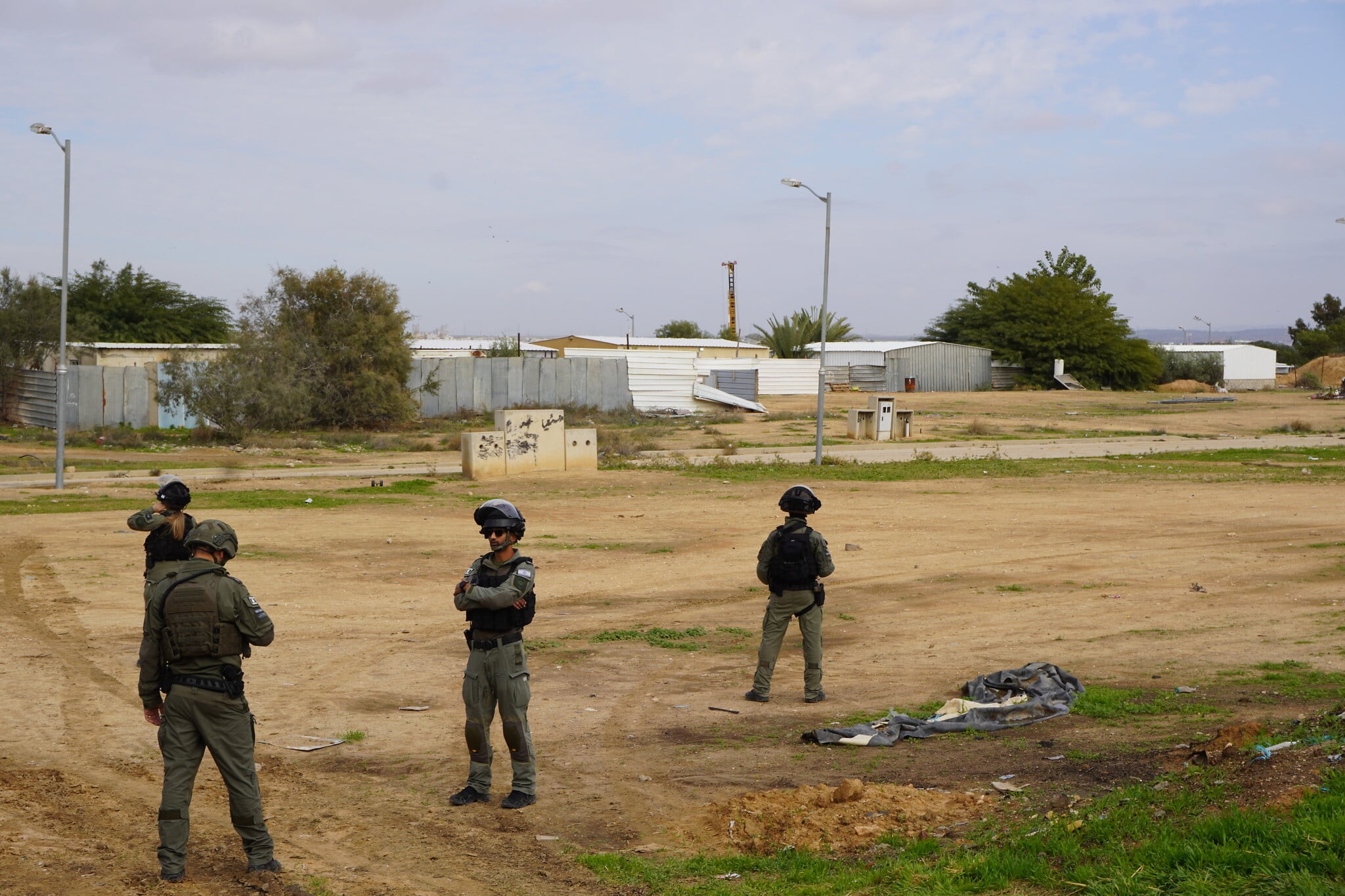
In April, the State Comptroller reported that police stations in the Negev, where most Bedouin live, were consistently understaffed — short a total of 205 officers. Border Police did not share the problem.
Ben Gvir’s term as national security minister and the sudden influx of gendarmerie policing forces into Bedouin communities on his watch is often blamed for the worsening relations between the minority and the state, though ties with authorities were already growing fraught before the current government took power.
Jamal confessed that when his two sons were deciding on where to enlist in the army, he forbade them from enlisting in the Border Police, citing what he described as its culture of “violence and barbarism,” a charge that has long hounded the gendarmerie force.
Instead, one son enlisted in a majority-Jewish unit, hoping to integrate more deeply into Israeli society, while the younger enlisted as a tracker.
Unlike the tensions with Border Police stationed in the area, many older Rahat residents said their relations with the local police are congenial. “We live with them day-to-day, they help us, we help them,” Srour said.
Speaking generally, he insisted, “Really, we felt comfortable with the police a few years ago.”
But younger Bedouin at Naami’s funeral did not share Srour’s rosy nostalgia, underlining a pronounced feeling of cynicism and jaded detachment seen in many of their generation, who are less likely to serve in the army or speak Hebrew with the same fluency as their parents.
One mourner — a young man from Rahat in his 20s, who recently moved back home after studying dental medicine in Tbilisi — expressed little shock at Naami’s killing, noting that “this isn’t the first time” such a thing has happened in the city.
In 2015, when he was growing up, the township was rocked by unrest following the police’s deadly shooting of 22-year-old Sami al-Ja’ar during a drug bust in the neighborhood. He had been returning home from work, his father told outlets at the time. Police said he was not connected to the bust.
Some 18,000 people coming from Arab towns and villages across the country attended al-Ja’ar’s funeral, which descended into brutal clashes between mourners and police. Young men threw stones at officers and police responded with tear gas and rubber bullets.
One man, 45-year-old Sami al-Zayadna, died of a heart attack following tear gas inhalation during the funeral and 23 injured attendees were taken to the hospital, including the mayor, according to a Maariv news report at the time.
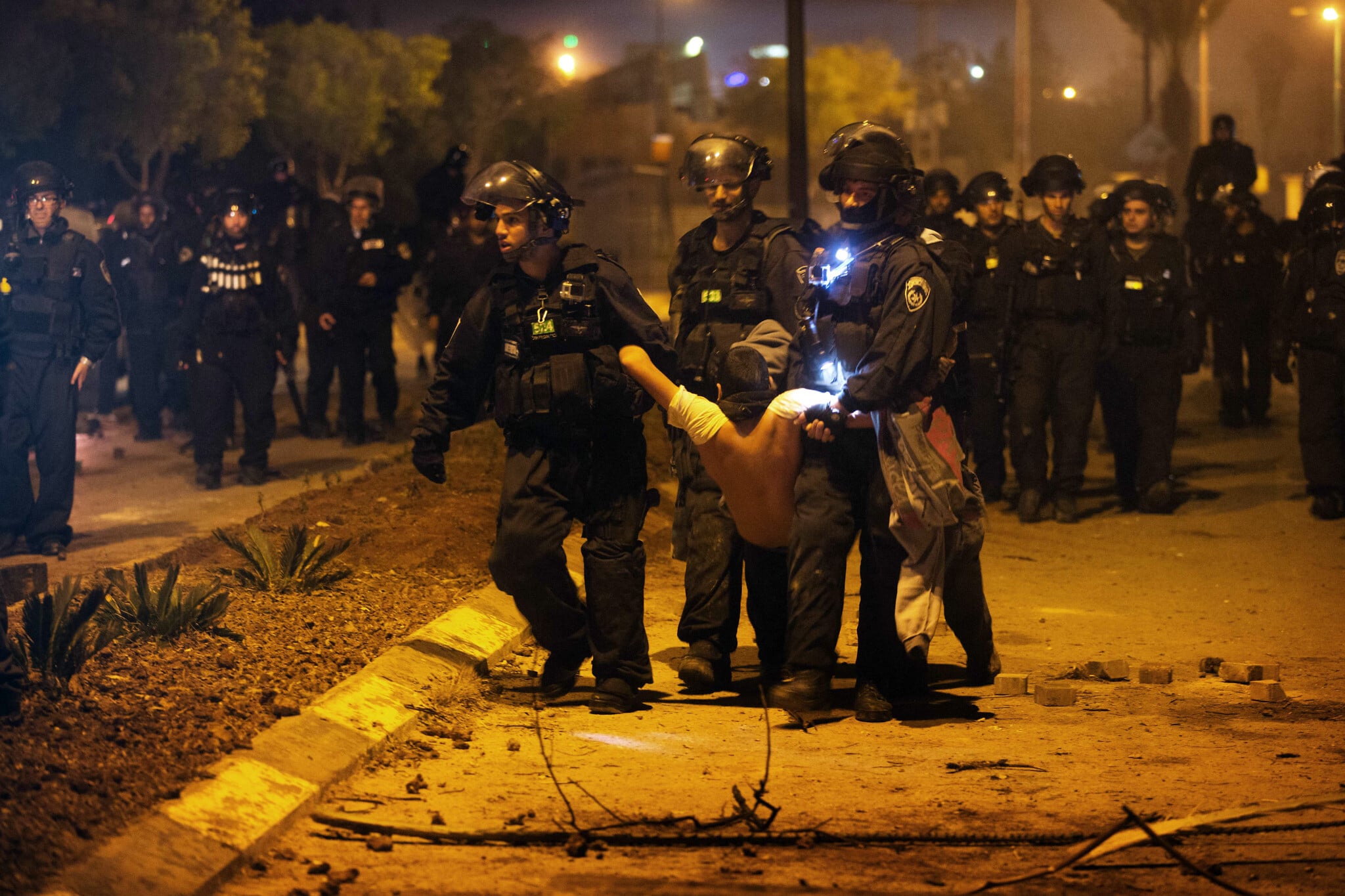
Clashes escalated after Zayadna’s death. A pipe bomb was thrown at police, causing no injuries but damaging a cruiser. Streets filled with young men clashing with law enforcement.
At Naami’s funeral, at a cemetery just west of Rahat, only a handful of police stood at the entrance to the graveyard. The family made sure to keep the event largely private, without speeches from politicians.
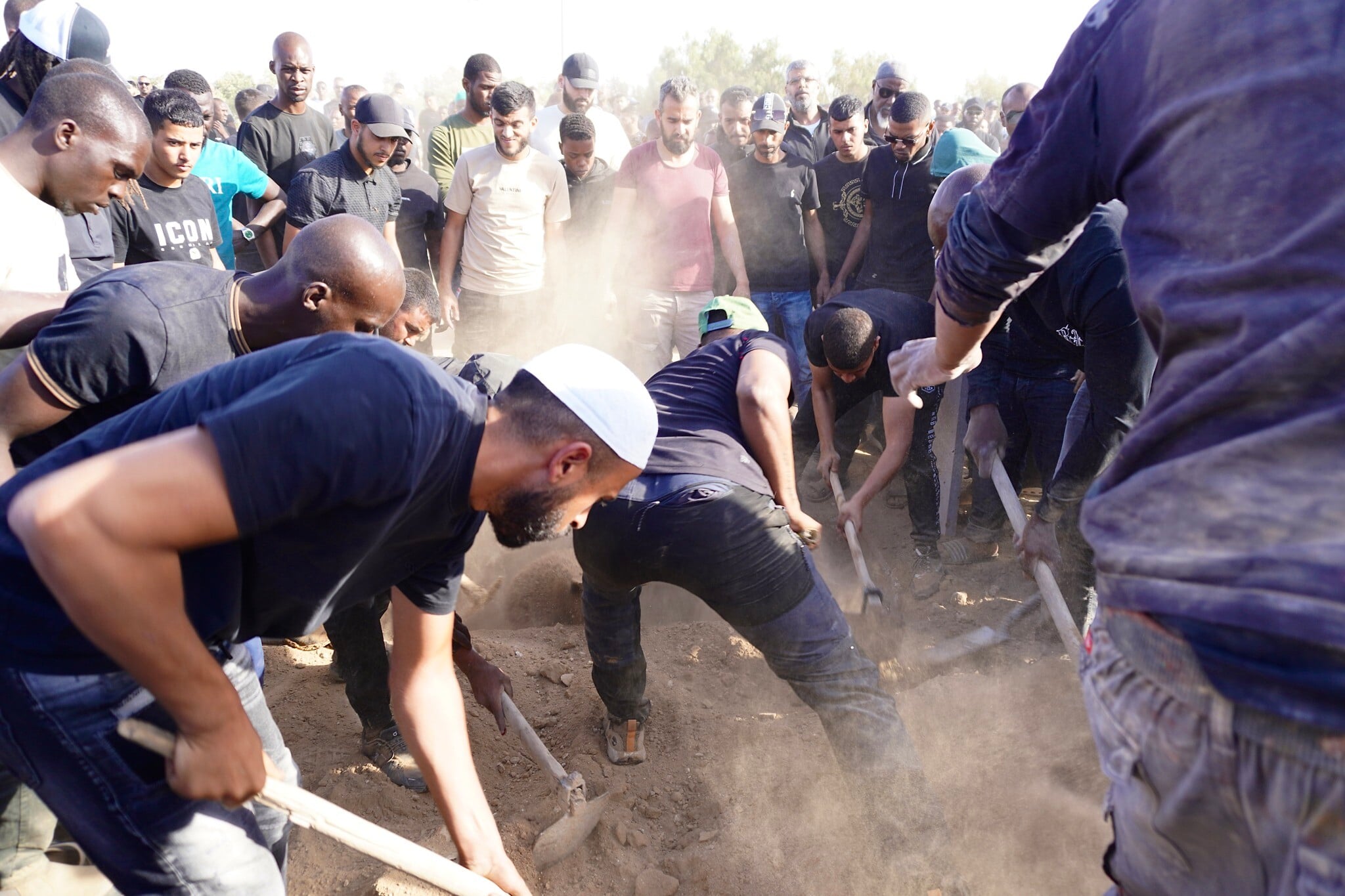
Men who had arrived at the cemetery in a convoy from Rahat lined up to pray before the body, wrapped in cloth. Pallbearers lifted Naami’s body and brought it to the empty plot.
Children trying to keep their balance on a loose mound of dirt watched as he was lowered into the ground. They were forced to get down when adults began to shovel the earth over Naami’s body.
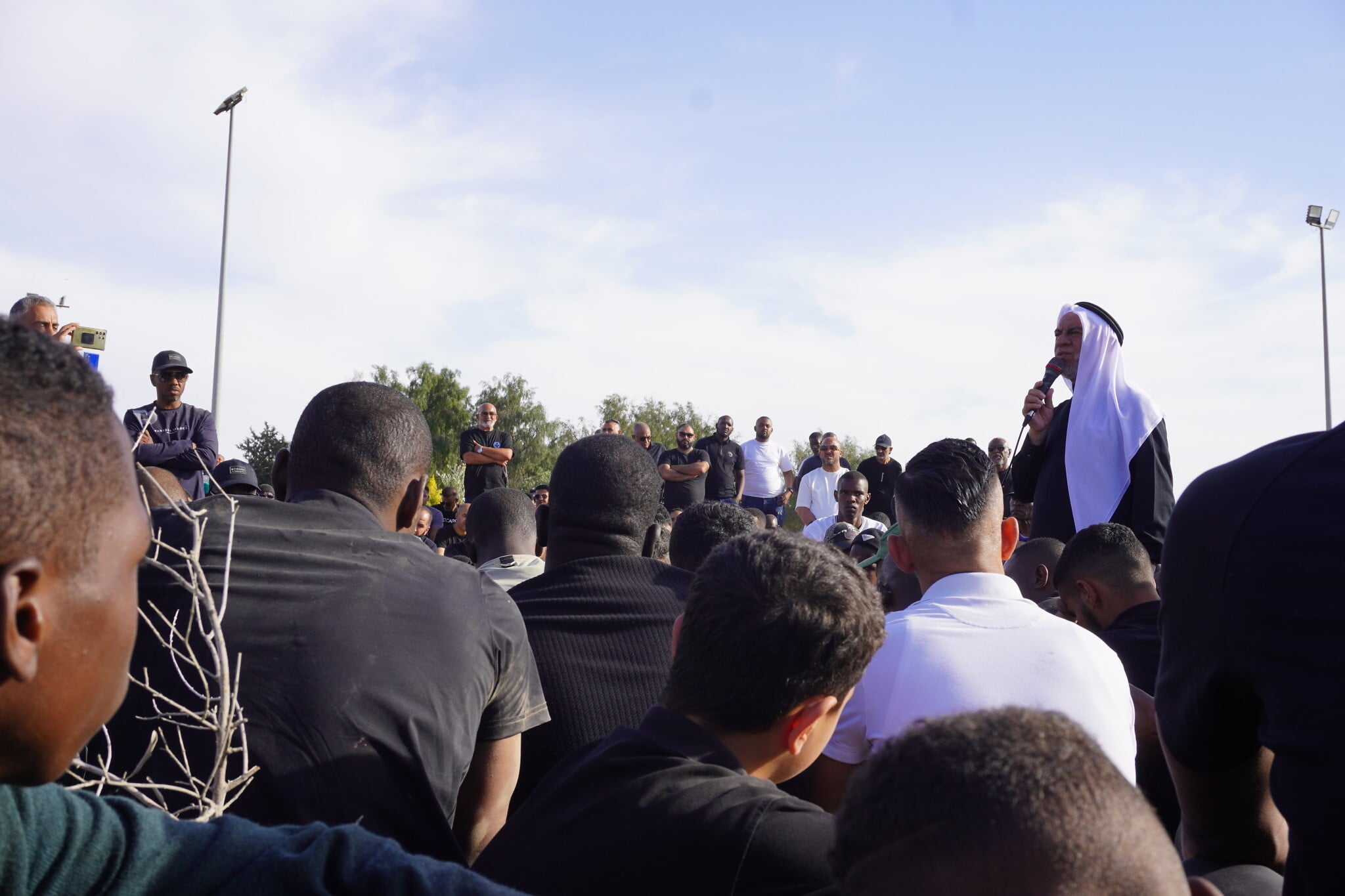
As mourners sat on the ground beside the fresh grave, a shiekh addressed them, declaring that the officer who shot Naami had been out to get him.
Stay out of trouble, he counseled the young men, deprive the cops of “any opportunity” they might seek to draw their weapons.
While there has always been distrust and alienation between Bedouin and state authorities, there are signs that the gaps are growing larger.
The April State Comptroller report, which warned of a complete erosion of “governance” in the Negev, was pilloried for describing the minority as a security threat, pointing to spiraling crime fueled by arms trafficking, widespread polygamy and Bedouin men marrying Palestinian women, pushing society away from Israel.
“If Israel were to give Bedouin residents “the same conditions that Jews in Israel receive — governance in its positive sense of services and equal opportunity — most of the need for enforcement will become unnecessary on its own,” asserted the Regional Council for Unrecognized Villages.
Trends seen in Bedouin society mirror those among the country’s Arab minority at large.
Younger generations of Arab Israelis are markedly less proficient in Hebrew than their parents, blocking access to much of the Israeli job market.
Among the Bedouin, the alienation is also reflected in dropping military enlistment rates, though many young men still volunteer for service.
According to data analyzed by Zman Yisrael, The Times of Israel’s Hebrew-language sister site, the number of Muslim Arab IDF recruits — the vast majority of whom are Bedouin — dropped some 40 percent from 2022 to 2023.
But there are also hopes that the widening chasm will reverse course, especially if the government is replaced in the upcoming elections. Ra’am, a pragmatic Islamist party, has seen its popularity climb as it has opened up to cooperation with political parties from the Zionist mainstream and could once again find itself at the government table, a throwback to harmonious relations between the community and the state.
Among those supporting the party is the slain man’s cousin, Jamal.
“If Arabs vote en masse, we can change the government,” he said.



The Times of Israel Community.