

Lebanon’s Aoun tells Iran to stop ‘interfering’ in its affairs, demands Israeli withdrawal
In Independence Day speech, president urges Hezbollah to disarm, vowing ‘no persecution, no revenge’ if that happens; tells Israel: ‘Withdraw from every inch… Stop your attacks’
 Add ToI as a Preferred Source on Google
Lazar Berman is The Times of Israel's diplomatic reporter
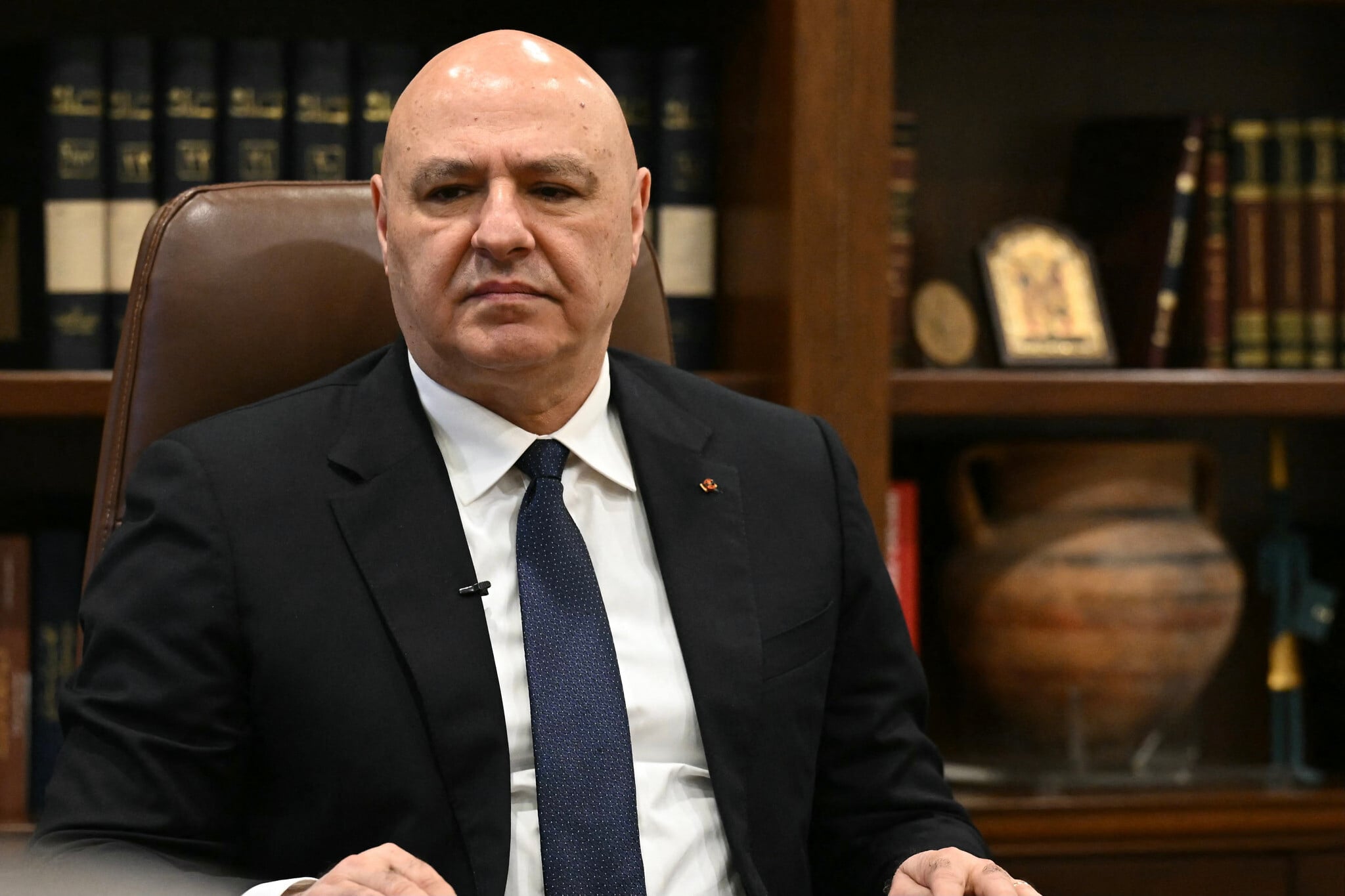
Lebanese President Joseph Aoun launched a lengthy rebuke of Iran in an Independence Day address, arguing that the Islamic Republic does not have the right to interfere in Lebanon’s internal affairs, as it long has via support for its local terror proxy, Hezbollah.
“To those responsible for Iranian interference in Lebanon, I say with clarity,” he said, “we respect the Iranian people and their civilization, and we want relations of friendship and mutual respect with Iran, as with all other countries.”
“But friendship between countries does not give one the right to interfere in another’s decisions,” Aoun continued in a speech on the eve of 83rd anniversary of Lebanon receiving independence from France.
“What you do not accept for your own country,” he said, “do not ask Lebanon to accept for its country.”
Hezbollah, whose arsenal has long outstripped that of the national army, pulled Lebanon into the war with Iran on March 2 in support of its Iranian patrons, prompting massive Israeli airstrikes and a subsequent ground invasion of southern Lebanon before an agreement between Jerusalem and Beirut to end the conflict was reached in June, though sporadic fighting has continued.
The negotiations have been hampered by the Shiite group’s refusal to comply with the deal, which calls for the IDF to withdraw from areas of southern Lebanon it held in parallel with the deployment of the Lebanese army, starting with so-called pilot zones, under the condition that Hezbollah disarms. But the Iran-backed terror organization has refused to do so despite heavy pressure from the country’s non-Shiite leaders and international actors.
???????????????? Lebanese President Joseph Aoun:
“To those responsible for Iran’s interference in Lebanon, I say with equal clarity that we respect the Iranian people and their civilization, and we seek relations based on friendship and mutual respect with Iran, as we do with all other… pic.twitter.com/I65z2fIb5n
— Political Pen (@politicalpen_) November 21, 2026
Hezbollah has been badly weakened by recent wars with Israel since 2023.
In his speech, Aoun said that his country was facing two intertwined challenges — Israeli occupation and Iranian interference, especially by backing weapons “outside the authority of the state,” a euphemism for Hezbollah, which for decades has resisted UN-mandated demands for disarmament.
“The era of weapons outside the state is over,” Aoun said, allowing that it had been useful in an earlier time.
“Then, in a later phase, it exhausted its people, its community, its nation, and its country,” Aoun said. “It inflicted heavy losses on them and on us. When it became openly devoted to non-Lebanese causes, you must accept that. And you must hand over your weapons.”
When that happens, he promised there would be “no persecution, no revenge, no retribution and no spite. No obsessions with power, madness, fear or intimidation.”
He also lamented “a campaign by forces in Israel calling for the continued occupation of our land because we told them openly and directly: Withdraw from every inch of Lebanese territory. Stop your attacks. And return our captives.”
Israel’s army still carries out strikes, shelling and detonations in southern Lebanon, where its forces are operating in a self-declared security zone running around 10 kilometers (six miles) deep along the border.
“There can be no genocide of our people,” claimed Aoun. “I say to those who believe that continued occupation and the use of force can provide security: Occupation does not create security, and destruction does not create peace.”
Aoun stressed that withdrawal was “the only sure path to establishing security and stability along our internationally recognized southern border and fostering a state of peace there, as an essential first step toward a region enjoying a just and lasting peace.”
AFP contributed to this report.



The Times of Israel Community.