

 From the Liveblog of
Saturday, November 21, 2026
In conditions for ‘unity’ coalition, Likud demands end to ‘political boycotts’ of Netanyahu, formal renunciation of ‘terror supporting’ parties
 Add ToI as a Preferred Source on Google
Ariela Karmel is a political correspondent at The Times of Israel. She previously reported for Calcalist and Haaretz. She holds an MA in Middle Eastern and African History from Tel Aviv University and a BA in Political Science from the University of British Columbia.
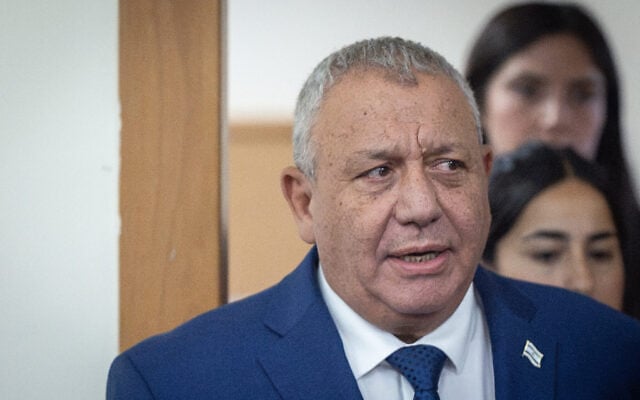
Prime Minister Benjamin Netanyahu’s Likud party publishes a list of conditions for establishing a national unity government with the bloc led by Yashar chairman Gadi Eisenkot, including an end to “political boycotts” of Netanyahu, amid ongoing talks between the two parties.
In a statement, Likud demands an end to “all personal attacks and incitement” and political “boycotts” against Netanyahu, his government and political parties, an apparent challenge to Eisenkot’s refusal to serve in a Netanyahu-led government.
The published conditions do not specify that Netanyahu must remain prime minister.
Eisenkot, who is currently tasked with forming a government, has said he would consider a unity government with Likud only if he serves as the sole prime minister, without a rotation agreement. Yisrael Beytenu leader Avigdor Liberman and Democrats chairman Yair Golan oppose a unity government with Netanyahu, while B’Yachad leader Naftali Bennett supports such a government only under Eisenkot.
While calling to lift political boycotts, the party also demands a joint declaration committing both sides to forming a unity government only comprising parties that recognize Israel as “the nation-state of the Jewish people,” alongside a formal announcement abandoning efforts to form a government with parties it accuses of “supporting terrorism and seeking the destruction of the Jewish state.”
The latter demand appears aimed at the Arab-majority parties Ra’am and the Joint List, which it has repeatedly branded supporters of terrorism in its campaign to delegitimize their participation in government and thwart Eisenkot’s efforts to form a coalition. Eisenkot has indicated he would seek to form a minority government reliant on their support if coalition talks fail, though Liberman has vowed to oppose such a government.
Likud also sets out four basic principles for a unity government: recognition of Israel as the nation-state of the Jewish people; opposition to Palestinian statehood; maintaining Israel’s security zones in Gaza, Lebanon and Syria; and “a broad agreement” with ultra-Orthodox leaders on the status of yeshiva students, a reference to their contentious military service exemptions.
More from today’s Liveblog:





The Times of Israel Community.