

Ceuta’s Jews wary as migrant crisis strains – but doesn’t break – long history of coexistence
Small Jewish community sees heightened security after 70,000 Moroccans breached border in July, while public anger over border surge strengthens Spain’s right wing ahead of November 29 snap election
 Add ToI as a Preferred Source on Google
CEUTA, Spain — The city’s residents called it an avalanche, or an invasion. On July 30, an estimated 70,000 undocumented immigrants jumped the border fence or swam around the small seawall that separates the Spanish exclave of Ceuta on the North African shore from neighboring Morocco. At least 140 people drowned.
The maritime border is easily reached by walking south along the beach from Ceuta’s center. Approaching the adjacent Moroccan town of Fnideq, the drab apartment buildings show more signs of wear, with peeling paint and old-fashioned television antennas. Palestinian flags wave from windows or balconies. Arabic is more commonly heard than Spanish on streets in this part of the city; even before the border breach, nearly half of Ceuta’s 84,000 residents were of Moroccan descent.
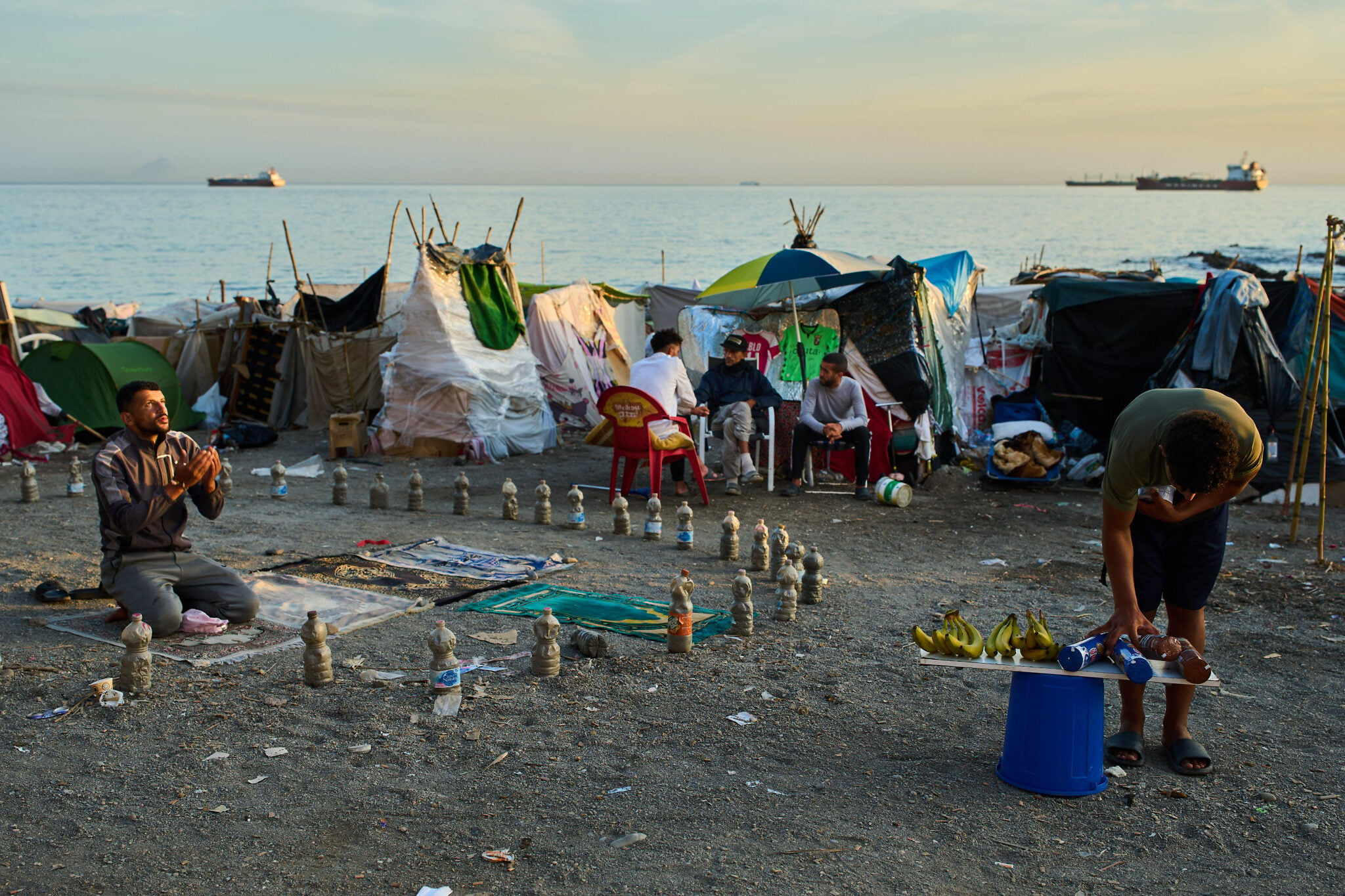
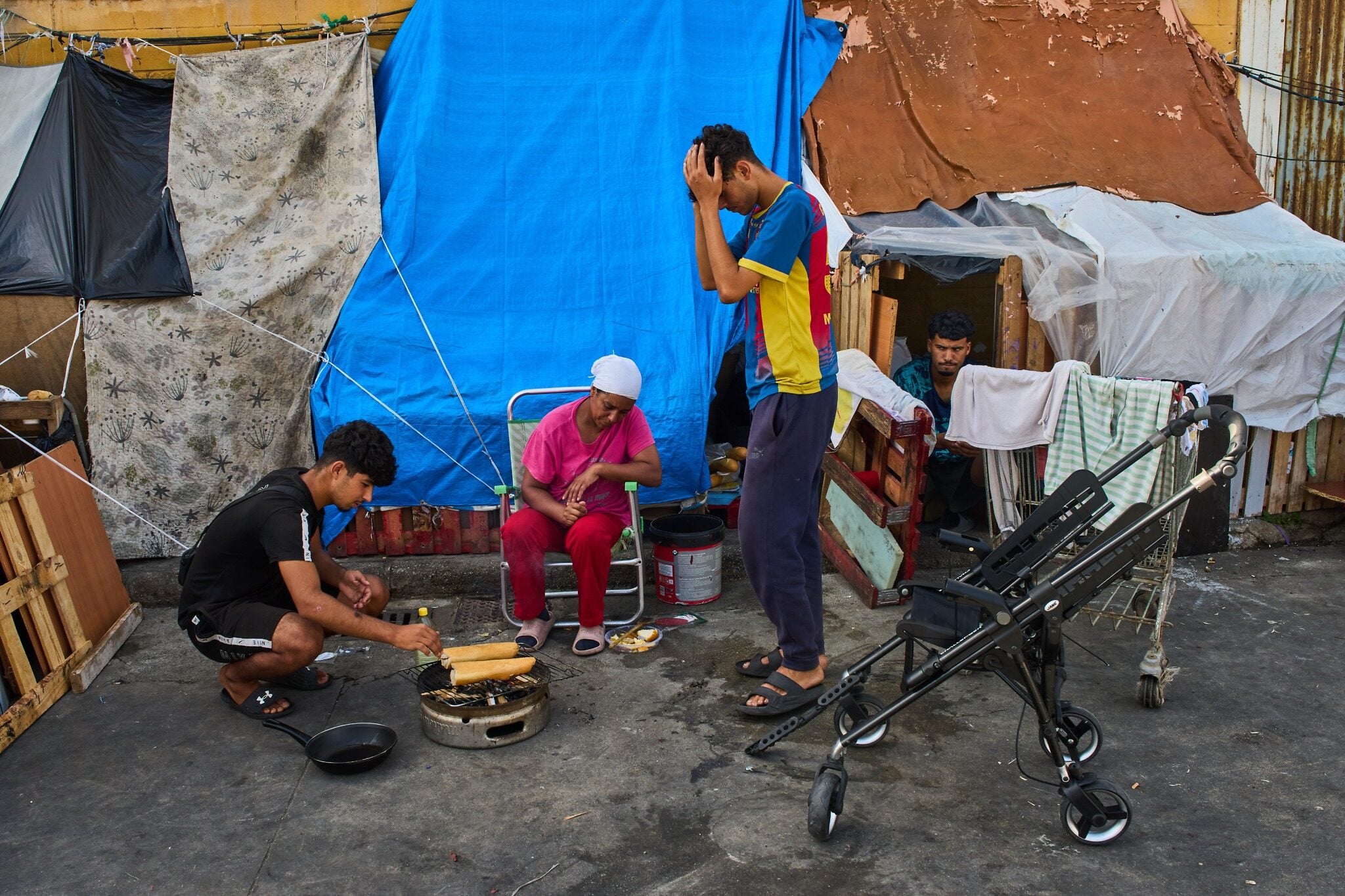
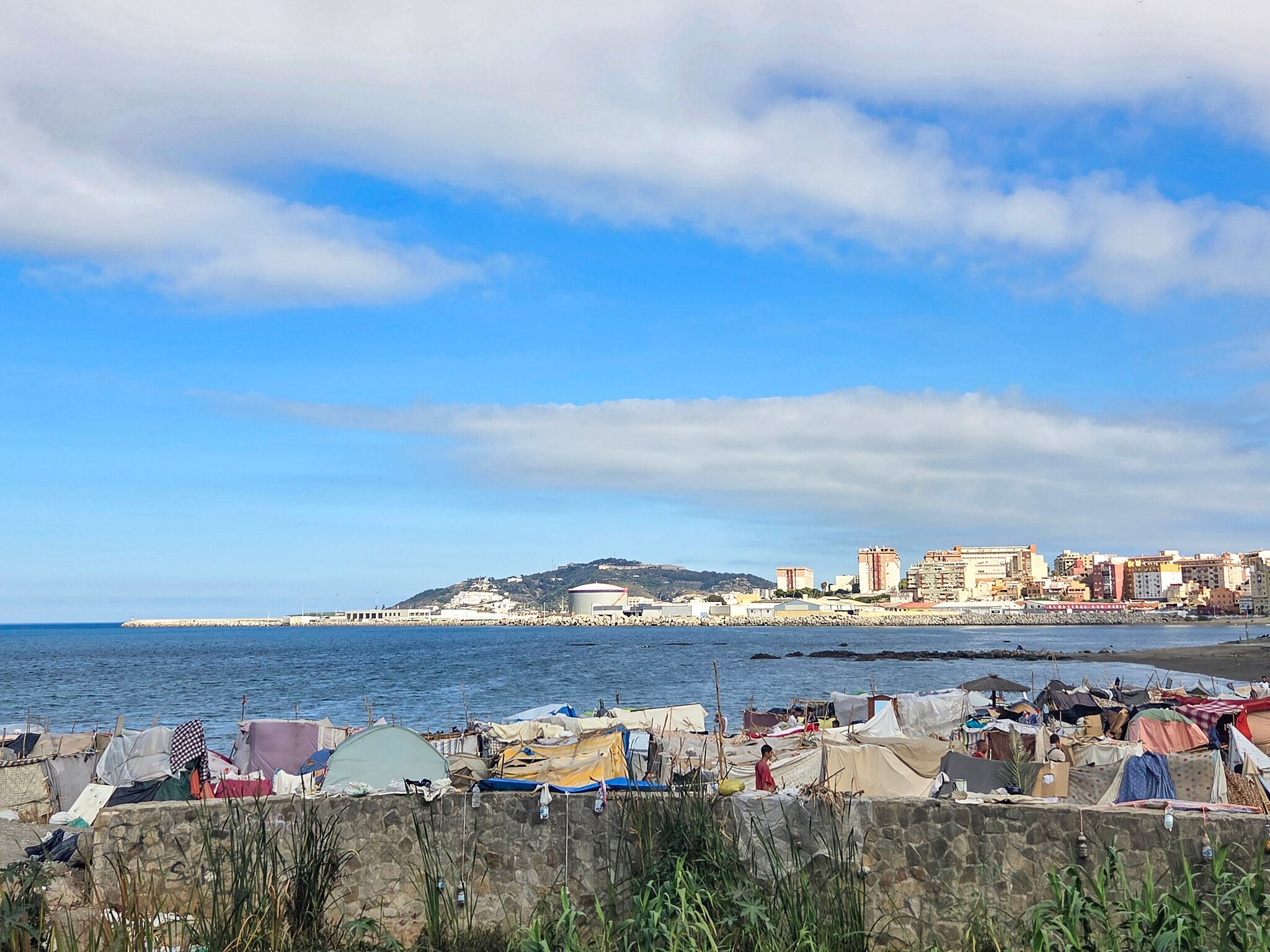
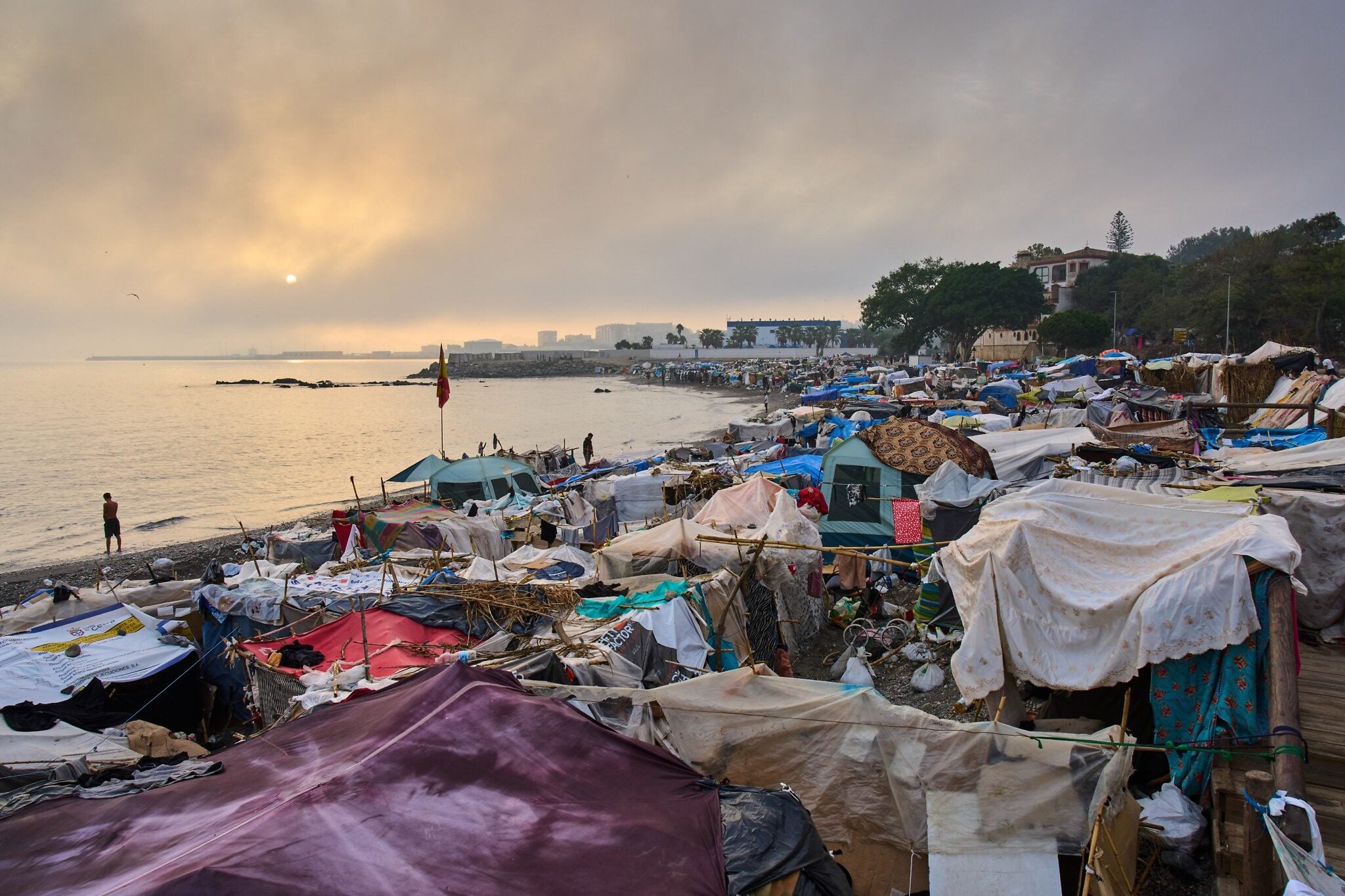
Right up against the border, in Ceuta’s southernmost neighborhoods, are a large warehouse, a hospital, the prison, and an industrial area called Tarajal. There, thousands of undocumented migrants reside in temporary camps — some makeshift, others state-run. Conditions in the former match those in some of the world’s most desolate slums: no electricity, running water, or law enforcement to keep residents safe.
“At night cops or soldiers come and beat them,” claims Karim, a Moroccan-born legal resident of Ceuta, who requested anonymity for fear of reprisal by the Spanish authorities.
Most of the migrants who stayed have been here for months now. Prime Minister Pedro Sánchez’s government in Madrid claims that all but 5,000 have returned to Morocco, but the estimate carries little credibility in Ceuta. Most residents, as well as the local authorities, put the number of migrants still in Ceuta at 13,000 to 15,000.
Sánchez has also claimed that social media networks associated with Israel and Russia amplified disinformation on Spanish migration policy that led to the “invasion.”
Independent fact-checkers found no evidence that Israeli- or Russian-linked disinformation triggered the mass crossing. Spanish intelligence likewise later said it had found no evidence tying the social media mobilization that preceded it to either government.
Asked about Sánchez’s allegations, Karim laughs and shakes his head: “Está loco, that’s crazy.”
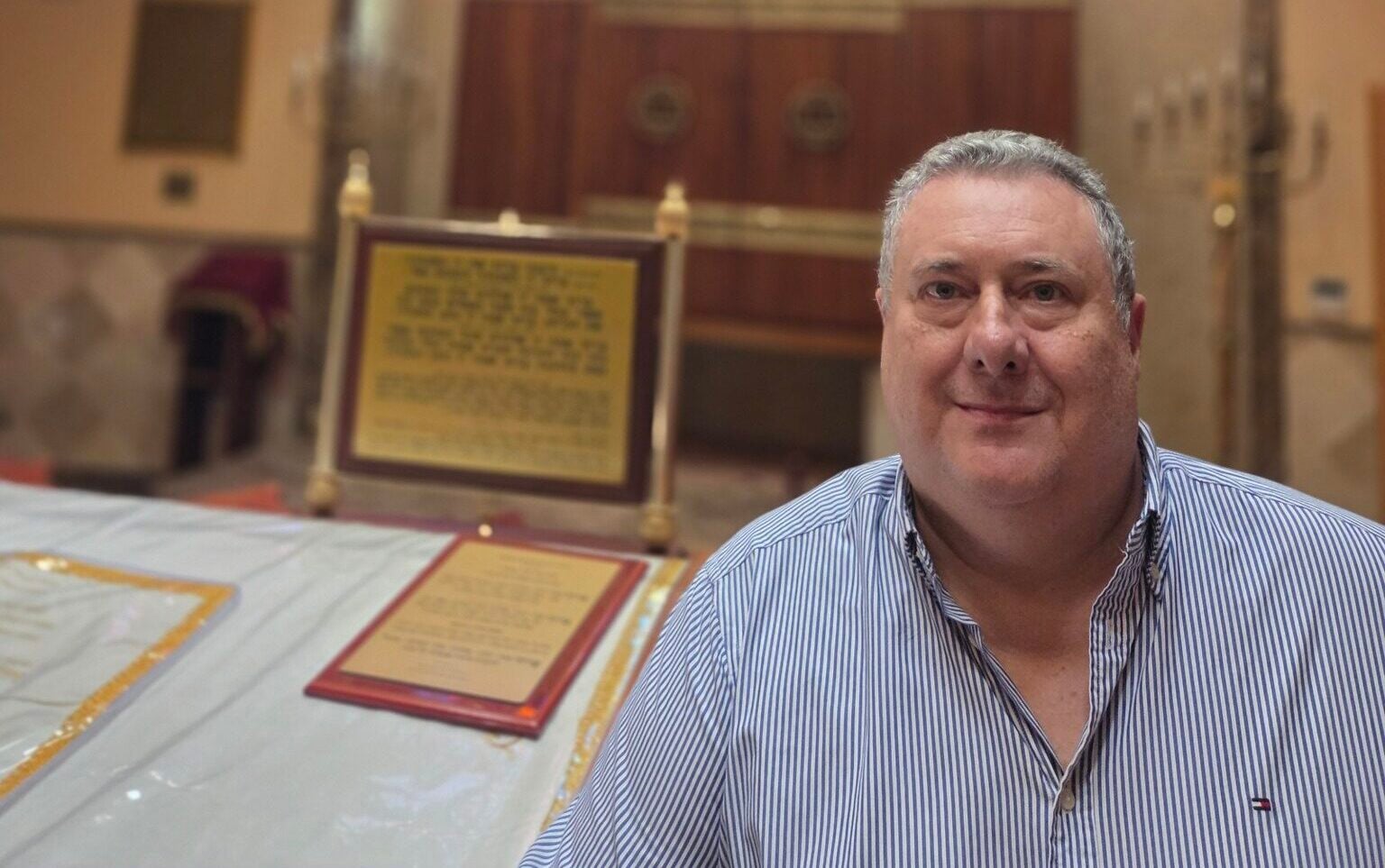
José Bentolila, president of Ceuta’s Jewish community, shares that view.
His small community has had to navigate life in a city facing heavy irregular migration, while Spain’s central government has taken an increasingly critical stance toward Israel since the Hamas-led invasion set off the war in Gaza on October 7, 2023.
“Historically, we have had no problems with our Muslim neighbors,” says Bentolila, a local businessman who owns three companies, one of which processes and trades mackerel. The fish is so closely associated with Ceuta’s economy that residents of the city are known as caballas — Spanish for mackerel.
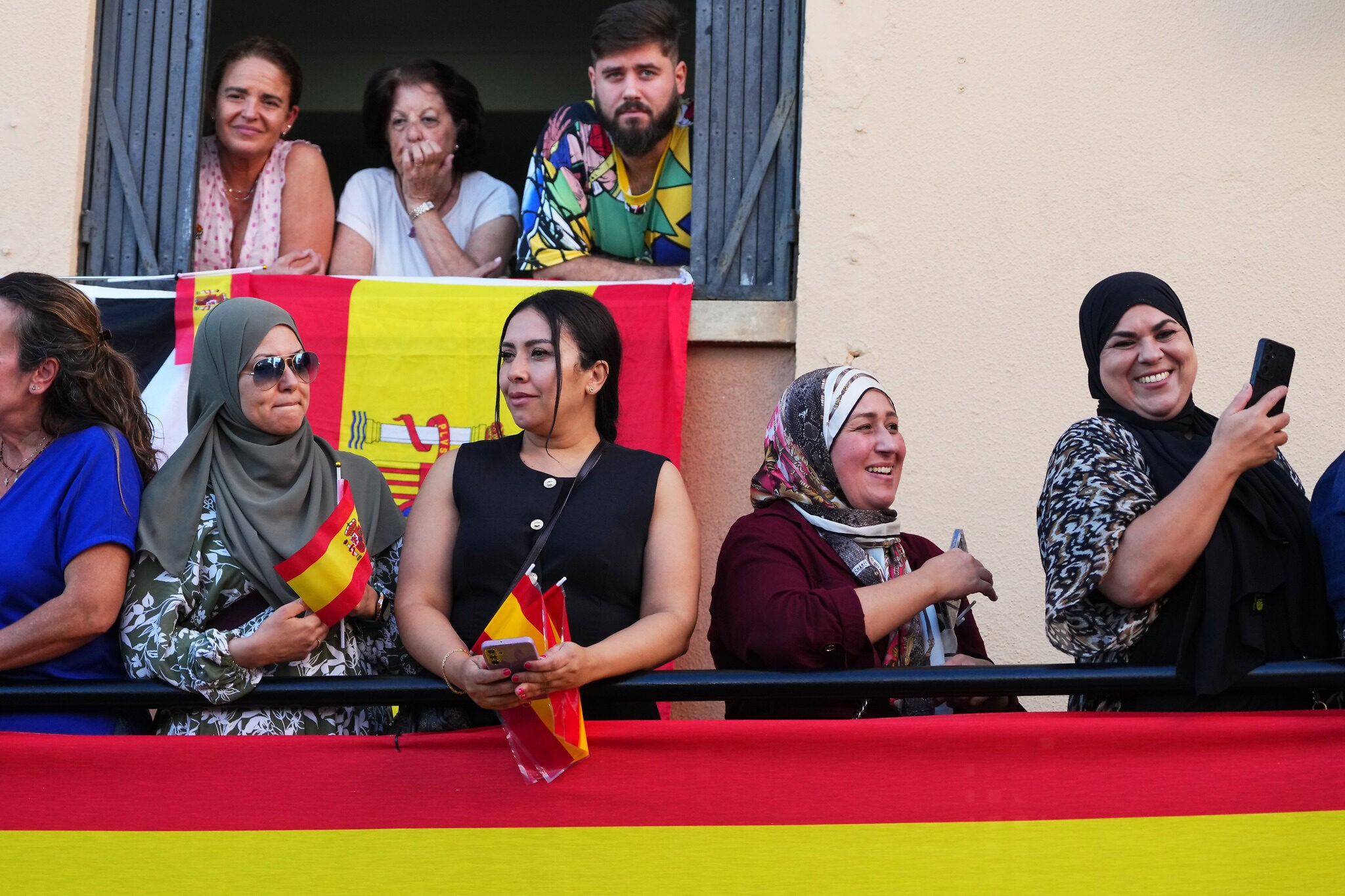
Bentolila describes Ceuta before July 30 as a model of peaceful coexistence among its four main religious communities: Christians and Muslims, the two largest, and Jews and Hindus. He says the same is true of Melilla, Spain’s other exclave on the Moroccan Mediterranean coast.
“We have found a way to coexist in these two small cities. We have known each other for so long; the Muslims here celebrate Hanukkah with us, and we do the same at the end of Ramadan,” says Bentolila.
Yet the Jewish community, which now numbers about 300, has been shrinking for decades. At its peak in the 1960s and ’70s, there were about 2,000 Jews in Ceuta. Bentolila says this decline is not due to tensions with the Muslim population or the Spanish government’s antipathy toward Israel.
“Our children go to study on the Spanish mainland and often do not return. There simply isn’t enough work here for highly educated young people,” Bentolila says.
Bentolila has experienced this firsthand. Only one of his five children lives in Ceuta; the other four have immigrated to Israel. Thus, the community is not only shrinking but also aging.
Hidden in plain sight
At first glance, the camps appear to be inhabited only by young men and boys. A closer look, however, reveals entire families, with children ranging from teenagers to toddlers, living in makeshift huts built from wooden pallets, cardboard, and plastic sheets. Every day, volunteers like Karim come with food and water.
“You can’t sit at home and do nothing; these people don’t have anything,” he says.
Some volunteers from the Spanish mainland provide basic medical assistance, disinfecting wounds with cotton wool and alcohol as their patients lie on the dirt ground.
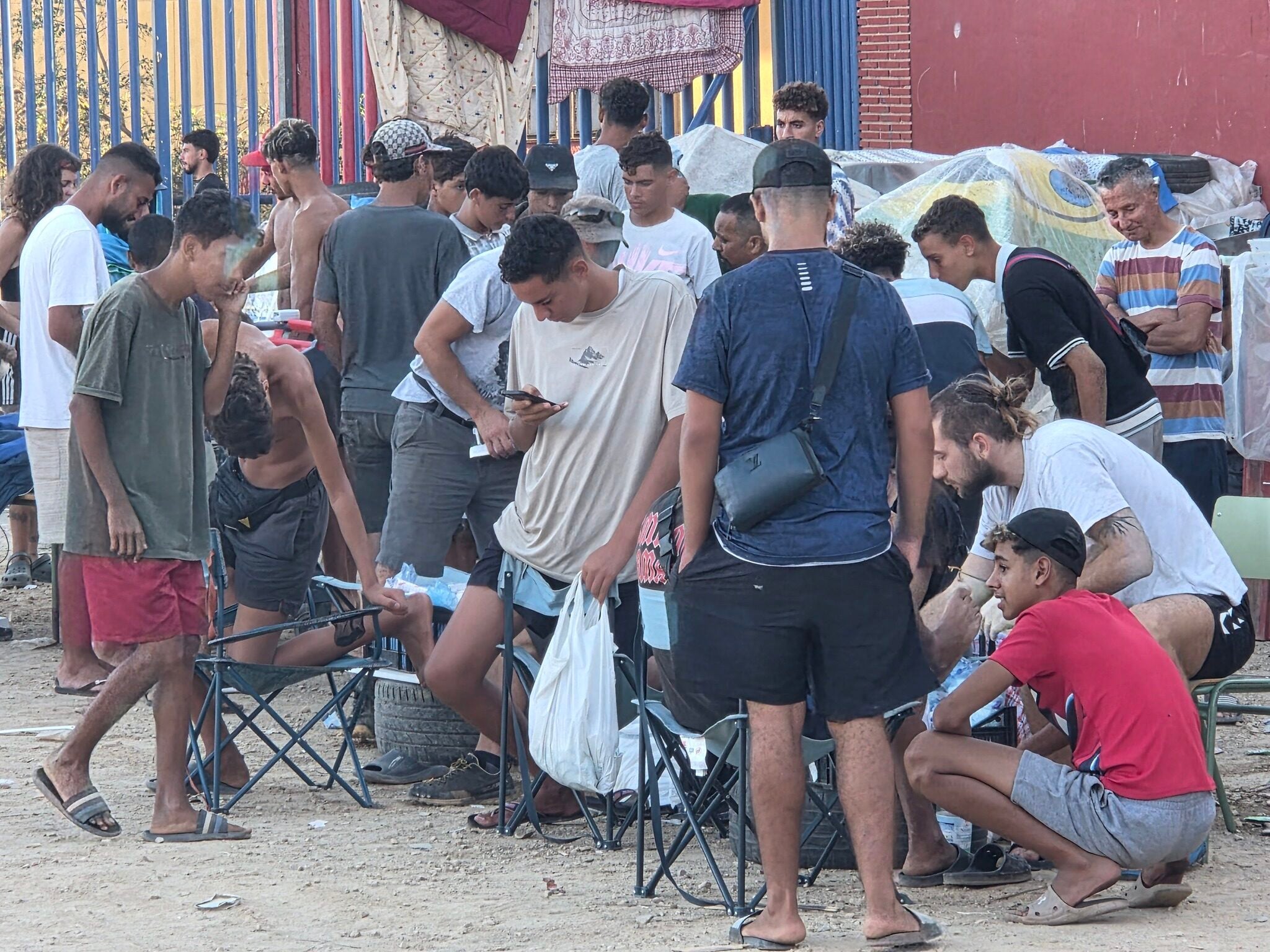
The worsening weather has made conditions in the camps more precarious. Autumn rains have soaked makeshift shelters and flooded some temporary accommodation, leaving bedding and belongings drenched. As temperatures have fallen, the lack of dry shelter has become an increasingly urgent problem for those still sleeping outside.
It’s an untenable situation for Ceuta’s longtime residents as well. Bet-El Synagogue, Ceuta’s only Jewish house of worship, sits in the city center, which has been sealed off by army patrols to prevent migrants from entering. Soldiers in combat gear patrol the area carrying assault rifles and batons.
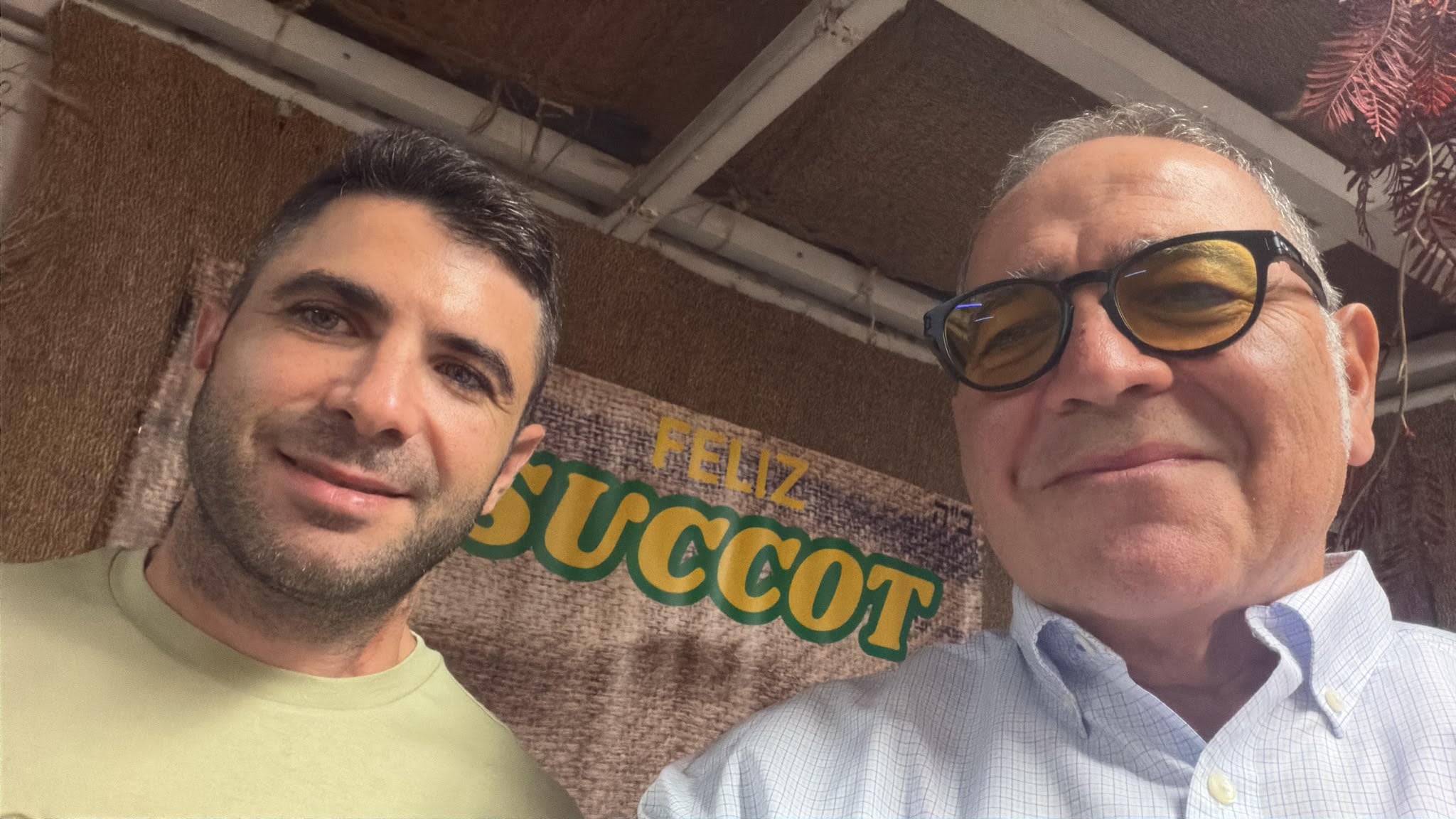
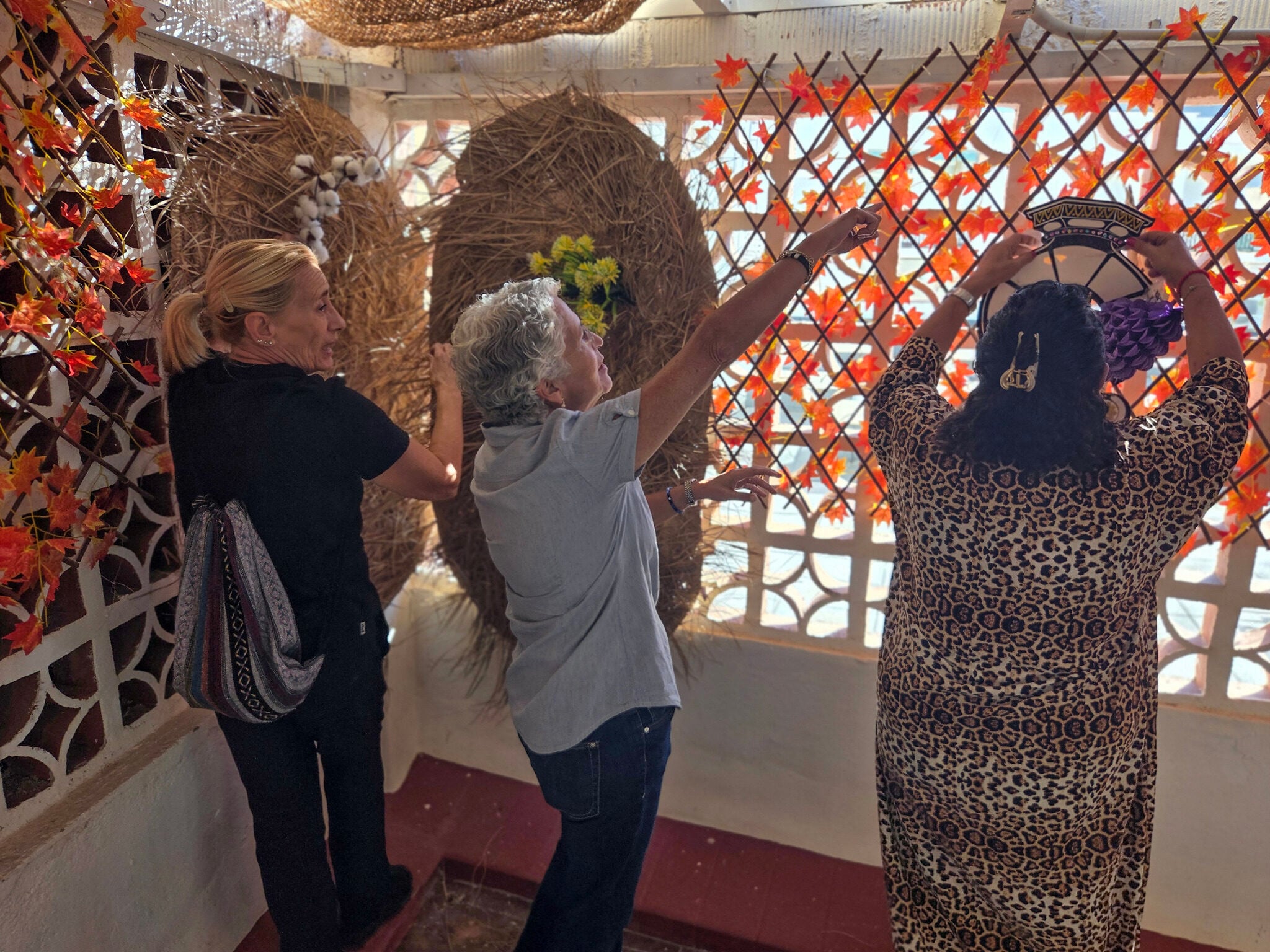
On the synagogue’s rooftop terrace, several people were decorating the sukkah during The Times of Israel’s visit.
One of them, Alegría, agreed to voice her opinion, provided she could use a pseudonym. She fears problems with the Moroccan authorities when she crosses the border.
“I don’t understand any of it,” she says. “Spain is supposed to be a country of laws, right? These people have broken those laws by crossing the border illegally, and now the government suddenly can’t do anything? They can’t be arrested, can’t be deported. Why? Wait and see what would happen if I disregarded the law.”
Asked what should happen next in Ceuta, Alegría is fatalistic. “That’s up to the government,” she says, “and God.”
Another of the sukkah decorators, Piedad Abecasis, shares Bentolila’s concerns about the community’s decline. She also says the shrinking congregation is becoming increasingly Orthodox.
As an example, she gestures to a sign posted at the synagogue entrance outlining a dress code for women. “In the past, no one thought that was necessary,” she says.
Abecasis has not experienced any problems in her daily life since the recent influx of migrants to Ceuta.
“But it makes me incredibly sad what is happening to my beautiful city, and that sadness is increasingly turning into anger,” she says. “The situation is getting worse now that the rains have begun. The migrants from the camps on the beach have scattered and are wandering through the city center.”
End of an epoch
Lawyer Moises Gabizón says Ceuta was the only Spanish city where Jews continued to live after their expulsion from Spain by the Catholic monarchs Ferdinand and Isabella in 1492. Jews had already lived in Ceuta for centuries, and the city later served as a refuge for some fleeing the Inquisition.
The city’s modern Jewish community, however, dates largely to the second half of the 19th century. Gabizón’s family arrived in Ceuta during that period; both his father and grandfather were born there.
Gabizón also sees his children leaving and not returning. “My son just left to study in Madrid. Can you blame him if he doesn’t come back? There is so much more to do there for a young person,” he says.
Still, Ceuta offers some advantages, including a strategic location for trade with Africa and tax rates roughly half those on the Spanish mainland.
“And we have more than 300 days of sunshine a year. My son-in-law from Amsterdam loves coming here,” laughs Gabizón.
He firmly believes in the peaceful coexistence of the various faith communities in Ceuta.
“The new antisemitism disguises itself as anti-Israelism and anti-Zionism, but I believe people here are somewhat fed up with that topic,” Gabizón says.
Not necessarily a threat to the Jews – but may as well be
Isaac Medina, a municipal official nearing retirement, says he does not see the recent influx of migrants from Muslim-majority countries as a threat to Ceuta’s Jews.
“They have other things on their minds than the Jewish community here,” he says.
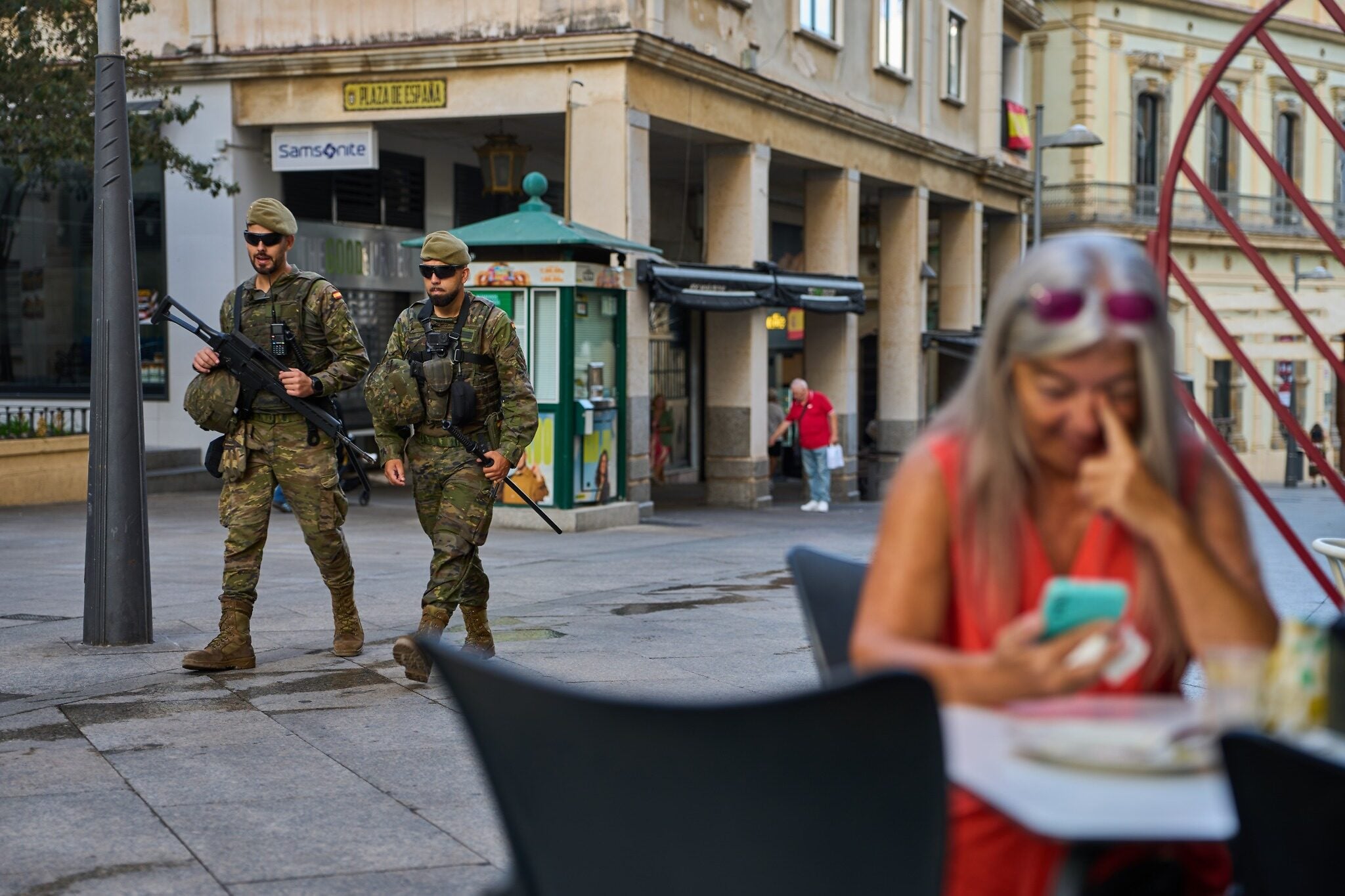
Still, Medina acknowledges that the two military vehicles parked across the street from the synagogue are not there by chance, as security is heightened around the Jewish community amid the broader tensions in the city.
Medina is more concerned about the government in Madrid. He compares the current situation to that faced by German Jews in the early 1930s.
“If a Jew feels unsafe somewhere, he leaves. Antisemitism existed, exists, and will always exist. Those who leave first can still take their belongings. But those who wait too long…” he says, trailing off.
For Medina, the warning is also personal. His father was honored by the State of Israel for helping tens of thousands of Jews leave Morocco after the country gained independence in 1956 amid growing uncertainty over their future, rising Arab nationalism and tensions surrounding Israel. The Moroccan government soon restricted Jewish emigration to Israel, prompting clandestine efforts to help Jews leave the country.
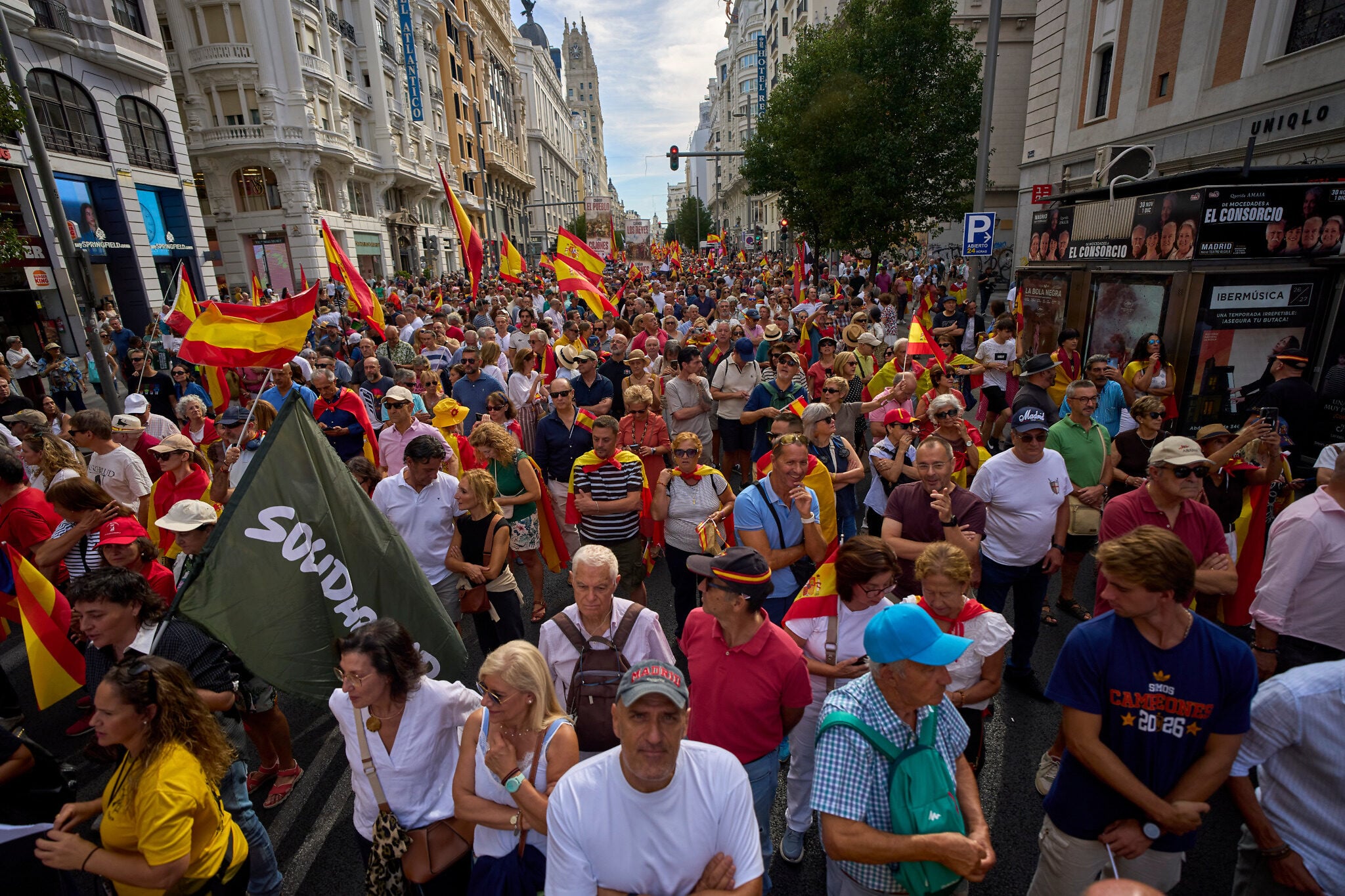
The crisis has also become an issue in Spain’s upcoming November 29 national election, sharpening an already heated debate over immigration and border security. Polling after the July crossings showed declining support for Sánchez’s Socialists and gains for the conservative Partido Popular and especially the anti-immigration Vox party. A September poll found that a majority of Spaniards rated the government’s handling of the Ceuta crisis negatively, while more than 80 percent favored stronger border controls to prevent similar mass crossings.
The vice president of Ceuta’s autonomous government, Kissy Chandiramani, is herself, as a Hindu, part of one of Ceuta’s smaller religious communities.
She places the blame for the crisis squarely on the national government in Madrid.
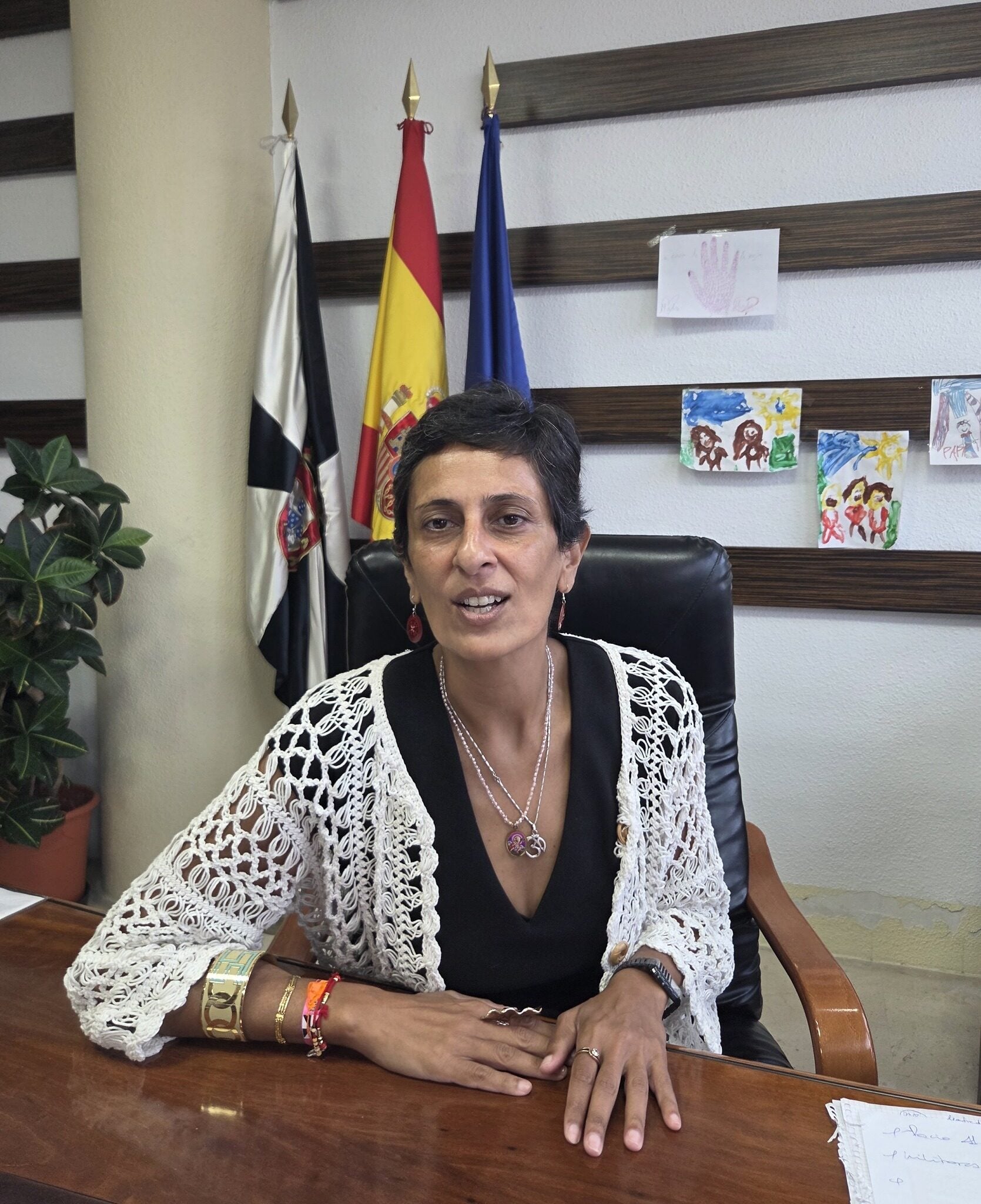
“They are doing everything they can to protect Morocco, calling it a reliable partner. Why? Perhaps the Moroccans are blackmailing Pedro Sánchez,” says Chandiramani, a member of the center-right Partido Popular.
Spanish media outlets have reported allegations that Moroccan intelligence used Pegasus spyware, made by Israeli cyber-arms company NSO Group, to target Sánchez’s phone, though Morocco has denied involvement and the attribution has not been conclusively established.
Sánchez, despite his allegations regarding social media networks associated with Israel, Russia and the international far right, has stopped short of accusing any foreign government of orchestrating the influx, and has said there is no solid evidence that Morocco planned it — even as Spanish authorities investigate whether Moroccan forces deliberately allowed migrants to cross during the height of the crisis.
“It’s inconceivable that our security lies not in Spanish but in Moroccan hands,” says Chandiramani.
The vice president considers the Jewish community in her city an example for other religious groups.
“They are particularly beloved among the Ceutís for their entrepreneurship, their culture, their intelligence, their empathy, their solidarity, and their help to others,” says Chandiramani. “Our heart consists of four parts: one Christian, one Islamic, one Hindu, and one Jewish. If any one of those were to disappear, we would all stop being Ceutí.”









The Times of Israel Community.