After Iran protests, feared security force says ‘world war’ on nation failed
Basij militia official claims interrogations of demonstrators revealed a ‘coalition of evil’ made up of ‘Zionists, America and Saudi Arabia’ behind the mass rallies
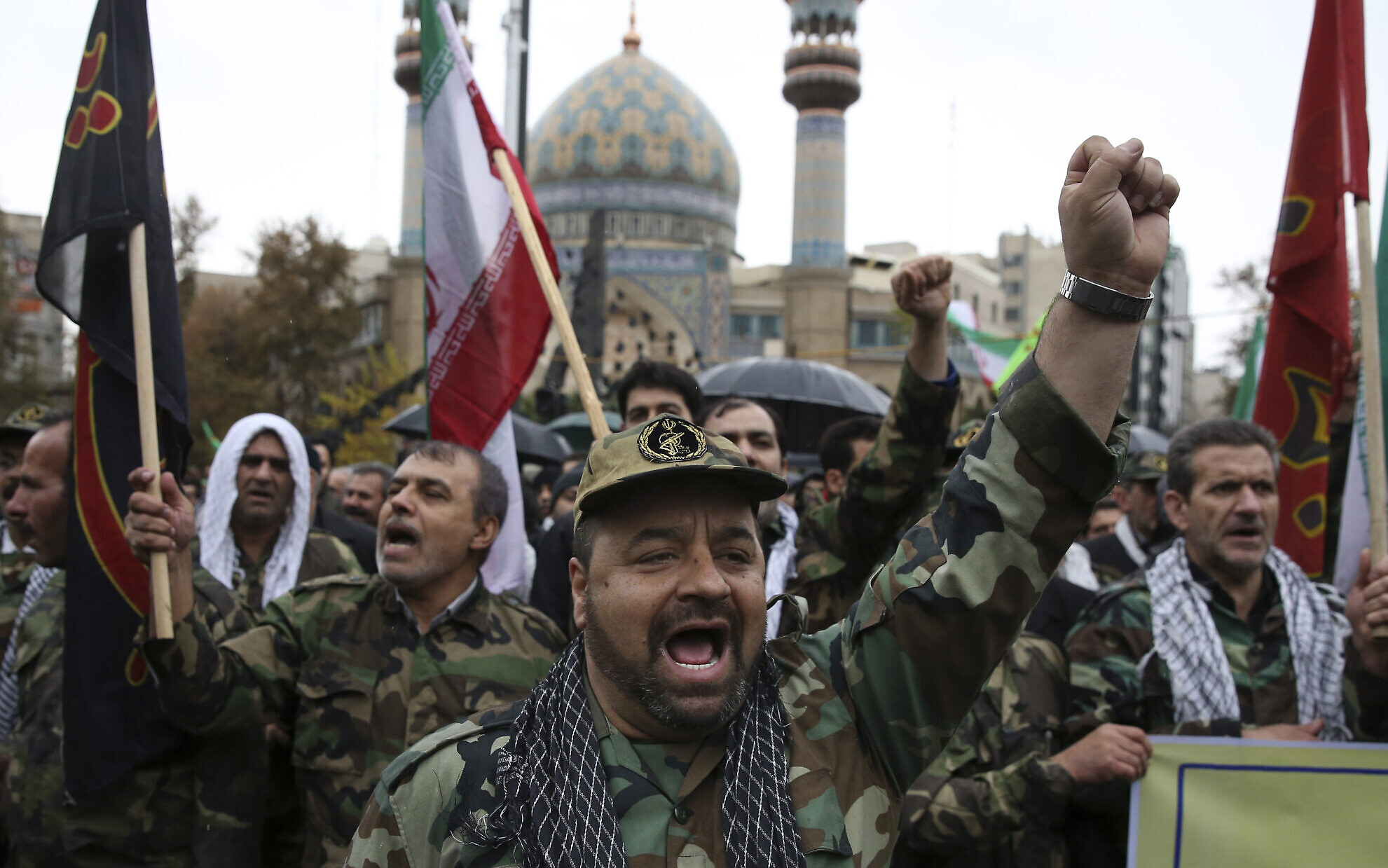
File: Iranian Basij paramilitary forces chant slogans during a rally marking the 35th anniversary of establishment of the force, at Felestin (Palestine) square in Tehran, Iran, in 2014 (AP Photo/Vahid Salemi)
Iran’s Basij militia said the nationwide unrest sparked by fuel price hikes amounted to a “world war” against the Islamic republic that had been foiled.
The protests erupted across the sanctions-hit country on November 15, after the price of gas was raised by as much as 200 percent.
Authorities said leaders of the protests in which police stations were attacked, gas pumps torched and shops looted had been arrested.
“A full-fledged world war against the system and the revolution was born and fortunately the child died at the moment of birth,” said Brigadier General Salar Abnoosh, a deputy head of the feared paramilitary arm of the Revolutionary Guard Corps.
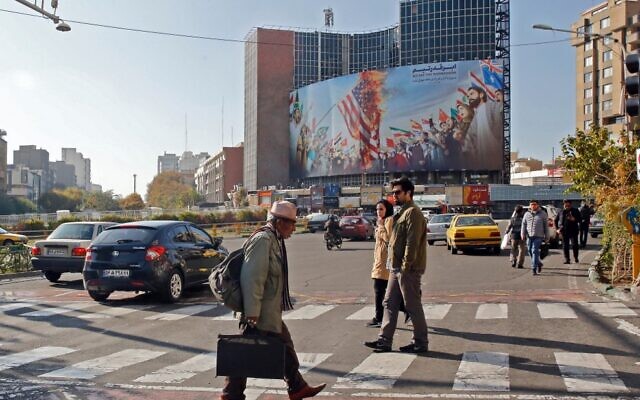
Iranian pedestrians cross a street at Valiasr square in Tehran on November 21, 2019. (Photo by AFP)
Quoted by semi-official news agency ISNA late Thursday, Abnoosh said interrogations had revealed that a “coalition of evil” made up of “Zionists, America and Saudi Arabia” was behind the “sedition.”
Get The Times of Israel's Daily Editionby email and never miss our top stories
The United Nations human rights office, for its part, has said it was alarmed by reports that live ammunition used by security forces to quell the unrest had caused a “significant number of deaths.”
Officials have confirmed five deaths, while Amnesty International said more than 100 demonstrators and up to 200 were believed to have been killed.
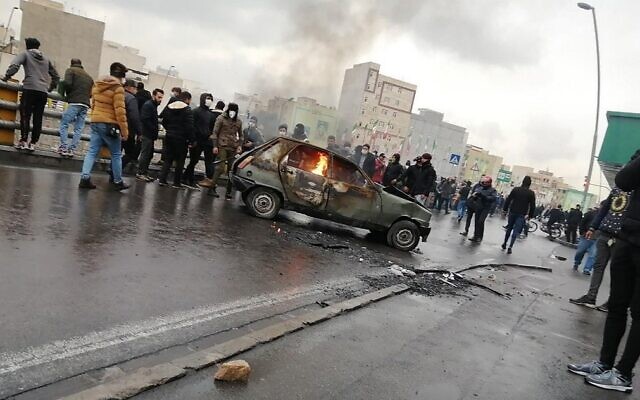
Iranian protesters gather around a burning car during a demonstration against an increase in gasoline prices in the capital Tehran, on November 16, 2019. (AFP)
The extent of the bloodshed was difficult to confirm because of internet cuts, which Abnoosh, said had helped “disrupt” efforts by Iran’s foes.
Advertisement
ISNA said internet access and connectivity via ADSL had now been partially restored in a number of provinces and for some universities in Tehran.
Help us report truthfully on social media
As a multimedia journalist, my job is to take the quality, fact-based journalism produced by The Times of Israel newsroom and make it accessible across every platform — from Instagram posts to podcasts to short-form videos.
This is how many, especially young people, consume news these days. But misinformation is rampant on social media. Our team at ToI produces accurate, responsible short-form reporting on Israel and the Jewish world.
If you believe in the importance of factual social media journalism, please consider joining our reader support group, The Times of Israel Community. Your financial support is essential to sustain responsible multimedia reporting.
We’re really pleased that you’ve read X Times of Israel articles in the past month.
That’s why we started the Times of Israel - to provide discerning readers like you with must-read coverage of Israel and the Jewish world.
So now we have a request. Unlike other news outlets, we haven’t put up a paywall. But as the journalism we do is costly, we invite readers for whom The Times of Israel has become important to help support our work by joining The Times of Israel Community.
For as little as $6 a month you can help support our quality journalism while enjoying The Times of Israel AD-FREE, as well as accessing exclusive content available only to Times of Israel Community members.
Thank you, David Horovitz, Founding Editor of The Times of Israel


 Add ToI as a Preferred Source on Google