

After watering-down, bill limiting porn access moves forward
New measure no longer requires internet users to opt in to view pornography, after critics say original text breached freedom of speech
 Add ToI as a Preferred Source on Google
A softened version of a controversial bill that would have initially forced Israeli internet providers to censor pornography passed an initial reading in the Knesset on Wednesday morning.
Under the terms of the watered-down bill passed on Wednesday, Israeli internet service providers will have to inform customers of the option to receive filtered internet.
Unlike the updated version of the bill, the original version mandated that all online pornography would be automatically filtered out by Israeli internet providers, while users who want to opt out of the censorship would be required to notify their service providers either in writing, by phone, or via the provider’s website.
That measure, sponsored by Jewish Home MK Shuli-Moalem Refaeli, was approved by cabinet ministers in a unanimous vote in the Ministerial Committee for Legislation Sunday, giving it coalition backing as it moved to the Knesset for a full vote.
The bill was widely criticized, with opponents saying that it would create a de facto government-accessible list of believed pornography consumers and could require intrusive government regulation of Israelis’ internet access to maintain and enforce a national proscribed content list.
The new bill will require ISPs to not only provide filtering software, but also to inform customers of the availability by text message or email.
On Monday, the Communications Ministry, which regulates internet access in Israel, said the original proposal was against the law.
“The position of the ministry was and remains that no content on the internet should be pre-filtered, and that the various ISPs are obligated to inform the customer of the existence of offensive content online and to supply customers with filtering programs for free,” the statement read, according to Haaretz.
Before the vote, MK Michal Rozen (Zionist Union) criticized the original version of the bill as too far-reaching, despite her opposition to the dissemination of pornography.
“This proposal is too general and will cause widespread harm to freedom of privacy,” she said during the vote. “This proposal does not address pornography but rather ‘harmful’ websites. Tomorrow there might be a communications minister who decides a LGBT website is harmful and that it is how the blacklists will start. The fight against pornography needs to be primarily educational.”
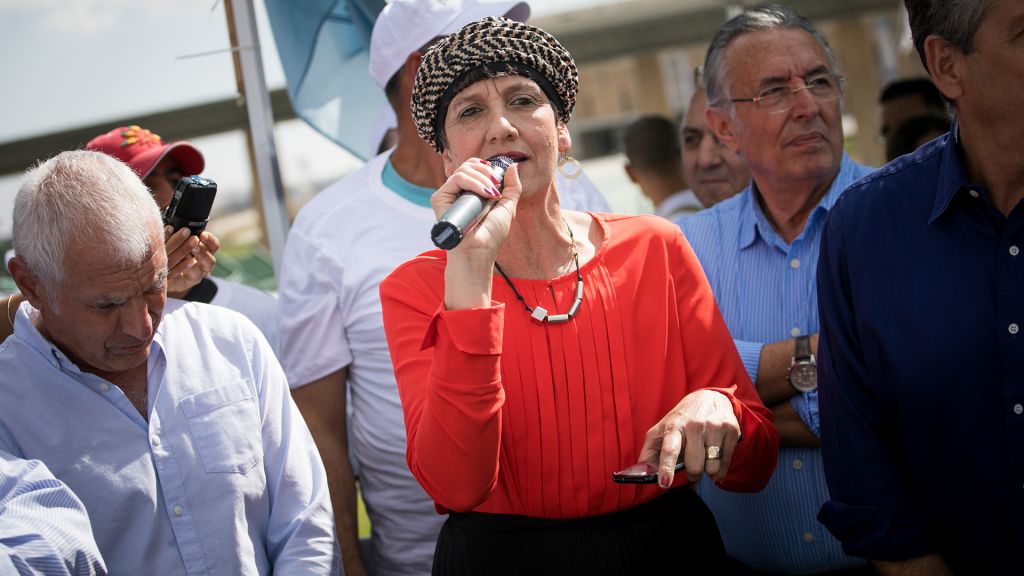
Moalem-Refaeli slammed critics of the bill Wednesday, sarcastically referring to them as “freedom fighters” and accusing them of being “slaves of the internet service providers.”
She also said there was a double standard, given that no one is protesting the need to have to request TV providers unlock pornographic channels.
Israeli ISPs are already required by law to provide content-filtering systems free of charge to customers who ask for them.
Existing regulations say providers must notify their customers of the availability of such services, but MKs say many parents remain unaware of the option.
For nearly a decade, various lawmakers have been trying to advance legislation to prevent children from viewing pornography on the internet. Previous bills have failed to make headway.
Moalem-Refaeli insisted Sunday that her bill was not intended to curtail free access to the internet.
“This isn’t Iran,” she told Channel 2.
But, she added, “as parliamentarians and public leaders, we must put up road signs that say ‘this is how we think society should behave. The average age at which children are exposed to pornographic sites is 8. I don’t think it is right for us to leave things like that.”
She said a similar default filter on adult content was introduced in other Western countries, notably Britain.
Moalem-Refaeli acknowledged the possibility that non-pornographic sites would be filtered by accident — such as sites dealing with breast cancer — but insisted this was a challenge that could be overcome.
“I am not interested in blocking a campaign for breast cancer awareness, as a woman and a survivor of breast cancer,” she said. “That is not what we are talking about. But during the process of legislation it will become clear what we are talking about.”










The Times of Israel Community.