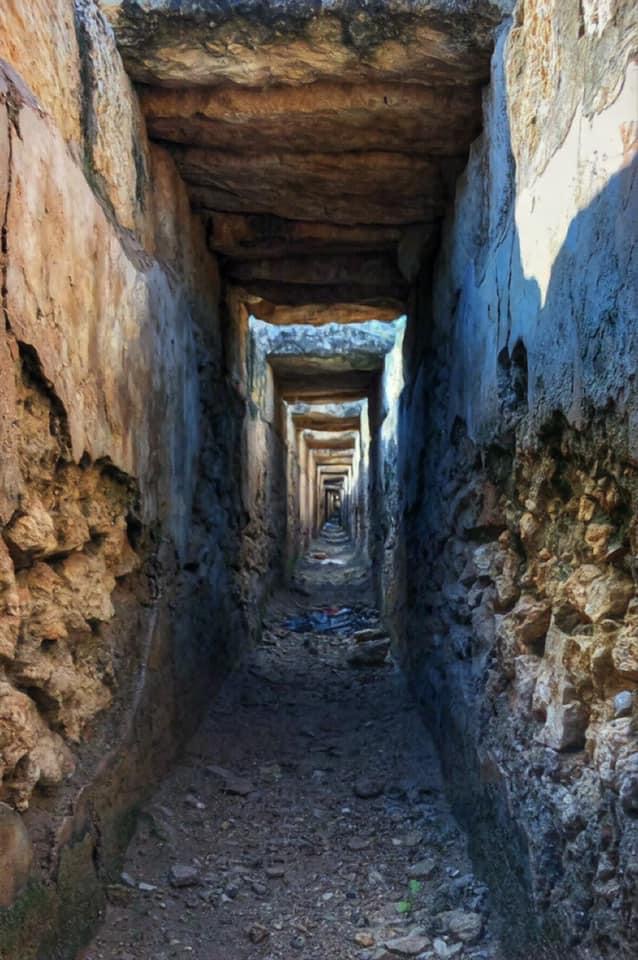
So this little piece of aqueduct is around the corner from where I used to live in central Israel. Here’s how it came to be:
Back in the early 8th century, the Umayyad governor and future caliph Sulayman ibn Abd al-Malik built the city of Ramle. He built Ramle along the old route of the Via Maris, connecting old Cairo with Damascus. It was also built at the halfway point on the road connecting the port city of Jaffa with the holy city of Jerusalem.
Ramle comes from the Arabic raml, which means “sands.” Because the area was totally arid. Because there was no water.
But you can’t have a city without water, and in order to nourish the new city, the Umayyeds built an aqueduct out of limestone and plaster stretching all the way from the springs at Tel Gezer to Ramle.
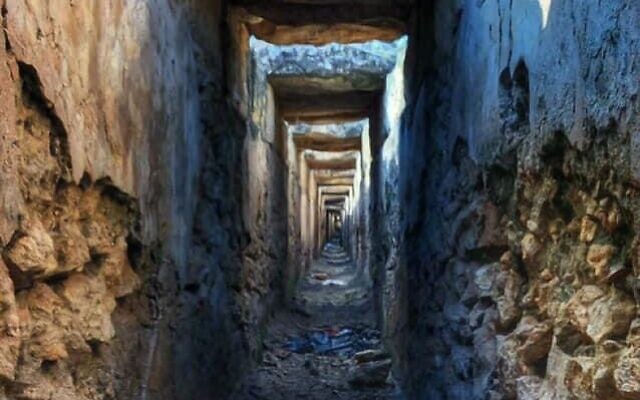
And you can still see parts of the aqueduct system even today, right by Israel’s modern Route 6, a highway that links North with South — and that’s one of the things I love about this place: In one dusty little spot, you have an ancient aqueduct and a modern highway — two innovations that allow cities to thrive.
So next time you’re speeding down the highway in these parts, slow down and check it out. You can even crawl through it!
Getting there:

The Times of Israel Community.