

Austria’s new FM once dismissed two-state solution as ‘too complicated’
In 2014 interview, Karin Kneissl said she ‘never believed’ in the idea, because the territory is ‘eaten up’ by Israeli settlements
 Add ToI as a Preferred Source on Google
Raphael Ahren is a former diplomatic correspondent at The Times of Israel.
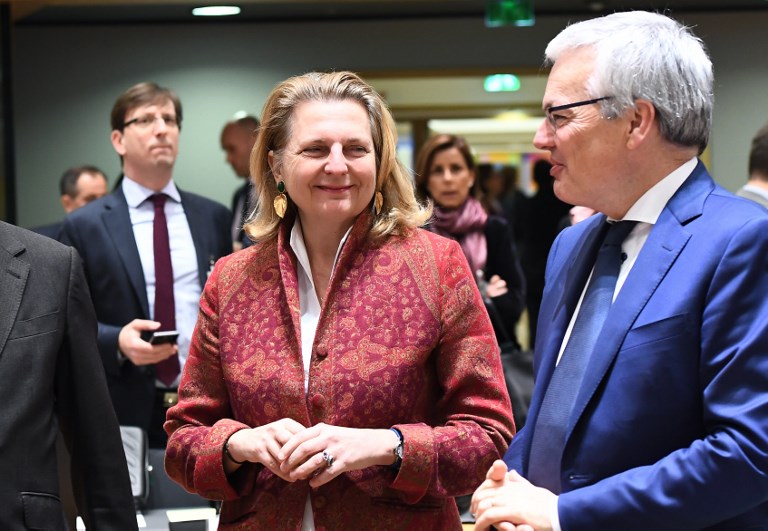
Austria’s new foreign minister may now be an ardent supporter of the two-state solution to the Israeli-Palestinian conflict, but she hasn’t always been. As recently as 2014 she dismissed the idea as “too complicated,” arguing that the land between the Mediterranean and the Jordan River continues to be “eaten up” by Israeli settlements.
Ever since taking up her post last month, Karin Kneissl has repeatedly proposed the notion of dividing the Holy Land into Israel and Palestine. A two-state solution “remains the only realistic way to provide a perspective of peace and prosperity for Israelis and Palestinians,” she told The Times of Israel last week.
Just a little over three years ago, however, Kneissl, a scholar who focused on the Middle East, where she lived for many years, apparently thought differently.
In December 2014, a local Austrian church newspaper asked her in an interview about her position on the two-state solution. She replied: “I’ve never believed in it. The separation of the territories in this small area is much too complicated, since it continues to be eaten up by the wall [the West Bank security barrier], by Israeli settlements in the occupied Palestinian areas.”

Asked by the Times of Israel to clarify her position on the two-state solution, Kneissl’s office said: “The quote you are referring to is taken from an interview Karin Kneissl gave in her capacity as a scholar of the Middle East. She was merely pointing out the well-known difficulties with actually obtaining a two-state solution, which has remained elusive for many decades, a fact that has caused a lot of misery for Israelis and Palestinians alike.”
“However,” her office continued, “the Austrian foreign minister remains convinced that a viable two-state solution remains the only realistic way to provide a perspective of peace and prosperity for Israelis and Palestinians.”
Israel controls an Arab majority without granting them civil rights. Therefore Israel can ultimately not be a democratic state anymore
Speaking to the Linz-based Kirchenzeitung on December 8, 2014, Kneissl — who wrote her doctoral thesis in international law about the concept of borders in the Middle East — also posited that Israel cannot be a democracy as long as Palestinians do not have their own state.
“Israel controls an Arab majority without granting them civil rights. Therefore Israel can ultimately not be a democratic state anymore,” she said. “If, however, the Palestinians were to be incorporated into a binational state, the idea of Zionism would become invalid, since [Israel] would not be a Jewish state anymore. It’s a major dilemma for all involved.”
Kneissl was nominated for the post of foreign minister by the far-right Freedom Party, which Jewish groups in Austria and worldwide accuse of harboring racist and anti-Semitic views. Israel is boycotting ministers who belong to the controversial party, including Kneissl (although she is not formally a member).
Known by its German acronym FPOe, the Freedom Party — which has adopted strong pro-Israel positions in an ostensible bid to shake off its reputation as political home for neo-Nazis — is the junior partner in a coalition government with Chancellor Sebastian Kurz’s People’s Party.
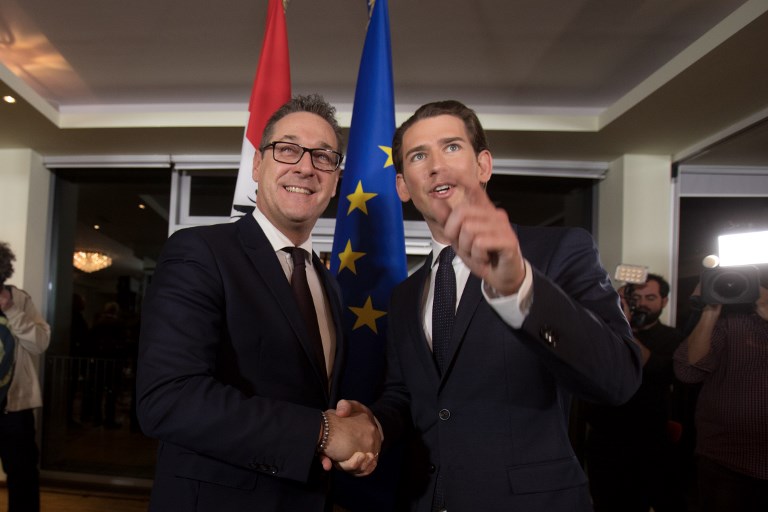
The “government program” the two parties published after finalizing coalition negotiations in December includes an explicit “commitment to Israel as a Jewish state with the goal of a two-state solution that will allow an Israel in permanently secure borders and a viable Palestinian state.”
It also calls for a “peaceful solution in the Middle East, with special consideration for Israel’s security interests.”
After Kneissl’s appointment last month, some Israelis noted that in one of her books she appeared to have compared Zionism with Nazi Germany’s “blood-and-soil ideology.”
In an exclusive interview last week with The Times of Israel, she denied having equated the two concepts. “To insinuate any comparison between Nazism and Zionism is utter nonsense. I have never made any such comparison,” she said.
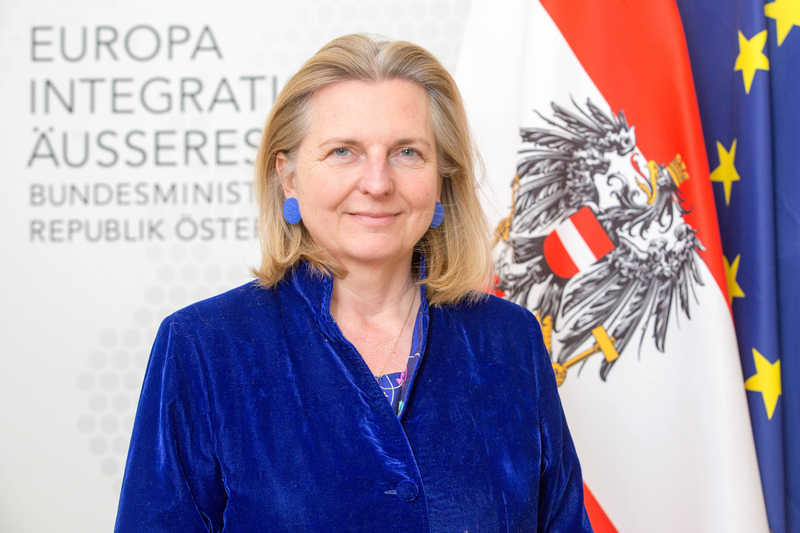
“What I pointed out is the historical fact that Theodor Herzl was certainly inspired by the nationalist aspirations that swept through many European countries during the 19th century. You always have to see things in the historical context. Some journalists only pointed out one line of the book without explaining the content.”
She added: “What’s important today is that myself and the new Austrian government are and remain committed to Israel as a Jewish state and to a two-state-solution, where Israel and Palestine live side by side, in peace and prosperity.”
In the interview, she repeatedly noted Vienna’s commitment to a two-state solution.
“Settlement activities threaten to further undermine prospects for a viable two-state solution, which remains the only realistic way to provide a perspective of peace and prosperity for Israelis and Palestinians,” she said.




The Times of Israel Community.