

Back to Strip one: 8 things to know for May 6
The latest round with Gaza is over and while everyone agrees it won’t be the last, there are disputes over who came out better and how to fix the problems that won’t go away
 Add ToI as a Preferred Source on Google
Joshua Davidovich is The Times of Israel's Deputy Editor
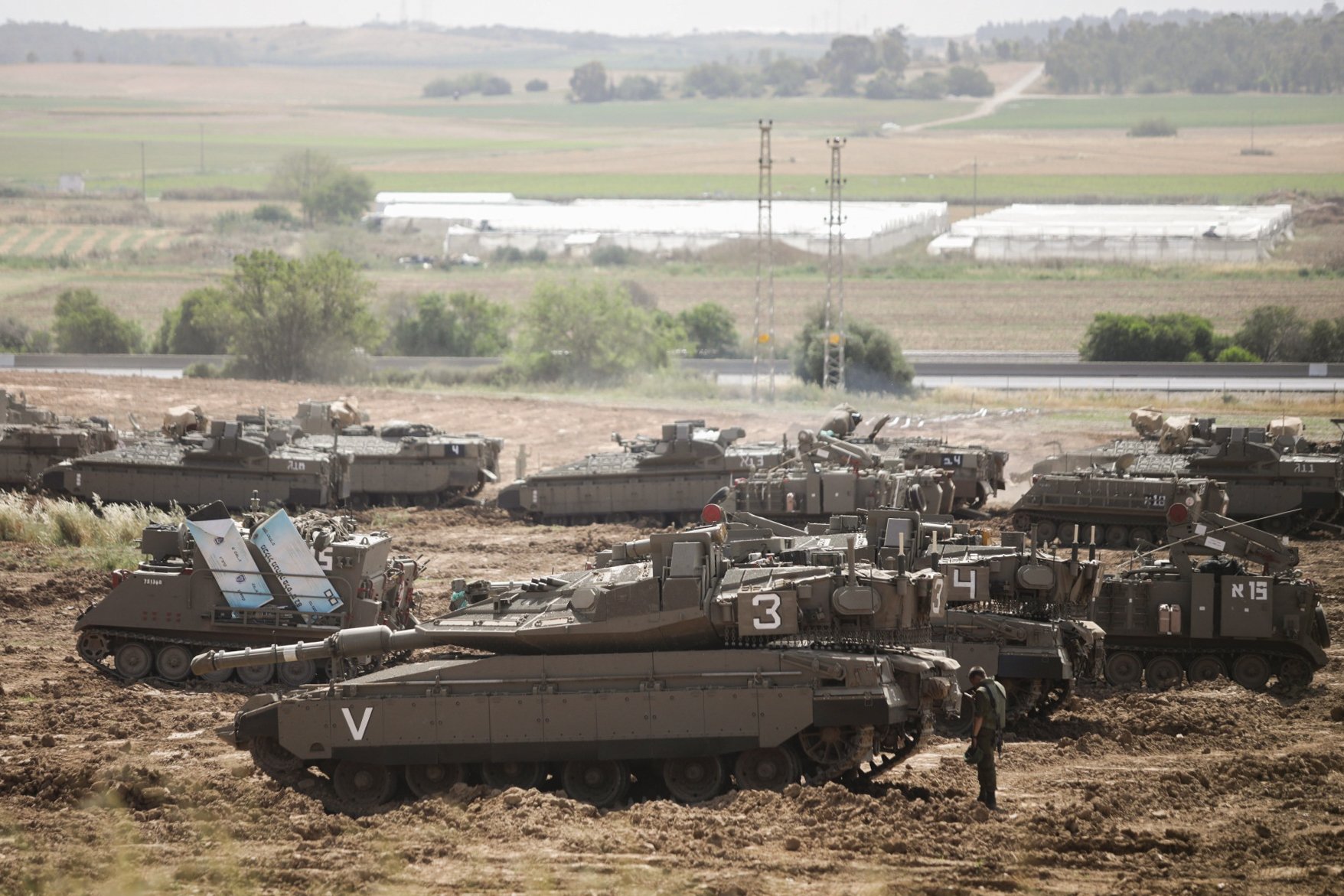
1. A quiet place: After two days of fighting, hundreds of rockets and airstrikes, four deaths in Israel and more than two dozen in Gaza, Israel and Hamas are back in ceasefire mode.
- The ceasefire reportedly means Israel has lifted some restrictions on Gaza in exchange for a return to quiet. As of noon, the ceasefire appears to be holding.
- The New York Times notes, “According to Arab media reports, the understanding was brokered by Egypt and the United Nations, and includes measures to ease the acute economic crisis in the impoverished Gaza Strip.”
- Nonetheless, the sides are still rattling their sabers.
- “The campaign is not over and it demands patience and sagacity. We are prepared to continue,” Prime Minister Benjamin Netanyahu says in a statement.
- Meanwhile, Israel Radio quotes Hamas spokesman Sami Abu Zuhri saying, “Our message is that this round is over, but the conflict will not end until we regain our rights.”
2. Back where we were: The decision to go toward war and then sue for peace is not an especially popular one, with critics saying it puts the sides right back where they were and does nothing more than buy some time and kick the can down the road, at the cost of many lives and two traumatized peoples.
- “Neither side has any substantive achievement to boast of, nor have they made a move that has altered the status quo,” ToI’s Avi Issacharoff writes.
- “Israel cannot allow [this situation] to go on. We must change it. We have been patient, we trusted the decision-makers’ considerations and allow them to explore various ways of restoring quiet throughout the area. A 10th escalation is too much. It’s time to act bravely and daringly to bring about a change,” Eshkol Council leader Gadi Yarkoni writes in Israel Hayom.
3. Aiming at Netanyahu: While the opposition predictably slammed the ceasefire deal, joining them was Likud MK Gideon Sa’ar, whiplashing Israel back into nitty gritty political sparring.
- Several news outlets quote “associates” of Netanyahu slamming Sa’ar for not toeing the party line.
- “Since 2015, as he has attacked Likud and the prime minister without stopping, Sa’ar has had one goal: to bring down prime minister and Likud leader Benjamin Netanyahu. The excuses have changed, the target has not,” Channel 12 news quotes unnamed sources saying.
4. What to do about Gaza: While many agree things with Gaza won’t stay quiet for the long term, there is disagreement over whether the solution is to go easier or harder.
- “Netanyahu needs to understand that the rules have changed. Hamas and Islamic Jihad need to be dealt a blow,” Ashkelon Mayor Tomer Gilam tells Yedioth’s Nahum Barnea.
- Haaretz meanwhile counsels another path in its lead editorial:
- “Netanyahu has failed miserably in keeping his promise to Israelis in general and those living near the Gaza border in particular. He knowingly lies when he offers military action as the ultimate solution,” the editorial reads. “Netanyahu, who boasts of his expertise in maneuvering political pressure to his benefit, can and must initiate a bold diplomatic move and present to Hamas, through Egypt, a worthy plan that will liberate Israelis from the threat in the south.”
- Many, though, recognize that with Gaza ruled by Islamists bent on Israel’s destruction, the coastal enclave represents a quagmire that may have no easy solutions.
- “The root of this round of violence, as of those that have preceded it in the 12 years since Hamas violently seized control of Gaza from Palestinian Authority President Mahmoud Abbas’s Fatah faction, is that Hamas, Islamic Jihad and their sponsors have no tolerance for the presence of the Jewish state,” ToI editor David Horovitz writes.
- “Does this mean that Israel will inevitably have to reconquer the Gaza Strip (with the danger of considerable loss of life), oust Hamas’s military forces, and try to marginalize its extremist ideology? Well, for there to be an end to these relentless rounds of conflict, somebody is going to have to supplant the Islamic extremists. The problem Israel faces is that it does not wish to retake control and responsibility for Gaza, and its 2 million or so Palestinians, but sees nobody else prepared to do so.”
5. So who won? There are also disagreements about how to score the latest round.
- Channel 13’s Hezi Simantov claims that Hamas “gained big-time,” thanks to the fact that Islamic Jihad was seen as leading the fighting on the Gazan side.
- “Hamas used the excuse that Islamic Jihad was pressuring it to tell Egypt ‘Jihad is the bad kid in the story, give us the tools to curb them,’ that is, understandings with Israel that will lead to a calm and economic tools to deal with the Palestinian public.”
- In Ynet, Ron Ben Yishai writes that “one can say cautiously that for the first time since 2014’s Operation Protective Edge, Israel accomplished the goals it had set from the start.”
6. Back in the sights: That reading is mostly thanks to Israel’s return to the use of “targeted killing,” that is, assassinations targeting specific terror leaders rather than wider bombing campaigns.
- On Sunday, that meant killing Gaza’s Iranian moneyman Hamed al-Khoudary with a strike on his car, in a return to a practice Israel has not employed for years.
- ToI’s Judah Ari Gross quotes a senior air force official saying Israel is “trying to revive the deterrence against Hamas.”
- The practice is controversial, hence Israel’s decision to abandon it decades ago for the most part.
- Haaretz’s Zvi Bar’el writes that the return to the method was meant to send a “clear message” to Hamas that this round of fighting is different.
- Israel Hayom’s Nadav Shragai writes that the killing of al-Khoudary “shines a light not only on the world of money-changers, who make a handsome profit off terror money before it reaches its targets, but also on Iran — again Iran — as an inexhaustible source of terror financing.”
- The return of the method also means the return of the redundant Hebrish term “targeted assassination,” which should be iced like “frozen tundra.”
7. Accustomed to tragedy: While some Israelis are celebrating the assassination of the financial liaison to Iran in Gaza, they are also mourning those killed in the fighting, including Moshe Feder, who was killed when an anti-tank missile hit his car near Gaza.
- Much of the reporting around Feder focuses on his partner in life Iris Eden, who was widowed when her first husband Yashish Eden was killed in the 1994 helicopter collision.
- “I’m already used to this. When I heard the reports I knew right away it was Moshe,” she tells Yedioth.
8. Off the rails: The Times of Israel’s sister site Zman Yisrael picks apart a propaganda video sent out by Hamas that claimed to show a missile narrowly missing a train as it hit Feder’s car.
- While several news channels shared the video and said the missile could have hit the train, Aviv Lavie notes that there were no trains running there at the time for the very reason that they pass near the border and could come under fire.
- A source tells the news outlet that “of course the train is fake, because it’s too clean. Since when are our trains so shiny?”






The Times of Israel Community.