

Electricity use breaks new record under searing temperatures
Israelis used 15,690 megawatts at 2:53 p.m. on Sunday, as mercury climbed to 40°C and above in some parts of country
 Add ToI as a Preferred Source on Google
Sue Surkes is The Times of Israel's environment reporter
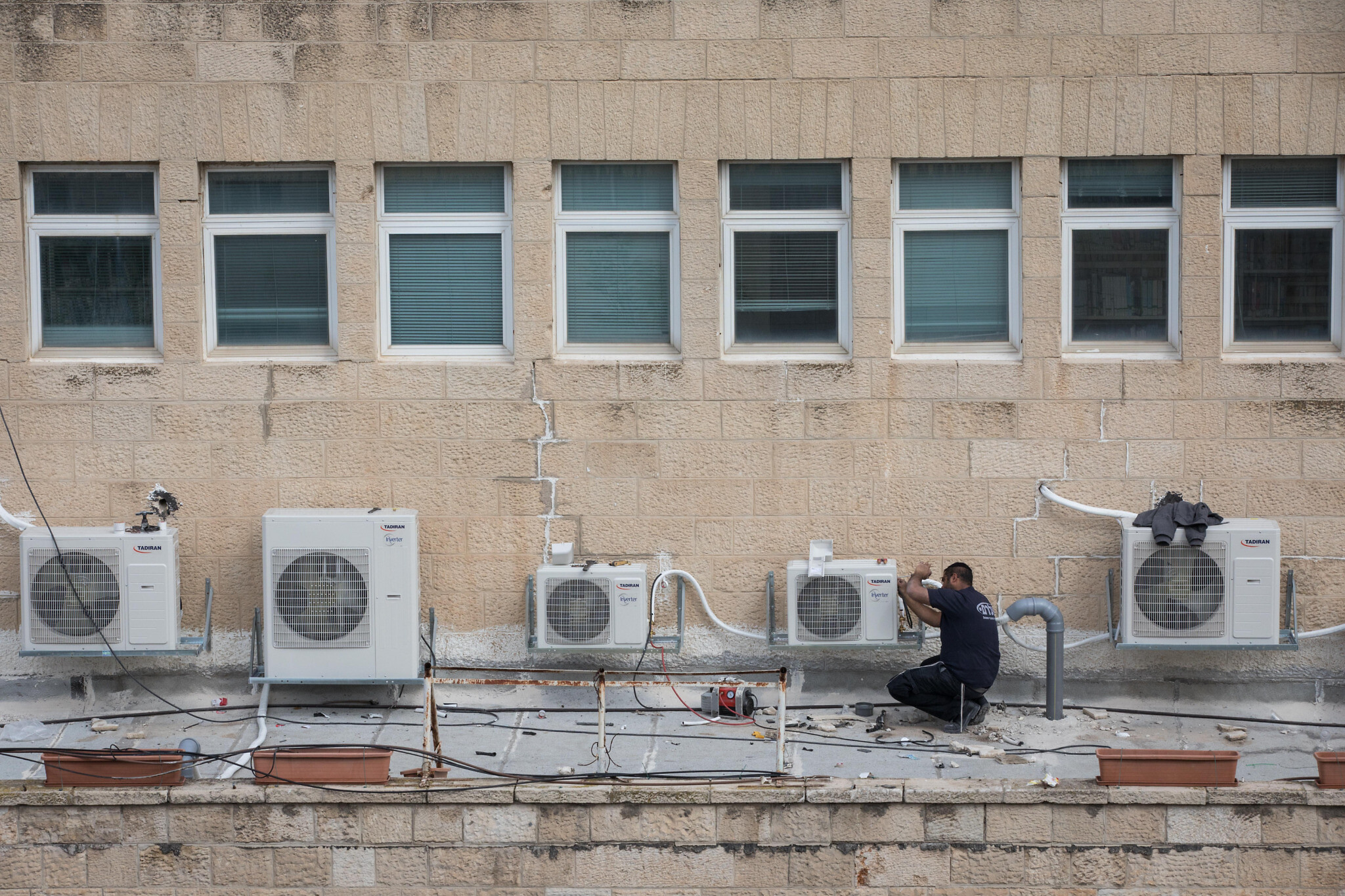
Electricity usage broke all records on Sunday as Israel sweltered under the latest heatwave, figures showed.
Israelis used 15,690 megawatts at 2:53 p.m., exceeding a 15,384-megawatt record set on July 25, according to the Independent System Operator for the electricity industry, known by its Hebrew acronym Noga.
Half the electricity on both occasions was utilized for air conditioning.
Data from the Israel Meteorological Service shows that at 2 p.m. Sunday, the mercury climbed above 40°C (104°F) in Jerusalem, and hit 41°C (105.8°F) in parts of the Lower Galilee and the Jordan Valley.
When the record broke on Sunday, the power was provided mainly from natural gas (9,239 megawatts), coal (3,379 megawatts), and solar panels (2,846 megawatts).
Noga’s CEO Shaul Goldstein said the high demand stemmed both from the searing heatwave and the growing number of air conditioners.
“Air conditioning use has grown from year to year, and together with the growth in electric vehicles, including buses, there is a significant increase in consumption,” he said.
The system was prepared for even higher loads than Sunday’s, Goldstein noted, so long as there were no large-scale malfunctions.
In June, an estimated 300,000 homes lost power as strong winds from Egypt brought sizzling heat into the country, sending temperatures in some places to 43°C (109°F) or higher. Separate malfunctions occurred at two power plants in southern Israel. Others were undergoing maintenance work to prepare them for the summer. And even solar panels underperformed, due to thick haze that accompanied the heatwave.
Goldstein said that with the entry of more electricity providers into the market in recent years, there was less dependence on any single producer.
Israelis could also do their bit, he added, by erecting solar panels on their homes and using electricity for non-urgent needs during the evenings.







The Times of Israel Community.