

Expert: Last week’s ‘blast’ in central Israel was a solid rocket fuel test
American professor bases assessment on satellite images, similar trials in other parts of the world
 Add ToI as a Preferred Source on Google
Judah Ari Gross is The Times of Israel's religions and Diaspora affairs correspondent.
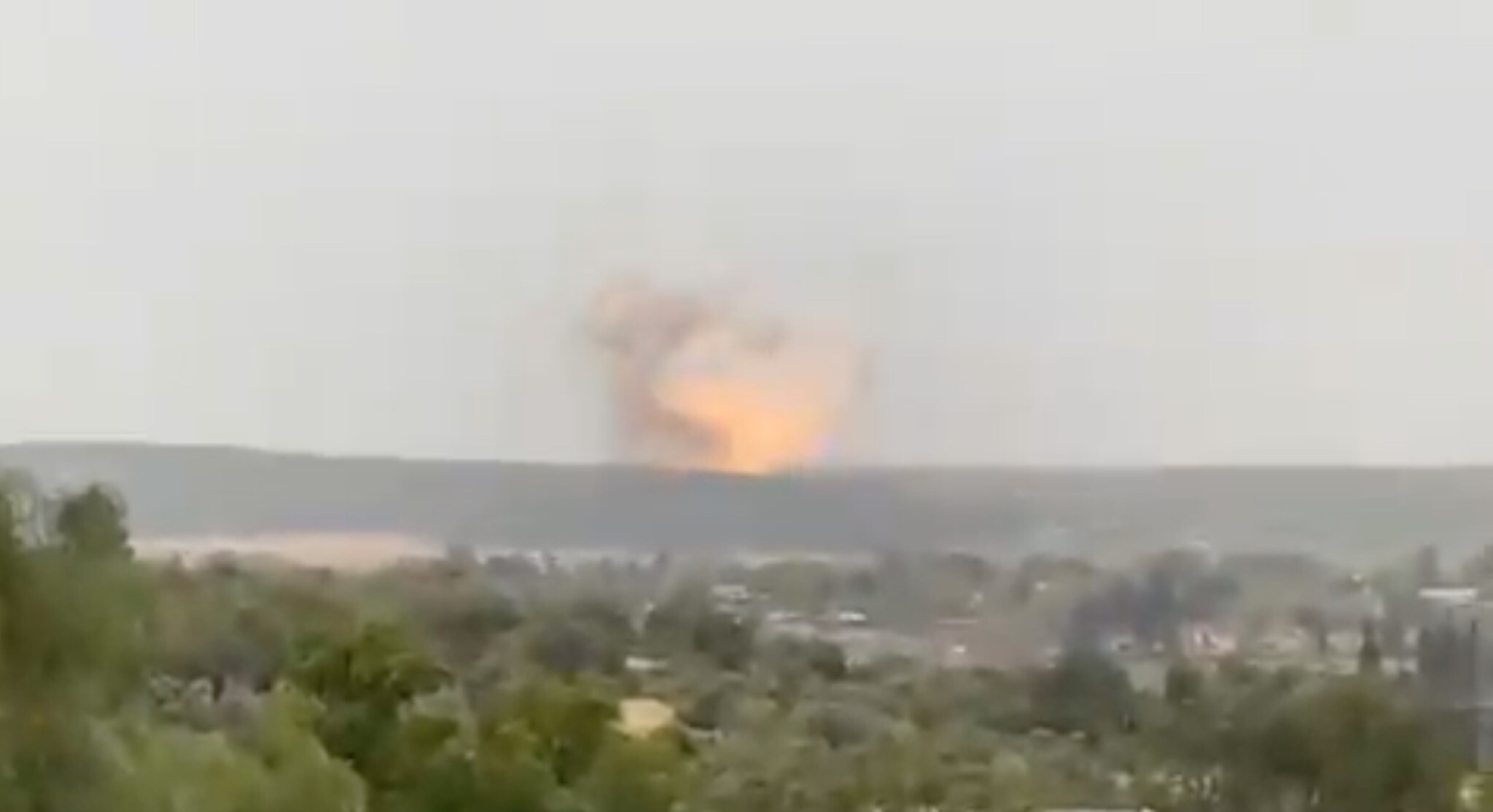
The mysterious blast seen in central Israel last week was, in fact, a test of solid rocket fuel at a secretive Israeli defense facility, according to an American nuclear nonproliferation expert.
Jeffrey Lewis, a professor at Middlebury Institute of International Studies and self-described “arms control wonk,” made his assessment based on satellite images of the site and video footage of similar tests from elsewhere in the world, publishing his findings on his website on Friday.
Last Tuesday, a Twitter user uploaded a video of the incident, showing a sudden massive blast of fire and smoke south of Kibbutz Mishmar David in central Israel, in the vicinity of the government-owned Tomer defense contractor, which manufactures propulsion systems for a variety of Israel’s rockets and missiles. This led to widespread speculation that the explosion was caused by Iranian sabotage as retaliation for a recent attack on the Islamic Republic’s Natanz nuclear facility, which was widely attributed to Israel.
When asked about the incident, a spokesperson for Tomer denied that an accidental blast had taken place, maintaining that the fire and smoke were caused by a “controlled test,” but refusing to elaborate further.
According to Lewis, the blast was in fact the controlled, directed explosion of a solid fuel rocket test.
The "explosion" video was posted on April 20. Satellite images captured by our friends at @planetlabs show a large burn scar that appeared on the same day at the test stand. I false-colored a pair of near-infrared images to reveal the scorched vegetation. (6/12) pic.twitter.com/QuBo7848Kh
— Dr. Jeffrey Lewis (@ArmsControlWonk) April 23, 2021
“There is a low rumble during the burn. And it seems to extinguish after a few seconds. At the James Martin Center for Nonproliferation Studies, we spend a lot of time looking at missiles. This event looks and sounds much more like the last few seconds of a test of a solid-propellent rocket motor than an explosion,” Lewis wrote in an article on his website.
Lewis and his colleagues reviewed satellite images of the area where Israel is known to test rocket motors and found that a large burn scar appeared on the day in question, one similar to those found after solid rocket fuel tests. They then cross referenced the images with the location data from the video, determining that the blast in the footage and the burn scar were in the same place.
“So, in the end, it is pretty clear to me that someone in Mishmar David recorded the last few seconds of a solid rocket motor test,” Lewis wrote.
The weapons expert questioned why Tomer decided to be cagey in its response instead of acknowledging the nature of the test, especially when it openly produces rocket motors for well-known, non-controversial Israeli missiles, including the Arrow 2 and Arrow 3 air defense systems and the Shavit satellite launcher.
“Why didn’t Tomer just say it was a solid rocket motor test? The fact that Israel produces large solid rocket motors for, among other systems, the Shavit space launch vehicle is no secret. There isn’t really any reason to be coy, it’s just… a habit. A culture that evolved in a past era and has yet to adapt to the current one,” Lewis said.








The Times of Israel Community.