

Gearing up for confrontation: 10 things for March 9
Police may set up a meet-fight between Netanyahu and a former aide who is blabbing about him; and alumni of Mideast confrontations have some advice for Trump before he meets Kim
 Add ToI as a Preferred Source on Google
Joshua Davidovich is The Times of Israel's Deputy Editor
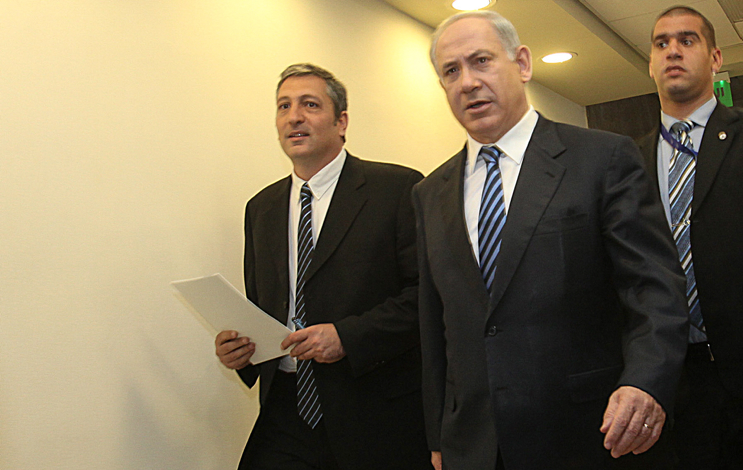
1. The world is talking about US President Donald Trump’s upcoming meeting with North Korean leader Kim Jong Un, but Israel may soon have a meeting no less dramatic (though somewhat less historic): Prime Minister Benjamin Netanyahu and former aide-turned-state’s witness Nir Hefetz.
- Yedioth Ahronoth reports that Hefetz agreed to a “confrontation” with Netanyahu and his wife, Sara — referring to an investigatory device sometimes used by police to put two people involved in a suspected crime together to see how they react to each other and what they say.
- However, the paper notes that investigators are still mulling the move, which would be seen as “extraordinary,” given the fact that they haven’t done so with the two other underlings that turned stoolie: Ari Harow and Shlomo Filber.
2. It’s not likely police want to spare the prime minister, though, after he attacked them on Wednesday by claiming they are telling witnesses to falsify evidence against him. “He’s talking like a Mob boss, no less,” Yedioth columnist Sima Kadmon writes, quoting a “very senior judicial official.”
- “If Netanyahu thinks the police, the prosecution and the attorney general are persecuting him, he should resign and do battle with them. But as long as he remains the prime minister, his denunciations of them are illegitimate. If no less a person than the prime minister thinks these institutions are acting unfairly, what will the ordinary citizen think,” Haaretz’s lead editorial reads.
- Playing the rube, columnist Haim Shine in Israel Hayom claims that there’s nothing wrong with Netanyahu trying to hand out favors for positive media coverage, as he is suspected of doing: “Anyone with any sense knows that Netanyahu is not corrupt,” he writes. “Everyone in politics wants positive coverage… If wanting it is graft, most Knesset members and party heads need to be investigated, and one would need to find out what positive coverage the police got in exchange for leaks.”
- Makor Rishon’s Netael Bandel joins those criticizing the police for allowing state’s witnesses to cut sweetheart deals and letting them avoid all or some punishment for their crimes. “It encourages government corruption. You just need to make sure you are not the most senior person in the scheme, and start to collect evidence from the state,” he writes.
3. The investigation is getting more and more wrapped up with talk of early elections, and there’s a sense that Netanyahu may be gunning for a snap poll even if the other coalition parties are willing to back down.
- Haaretz’s Yossi Verter writes that turning the dispute over the army draft into a coalition crisis and pushing for new elections after police recommend to indict — but before Attorney General Avichai Mandelblit actually hands down the charges — was a Likud strategy hatched about a month ago.
- “It all came together before our eyes wondrously over the last 10 days. The crisis broke out and escalated immediately. Those involved dug in their heels, threatened and tangled themselves in statements. And Netanyahu stood to the side and watched… as the fire spread,” he writes. “From his perspective it all came together for a one-time chance: to call elections, form a new government and once the charges come down, to claim that the people made their choice knowing the suspicions.”
4. Justice Minister Ayelet Shaked, though, may be playing spoiler by putting forward a compromise bill that Yisrael Beytenu head Avigdor Liberman signaled he may be able to live with, according to Haaretz.
- However, a poll in Israel Hayom showing 57 percent of the country would rather have new elections than giving in to the ultra-Orthodox on the matter — versus 17% who would be fine with the law — may push him to retreat from any compromise.
5. Netanyahu’s confidence in winning another term comes from a number of polls that show him maintaining a comfortable lead over any rivals, especially Yesh Atid.
- The prime minister’s continued popularity, despite his being corrupt, is not a huge mystery to Prof. Yoram Yuval, who writes in Yedioth that it comes from a subliminal desire in Israelis to be a little rebellious: “In our heart of hearts, we also want to be a little like Netanyahu. To see what our limits are, to maneuver into the gray zone between allowed and forbidden, and to manage to quickly slip away from anyone who tries to catch us.”
6. In The New York Times, David Halberstam takes note of the fact that Netanyahu seemed to have two separate agendas on his trip to the US: one for Israel, and one for everyone else.
- “Addressing American audiences in English, Mr. Netanyahu beat the drum, steadily and loudly, for confrontation with Iran,” he writes. “Speaking to the Israeli news media in Hebrew, by contrast, Mr. Netanyahu played the victim and continued his months-long assault on the credibility and motives of Israeli law enforcement.”
7. Sometimes, Israeli and American interests converge. Trump’s announcement that he has agreed to meet with North Korea’s Kim may have little to do with Israel, but the shock wave was big enough that it still dominated Israeli news sites overnight while much of the country slept.
- It did not take long for pundits to criticize the move as giving the North Koreans a quick win, being able to project their hermit kingdom as an equal rival of the US, with barely any plan or concessions. But some are also noting lessons from the Middle East that will be relevant.
- On Twitter, Mideast policy wonk Aaron David Miller says Americans meeting the Koreans can should pay attention to why Mideast peace talks failed.
Having helped shape and plan a failed presidential summit in2000, followed by three years of violence from which Israeli-Palestinian relations have still not recovered, make sure you know what you’re doing. We didn’t.
— Aaron David Miller (@aarondmiller2) March 9, 2018
Having helped plan a failed 2000 summit with Arafat, Barak and Clinton that was ill-timed; ill-advised; ill-prepared and followed by violence, I have 3 pieces of unsolicited advice — do your homework; study history; and be damn careful. https://t.co/jQSUmYOKQU
— Aaron David Miller (@aarondmiller2) March 9, 2018
- In The Washington Post, Iran deal negotiator Wendy Sherman also says the US needs to be prepared, going in, if it is going to take the talks seriously: “When we did the Iran negotiation, we wrote an entire agreement, over 100 pages, before we began the negotiation, so we had a sense of what we were trying to achieve. It was incredibly detailed and incredibly technical. There’s homework to be done.”
8. Homework might have helped people not get caught off guard over a story in The New York Times that the new US Embassy in Jerusalem will be partially in no-man’s-land between East and West Jerusalem, as the fact is easily discoverable on Google Maps and has been for years.
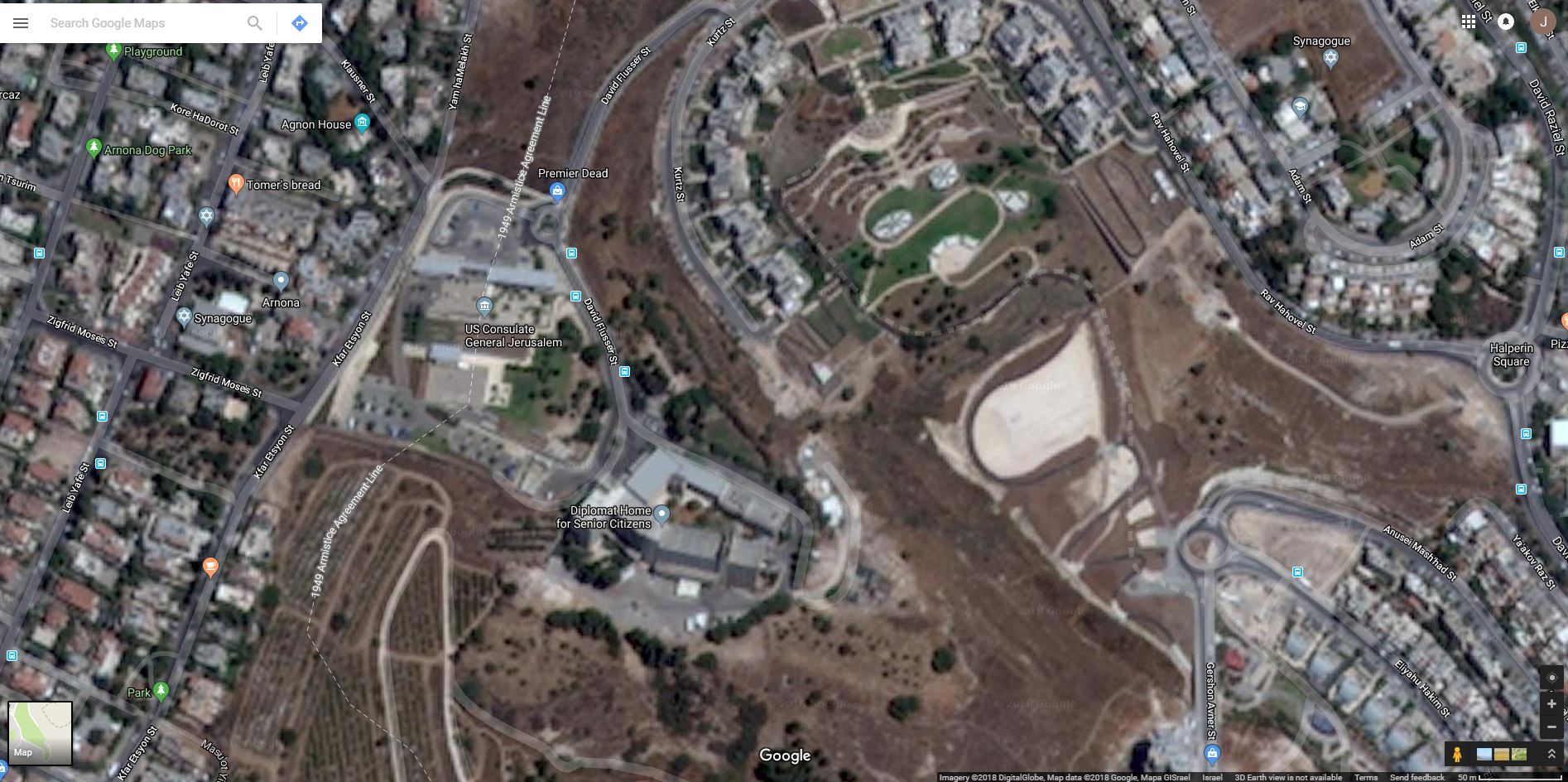
- The fact that it will be the embassy, though, does have policy implications. Still, State Department spokesperson Heather Nauert demurred when asked about them. “We did not make a determination on the borders or boundaries. That’s final-status negotiation. We consider our location, where it is, to be partly located in West Jerusalem and partly located in no-man’s-land,” was all she offered Thursday evening.
- In the meantime, the US may recognize Jerusalem as the capital of Israel, but it is still refusing to recognize that Jerusalem is even in Israel.
Trump can move all the embassies he wants. Jerusalem still isn't the capital of boo until the State Department decides it is. pic.twitter.com/gxJ6rdaaJO
— Joshua Davidovich (@Josh_Davidovich) March 8, 2018
9. Land-use issues are not unique to Israel. The Jordan Times reports that farmers in that country are annoyed that officials are buying land in their olive groves for a pipeline to ship Israeli gas.
-
- “The pipeline will occupy a 25-meter-wide plot passing through these lands,” a lawyer for local residents says. “This in practice means that each plot of land on the way of the pipeline will be destroyed.
10. Forget no-man’s-land. On Friday, Jerusalem is “no-car’s-land,” with much of the city blocked off for its annual marathon. Organizers say 35,000 runners are taking part in the various races across the city, including 4,000 from 72 countries running the full marathon, a new record.
I know #InternationalWomensDay
Was yesterday, but…This amazing lady, aka my mom, is about to run her 8th Jerusalem half-marathon (that's not including the ones she's run in the US) in order to raise money for the Michael Levin Lone Soldier Center. pic.twitter.com/gptkvAJEJw
— Judah Ari Gross (@JudahAriGross) March 9, 2018





The Times of Israel Community.