

Haley insists US decision on Jerusalem will ‘move the ball forward’
American UN ambassador suggests Trump’s recognition of Israeli capital will simplify peace negotiations
 Add ToI as a Preferred Source on Google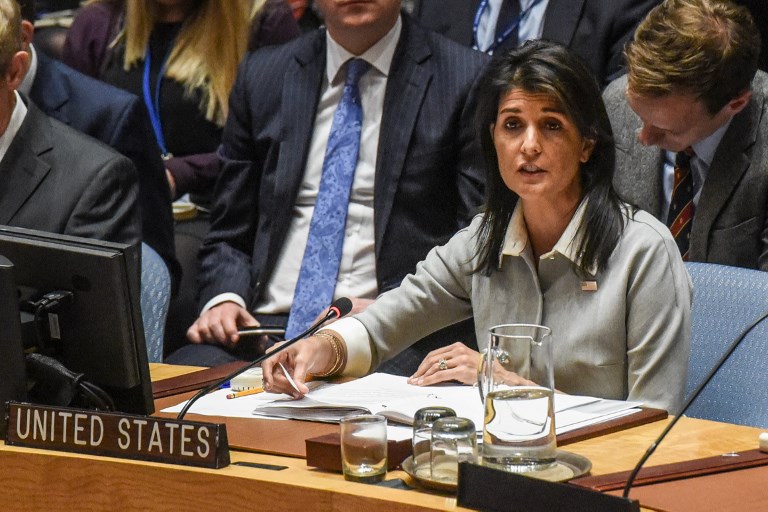
WASHINGTON — US President Donald Trump’s administration insisted on Sunday that its recognition of Jerusalem as the Israeli capital will help the cause of peace, with UN Ambassador Nikki Haley saying it will “move the ball forward.”
The new US stance, welcomed by Israel but fiercely criticized by Palestinians, Arab leaders and others as gravely damaging any prospects for Middle East peace, has given rise to swelling protests across the region in recent days.
But Haley suggested that the fears are overblown.
She told CNN that Trump was the first US president to have the “courage” to make a move that she said many Americans and others around the world supported.
US Ambassador to the United Nations Nikki Haley says moving the capital of Israel to Jerusalem will "move the ball forward for the peace process” #CNNSOTU https://t.co/2iuv0NPb65
— CNN (@CNN) December 10, 2017
“When it comes to those people (who are) upset, we knew that was going to happen. But courage causes that… I strongly believe this is going to move the ball forward for the peace process.”
When a CNN interviewer asked repeatedly how the change would help the cause of peace, Haley suggested that it would simplify negotiations.
“Now they get to come together to decide what the borders look like, they get to decide the boundaries and they get to talk about how they want to see Jerusalem, going forward.
“All we did was say, ‘this is not something we’re going to allow to happen in the middle of your negotiations.'”
In a Wednesday address from the White House, Trump defied worldwide warnings and insisted that after repeated failures to achieve peace a new approach was long overdue, describing his decision to recognize Jerusalem as the seat of Israel’s government as merely based on reality.
The move was hailed by Israel’s Prime Minister Benjamin Netanyahu and by leaders across much of the Israeli political spectrum. Trump stressed that he was not specifying the boundaries of Israeli sovereignty in the city, and called for no change in the status quo at the city’s holy sites.
Critics of the US shift say it will have the opposite effect: It has long been US policy that the critically sensitive status of Jerusalem — claimed as capital by both Israelis and Palestinians — must be saved for the end of peace negotiations, not taken off the table at the start.
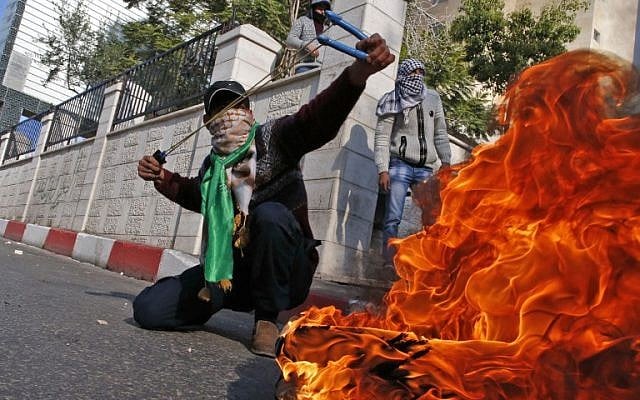
Protests, sometimes violent, have flared across the region since Trump announced the new policy on Wednesday. Two Palestinians in the Gaza Strip were killed in clashes on Friday, and two others died in Israeli air strikes in retaliation for rockets fired into Israel from the Hamas-run Palestinian enclave.
Hamas, an Islamist terror group that seeks to destroy Israel, on Thursday had called for a new intifada against Israel, on Friday urged Palestinians to confront soldiers and settlers, and has allowed thousands of Gazans to confront Israeli troops at the Gaza border fence in recent days. Its leader Ismail Haniyeh on Friday praised the “blessed intifada,” urged the liberation of Jerusalem, and made plain the group was seeking to intensify violence against Israel.
On Sunday, a Palestinian stabbed and seriously wounded an Israeli security guard in Jerusalem.
And in Beirut, Lebanese security forces fired tear gas and water cannon on Sunday at several hundred pro-Palestinian demonstrators gathered near the US embassy.


The Times of Israel Community.