Authorities say drug use has grown among the Strip’s 2 million residents as people look for an escape from harsh living conditions, soaring unemployment and travel restrictions
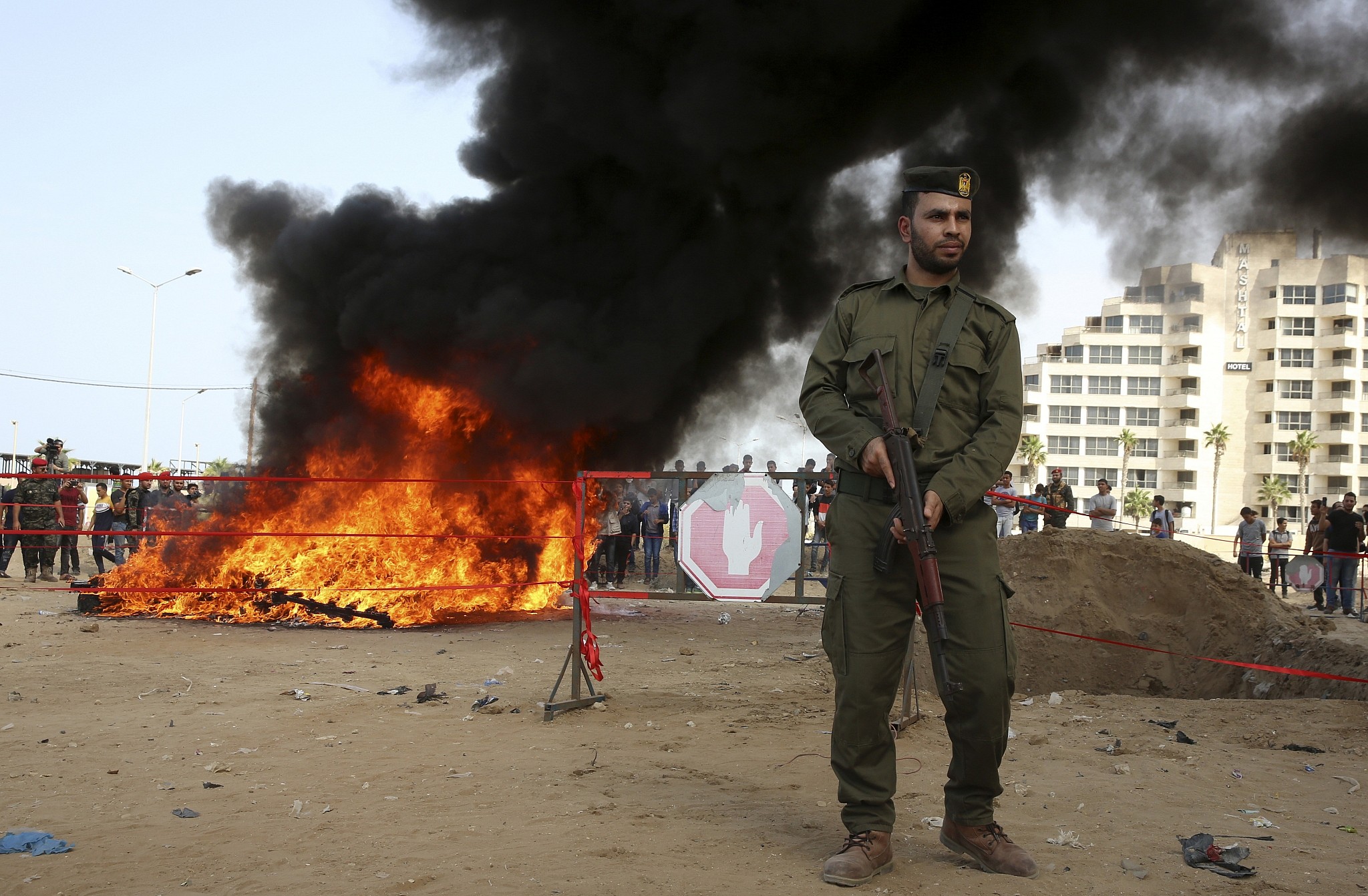
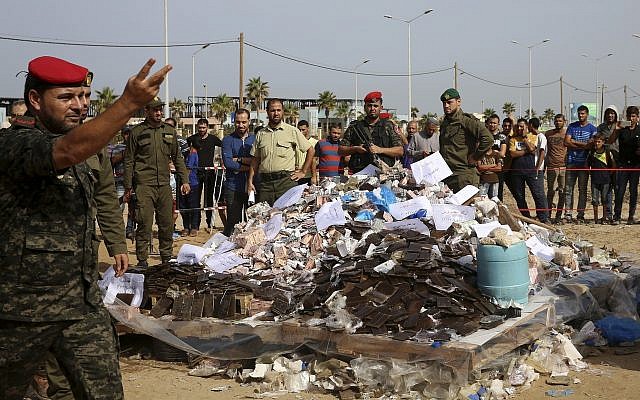
Hamas security forces stand guard while they burn some 1,383 bars of hashish and 1,242,000 pills of Tramadol, that have been seized since the beginning of the year, in Gaza City, Oct. 22, 2018. (AP Photo/Adel Hana)
Hamas authorities have been burning piles of narcotics and cannabis in a yearly sweep against drugs in the beleaguered Gaza Strip.
Officers in military fatigues on Monday poured gasoline and set alight more than 1 million tablets of opioid painkiller tramadol, about 1,500 slabs of hashish and 900 grams of opium.
With residents suffering under a decade-long Israeli-Egyptian blockade since the terrorist group Hamas took power, authorities say drug use has grown among Gaza’s 2 million residents as people look for an escape from harsh living conditions, soaring unemployment and travel restrictions. Israel imposes the blockade to prevent Hamas, which seeks to destroy Israel, from importing weaponry.
Hamas says it is fighting the endemic relentlessly. On Monday, it sentenced 17 people convicted of drug trafficking to hard labor prison terms of 10 years to life.
Last year, Hamas legislators endorsed the death penalty to curb drugs.
Get The Times of Israel's Daily Editionby email and never miss our top stories
Hamas security forces prepare to burn some 1,383 bars of hashish and 1,242,000 pills of Tramadol, that have been seized since the beginning of the year, in Gaza City, Oct. 22, 2018. (AP Photo/Adel Hana)
Help us report truthfully on social media
As a multimedia journalist, my job is to take the quality, fact-based journalism produced by The Times of Israel newsroom and make it accessible across every platform — from Instagram posts to podcasts to short-form videos.
This is how many, especially young people, consume news these days. But misinformation is rampant on social media. Our team at ToI produces accurate, responsible short-form reporting on Israel and the Jewish world.
If you believe in the importance of factual social media journalism, please consider joining our reader support group, The Times of Israel Community. Your financial support is essential to sustain responsible multimedia reporting.
We’re really pleased that you’ve read X Times of Israel articles in the past month.
That’s why we started the Times of Israel - to provide discerning readers like you with must-read coverage of Israel and the Jewish world.
So now we have a request. Unlike other news outlets, we haven’t put up a paywall. But as the journalism we do is costly, we invite readers for whom The Times of Israel has become important to help support our work by joining The Times of Israel Community.
For as little as $6 a month you can help support our quality journalism while enjoying The Times of Israel AD-FREE, as well as accessing exclusive content available only to Times of Israel Community members.
Thank you, David Horovitz, Founding Editor of The Times of Israel


 Add ToI as a Preferred Source on Google