IDF suspects engine malfunction behind crash of armed drone
Heron 1 has seen several issues, most recently in September when one fell in the sea near maritime border with Lebanon; fleet taken out of service pending investigation
Emanuel (Mannie) Fabian is The Times of Israel's military correspondent
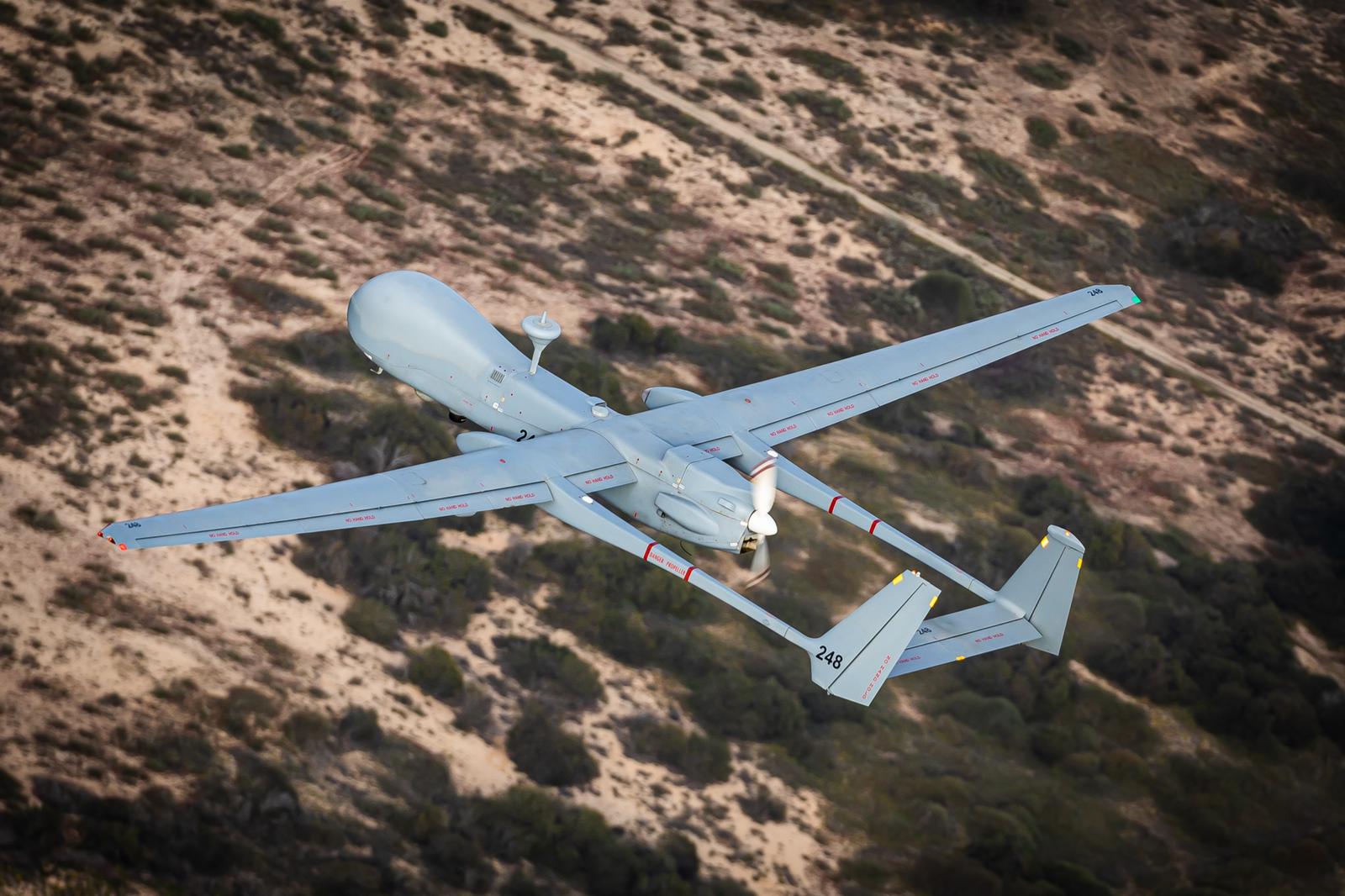
Illustrative: An IAI Heron TP is seen flying over Israel in early August 2022. (Israel Defense Forces)
The Israeli military suspects an engine malfunction caused an armed drone to crash in southern Israel on Wednesday, according to an initial probe of the incident, details of which were released Thursday.
The drone, an IAI Heron 1, known in the military as Shoval, crashed near the southern city of Arad, causing a fire and leading to the grounding of the entire fleet for the second time in three months.
The Heron 1 has seen several crashes due to various malfunctions, most recently in September, when one crashed into the sea along Israel’s maritime border with Lebanon, before it was retrieved by the Navy.
The Air Force briefly grounded the fleet following that crash.
Air Force chief Tomer Bar on Wednesday night ordered the grounding of the entire Heron 1 fleet until after the incident was investigated.
Get The Times of Israel's Daily Editionby email and never miss our top stories
The findings of an initial probe were presented to Bar on Thursday, and the final findings are to be presented next week, the IDF said.
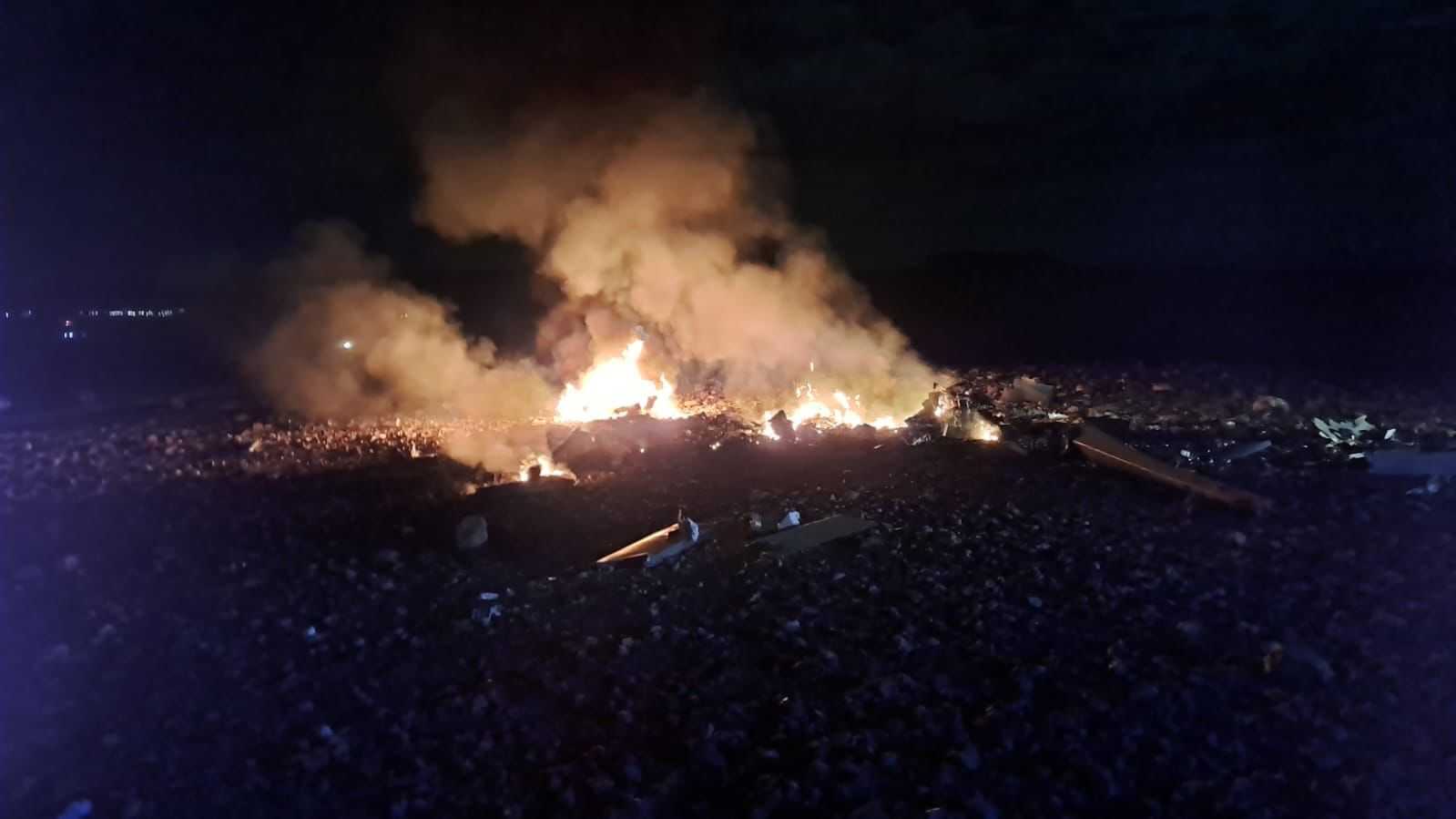
The scene of the crash of an armed military drone in southern Israel, November 9, 2022 (Courtesy)
Until recently, talk of Israel’s armed drones was barred from publication by the Military Censor. For years the IDF would not confirm it uses armed drones, and Israeli journalists who attempted to report on it came up against the IDF censor.
The IDF says that drones make up about 80% of the total operational flight hours in the Air Force. Israel has not disclosed how many attack drones it has.

Advertisement
We can't do this work alone.
The war with Iran has been draining for all of us in Israel. But when I heard about a high casualty incident – ballistic missile impacts in Arad and Dimona that left nearly 200 people wounded – I drank a cup of coffee, packed a bag, and headed south.
There, I spoke with Shilgit, the head of an after-school program for underprivileged youth. Standing outside her destroyed center, Shilgit said it was a miracle that no children were hurt and spoke about the community coming together in the hours since.
As a Times of Israel reporter, I’m committed to telling stories of resilience like Shilgit’s. But my colleagues and I can't do this alone. If you value work like this,please consider joining our reader support group, The Times of Israel Community. Your financial support is essential to keep real human reporting like this going.
We’re really pleased that you’ve read X Times of Israel articles in the past month.
That’s why we started the Times of Israel - to provide discerning readers like you with must-read coverage of Israel and the Jewish world.
So now we have a request. Unlike other news outlets, we haven’t put up a paywall. But as the journalism we do is costly, we invite readers for whom The Times of Israel has become important to help support our work by joining The Times of Israel Community.
For as little as $6 a month you can help support our quality journalism while enjoying The Times of Israel AD-FREE, as well as accessing exclusive content available only to Times of Israel Community members.
Thank you, David Horovitz, Founding Editor of The Times of Israel