

In interview blitz, Bennett vows to fire politicized officials if elected PM
Former premier says he’s seen ‘crazy things’ in ‘political’ Israel Police; urges Eisenkot to ‘display leadership’ and join his union with Lapid; warns Haredi draft evasion ‘killing our soldiers’
 Add ToI as a Preferred Source on Google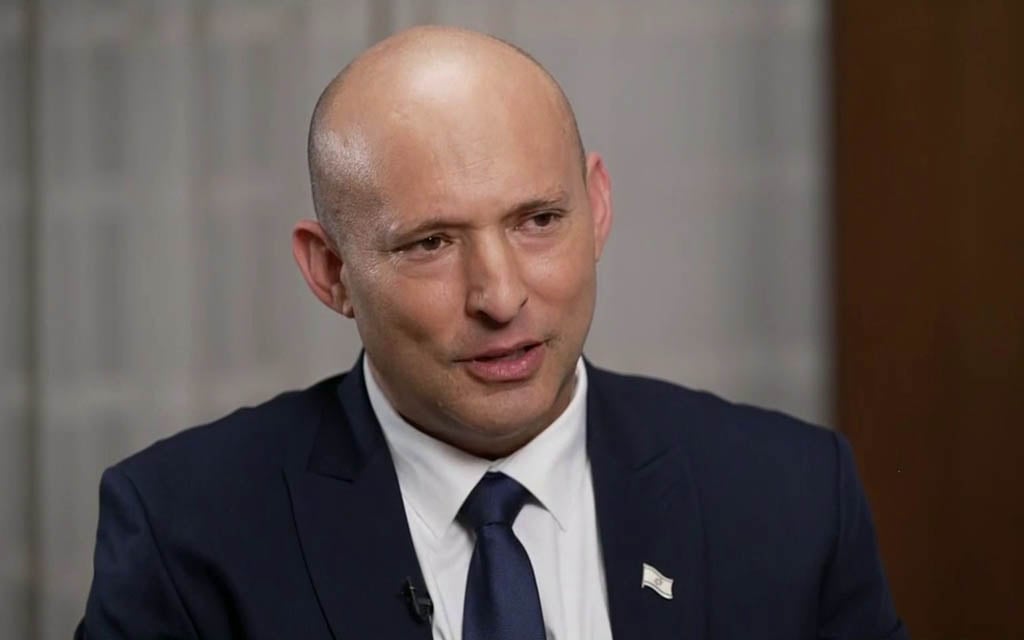
Former prime minister Naftali Bennett on Wednesday said that should he become prime minister again, he will “without a doubt” dismiss officials who he deems serve political interests rather than those of the country, as he conducted his first series of television interviews since his political union with Opposition Leader Yair Lapid’s Yesh Atid this week.
Bennett said in a Channel 12 news interview that officials will be examined “not on the intentions [of their appointment] but on their performance, what they are doing” in their positions.
The interviews he gave to other major TV networks were aired simultaneously.
Without naming any names, Bennett added that he has seen “crazy things” in the Israel Police. “They’re becoming political,” he said. “I suggest now and say to all the police leadership and every government employee, you are now under my scrutiny.”
Bennett was likely referencing National Security Minister Itamar Ben Gvir, who has exerted significant policy influence over the police force, which is under his ministry’s oversight. Attorney General Gali Baharav-Miara and several petitioners have argued to the High Court that the ultranationalist politician has overstepped his authority and undermined law enforcement’s independence.
Bennett may have also been referring to the controversial appointments of several top officials, including Shin Bet chief David Zini, who has faced criticism for allegedly politicizing the security agency, as well as Israel Prison Service Commissioner Kobi Yaakobi, a close Ben Gvir ally who is reportedly set to be indicted for breach of trust and obstructing an investigation.
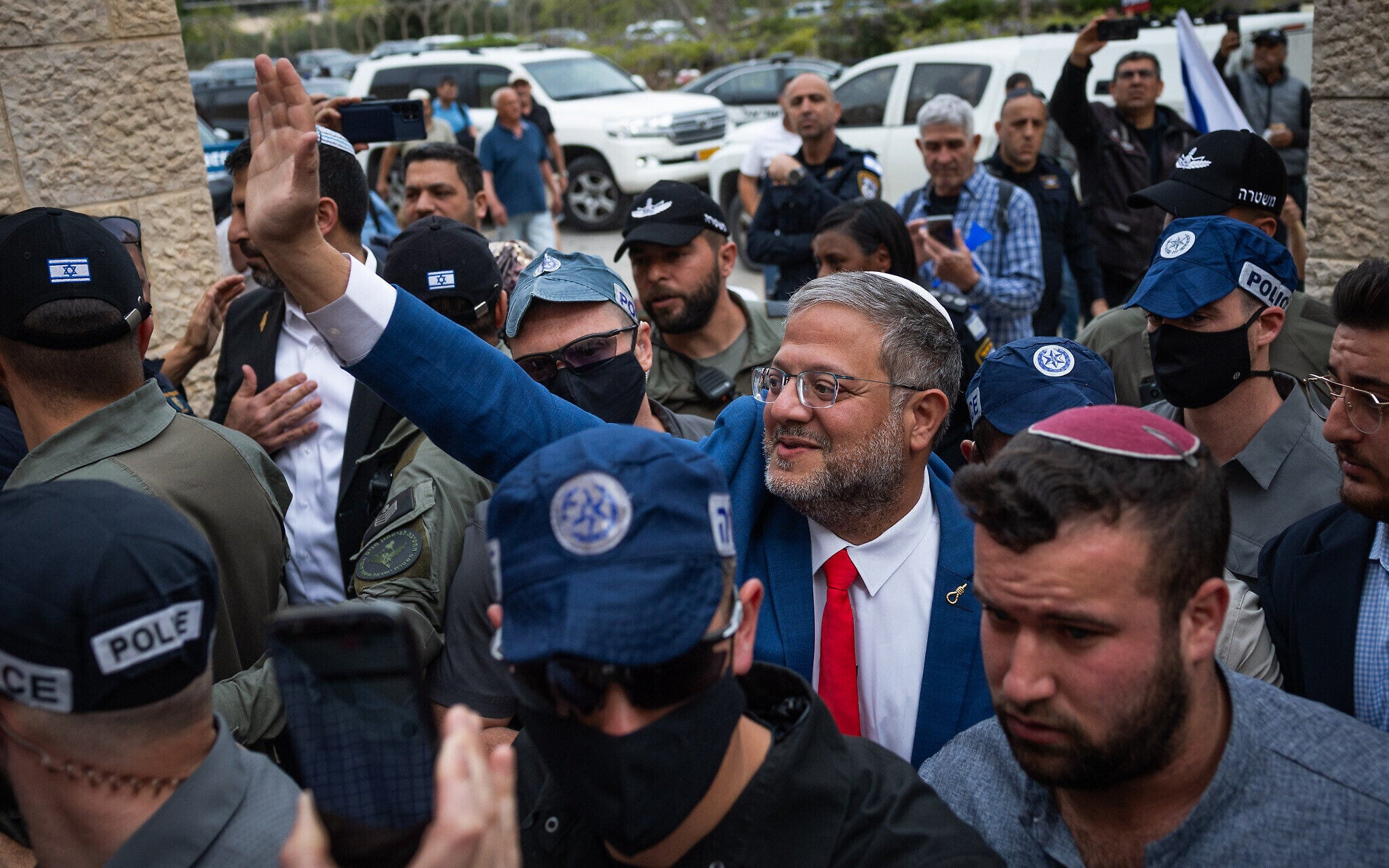
“Wherever I see places of political exploitation of the role and un-statesmanlike work, of course I’ll cut [them loose],” Bennett said Wednesday.
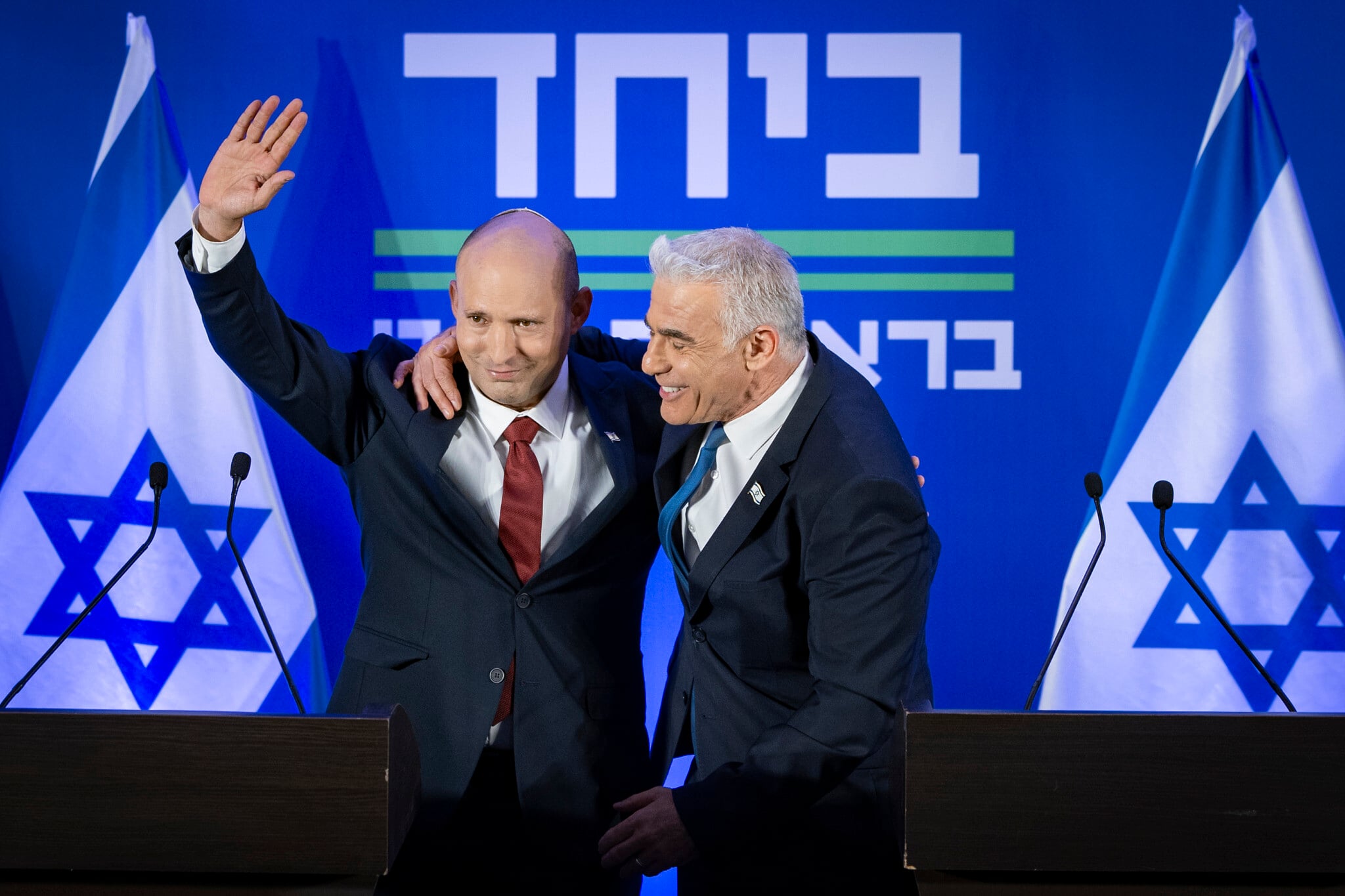
Commenting on his political union with Lapid, who are running in this year’s elections on a joint slate called “Together,” Bennett said he and his centrist ally “displayed leadership” with the move. He called on Gadi Eisenkot, another contender against Prime Minister Benjamin Netanyahu, who leads the Yashar! party, to also join forces under his leadership.
“I made a decision and displayed leadership, Lapid displayed leadership, now it’s Gadi’s turn to display leadership, to join, the ball is with him,” he said.
Bennett urged those in the so-called Zionist opposition to learn about uniting behind a leader from the example of the current ruling coalition.
“One thing that I’ll say to their [the coalition’s] credit is that they all line up behind Netanyahu. I think that the Zionist opposition bloc under my leadership must learn from this,” he said. “Even if I’m not exactly everyone’s cup of tea, that’s OK.”
Speaking about the coalition’s advancing of legislation to entrench widespread Haredi non-enlistment in the IDF, he said that draft evasion is “killing our soldiers,” and blamed Netanyahu and the government.
“The decision of the coalition to transfer billions to these draft-evaders, to prevent conscription that would have made it easier for our soldiers… is costing [us] in blood,” he said.
When asked if he blames Netanyahu for this, he said: “It’s all the coalition, it’s not just him, it’s costing us in human life.”
Speaking about the potential for him to unite with Ra’am, a moderate Arab party that was in his former coalition, Bennett indicated that he would not do so again: “Since October 7, we have to rely on the union of servers [soldiers] and Zionist people. That’s how it is.”
“Will I care for the Arab citizens of Israel? Of course. But to depend [on an Arab political party?] No,” he added.
Both Netanyahu and Bennett are again campaigning on not forming a coalition with Arab-majority parties. Bennett pledged not to sit in the same government as Ra’am during the 2021 election campaign, but subsequently did just that to form a coalition. Bennett said Sunday that Netanyahu was ready to do the same thing, a claim Ra’am leader Mansour Abbas has repeatedly made.
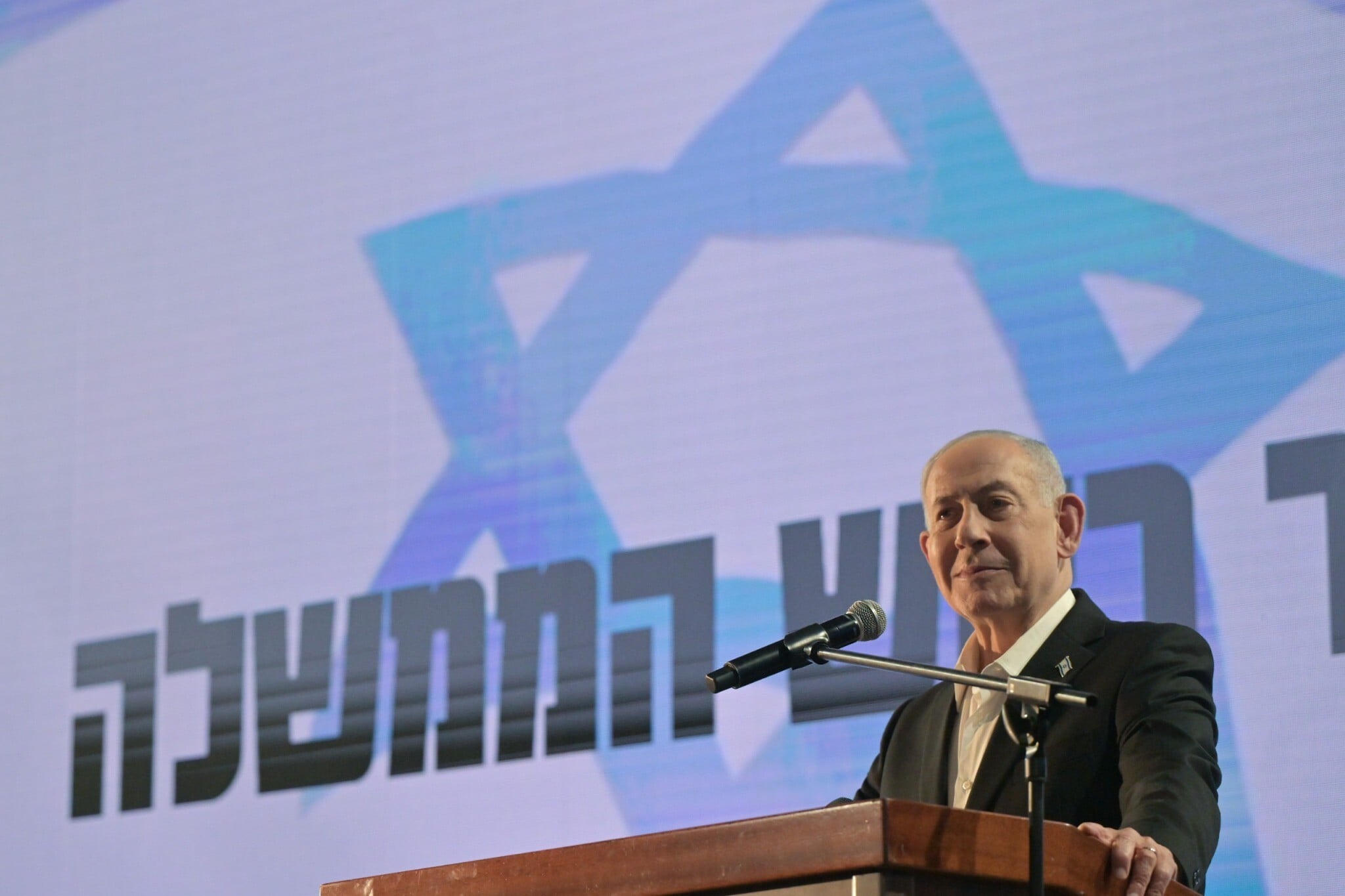
While the 2021-22 Bennett-Lapid government appeared to break the taboo against such high-level political cooperation with Arab-majority parties, attitudes toward such collaboration have soured following Hamas’s October 7, 2023, attack.
A Monday poll by Channel 12 showed that Bennett and Lapid would win a total of 26 seats if elections were held, overtaking Netanyahu’s ruling Likud as the Knesset’s largest party.
In the poll — the network’s first since Sunday night’s announcement of the union — Netanyahu’s right-wing bloc only garnered 50 out of 120 Knesset seats while the Zionist opposition parties received 60 and the Arab factions 10 — an identical showing to last Thursday’s Channel 12 survey.
The combined Bennett-Lapid platform’s showing of 26 seats is one fewer than the two received separately in that previous poll, in which Bennett 2026 and Yesh Atid garnered 21 and seven seats, respectively.
They were followed in Monday’s poll by Likud with 25 seats; Gadi Eisenkot’s centrist Yashar at 15; the left-leaning Democrats at 10; the Mizrahi ultra-Orthodox Shas, the secular, right-wing Yisrael Beytenu and the far-right Otzma Yehudit at 9 each; the Ashkenazi ultra-Orthodox United Torah Judaism at 7; and the Arab-majority Hadash-Ta’al and the Islamist Ra’am each with 5.








The Times of Israel Community.