

Iran’s president proposes all male, near-same cabinet for his second term
‘We are treading water,’ says outgoing vice president for women’s affairs; Foreign Minister Mohammad Javad Zarif will keep his post
 Add ToI as a Preferred Source on Google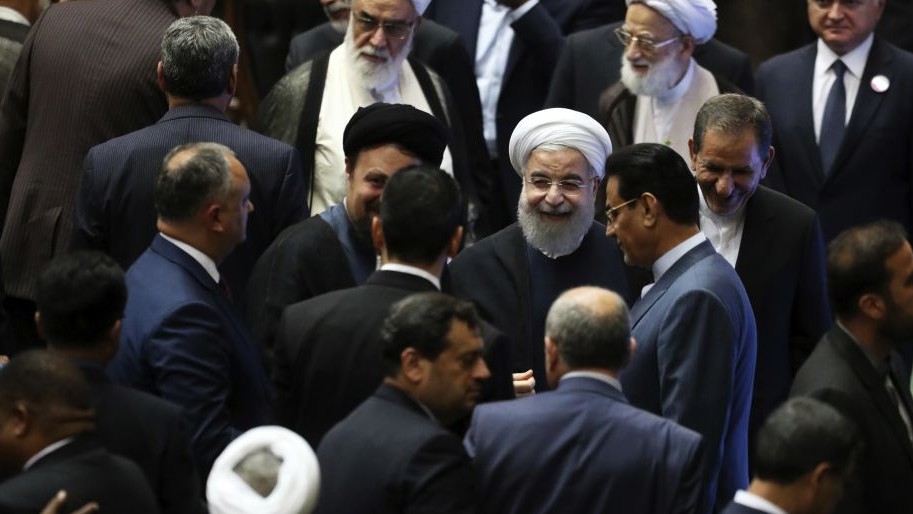
TEHRAN, Iran — Iran’s President Hassan Rouhani has proposed an all-male cabinet for his second term in office, with almost no changes among incumbent portfolios.
Iranian state TV said Tuesday that according to a list of 17 nominees Rouhani submitted to parliament, Foreign Minister Mohammad Javad Zarif, Oil Minister Bijan Zanganeh and Intelligence Minister Mahmoud Alavi will retain their posts.
He did replace the defence minister, Major General Hossein Dehghan, with his deputy, General Amir Hatami — the first time in more than two decades that the post has been filled by someone from the regular army rather than the elite Revolutionary Guards.
Parliament is to vote next week on the cabinet.
The line-up again included no women, despite criticism of their absence from his reformist allies.
Rouhani’s reformist allies had already slammed the president after news leaked that he would again fail to appoint any women to the cabinet — seen as a capitulation to religious leaders.
“The lack of women ministers shows we are treading water,” Shahindokht Mowlaverdi, Rouhani’s outgoing vice president for women’s affairs, told the reformist Etemad daily on Monday.
During his first term, she was one of three women among his large cohort of vice presidents, who do not require parliamentary approval.
Ironically, the sole female minister since Iran’s 1979 Islamic revolution came under Mahmoud Ahmadinejad, Rouhani’s hardline predecessor, whose health minister Marzieh Dastjerdi served between 2009 and 2013.
With no official parties in parliament, Rouhani must coordinate among a shifting pattern of political factions, none of which holds a definitive majority of the 290 seats.
He is known to have coordinated closely on his appointments with other power-brokers, including supreme leader Ayatollah Ali Khamenei, the Revolutionary Guards and the judiciary.
The 68-year-old Rouhani was sworn into office on Saturday. He was re-elected in May on the platform of pursuing a “path of coexistence and interaction with the world.”
Rouhani said he prefers “peace to war and reform to rigidness.”








The Times of Israel Community.