At ToI event, Lapid warns president against meddling in post-election coalition talks
Candidates clash over possibility of unity with Likud, West Bank settlements and international isolation; People of Israel's Eran Ben-Ari backs E1 building: 'Do you want Jerusalem to be a border town?'
Former prime minister Yair Lapid, No. 2 on the B’Yachad electoral slate, criticized President Isaac Herzog on Monday evening over his pledge to do everything in his power to prevent a second round of elections if the October 27 vote fails to produce a clear winner, arguing that the president has no authority to intervene in parliamentary politics.
Speaking with The Times of Israel’s founding editor David Horovitz at a ToI event in Tel Aviv two weeks before Israelis head to the polls in what is expected to be a very tight race, Lapid said he opposed presidential involvement in efforts to resolve a potential post-election deadlock.
“I don’t think it’s a good idea that the president will get involved,” Lapid said, arguing that it is not within Herzog’s authority as president. “I think it’s a bad idea. In our system, there is a wall between the presidency and the Knesset.”
As president, Herzog is officially tasked with appointing a candidate to attempt to form a government following an election, but has little discretion beyond the ability to extend the time allotted for coalition negotiations.
Earlier on Monday, though, Herzog pledged to do everything he could to ensure the formation of a stable government and avoid another round of elections. The comments were seen as a signal that he could intervene to help cobble together a unity government involving rivals Likud and Gadi Eisenkot’s Yashar party to break a potential deadlock.
Recent polls show neither Prime Minister Benjamin Netanyahu’s presumed coalition nor the main opposition bloc led by Eisenkot securing enough seats to form a government.
Pressed on whether the opposition was campaigning vigorously enough to unseat Netanyahu, Lapid argued that an aggressive approach risked alienating the moderate right-wing voters who could determine the election’s outcome.
“This election is going to be determined by six to seven seats of moderate right-wingers who are all against a very violent or toxic campaign. They’re fed up with it,” he said, expressing confidence in the opposition bloc’s impending victory.

Introducing Monday evening’s sold-out event, held at the ANU Museum of the Jewish People at Tel Aviv University, Times of Israel political correspondent Tal Schneider noted that Foreign Minister Gideon Sa’ar had also been invited for a one-on-one sit-down, but could not attend because he was in Albania. Schneider noted that The Times of Israel then approached several other high-ranking Likud ministers, but they declined the invitation.
The uncertainty over who could form Israel’s next government was a central theme of the evening, which also featured a panel discussion moderated by Schneider, with MK Gilad Kariv of Yair Golan’s Democrats, former minister Orit Farkash-Hacohen of Yashar, Eran Ben-Ari of Ofer Winter’s People of Israel party, and Einat Wilf of Yoaz Hendel’s Reservists-Economic Party.
Kariv, No. 3 on the left-wing party’s list, categorically rejected any possibility of a unity government with Likud, while Farkash-Hacohen stopped short of explicitly ruling out such an arrangement.
“There is no room — moral, public or political — for a unity government with Netanyahu, with Likud, and with any other party that took part in this terrible government and coalition,” Kariv declared, insisting that the opposition would win a majority on October 27. Asked whether he would prefer another election over forming a government with Likud, he replied that he would rather face five more election cycles.
Farkash-Hacohen, pressed on whether Yashar would be willing to join a unity government with Likud, reiterated her party’s stance that members of any future coalition would have to uphold Israel’s Jewish and democratic character, the principles of the Declaration of Independence, and universal military or national service.
The party has consistently refused to rule out potential partners, including non-Zionist parties from the ultra-Orthodox and Arab communities, but has demanded that any ally accept Israel’s Jewish and democratic character.
Farkash-Hacohen later stressed that “no one in a leadership position on October 7th can continue,” essentially ruling out Netanyahu remaining in power but not explicitly excluding cooperation with Likud under different leadership. Yashar party leader Eisenkot similarly said Sunday: “Everyone who was in office [on October 7] is unfit to serve in command and leadership roles.”
Ben-Ari, meanwhile, defended the People of Israel party’s willingness to join a Netanyahu-led government despite the party’s campaign against the government, saying it would condition its support on fundamental changes to policies exempting the ultra-Orthodox from military conscription.
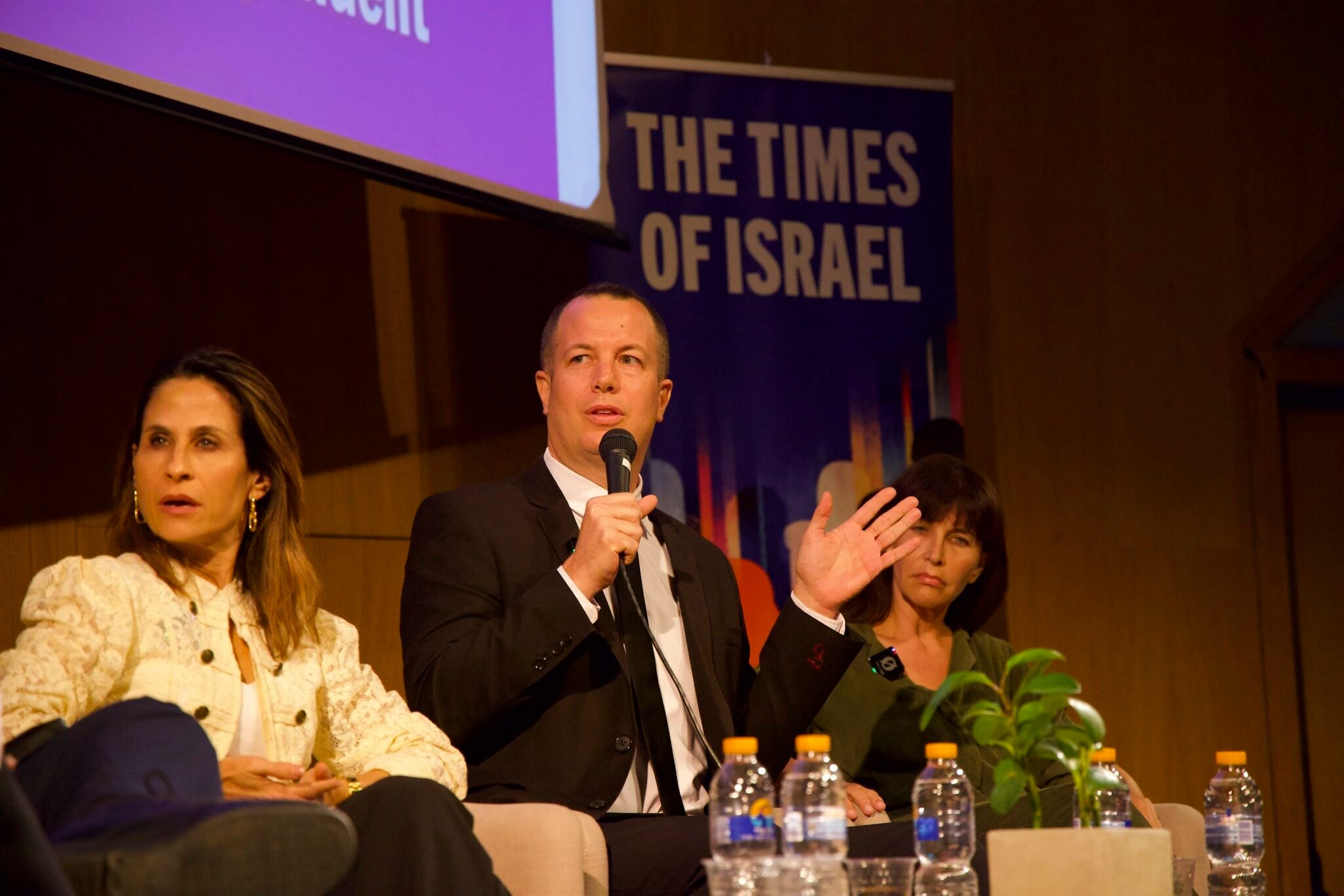
“It’s the one condition we have to support Netanyahu as a prime minister,” he said, acknowledging that such an arrangement would require either the Haredi parties to change their position or his own party to be in a position to wield very substantial political influence.
Farkash-Hacohen ridiculed the suggestion that a small party could force Netanyahu to abandon his ultra-Orthodox partners. Polls show People of Israel hovering around four or five seats, less than a third of what Shas and United Torah Judaism are projected to win, together.
“If you really think that because of a four- or five-seat party Netanyahu will change, then you live in la-la land,” she said.
Settlement policy
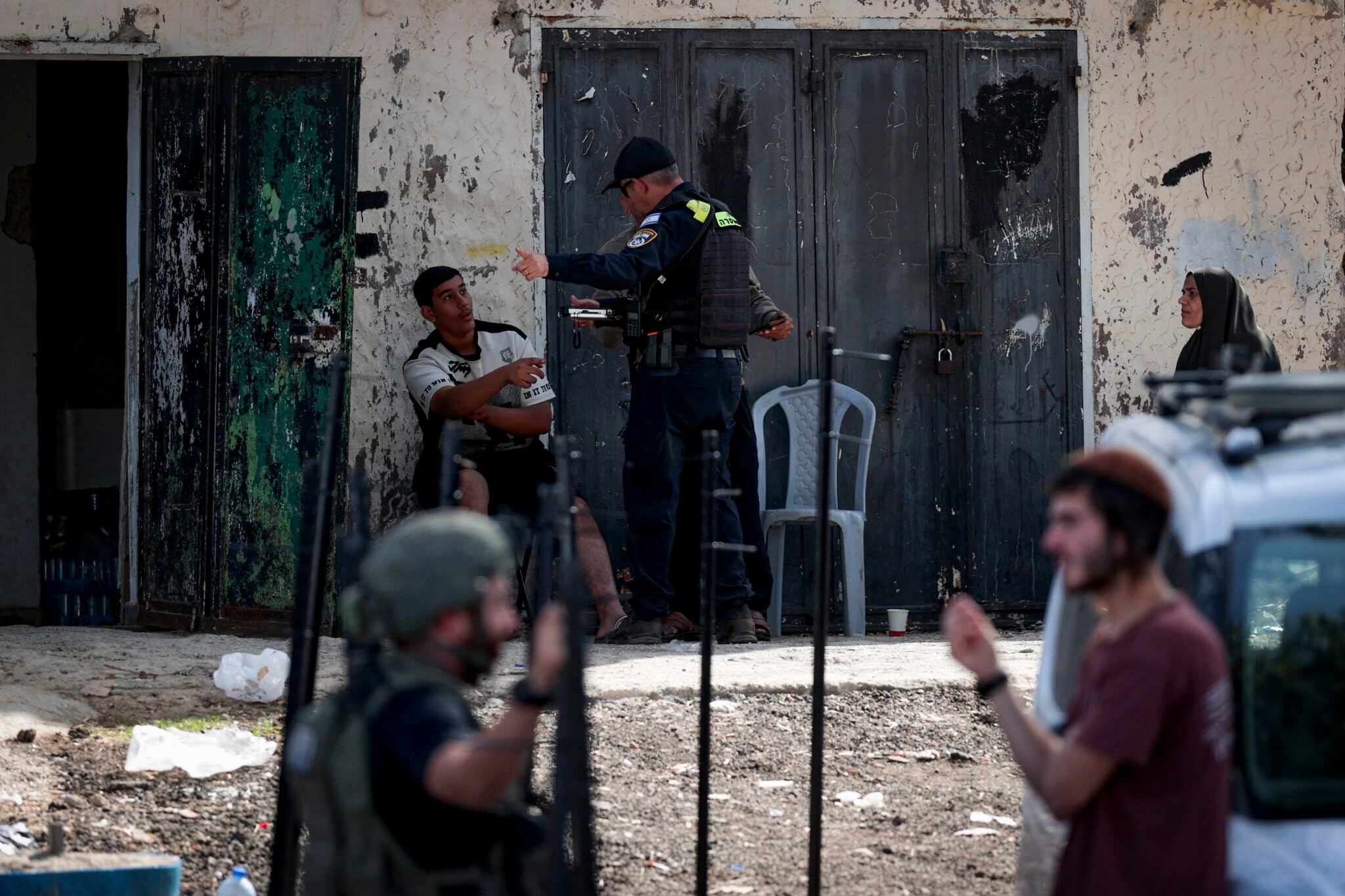
The panelists also differed sharply over plans to expand settlement construction in the contentious E1 area east of Jerusalem, which have drawn threats of international sanctions, and over the government’s handling of extremist settler violence in the West Bank.
The E1 project would see thousands of housing units built as an extension of the Maale Adumim settlement, linking the large West Bank settlement to Jerusalem and cutting off reasonable territorial contiguity between key Palestinian population centers.
Kariv opposed the project, noting that Netanyahu himself had blocked construction there for years because of its diplomatic repercussions. He argued that building in E1 would damage the Palestinian economy without improving Israeli security. He also accused ministers Bezalel Smotrich and Orit Strock of pursuing a deliberate policy of using extremist settler violence to displace Palestinians.
While expressing support for settlement construction within “the limits of Israeli law” and national security interests, Farkash-Hacohen declined to say whether a Yashar-led government would halt the E1 project, instead emphasizing the need to restore Israel’s international standing.
Ben-Ari, by contrast, defended construction in E1 as essential to Israel’s security, arguing that failing to develop the area would leave Jerusalem vulnerable and place Israel’s narrow coastal plain at risk.

“Do you want Jerusalem to be a border town?” he asked, insisting that building in E1 was “crucial.”
Wilf, meanwhile, dismissed the debate over E1 as misguided, arguing that Israel should instead adopt a comprehensive policy for the West Bank.
“Dealing with E1 is stupid,” she said, calling for Israel to make clear that areas where most settlers live would become Israeli territory, while other areas would remain under Israeli control.
Israel’s international isolation
The dispute over settlement policy reflected a broader divide over how to deal with Israel’s growing international isolation, with Lapid, Kariv and Farkash-Hacohen blaming government policies for much of the diplomatic fallout, while Wilf argued that hostility toward Israel ran far deeper.
“The majority of people who are now speaking against us don’t hate the State of Israel — they hate the government of Israel,” Lapid told Horovitz.
“There is a severe hasbara problem, but this is not only a public advocacy problem… it’s also a problem of poor policies,” he said, citing the government’s tolerance of Jewish extremist violence in the West Bank.
Lapid also accused ministers in the government of fueling allegations of genocide through inflammatory statements about Gaza, vowing that any minister in a future government who advocated nuclear attacks or deliberate starvation of civilians would be “fired on the spot.”
Kariv echoed Lapid’s criticism, accusing Netanyahu of “abandoning” the bipartisan approach that had historically underpinned Israel’s relationship with the United States.
Wilf, however, offered a sharply different assessment, arguing that Israel was confronting a global wave of anti-Zionism that would not disappear with a change in government.
“What is happening in the world today is we’re living through mass psychosis that has been built for decades,” she said, describing October 7, 2023, as the day people emerged from “physical tunnels and metaphorical tunnels to wage a global assault on Jewish life” by equating Israel and Zionism with apartheid, racism, colonialism, Nazism and genocide.
“If Zehava Gal-On were tomorrow Israel’s prime minister, this would not make a difference to what is being built against us globally,” she said, referring to the former leader of the left-wing Meretz party.
Wilf warned that the growing portrayal of Israel as an obstacle to a better world meant “we are entering very dangerous territory,” urging Israel to prepare for “some pretty extreme scenarios” while working more closely with international allies.
Monday’s event was the first of three pre-election discussions being hosted by The Times of Israel. On Wednesday, Times of Israel deputy editor Amanda Borschel-Dan will host a live recording of the Daily Briefing podcast in Jerusalem, joined by military correspondent Emanuel Fabian, diplomatic correspondent Lazar Berman, and political correspondent Ariela Karmel.
On October 18, Horovitz will host a free-wheeling conversation with analyst Tal Becker covering what’s at stake in the elections, also in Jerusalem.