

 From the Liveblog of
Thursday, December 7, 2023
From the Liveblog of
Thursday, December 7, 2023
Arab nations ready draft Security Council resolution calling for Israel-Hamas ceasefire
 Add ToI as a Preferred Source on Google
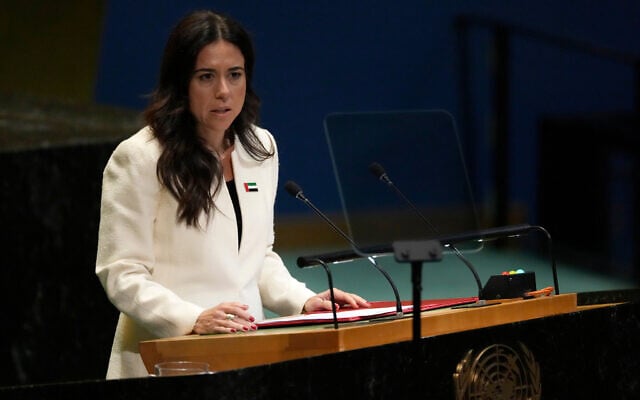
Arab nations at the United Nations are fine-tuning a proposed UN Security Council resolution calling for a ceasefire in the two-month Israeli-Gaza war.
Riyad Mansour, the Palestinian UN ambassador, said Wednesday that it’s essential that the UN’s most powerful body demand a halt to the war following the resumption of fighting in Gaza after the end of a weeklong humanitarian truce on December 1.
Surrounded by members of the 22-nation Arab Group, Mansour also told reporters that a ministerial delegation from Arab nations and the 57-member Organization of Islamic Cooperation headed by Saudi Arabia’s foreign minister will be in Washington on Thursday to meet with US officials.
“On top of the agenda is this war has to stop,” he said. “A ceasefire has to take place and it has to take place immediately.”
Mansour said the national security adviser to US Vice President Kamala Harris contacted Palestinian Authority President Mahmoud Abbas Wednesday morning and that Abbas pressed for an immediate ceasefire and more humanitarian aid.
The US, Israel’s closest ally, has veto power in the Security Council and has not supported a ceasefire.
On Tuesday, US deputy ambassador Robert Wood told reporters that the role of the Security Council in the Israeli-Hamas war “is not to get in the way of this important diplomacy going on on the ground … because we have seen some results, although not as great results as we want to see.”
A Security Council resolution at this time, he said, “would not be useful.”
Times of Israel staff contributed to this report.






The Times of Israel Community.