

 From the Liveblog of
Monday, February 2, 2026
From the Liveblog of
Monday, February 2, 2026
Knesset marks building’s 60th anniversary
 Add ToI as a Preferred Source on Google
Ariela Karmel is a political correspondent at The Times of Israel. She previously reported for Calcalist and Haaretz. She holds an MA in Middle Eastern and African History from Tel Aviv University and a BA in Political Science from the University of British Columbia.
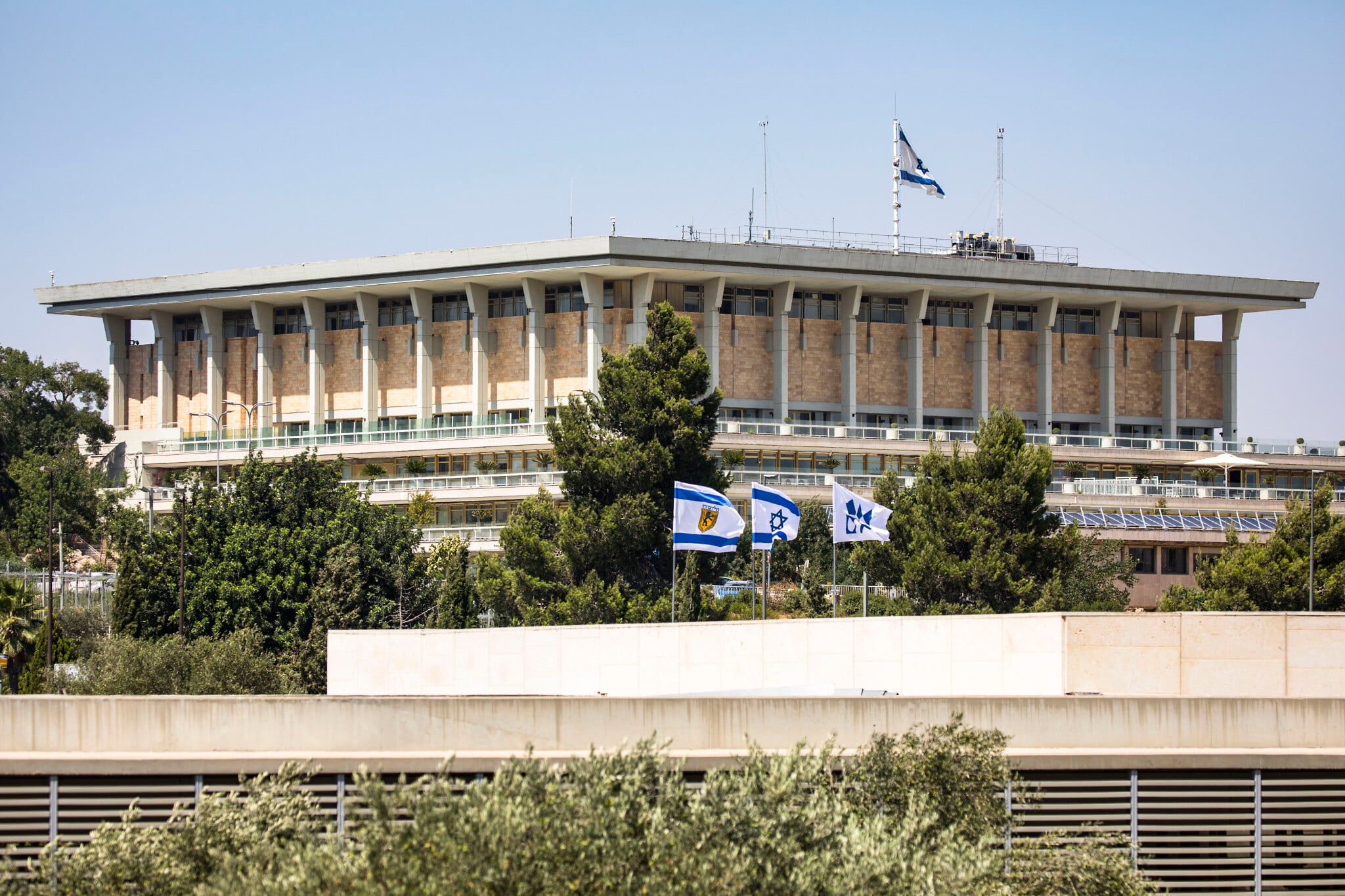
The Knesset is marking the 60th anniversary of its building’s inauguration in August 1966 and is hosting an “open house” to celebrate the occasion.
More than 2,000 visitors are expected to come to the Knesset today, including soldiers, police officers, Holocaust survivors, and students from across the country, according to the Knesset Spokesperson’s Office.
Designed by architect Ossip (Yosef) Klarwein, construction of the Knesset’s permanent home in Jerusalem’s Givat Ram neighborhood took about a decade to complete, aided by a six-million-Israeli-pound donation from philanthropist Lord James de Rothschild. The move in August 1966 followed 16 years in which Israel’s parliament operated out of Beit Frumin, a three-story building on King George Street that had housed the Knesset since March 1950.
Then-prime minister Levi Eshkol declared during the inauguration ceremony that the new building was “a symbol of Israel’s rebirth in its land.”
“The Knesset building, representing renewed sovereignty in the national home of the Jewish people, marks sixty years of parliamentary activity,” says Knesset Speaker Amir Ohana in a statement.
“The building is one of the most recognizable and beautiful structures in the State of Israel, and within it, the people of Israel have experienced moments of great uplift as well as difficult hours, as we have seen in recent years,” he continues.
Several events will take place today, including musical performances, exhibits, and an honor guard ceremony in the Knesset plaza, culminating in the raising of the national flag. A plenary session will be held to mark the day, along with a prayer service at the Knesset synagogue.
Additionally, a new archaeological exhibition called “From the Great Assembly to the Knesset building: The wanderings of the Sanhedrin” will present 1,800-year-old artifacts from the Second Temple period, tracing the history of “Jewish leadership institutions.”
The Great Assembly, known in Hebrew as the Knesset Hagdola, was, according to Jewish tradition, a body of around 120 sages and prophets that operated for roughly two centuries, from about 516 to 332 BCE, from which Israel’s modern 120-seat Knesset derives both its name and its number of members.










The Times of Israel Community.