

Nefertiti’s tomb may have finally been found
Archaeologist says Egyptian queen’s final resting place may be hidden behind a wall in the grave of King Tut
- See more Times of Israel on Google - add us as a Preferred Source
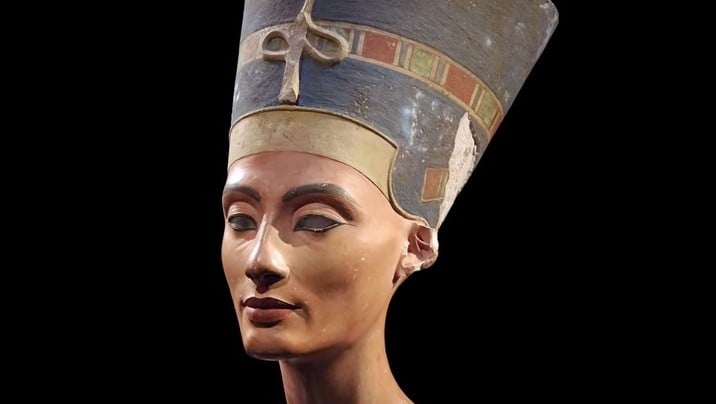
An American archaeologist believes he may have found the long-lost tomb of Egypt’s Queen Nefertiti.
The ancient Egyptian royal’s place of burial has been a mystery for decades. But Dr. Nicholas Reeves of the University of Arizona now believes it may have been found — in the tomb of King Tutankhamun.
Detailed scans produced last year of Tut’s crypt have shown marks in the wall which Reeves believes may indicate the location of two doors. He thinks one leads to a small storage room. But the other may be a portal to a second chamber — one which he believes, thanks to certain design features, may contain the remains of Nefertiti.
Reeves claims the relatively small size of Tut’s tomb may be a result of it not originally being his tomb at all, but an extension of the queen’s earlier burial site.
“The more I looked, the more information I found that I seemed to be looking at something pretty real,” he told the BBC.
“If I’m wrong, I’m wrong,” he said. “But if I’m right, the prospects are frankly staggering. The world will have become a much more interesting place – at least for Egyptologists.”
Other Egyptologists, however, caution that it is too early to jump to conclusions.
Joyce Tyldesley of the University of Manchester told the BBC that Reeves’ assumptions may be “a step too far,” but admitted that “it would be absolutely brilliant” if true.
Nefertiti lived during the 14th century BC and was the wife of Pharaoh Akhenaten. She was made famous by her bust, discovered in 1912 in Amarna, Egypt. Today it is on display in Berlin’s Neues Museum.









The Times of Israel Community.