 Add ToI as a Preferred Source on Google
NEW YORK — In 1896, an immigrant Jewish teenager in New York City, Mose Ginsberg, boarded the Troy Night Line, a steamship headed up the Hudson River. His third-class ticket bought him a spot in the ship’s hold, where he slept on top of baggage and couldn’t see the river.
From Troy, then a booming industrial city, Ginsberg traveled north and west by ship, train, and horse into the Adirondacks, a mountainous, rural region spanning thousands of square miles in upstate New York. At one point, he spent a day traversing a narrow, 52-kilometer (32-mile) dirt road without seeing another soul.
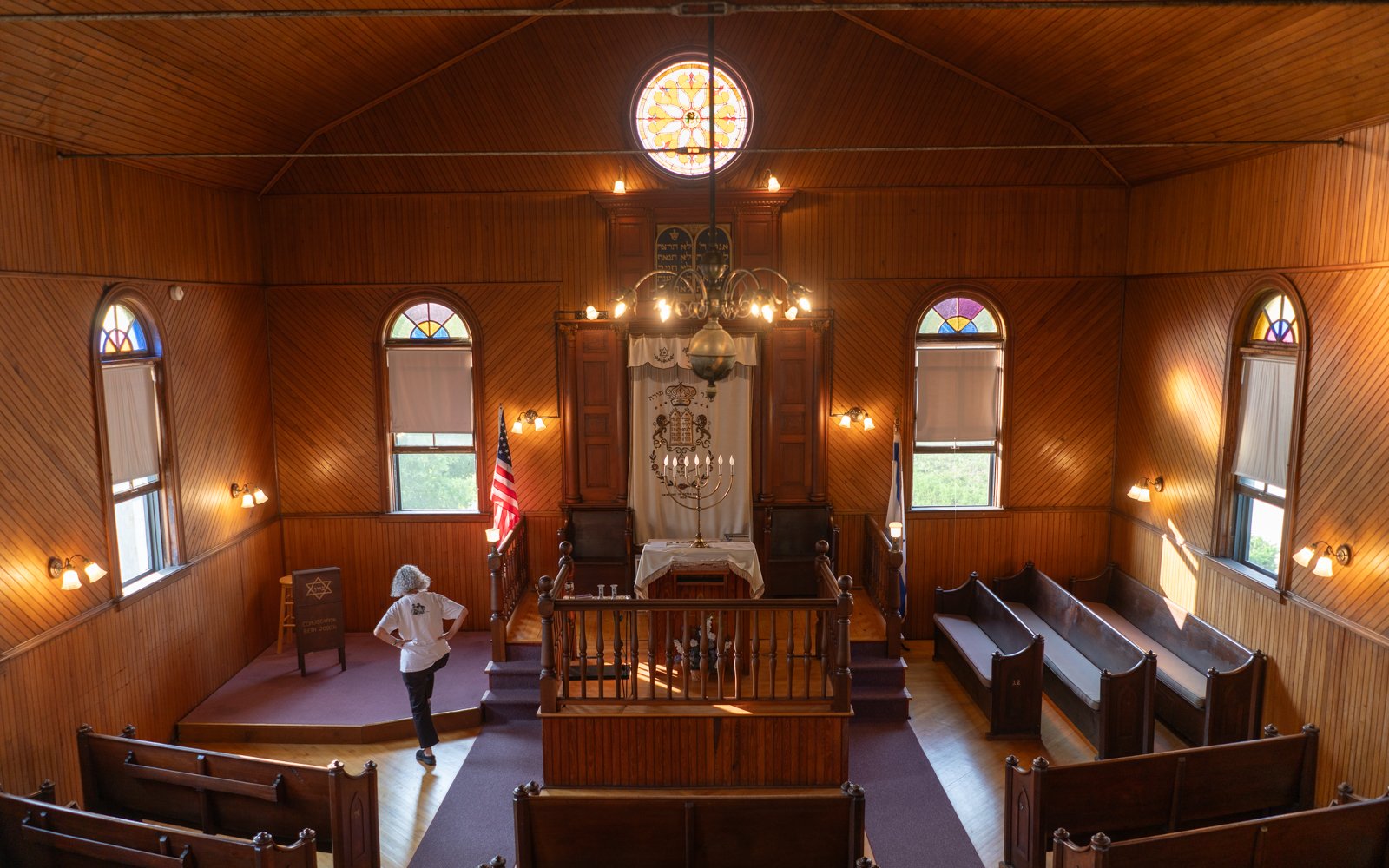
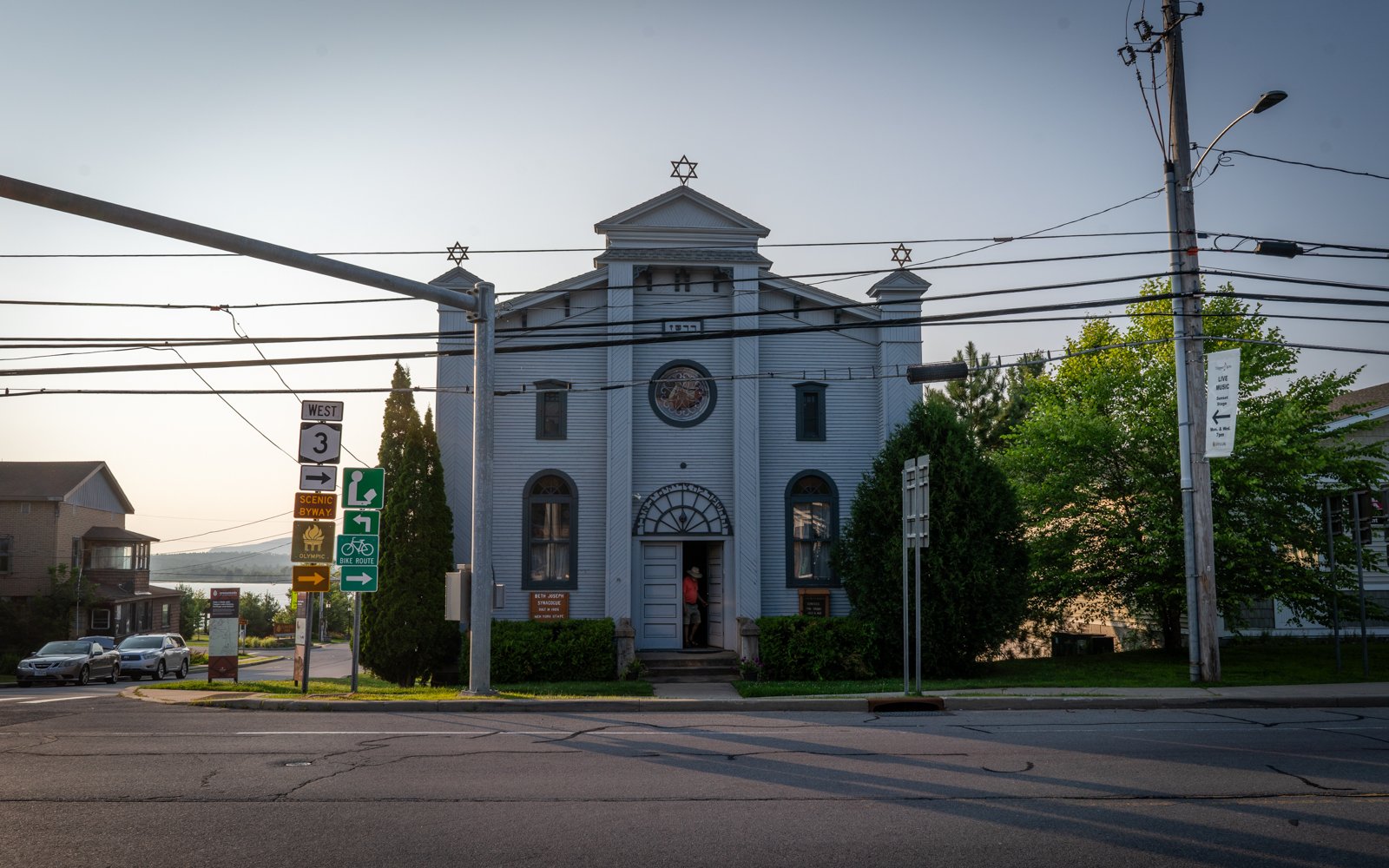
Ginsberg’s father had died of illness, leaving the family in dire straits, so he went north to join relatives who had a job lined up for him in plumbing, then seen as an up-and-coming industry. Ginsberg landed in the town of Tupper Lake, named for a sprawling body of water beneath the region’s High Peaks wilderness. The community was populated by lumbermen who ferried logs down waterways and homesteaders farming the rocky ground. A small, vibrant Jewish community there later built a soaring, wood-beamed synagogue on the lake’s shore.
That synagogue, Beth Joseph, hosted weddings, bar mitzvahs and prayer services managed by its Yiddish-speaking committee for decades. The building was known as the “Peddlers’ Synagogue,” named for its itinerant salesmen, like Ginsberg, who resorted to peddling after the plumber who was training him died. Despite his rough start, Ginsberg went on to play a central role in the synagogue’s construction and the local community.
But like many small-town Jewish congregations across the US, the community dissipated as its region’s fortunes declined. Today, as the synagogue’s 120th anniversary approaches, it is charting a new path forward, with the help of a few remaining congregants and the local community.
“To me, this is a very spiritual place. I come in here and I feel like I’m getting a hug,” said David Mandelbaum, a Beth Joseph member. “But we’re not going to survive as a shul.”
The Hebrews build a ‘Jewish church’
Beth Joseph originated in the wave of Jewish immigrants who arrived in New York in the late 1800s. Some left the city’s crowded tenements and headed north to farm in the Catskills, or landed in upstate cities such as Albany.
Others ventured farther, into the Adirondack wilderness. They became peddlers, lugging 35-kilogram (75-pound) packs of goods like needles, underwear, buttons and fabrics that they sold to isolated farms and logging camps. Red tablecloths were a hot item, Ginsberg said in a 1969 interview.
Ginsberg, born in Lithuania in 1879, peddled a multi-week-long loop through local communities; one 25-kilometer (16-mile) road had only one house. He recalled experiencing little antisemitism, except for once, when a woman granted him board at her home. Her husband kicked him out, saying, “He didn’t want no Jewish peddlers in the house.”
Tupper Lake was a small, hardscrabble town. Ginsberg noted the disproportionate number of liquor stores catering to hard-drinking men
Tupper Lake was a small, hardscrabble town. Ginsberg noted the disproportionate number of liquor stores catering to hard-drinking men and described periodic fires and disease outbreaks that battered the town. The communities and homesteads in the area were largely isolated, especially during the region’s brutal winters. Around the turn of the century, there were no cars, electricity, phone lines, or running water, Ginsberg said.

“The furthest away you could go with a horse was from 10 to 20 miles. That was the extent of having a good time, by hitching up your horse,” Ginsberg said. “All the pleasures and sorrows were right around the house.”
The town and the Jewish community became more established as railroads reached the area. In the early 1890s, Jews in the area started holding services at their homes, traveling from around the region to establish a minyan, or prayer quorum of 10. The Tupper Lake Jews decided to build a synagogue, the region’s first, bought a half-acre plot and started construction in 1905.
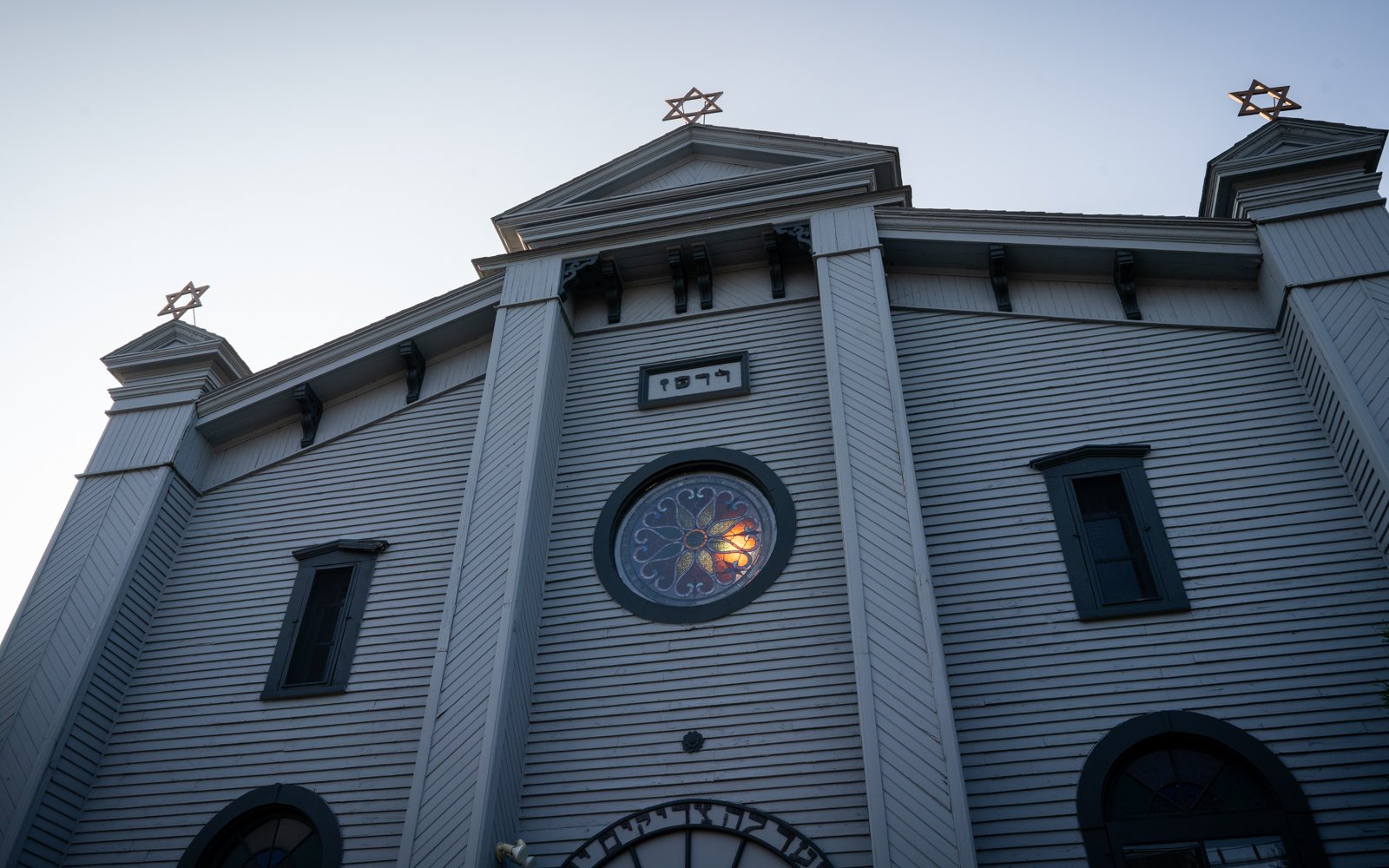
Local residents welcomed the congregation, even if they were unfamiliar with Jews. Newspapers referred to the synagogue as a “Jewish church” and the congregants as “Hebrews.” A local violin player joked that the Hebrew inscription at the building’s entrance looked like musical notes.
“There are a large number of Jewish people in Tupper Lake and vicinity and no doubt a church could be sustained,” a 1903 article said.
The synagogue brought together two streams of Jewish immigrants. The peddlers from Eastern Europe, who arrived in the US in the 1880s and 1890s, went north to take advantage of the region’s booming lumber industry, and lived there permanently. The second group was made up of German Jews who had arrived in New York earlier and developed successful businesses in fields like banking. They visited the region in the summer and contributed funds to the synagogue, as did non-Jewish town residents.

The Orthodox synagogue was built for $3,526 and, in 1908, held its first wedding. The ceremony was in English and Hebrew and the building, with a 1,500-square-foot sanctuary, was “crowded to its utmost capacity.” The floor level of the synagogue can accommodate about 120 people, and the women’s balcony above seats another 30.
Local papers reported that Beth Joseph hosted “colorful and impressive” bar mitzvahs, parties and local community groups like the town’s Ladies Aid Society. When the sun set over the lake, golden light illuminated the building’s stained glass windows. News reports relayed the synagogue’s goings-on, announced closures of Jewish-owned stores during holidays, and explained Jewish customs to non-Jews.
“Observance of the day requires 24 hours fasting, and prayer at the Synagogue,” The Tupper Lake Herald reported on its front page in 1919, explaining Yom Kippur to the community. “However, the finest of feasting follows the fasting period.”
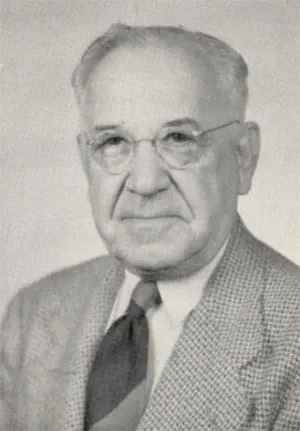
Ginsberg and the synagogue became pillars of the community. He opened a department store in the center of town with his brother-in-law, called Goldberg & Ginsberg, which was recognized in 1970 as the state’s oldest family-owned business. Local Girl Scouts met in the synagogue basement and Ginsberg was instrumental in establishing the area’s first hospital.
The Jewish community peaked in the 1920s with around 35 families, according to the synagogue, but dwindled as the economy declined. The synagogue ceased regular services by the mid-1960s.
When Ginsberg died in 1974, the local newspaper hailed him as a “local pioneer.” By that time, some of the towns he had peddled in no longer existed. His store closed in 1988.
A store on their backs
Nancy Sinkoff, a professor of Jewish Studies and History at Rutgers University who has been coming to the Adirondacks for more than 35 years, said the region’s Jewish history is tied to broader economic trends. In the 19th century, Jewish peddlers joined an economic migration to frontier areas like the Adirondacks, as well as South Africa and Brazil.
“Young men could come and put their store on their back and go to the hinterlands, wherever that hinterlands was, and bring things that hunters and farmers needed to buy,” she said.
The peddlers resupplied in towns like Tupper Lake, boosting the economies in permanent communities at the frontier. Some, like Ginsberg, shifted from peddling to selling goods at stores. Repurposed shops bearing Jewish surnames on their facades, like Ginsberg and Khan, are scattered around the region. In the former location of Ginsberg’s store, the Adirondack Store and Gallery now sells the region’s distinctive furniture and taxidermy.
Local economies across rural America changed, and in the Adirondacks, the timber industry died as forests were wiped out and the environmental movement gained steam. After those industries collapsed, the towns declined, leading to the closure of stores like Ginsberg’s. The Adirondack Park, the largest in the US at more than 24,000 square kilometers (9,300 square miles), has around 123,000 year-round residents, the lowest population density in the eastern US. The closest major city to Tupper Lake is Montreal, across the US-Canada border, approximately 160 kilometers (100 miles) away.
Local economies across rural America changed, and in the Adirondacks, the timber industry died as forests were wiped out and the environmental movement gained steam
“Jews have historically been linked to urbanism and an urban economy, so as the village economy changed, the fate of Jews was also affected,” Sinkoff said, adding that the topic of merchant Jews has not been properly studied. Younger Jews moved on to white collar jobs and relocated to cities. The dominant industry in the region is now tourism, and Tupper Lake has been eclipsed by more picturesque nearby towns such as Saranac Lake and Lake Placid.
“Economics are really critical to understand where Jews fit and where they don’t fit, and part of it is bigger than Jews themselves,” Sinkoff said. “You talk to young people up here, and economics remains a problem. ‘How can I make a living? I’m not necessarily going to work in the prison, I’m not necessarily going to be a state trooper.'”
A synagogue restored
In the mid-1980s, a non-Jewish architecture student, Sharon Berzok, noticed the elegant but disused synagogue. She connected with Ginsberg’s daughter, Muriel, and the two worked to raise funds and place the synagogue on the National Register of Historic Buildings, which would boost its chances for protection. In 1988, Berzok died in a car crash, her work incomplete.
“The Jewish congregation is heartbroken,” Muriel Ginsberg said at the time.
Months later, the synagogue was recognized as a historic building, and a group of local women raised funds for restoration. The building reopened in 1990.
In its designation, the National Park Service said the synagogue combined traditional designs from the US and Europe, with some “rustic resort architecture” that was popular in the region and based on the area’s lumber. Jews were developing architecture distinct from churches, such as corner towers, styles of stained-glass, and arches, designs used in Beth Joseph. The park service noted that the building remained “remarkably intact” and highlighted its “finely crafted” wooden ark for Torahs.
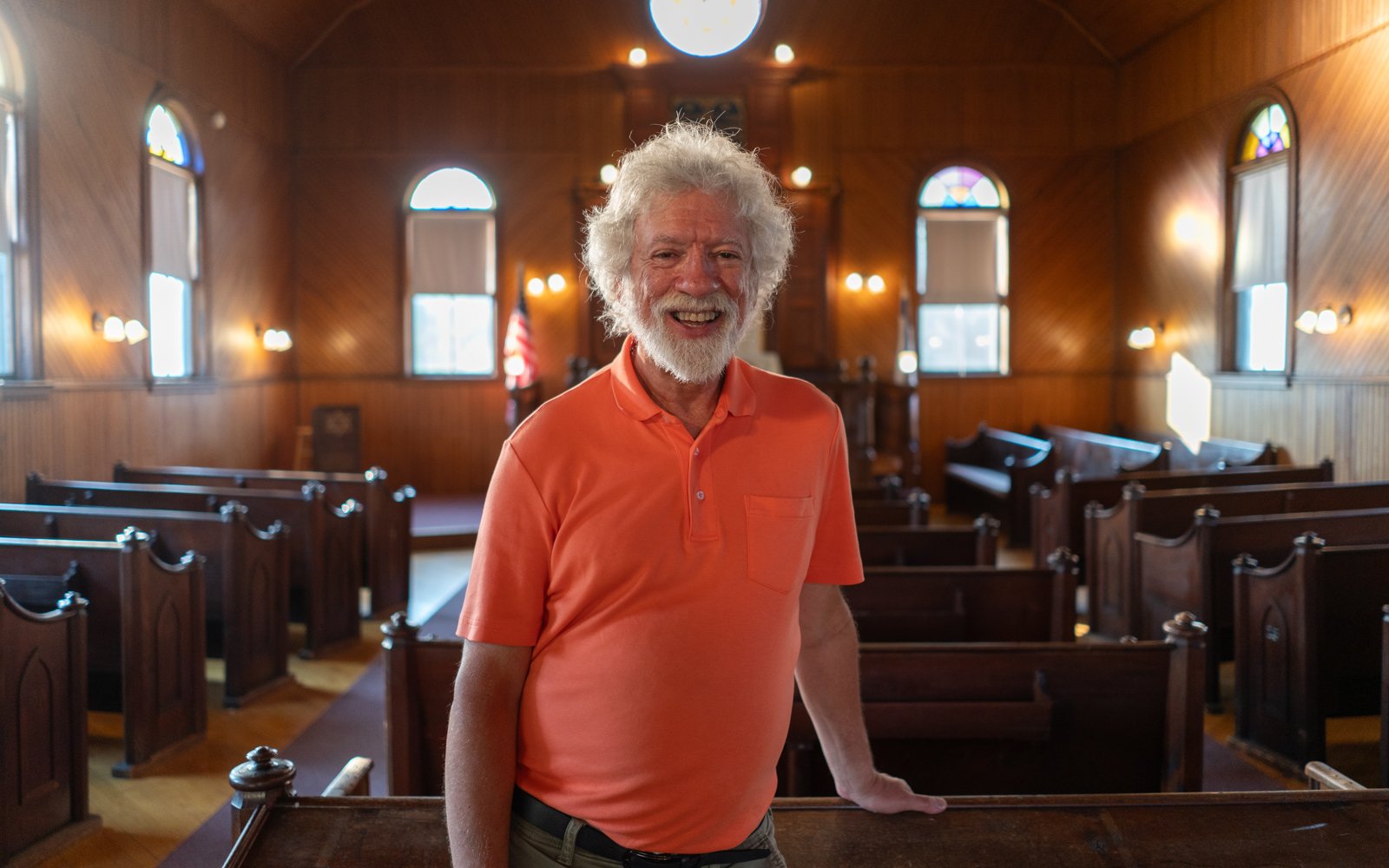
The synagogue is now charting a new path forward, despite lacking local congregants. Funding comes from donors who have family connections to the community or traveled to the area and came upon the congregation, said Lara Kassel, the president of the synagogue’s board, whose family has been connected to the synagogue for decades. The synagogue’s setting in the region’s verdant forests, serene lakes and towering mountains contributes to its spirituality, congregants said.
Beth Joseph hosts visitors, prayer services and concerts during the summers, drawing in Jews who visit the region for vacation. Sometimes, no one shows up for services; other times, up to 10 people attend. The town is “very down on its heels,” but the synagogue has the support of the local government as a much-needed tourist draw, Mandelbaum said. The town, with a population of 5,000, had a per capita income of $33,000 in 2023, more than 20% less than the national average of $43,000.
“All the full-time Jews are pretty much gone,” said Mandelbaum.
The congregation plans to build out its exhibit on the site’s history and archive its historical materials such as textiles, Judaica and minutes from the congregation’s board, turning the site into a “cultural beacon,” Kassel said.
For the congregation’s 120th anniversary, the synagogue is hosting a celebration for the local community on July 13 that will be attended by congregants and the town mayor. The year’s first services started this month.
The congregation is a testament to the rural community’s acceptance of minorities, said Kassel, whose grandfather was the town mayor in the 1980s. The Jewish community has longstanding ties to residents of the area who are descended from Lebanese immigrants, for example.
The community is also an example of Jews’ mostly forgotten role in rural America, said Jerry Klinger, founding president of the Jewish American Society for Historic Preservation. Klinger’s group, which is not connected to Beth Joseph, erects landmarks commemorating Jewish history in offbeat historical locations such as Deadwood, South Dakota. Klinger believes that history is neglected and that it is important in combating antisemitism as a reminder of how Jews “contributed to the American story.”
“We have Jews in every aspect of American life. They don’t talk about it when they talk about Jewish history,” he said.
Sinkoff said the history fosters nuance in understanding US society during a “very fraught, complicated time.”
“It’s very easy to tell a narrative about our society that’s incorrect — that there was a dominant group and they did everything, and these so-called outsiders didn’t contribute,” Sinkoff said. “That’s a very easy trap to fall into in many societies, not only ours. It’s critically important to preserve the past, which tells us not, ‘Oh this one’s better or that one’s better,’ but there was diversity here.”
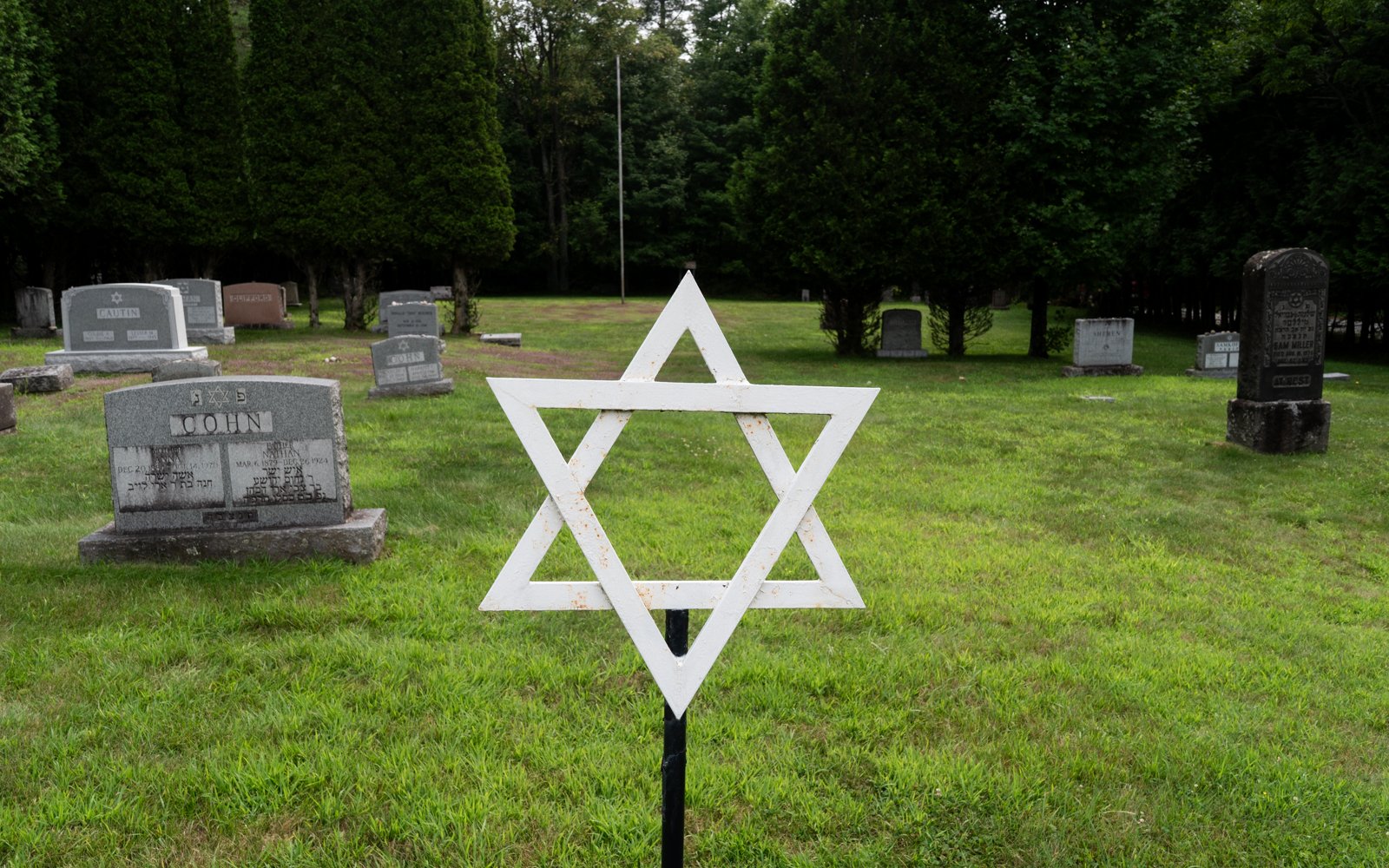
Some late Adirondack Jews remain in scattered cemeteries. Near Tupper Lake, the Jewish community’s lichen-covered gravestones are arrayed inside a tree-lined rectangle with a white Star of David at its entrance. The space feels unfilled, like a community that had expected to grow but died out too soon. Families are clustered together with expanses of grass between them, and under a row of pine trees is Ginsberg’s small, flat marker, his family members buried around him.
The Times of Israel Community.