

Playing catch-up: 7 things to know for March 18
Local media has a lot on its plate after an action-filled weekend that saw a deadly terror attack, a sharp uptick in Gaza border tension and the arrest of a terrorist stabber
 Add ToI as a Preferred Source on Google
Tamar Pileggi is a breaking news editor at The Times of Israel.
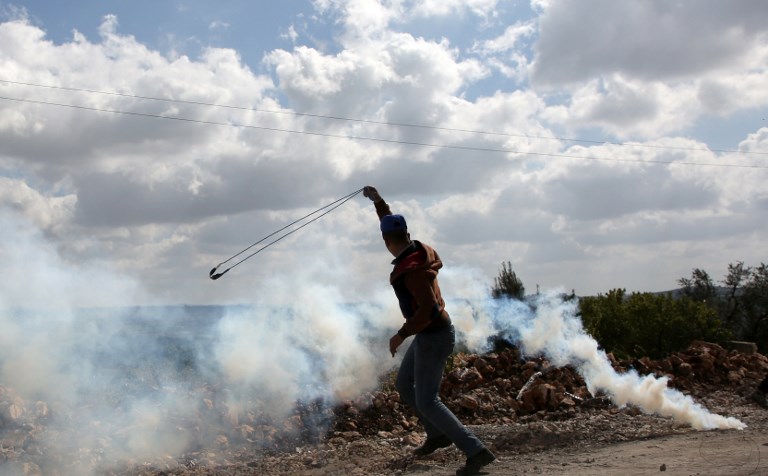
1. Israeli media on Sunday is playing catch-up after a weekend that saw a sharp uptick in tensions along the Israel-Gaza border, developments in the investigation into the attempted assassination of the PA prime minister, the arrest of a Palestinian terrorist who murdered a settler rabbi two months ago, and a terror attack that killed two Israeli soldiers and seriously injured two others.
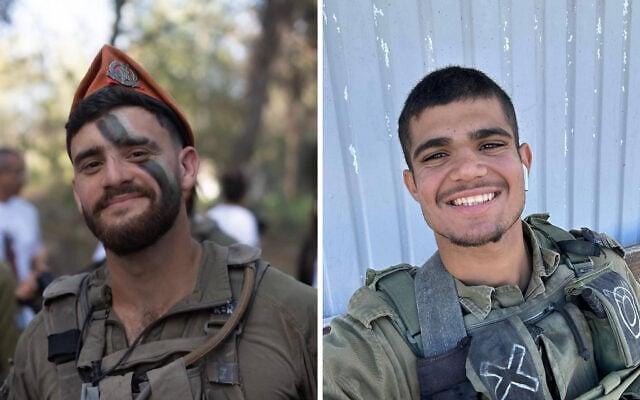
2. The two IDF soldiers who were killed in Friday’s terror attack make the front page of every major Hebrew-language newspaper on Sunday. The IDF released the names of Cpt. Ziv Daos and Sgt. Netanel Kahalani Saturday evening, after their families had been informed for their deaths.
- The papers report that the Shin Bet security agency said Saturday that 26-year-old suspect Ala Qabha confessed to carrying out the attack, and told investigators that he deliberately intended to kill Israeli soldiers. The security agency said that it appeared that Qabha acted alone, and possibly spontaneously.
- Yedioth Ahronoth leads its coverage with the headline: “Ziv and Netanel: Plucked in a moment” and devotes most of its coverage to the emotional tributes by Daos and Kahalani’s bereaved friends and family.
- In its opinion pages, columnist Roni Shaked warns that an increasing sense of despair and isolation among Palestinians in the wake of US President Donald Trump’s moves on Jerusalem could lead to a rise in the so-called lone wolf attacks. “The toolbox of the Palestinian political struggle is empty: they have no support from the Arabs, from Europe or at the UN, which has become an arena for their verbal assaults,” he says. “So the only tool they feel they have left in their arsenal is terrorism.”
- The Times of Israel’s Avi Issacharoff makes a similar argument. He says that Israeli defense data shows that “lone wolf” terrorism continues to be a trend in Palestinian society. Though he notes a drop in incidents from 2016, Issacharoff warns that the ongoing Palestinian leadership crisis, Israeli settlement construction, and the stalled Hamas-Fatah reconciliation is likely to amplify despair among Palestinian youth, leading to a “very unstable environment” in our region in the coming months.
- Meanwhile, Haaretz reports that in the wake of the attack, the IDF is considering moving the West Bank separation barrier to split Qubha’s hometown of Barata’a in two. The paper says the punitive measure is the army following the government’s “hard line that follows terror attacks.”
3. On Saturday, a bomb planted along the Israel-Gaza border exploded, causing no casualties but prompting an Israeli retaliatory strike on a nearby Hamas outpost in response. On Sunday, the IDF announced it destroyed two attack tunnels from the Gaza Strip overnight.
- Though the announcement does not make it into Sunday’s papers, the latest demolition of cross-border tunnels has news junkies and pundits abuzz with speculation that new round of hostilities with Hamas is on the horizon.
- Haaretz’s Amos Harel says the low-level clashes along the Israel-Gaza border have become a full-blown conflict with the Gaza-based terrorist group. “The bottom line is that the escalation in the Strip is already evident. All it will take is one multi-casualty incident to push both sides into a broader military conflict,” he warns.
4. IDF spokesperson Lt. Col. Jonathan Conricus said one of the tunnels was partially destroyed in the 2014 war, and that Hamas forces were working to re-open the passageway into Israel near the southern part of the Strip. The other one, Conricus said, was a “subterranean complex” in the central Gaza.
Breaking: Using precise intel and new tech, IDF thwarted attempt by Hamas to renew old terror tunnel near Kerem Shalom. 4th tunnel since November. Hamas is responsible for all hostile acts from Gaza and we will continue to defend our people and border. pic.twitter.com/p7x3xjj5OB
— LTC Nadav Shoshani (@LTC_Shoshani) March 18, 2018
5. Following a month-long manhunt, Israeli security forces arrested the suspected terrorist behind the murder of Rabbi Itamar Ben-Gal near the West Bank settlement of Ariel in February. The 19-year-old Abed al-Karim Assi was found hiding in the Palestinian city of Nablus and arrested in a pre-dawn raid.
- Assi’s arrest did not bring comfort to Ben-Gal’s widow, Miriam, who said it “will not bring him (Itamar) back home to me…and it will not prevent another terrorist from destroying another family’s life.”
- She called on Prime Minister Benjamin Netanyahu to authorize the construction of 800 housing units in the family’s settlement of Har Bracha. “This is our consolation and the consolation of all the people of Israel. This will be the real answer to Itamar’s murder,” she said.
6. Hamas on Saturday shut the offices of a Qatari-Palestinian cellular provider in connection with its investigation into an explosion that targeted the visiting PA Prime Minister Rami Hamdallah last week.
- Hamas police spokesman Ayman Batniji said Saturday that Wataniya Mobile, a subsidiary of Qatar’s Ooredoo, was being closed down for “refusing to cooperate” in the inquiry.
- According to local reports, a second bomb that failed to detonate when Hamdallah’s convoy passed into Gaza from Israel contained a Wataniya SIM card.
7. And in more encouraging news, hundreds of Poles staged protests in Warsaw and other cities against racism and anti-Semitism over the weekend to show they don’t agree with the rising wave of hostility and intolerance in Poland.
- Pounding drums, some 1,000 people walked in downtown Warsaw chanting “Freedom, equality, tolerance!” and carrying banners that called for a stop to conflicts like the war in Syria.
https://twitter.com/WLENRADIO1039fm/status/975285231124205573
- Racism and anti-Semitism on Twitter, in graffiti and in public discourse have been on the rise since Poland’s right-wing government refused to accept Muslim migrants under an EU plan. That has only increased after Poland recently adopted a new law banning some statements about the Holocaust, which critics say could whitewash the actions of some Poles during the Holocaust. The law has led to a bitter conflict with Israel.


The Times of Israel Community.