

Playing the slots: 7 things to know for February 3
Parties are negotiating to join forces or trying to outmaneuver rivals with 2.5 weeks to go until faction slates must be finalized
 Add ToI as a Preferred Source on Google
Joshua Davidovich is The Times of Israel's Deputy Editor
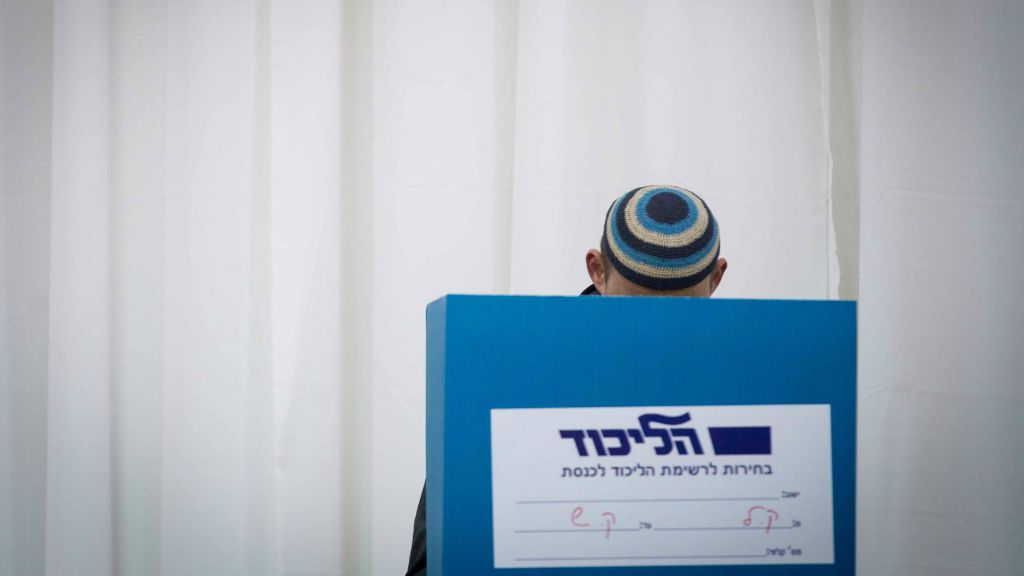
1. Will they or won’t they: Elections are 65 days away, but the more important date right now isn’t April 9 but February 21: the day party lists have to be finalized.
- With just under three weeks to go before the slates have to be set, factions are busy trying to negotiate mergers, bring in big names or outflank rivals.
- The biggest question is whether Benny Gantz’s Israel Resilience will join up with Yair Lapid’s Yesh Atid, and who will be the No. 1 if they do unite. Speaking to Israeli TV, Yesh Atid MK Ofer Shelah says talks are ongoing and there will be a decision within two weeks.
- He also thinks Lapid is the best choice to lead a possible joint party, but not many agree with him. According to a poll published by Channel 12, either 33 or 36 percent of respondents think Gantz should lead a center-left bloc (the channel’s news website writes one number but the graphic displayed by the channel displays another). Lapid meanwhile is supported by only 11%, well behind Candidate None of Them, who is supported by 23% of respondents.
- Comparing politics to a game of poker, Channel 13’s Sefi Ovadia guesses that Gantz will wait until the last minute to make an announcement on whether he and Lapid are getting together.
- Meanwhile, he may join up with smaller parties or names, such as Adina Bar-Shalom or Tzipi Livni’s Hatnua.
2. Unite the right: Prime Minister Benjamin Netanyahu isn’t waiting to see what happens and has asked Likud to give him extra reserved spots on the party list ahead of primaries, seemingly in preparation for the addition of some biggish names or smallish parties.
- In a letter to party officials, Netanyahu cites “expected mergers on the left.”
- Netanyahu is asking for the 21st, 26th and 36th spots. Given the relatively low places, Channel 12 surmises that he’s likely not looking to bring in a big party or any major names, but rather something more modest, like Jewish Home.
- However, Channel 13 notes that Netanyahu is telling party activists that 36th place is a realistic slot for the Knesset, numbers he would only get if his party joined up with New Right.
- According to Haaretz, a merger with another party would need to be approved by the party’s central committee, so it’s more likely he’s looking to poach people to stick in those slots than bring in a whole party.
3. Knives are out: Battles are heating up within Likud, which will hold its primary on Tuesday.
- Adding a whole barrel of fuel to the fire, Israel Hayom publishes what it calls Netanyahu’s preferred list for the primaries.
- The list is seemingly more explosive for who is out than who is in: namely Knesset speaker Yuli Edelstein, minister Ayoub Kara, former minister Gideon Sa’ar and minister Haim Katz, who is also in legal trouble (and is known for wielding serious power when it comes to primaries.)
- Likud denies that the list is real, and the paper’s Yehuda Shlezinger notes that while technically Netanyahu won’t release an official list, it’s not too hard to game who is on his good side and who is on his shitlist.
- “The knives are out,” writes Yedioth Ahronoth’s Moron Azulai, reporting that party officials expect Netanyahu to concentrate most of his efforts on Sa’ar.
- “Senior Likud officials claim that the chances of Netanyahu intervening to Sa’ar’s detriment, deploying mayors close to him and asking that his name be struck from the lists on the day of the primaries, are high,” she writes.
4. Indictment deadline? Channel 12 reports that February 21 may also be the last day that Attorney General Avichai Mandelblit feels comfortable announcing an intention to indict Netanyahu.
- According to the channel, former Supreme Court justice Elyakim Rubinstein said Mandelblit should not do anything beyond that date.
- The problem according to the channel, though, is that Netanyahu only got a procedural letter informing him that his case had moved from police to the prosecutor in mid-January, and by law an indictment can’t come down less than 30 days after that, and the suspect’s lawyers can appeal. Thus, Mandelblit will only have a window of few days window to make an announcement, during which time the defense can delay “by sending six cases of material to be reviewed.”
- Justice Ministry sources say Mandelblit won’t be constrained by the February 21 date.
5. Selective complaints: In Haaretz, jurist Mordechai Kremnitzer praises Mandelblit for refusing Netanyahu’s request to delay any progress in the case until after elections.
- “Netanyahu … is complaining that the system is working too fast and too efficiently for his personal interests. One needs quite a large dose of shamelessness to raise such a claim,” he writes.
- In pro-Netanyahu Israel Hayom, though, columnist Haim Shin accuses the law community of “selective enforcement” against Netanyahu. “A unique type of selectivity, which is expressed through cooperation with the hostile media and perhaps jurists who are overly ambitious.”
6. All means: Turkish leader Recep Tayyip Erdogan held a rare meeting with Arab Israeli lawmakers, backing their fight against the nation-state law and vowing to “continue to share all means in our disposal with our brothers” in order to help the Palestinian cause, according to the pro-government Daily Sabah Daily.
- Turkey’s Anadolu Agency reports that “Erdoğan underlined that Turkey will not ‘turn its back’ on the Palestinian cause.”
- The British Daily Mail tabloid translates that to the somewhat more sinister headline: “Turkey’s President Erdogan says he will use ‘all means available to end Israel’s occupation of Palestine.’”
- Erdogan also agreed to free three Israelis who flew to Turkey for medical procedures and had been detained for several weeks.
- Haaretz reports that the Israeli lawmakers said the meeting would not include domestic matters, such as leaning on the lawmakers to join forces in upcoming elections.
7. Anti-Anti-Terror: Israeli officials are scrambling to work out a way to keep US security money flowing to the Palestinian Authority, after new anti-terror legislation in Washington essentially made it illegal for Uncle Sam to train Palestinian anti-terror forces.
- Reporter Barak Ravid tweets that an “Israeli official said Israel wants a solution that on the one hand allows terror victims to get compensation from the Palestinian Authority but on the other hand allows the continuation of U.S. aid to the Palestinian security forces” (read the whole thread to get the whole story).
1 Israeli official tells me: "The continuation of U.S. aid to the Palestinian security forces is a top priority for Israel"
— Barak Ravid (@BarakRavid) February 1, 2019
- NPR’s Daniel Estrin says that that some money is continuing to flow to the PA from the CIA, and from the Defense Department for the US Security Coordinator’s office, “which oversees U.S. and international assistance for the Palestinian security forces.”
- “Funding from the Pentagon would not be subject to the same conditions of the anti-terrorism law,” he reports.





The Times of Israel Community.