

Procrastination nation: 6 things to know for May 1
As ministers hem and haw, waiting until last minute to decide whether to send children back to school, media loses patience and rushes to print with assumption that proves false
 Add ToI as a Preferred Source on Google
Jacob Magid is The Times of Israel's US bureau chief
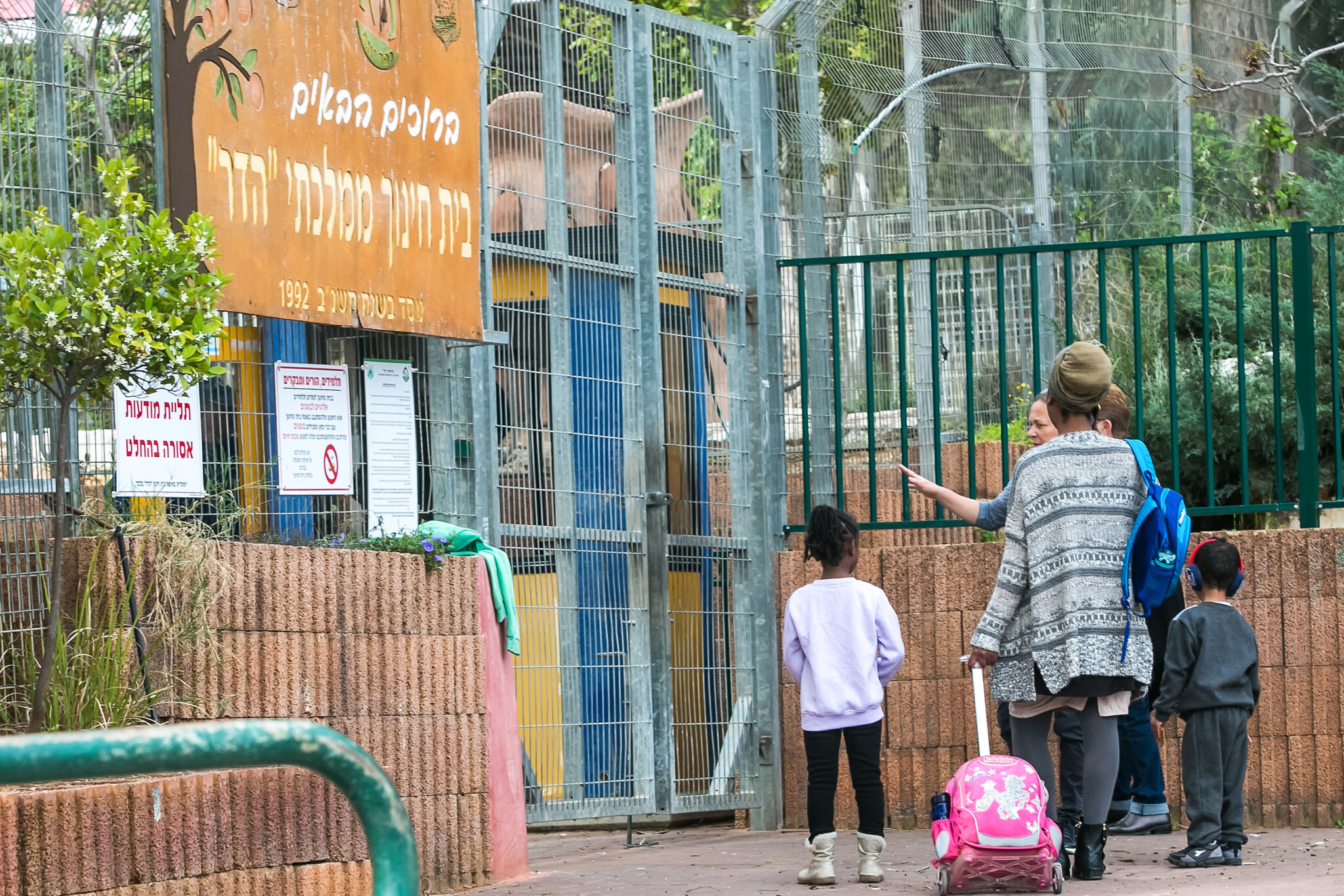
1. Will they, won’t they: The cabinet has finally voted to return some of Israel’s students to school on Sunday, but not before an exhausting back and forth, during which much the media appeared to have gotten sick of waiting and went to print declaring that kids would be staying at home.
- All day Thursday, news reports indicated that the opening of kindergartens and daycare centers would be delayed, though they appeared to be mostly a reflection of inter-ministerial power struggles between the Health Ministry and Prime Minister’s Office/National Security Council and the Education and Finance ministries.
- A comment from an unnamed “senior Health Ministry official” saying kindergartens should not open but elementary schools can was widely covered as a sign that kindergartens would not open, though even before then media outlets reported it practically as if it were a done deal, and Israel Hayom’s front page this morning screams out that the young whippersnappers will indeed be staying at home, even though the ministerial meeting to decide on the matter had yet to take place.
- Indeed, some students will be staying home, but not all. The exact details of the decision are not known because in typical fashion, it was only leaked to a select few reporters rather than publicized uniformly in a government statement. What we do know (at least for now) is that grades 1, 2, 3, 11 and 12 will return on Sunday along with special education programs and grades 6 through 8 in Haredi schools. All other children will remain home but will be gradually returned to classes by June 1. Why this exact breakdown? The lack of transparency ensures that the public will never know.
- Kan reports that ministers during the morning cabinet meeting blamed the Health Ministry for changing its mind on the matter, first opposing any return to classes and then suddenly supporting an opening for grades one through three.
- According to Channel 12, ministers had been all set to vote on reopening grades one through three, but then Health Ministry Director-General Moshe Bar Siman-Tov managed to convince National Security Council Thursday night to support a one-week delay. This led to the frantic media reports putting the kibosh on parents’ hopes for some freedom from the kids that were eventually alleviated by ministers the next morning when they voted against the NSC recommendation.
2. Circus act: The chaotic manner in which the decision was made has left municipalities and schools with little time to prepare, given that reopening in the age of the pandemic does not just mean opening the doors and ringing the bell, but must also include extensive hygienic precautions to ensure that the country’s germ-balls don’t infect everyone.
- Army Radio reports that Tel Aviv mayor Ron Huldai has decided not to reopen grades one through three on Sunday, despite the green-light from the cabinet. “We can’t open on Sunday based on guidelines given only on Friday. We will not abide by the rules of people who do not take responsibility. The proposed outline is not a solution to help the economy and does not guarantee children’s health,” he’s quoted as saying.
- Likud MK Shlomo Karhi points out that Huldai’s education chief had just announced last week that it was locked and loaded to return kids to school and that the mayor was simply trying to score political points on the backs of his city’s children.
- Army Radio’s Lia Spilkin suggests that the decision has less to do with an inability for the municipality to prepare on the fly and more do to Huldai’s opposition to the plan that was approved.
- Activist Eran Cherpak writes that the decision-making process regarding the education system is “a perfect parable” for the Benjamin Netanyahu era. “Simple decisions that are easy to implement such as halting flights, Shin Bet tracking and closures are reached and carried out swiftly. But on decisions that require planning, data, analysis, modeling and strategy and supervision and control the ball is dropped.”
- Meretz chairman Nitzan Horowitz, who also heads the Knesset’s education committee that apparently was left out of today’s decision-making blasts Netanyahu “for playing with the education system like a yo-yo” and for failing to make decisions in an orderly manner.
3. Oh, how the table’s have turned: Attorney General Avichai Mandelblit recommends the High Court of Justice against ruling next week to bar Netanyahu from forming and leading the next government despite the criminal charges against him in a legal opinion that infuriates his typical defenders in the anti-PM camp.
- “Mandelblit is hiding behind vague words and legitimizing corruption,” says the Movement for Quality Government, which has long warned against attacks on the justice system, in a statement. “We are saddened by this weak response from the person in charge of upholding the law.”
- Meanwhile, anti-Netanyahu protesters think it would be a good idea to gather by the dozen outside the High Court in all black clothing and eerily shout “democracy” over and over again.
- “The fascists are demanding the High Court to ‘make the right decision,’ right-wing analyst and media personality Yinon Magal writes, highlighting the irony.
הפשיסטים דורשים מבג"צ "החלטה נכונה": pic.twitter.com/QYjnl7athU
— ינון מגל (@YinonMagal) April 30, 2020
- The coronavirus-era protests, with their two meters between demonstrators, continue to get positive coverage from the local and international press which praises the activists for adapting to the circumstances.
- “The demonstrations, resembling a vast glowing human matrix in stunning aerial photos, have become a symbol of Israel’s dueling political and health challenges. They also contrast with some other hotspots of civic unrest at a time when gatherings are restricted or banned around the world,” writes The Associated Press, making no mention that the gathering of hundreds, if not thousands of people in one location, is a rather sure-fire way to spread the virus, even if everyone does their best to keep a distance.
4. Ten’s a crowd, 5,000’s a funeral: Speaking of crowds, a small, albeit significant section of New York’s ultra-Orthodox community continues to throng together for funerals, even after Mayor Bill de Blasio called them out on it.
- JTA reports on a video shared on WhatsApp showing a chaotic scene on a street corner in the heart of Borough Park in Brooklyn, with a Judaica store visible on one corner of the street along where hundreds of mourners were walking, many of them without masks.
- As for the funeral two days earlier that led de Blasio to chide the “Jewish community,” The Forward’s Ari Feldman reports that the service had been coordinated with the NYPD. “It was strictly through NYPD’s permission… If they would say no, it would be no, says Moshe Weiser, a liaison between police and the Williamsburg Hasidic community.
- But Prominent Orthodox rabbi Pini Dunner writes in his blog that those focusing on the NYPD’s role are missing the point. “Why was it left to NYPD and Bill de Blasio to regulate an over-attended funeral? Are there no senior rabbis and community leaders in Williamsburg with a sense of responsibility for what is going on in their own neighborhood, who can speak up and assert their authority with those who are flouting rules and thereby endangering lives?”
- And to make it clear that the funeral issue is not just an ultra-Orthodox problem, the Arabic news site Panet reports on a mass-funeral in the Bedouin village of Leqiya in the south, where outnumbered police at the site sufficed with passing out masks rather than dispersing the gathering.
כך נראתה הלוויה בישוב הבדואי לקיה בתחילת השבוע. שוטרים שהיו במקום, לא רק שלא אכפו את ההנחיות אלא חילקו למשתתפים מסכות.
צילום: https://t.co/5LjdcnOgBN pic.twitter.com/2hgOqeMyIP— Almog Ben-zikri (@almogbenzikri) May 1, 2020
5. Annexation nation: Palestinian leaders as well as their allies around the world are doing their best to ensure that Netanyahu’s rather-imminent annexation plans are not neglected between all the coronavirus coverage.
- PLO Executive Committee secretary-general Saeb Erekat tells The Times of Israel that world leaders must go beyond “statements of condemnation and demonstrate to Netanyahu that there will be repercussions if he moves forward with annexation.”
- During the fiery interview, Erekat accuses Netanyahu of “seeking to destroy every Palestinian moderate.” He warns that annexation would doom the PA, but admits that no world leaders have revealed what concrete steps they plan to take against Jerusalem if it goes through with Articles 28 and 29 of the coalition deal.
- Meanwhile, Axios reports that the Trump administration has told Israel that it won’t support annexation unless Israel agrees to negotiate over a Palestinian state and fully endorses the Trump peace plan.
- But former US Ambassador to Israel Martin Indyk pours cold water on the report, writing: “Bibi already accepted the Trump Plan. He will have no problem agreeing to negotiate with the Palestinians on that basis if he gets US recognition of annexation up front. Since the Palestinians will not accept the Trump Plan anyway, Bibi will be home free.”
- “Annexation will get green-light even in the absence of a Palestinian state. What the White House insists on is merely an Israeli commitment to the entirety of Trump peace plan, which includes the mere possibility of a future Palestinian state,” adds ToI’s Raphael Ahren
- Subsequently, Ahren cites US officials who say Barak Ravid’s Axios report is false and misrepresentative of the White House position and that it is not conditioning its support for annexation on Palestinian statehood.
6. Everyone’s minister: Israel Hayom publishes a flattering farewell from the Health Ministry interview of Yaakov Litzman in its weekend edition that evokes quite the uproar from the ultra-Orthodox minister’s usual critics.
- Litzman, who police are recommending face indictment for pressuring officials in his office to deem alleged serial pedophile Malka Leifer unfit for extradition, says the growing criticism against him over the years is baseless. “There are anti-Semitic journalists who don’t want to see a Jewish Haredi man succeeding,” he says.
- Addressing criticism that he has been absent in recent cabinet meetings on the crisis, Litzman says: “There’s a problem that repeats itself regarding whether or not to listen to professionals in my office. When I lead the way, people tell me, ‘you’re not a doctor, you should listen to the professionals.’ When I listen to the professionals, I’m criticized for not leading. No matter what I do, I can’t win.”
- Haaretz’s Anshel Pfeffer slams Israel Hayom for the soft interview, accusing Litzman of inflicting the most damage on the Haredi public than any other official in Israeli history. “The fact that he is accusing his critics of anti-Semitism is not only a terrible misrepresentation of what anti-Semitism is, but he’s also claiming that anyone who is not ultra-Orthodox isn’t really a Jew.”
- Separately, Kan reports that the closure of the Romema neighborhood of Jerusalem just so happens to extend right up to the very street on which Litzman lives. The network says that the minister was not involved in the decision, but it doesn’t stop many from thinking otherwise.
- “Classic,” tweets Army Radio’s Yair Orvieto.
דיווחנו במהדורה של כאן 11-
פלא: הסגר בירושלים מסתיים בדיוק על הרחוב של שר הבריאות ליצמן (מסומן בירוק). pic.twitter.com/Ima6RHEJCE— Suleiman Maswadeh סולימאן מסוודה (@SuleimanMas1) April 30, 2020




The Times of Israel Community.