Right-wing weekly shows new Knesset speaker with Arabic title as MKs warn of growing hostility
Surge reported in violent discourse toward Matan Kahana; Shin Bet chief said to try to block Arabs from moving to Jewish towns; Arab MK says officer called him ‘terrorist’ — report
A right-wing weekly’s Arabic-themed portrayal of new Knesset Speaker Matan Kahana drew accusations of racist incitement this week, one of multiple instances in which lawmakers have alleged anti-Arab discrimination from members of the outgoing coalition or its supporters.
The cover came as data was published showing a sharp rise in violent rhetoric against Kahana following his election on Tuesday with the support of the two Arab-led political parties. Those parties won a record 19 Knesset seats in last month’s election, and in recent days, Arab lawmakers have said they faced racism in the Knesset and from police.
In addition, there has been a rash of anti-Arab statements in Israeli media, and this week saw a car ramming in the Arab town of Kafr Qassim, which locals blamed on anti-Arab rhetoric, as well as the torching of a mosque in the northern Israeli village of Dahi.
Kahana, a member of Gadi Eisenkot’s centrist Yashar party, was elected Knesset speaker on Tuesday by a 66-52 vote, replacing Amir Ohana of caretaker Prime Minister Benjamin Netanyahu’s Likud party. He received the backing of Eisenkot’s four-party Jewish-led bloc as well as the Arab-led Ra’am and Joint List parties. Together, those parties control a 67-seat majority in the 120-seat Knesset.
This week, the cover of Olam Katan — Hebrew for “a small world” — featured a stylized image of Kahana against a background of green, the color associated with Hamas, with the Arabic phrase “Ra’is al-Knesset,” or “head of the Knesset,” written in Hebrew transliteration. His suit and tie were decorated with arabesque patterns, while the names of Ra’am chairman Mansour Abbas and Joint List chairman Yousef Jabareen appeared above his collar.
The imagery appeared intended to portray Kahana as a tool of the Arab lawmakers whose votes helped elect him. Olam Katan is owned by the same businessman who owns the pro-Netanyahu Channel 14, whose pundits have also repeatedly used anti-Arab epithets and denounced cooperation between Eisenkot’s bloc and the Arab parties.
Yashar denounced the weekly’s cover, accusing “Netanyahu’s mouthpieces” of continuing what it called a “violent and dangerous delegitimization campaign against public officials and whole sections of Israeli society.”
Yashar MK Tair Ifergan noted that Kahana had served in the IDF’s elite Sayeret Matkal unit before becoming an Air Force squadron commander, and said the cover belied Netanyahu’s calls for national unity.
אחדות, אה? אחד בפה ואחד בלב.
נתניהו מדבר על אחדות, והשופר שלו, ״עולם קטן״, קורא למתן כהנא, יוצא סיירת מטכ״ל ומפקד טייסת לשעבר, ״ראיס אל-כנסת״.אחדות זה לקחת אחריות על השיח, להרגיע את הרוחות ולפעול כדי לקרב בינינו.
מתן יהיה יו״ר כנסת מצוין. לכל חלקי המשכן. pic.twitter.com/Wfhgox7qb3
— Tair Ifergan- תאיר איפרגן (@RevivoTair) November 19, 2026
“Unity means taking responsibility over discourse, calming passions and working to bring us together,” Ifergan wrote on X. “Matan will be an excellent Knesset speaker — for all parts of the chamber.”
According to data compiled by the Israeli group Fake Reporter, which monitors social media discourse, and reported by Channel 12, violent online statements targeting Kahana surged by roughly 600 percent on November 10, when the new Knesset was sworn in, and hate speech and incitement against him rose by around 250% on November 17, the day he was elected Knesset speaker.
Netanyahu has repeatedly branded Ra’am and Joint List lawmakers “terror supporters” while urging Eisenkot’s bloc not to rely on them. At the opening of the new Knesset last week, Netanyahu accused Arab lawmakers in a furious speech of seeking Israel’s destruction, and that same day posted a string of messages warning against a government dependent on their votes.
Likud’s candidate for Knesset speaker, Ofir Katz, similarly asked Arab MKs not to support him ahead of the vote, saying he would not accept election with the votes of “terror supporters.”
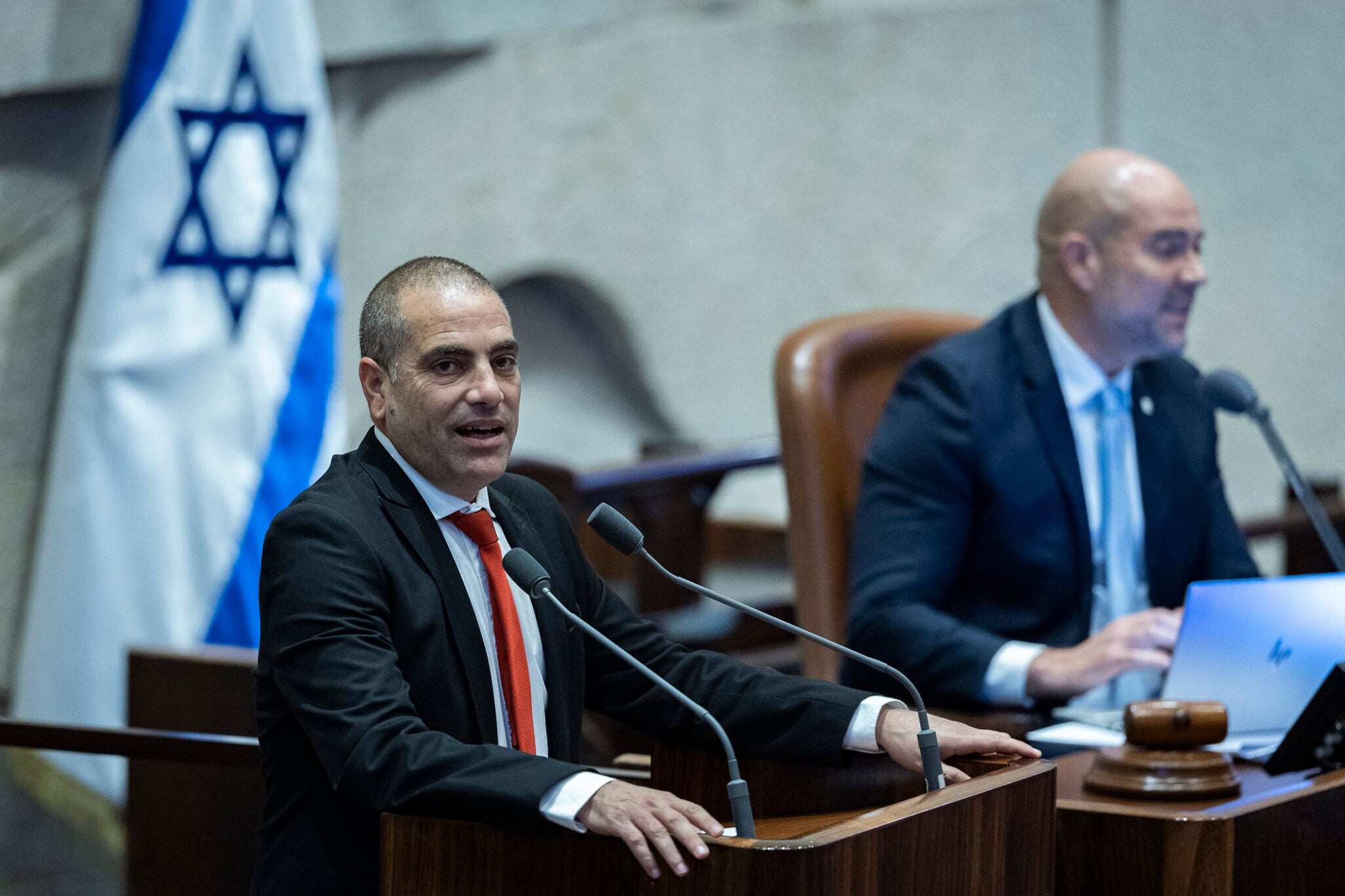
Arab MK says police officer called him a ‘terrorist’
Joint List MK Hassan al-Nasasra, meanwhile, said a police officer called him a “terrorist” on Thursday, Haaretz reported, after the lawmaker stopped near the Beit Kama junction and attempted to intervene when he saw officers allegedly beating and humiliating a handcuffed Arab suspect.
"אני לא רואה אותך מסנטימטר!", "כנס לאוטו שלך!":
עימות בין ח"כ חסן נססרה מהרשימה המשותפת לשוטר הבוקר סמוך לבית קמה. לדברי נססרה, הבחין בשוטרים מכים עצור אזוק ומשפילים אותו בצדי הדרך ולכן עצר את מכוניתו.
"דרשתי ממנו להפסיק את ההשפלה", אומר נססרה שטוען שהשוטר קרא לו טרוריסט. pic.twitter.com/RKXEHsNT1p— Josh Breiner (@JoshBreiner) November 19, 2026
“Take him to the police station,” Nasasra said to Haaretz. “Why do you have to humiliate him?” Video from the scene showed a plainclothes officer repeatedly ordering the freshman Balad lawmaker to return to his vehicle. It was unclear why the suspect, who was not on camera in the clip, was being arrested.
Tibi argues with bereaved MK Gvili from Knesset podium
Joint List MK Ahmad Tibi also denounced anti-Arab racism earlier this week amid a spat with Talik Gvili, a Likud lawmaker whose son, Ran, was killed in the Hamas-led October 7, 2023, attack and taken hostage to Gaza.
Tibi criticized what he described as the racist delegitimization of Arab lawmakers. He argued that similar treatment of Jewish legislators in France or Germany would cause a political “storm.”
He added that the lawmakers now calling Arab votes “illegitimate” had previously requested the Arab parties’ help.
“Everyone calling us supporters of terror and saying our votes weren’t legitimate turned to us and asked for our help, asked for our votes a year, two years, five years ago,” he said. “This is hypocrisy, hypocrisy that is racism.”
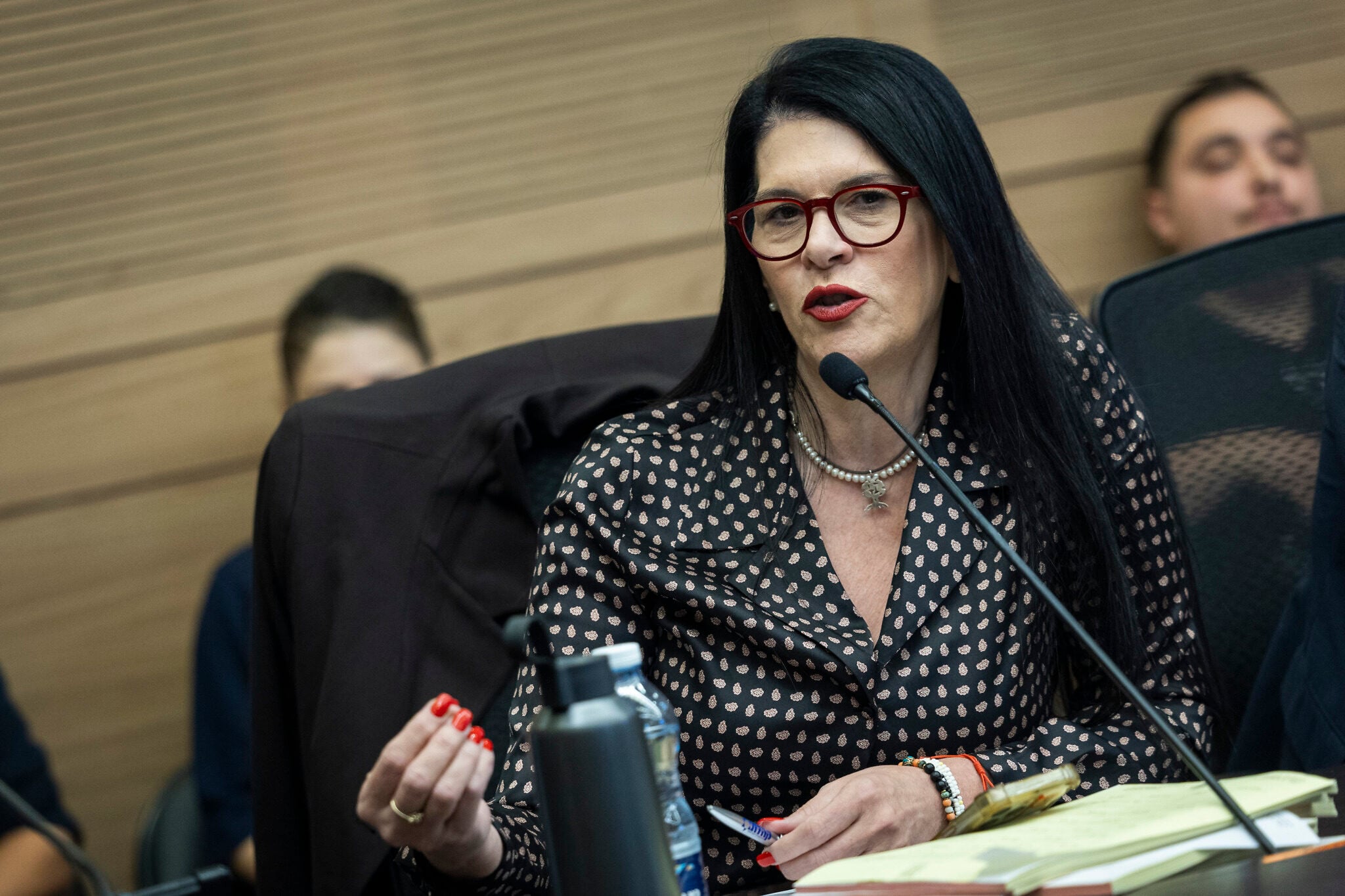
During the speech, Gvili repeatedly called out to Tibi: “Who murdered my son?”
Tibi told her that he respected her but objected to directing the question specifically at an Arab lawmaker.
“Don’t direct that question at an Arab member of Knesset. It’s not fair,” he said. “Even hinting at it is out of place.”
He then told Gvili: “Those who committed the murder were Hamas, and the person responsible is your prime minister.”
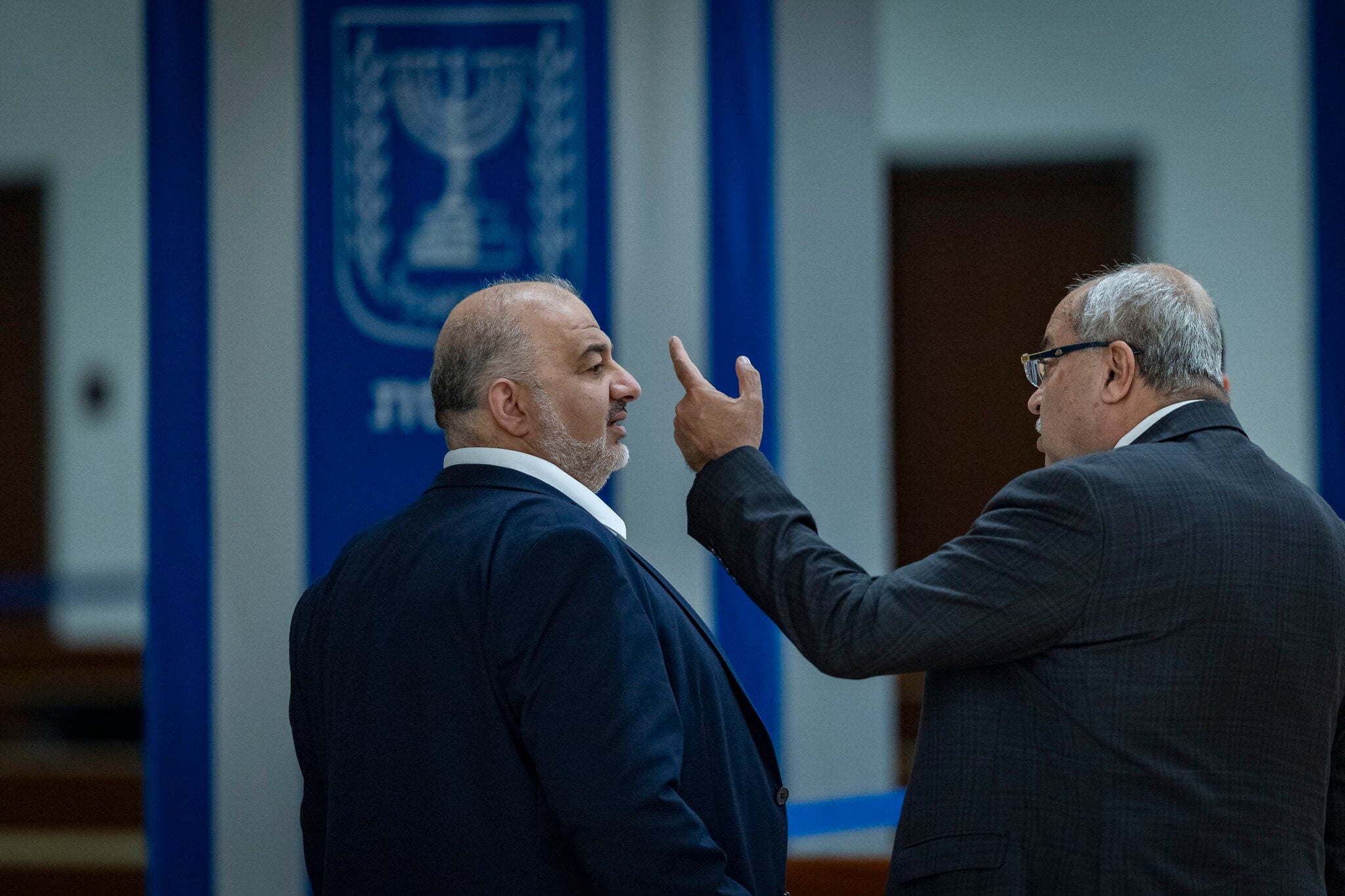
When Gvili pressed him on whether he condemned Hamas, Tibi responded: “I condemned all of the horrors of the [October 7] massacre. Of course I do.”
Shin Bet chief accused of trying to block Arabs from moving to Jewish towns
Separately, Haaretz reported Thursday that Shin Bet chief David Zini and his deputy had used their positions to try to prevent Arab Israelis from moving into Jewish towns, viewing the phenomenon as a potential threat to the character of the state. A senior security source told the newspaper that Zini’s “starting premise is that all Arabs are supporters of terrorism.”
The report came as Zini sought to detain all four Arab party chairs in the Knesset for questioning over alleged foreign election interference but was blocked from doing so by the attorney general, who told him there were no legal grounds for such arrests.
In one meeting, Zini was quoted as referring to Ra’am chairman Mansour Abbas as “What’s that Arab’s name — Mansour,” and telling the attorney general to let him conduct the interrogations first so he could produce the evidence afterward, Haaretz reported.
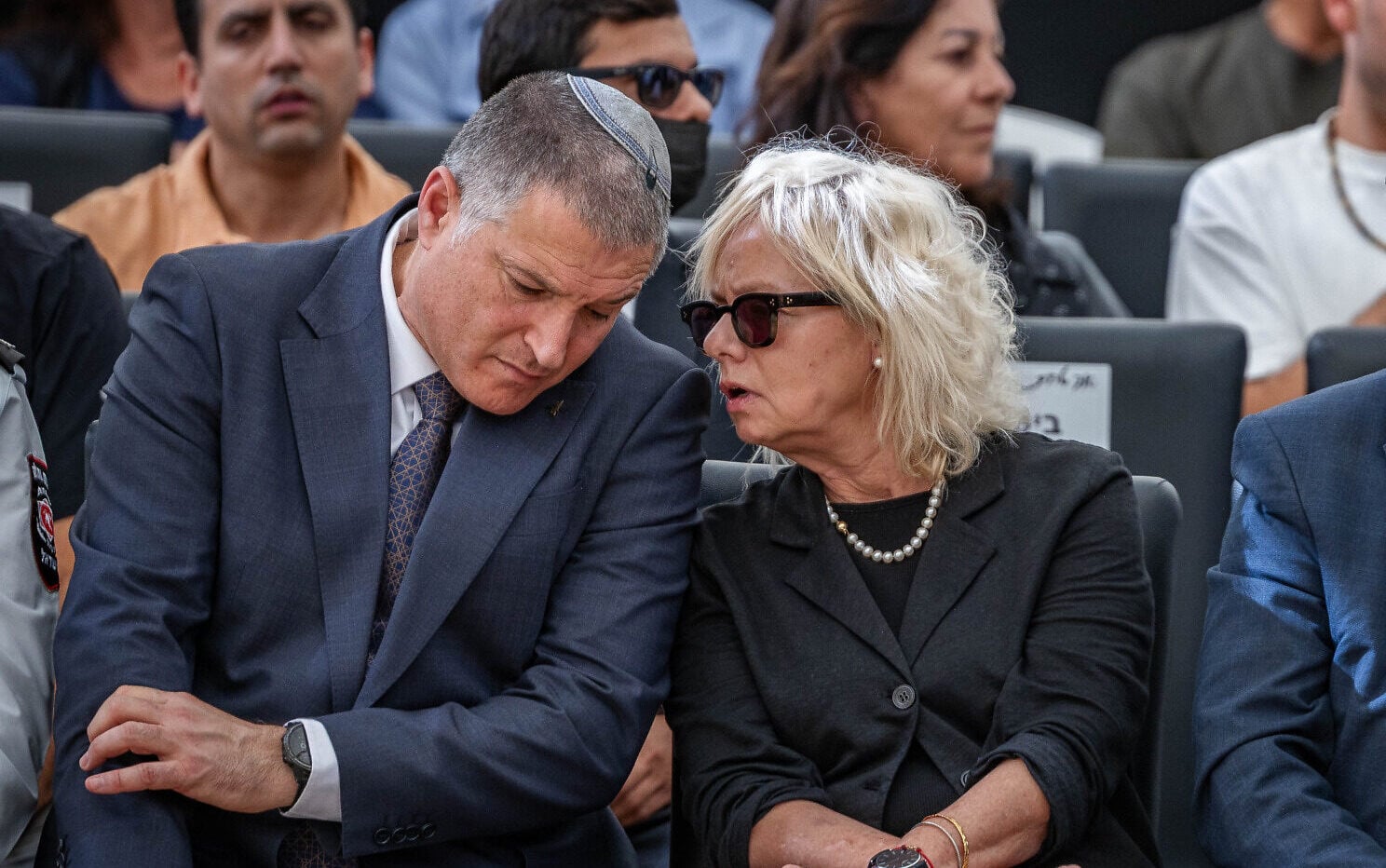
“Let me conduct the interrogations, and I’ll give you what you’re asking for,” Zini was said to have told Baharav-Miara.
The attorney general subsequently explained to the Shin Bet chief that in democratic countries, evidence is needed before such interrogations are conducted, not afterward.
Zini’s deputy, whose name is barred from publication, holds similar views toward Arab Israelis, according to Haaretz.
“There is a concern that external funding driven by motives hostile to the state is being used to challenge the social fabric (of Israel),” the deputy Shin Bet chief was quoted as having said in a closed-door meeting in the lead-up to the election.
“Especially in an election year, we must monitor this issue,” the Shin Bet deputy reportedly added.