

Subterranean Hezbollah blues: 7 things to know for December 5
Israel exposes a tunnel under the Lebanese border, surfacing questions about the chances of war, how the army acted and what Netanyahu is doing
 Add ToI as a Preferred Source on Google
Joshua Davidovich is The Times of Israel's Deputy Editor
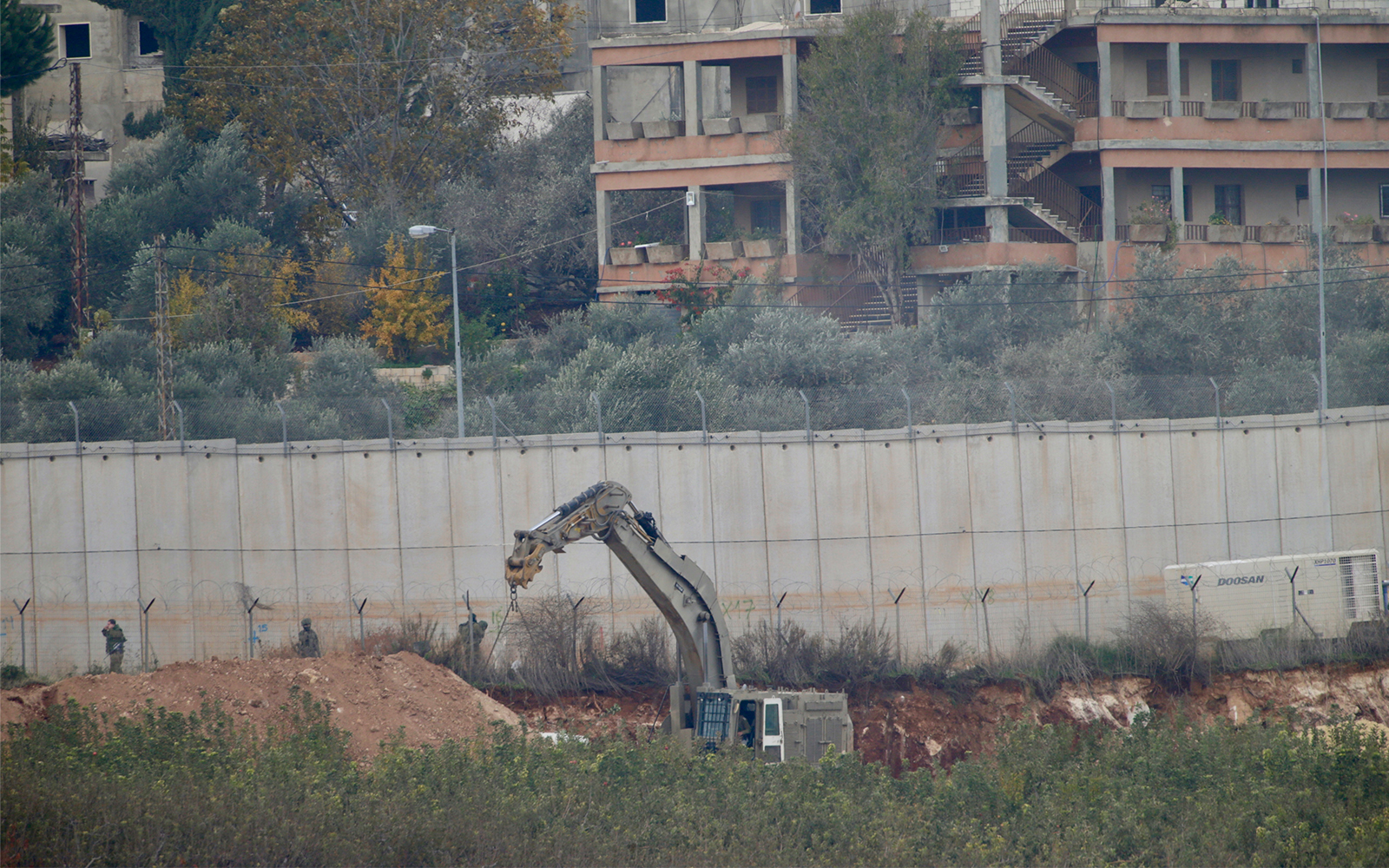
A day after Israel launched a major operation to find and destroy suspected Hezbollah attack tunnels on the Lebanon border, ending years of speculation that the terror group was digging beneath the tense frontier, there remain more questions than answers.
That does not mean, though that press pundits does not do their darnedest to at least give the state of play and make educated guesses at what the future may hold.
1. Questions like: Will Hezbollah respond and how?
- For now the consensus by and large seems to be that the Iran-backed terror group won’t break the tense calm on the border, so long as Israel does not cross over the blue line.
- “The question of sovereignty will likely affect [Hezbollah head Hassan] Nasrallah’s decision-making,” Nahum Barnea writes in Yedioth Ahronoth. “If there are army operations against the tunnels in areas that Hezbollah claims is part of Lebanon, it could respond with fire.”
- Hezbollah flack Hassan Hoballah tells Iran’s Press TV: “The days when Israel could simply attack Lebanon are over, even though the initiative to attack is in Israel’s hands,” seemingly indicating that the operation on the tunnels is not seen as an offensive operation.
- Lebanon Parliament Speaker Nabih Berri’s response was to question whether the tunnels even exist: “The Israeli tale about the existence of a tunnel in Kafr Kila is questionable. Lebanon is asking to be provided with the details that determine the location of this tunnel and the validity of the Israeli claims about its existence,” he said according to Lebanon’s Naharnet, quoting the local al-Joumhouria daily.
- To Israel Hayom’s Yoav Limor, the fact that Hezbollah and Iran have not responded and have remained largely silent “proves it was caught off guard.”
- “Israel is hoping the exposure will lead to an internal Lebanese debate as to if the group is in fact ‘Lebanon’s shield,’ is it says it is, or actually “Lebanon’s danger’ as Israel defines it.
2. What are the chances the operation will in fact expand and lead to war?
- Haaretz’s Zvi Barel sees the chances of the tunnel-busting effort sparking a war as fairly slim, as neither side wants to go to war, and Hezbollah is too busy with domestic political battles: “It does not want to test its strength again against Israel in a violent clash now. Such a clash would compel Hezbollah to breach the convenient balance of deterrence that it has managed to forge since the Second Lebanon War.”
- But with Hezbollah’s missile arsenal still looming and Israel threatening to action against its acquisition of precision guided missiles, war is still seen as a very real possibility.
- Israel’s Channel 10 notes that the relatively limited scope of the tunnel operation is largely due to an expectation that the IDF would have to launch a far greater operation in the near future to deal with Hezbollah’s efforts to add precision guidance to its arsenal of tens of thousands of rockets.
- The channel surmises that Israel felt it needed to deal with the tunnel threat before launching strikes that could spark war.
- Former Military Intelligence head Amos Yadlin says essentially the same in a Twitter thread on the northern exposure.
Last word: the MORE CRITICAL CHALLENGE, stopping the “Precision Project” is still ahead, with legitimacy issues and escalation risks at a totally different level.
10/10— Amos Yadlin (@YadlinAmos) December 4, 2018
3. How much of a threat did the tunnels pose to Israel? And how did Israel allow Hezbollah to become such a formidable threat, and was it caught off guard, dismissing concerns from northern residents?
- ToI’s Avi Issacharoff, who predicts “war is at the doorstep,” notes that in hindsight, of course Israel should have known Hezbollah would dig under the border.
- “Like many others, I had heard endless explanations from senior and not-so-senior IDF officers that Hezbollah has no interest in tunnels because of the cost and difficulty of digging them in the northern terrain,” he writes. “Yet Hezbollah plainly thought differently. In the Second Lebanon War in 2006, the IDF discovered that the ‘nature reserves’ Hezbollah had set up on the northern border included a network of tunnels, carved out in that difficult hilly territory — drilled through the limestone bedrock. Therefore, it was eminently reasonable to imagine that Hezbollah would try to build attack tunnels into Israel.”
- Yedioth’s Yossi Yehoshua writes that Israel had been watching the tunnel being built since 2014, but didn’t have the technology to tackle the threat until the army chief of staff gave the go ahead on November 7, though then-Defense Minister Avigdor Liberman and others thought the operation a fool’s errand, and even the army seemed surprised that it found the actual tunnel opening so quickly after launching the operation.
- “The IDF General Staff called it a ‘Hanukkah miracle’ and it seems that on a tactical level, regarding one tunnel, they were right. But against Hezbollah’s larger threat, with unending missiles, miracles won’t suffice.”
4. Is this operation what helped Prime Minister Benjamin Netanyahu keep his coalition together?
- This answer, at least, seems to be a clear yes.
- ToI’s Marissa Newman writes that the operation was apparently what Netanyahu was referring to when he cited a “security situation” in his decision to sue for calm with Gaza and what was behind Education Minister Naftali Bennett’s decision not to go ahead with an ultimatum to bring down the government.
- “Both Bennett and Netanyahu on Tuesday afternoon released statements hailing the operation and threatening Hezbollah. But neither cited their previous references to a security threat during last month’s political upheaval,” she writes. “Perhaps they were abiding by Netanyahu’s self-stated rule against ‘playing politics’ during a military campaign. Or perhaps they no longer have to.”
- In Israel Hayom, Mati Tuchfeld continues to pillory Bennett for even making the ultimatum when the country’s fate supposedly hung in the balanced.
- “Today these moves appear just a little more detached from reality and a little less responsible,” he writes.
5. But is the army/government overplaying it as a propaganda tool and does its timing have anything to do with distracting from the PM’s domestic troubles?
- Not a few people surmised that the operation was timed days after police recommended that Netanyahu be charged in a graft case to distract attention from those woes, pointing to the fact that the operation seemed a larger dog and pony show than it may have deserved, with maps and reams of info about what the army found underground.
- “Was it necessary to make such a media festival out of what is just another stage in an ongoing operation,” Haaretz’s Anshel Pfeffer asks. “Hezbollah could have been notified by any number of other channels that Israel was only operating on its side of the border. The mysterious flight on Monday to meet U.S. State Secretary Mike Pompeo in Brussels, didn’t have to be so public – and anyway, Israel has so many other ways of informing the Trump administration. As a journalist, one has to appreciate all this information being offered. But as a citizen, one can’t help asking himself whether this uncharacteristic military transparency is serving other interests.”
- One propaganda video put out by the army included stock footage of the wrong Hezbollah, Iraqi militia Kataib Hezbollah, which is related but not the same.
https://twitter.com/Intel_sky/status/1069874306295971841
- But Ynet reports that some believe that Iran, which pulls the strings for both groups, planned to enlist an Iraqi Shiite militia called the Noble Movement, which was sent to fight in Syria previously, in the fight against Israel.
- “It seems the Iranian called on the Noble Movement to take part in the conflict with Israel, which would have taken the form of creating a ‘unit to Liberate the Golan.’”
6. Punching violence: It’s not just Netanyahu’s domestic problems that get shunted aside by the macho army operation, but also Tuesday’s major protests against domestic violence.
- Haaretz is the only major newspaper to give the protest anything close to major space on its front page, after a day of labor actions, demonstrations and more.
- Yedioth Ahronoth makes do with a small box on its front page and a double truck feature on pages 12 and 13.
- Israel Hayom has an even eensier front page box and smaller story on page 17.
- On Wednesday, though, Netanyahu kicked off a ministerial meeting on the matter by threatening to do some domestic violence of his own.
PM @netanyahu opened the ministerial committee on violence against women by promising to "give a punch in the face to violent men"
— Raoul Wootliff (@RaoulWootliff) December 5, 2018
7. Emirate Jews open up: Dubai is not a place one often thinks of as having many Jews, but ToI’s Miriam Herschlag shines a rare light on the Gulf city’s tiny community.
- Unlike other communities scattered around the Mideast, remnants of once thriving communities decimated after the formation of Israel, Dubai’s is decidedly newer and mostly made up of people in the sparkling petropolis on business.
- “Since formation in 2008, the community has been vigilant in maintaining a low profile. No dedicated website. No listing on Jewish travel sites. Almost no mentions on social media. Visitors learn about it via word of mouth and the villa’s address is supplied only after a careful vetting,” she writes of the community, which hesitantly stepped out the shadows by giving her and her husband, who writes for Bloomberg news, access.
- “They come from the UK, South Africa, Belgium, the US. Some find the political trends encouraging, some remain skeptical,” Herschlag writes. “The Kiddush lunch banter, argumentative, laced with affection and humor, is quintessentially Jewish. The question, as ever, boils down to: Are we safe here?”






The Times of Israel Community.