

The 2020 Democratic primary according to Debbie Wasserman Schultz
Ahead of debates, Florida congresswoman and former DNC chair says she’s not worried about an acrimonious nomination fight that could divide the party
 Add ToI as a Preferred Source on Google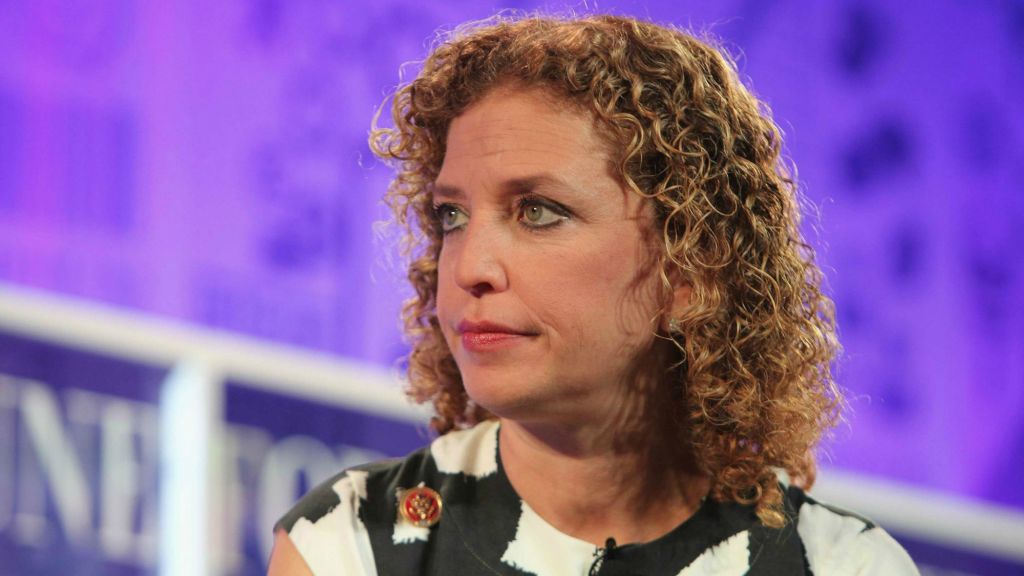
WASHINGTON — Until now, it’s all been academic. Who’s polling well? Is Joe Biden too old? Is Pete Buttigieg too young? Can Elizabeth Warren win as the candidate of ideas? Will Bernie Sanders turn off voters and seem hypocritical with an unabashed populist message even after becoming a millionaire from book sales?
All of these questions can often seem like part of a conversation the media is having with itself. But starting this week, the 2020 Democratic primary will take off in earnest, with the first debates of the election cycle set in Miami, Florida, on Wednesday and Thursday.
Few people will be looking at them with the same perspective as Debbie Wasserman Schultz.
A former chair of the Democratic National Committee from 2011 to 2016, the Florida congresswoman organized the party’s debates four years ago. (She later resigned from the position after Wikileaks released stolen emails that showed her favoring former secretary of state Hillary Clinton over Vermont Senator Sanders.)
And while that contest indeed became tumultuous — the mutual resentment between the Clinton and Sanders camps can still be deeply felt in Democratic circles — there was a glaring difference. In 2016, the race started with just six presidential hopefuls. As of this writing, there are 23 Democrats vying to take on US President Donald Trump next year.
With such a crowded race, the DNC divided the first debates into a two-night event, with 10 of the top 20 candidates debating one night, and the other 10 debating a day later. Three candidates didn’t make the cut to participate at all.

Under these circumstances, Wasserman Schultz thinks it will be difficult for any of the Democrats to have a breakout moment on stage. Rather, she said, it will jump-start the process of narrowing the field.
“I think with two nights of 10 candidates each, it’s obviously challenging for any candidate to really get a whole lot of time to capture people’s imaginations,” she recently told The Times of Israel in a brief interview.
“These initial debates are a weeding out process, the beginning of a weeding out process. You have to be creative and do as much as you can to grab the notice and attention of voters and leave an impression with voters that you did well. That’s what the first debates are about,” she said.
But unlike the 2016 Republican primary, which also had a large group of candidates, the DNC will not divide the candidates based on their polling numbers. Instead, they are dividing them up randomly.
As a consequence, the second night is stacked with many of the most prominent contenders — Biden, Buttigieg, Sanders, and California Senator Kamala Harris — whereas the first night includes only one candidate polling in the top five: Massachusetts Senator Elizabeth Warren.
Pundits have debated whether that will be an advantage or a disadvantage for the wonkish legislator climbing in the polls. Wasserman Schultz thinks she’ll do just fine.
“She’s proven to be pretty adept at maximizing opportunity, so I think she will likely perform well no matter what night she is on the stage,” she said.

“Regardless of the night, there is also the position on the stage. The way the Republicans did it was when you did well in the polls, you moved more to the center. That often matters because the moderator who is managing the debate time is going to see you more easily when you’re on the center than when you are on the end. Every candidate has to focus on the best strategy to maximize their impact. Elizabeth Warren certainly has proven that she has the ability to get the attention she needs.”
Because Warren is polling the best out of all the other candidates who will debate Wednesday night, she will be in the center of all her rivals.
Wasserman Schultz would not say whether she thought this approach was the best way to deal with a primary this packed, but said she empathized with the current head of the DNC, Tom Perez, who she said will irritate people no matter how he decides to manage the primary process.
“I think the DNC chair, having experienced it myself, is in a very difficult situation,” she said. “Whoever loses out on the criteria that was established is critical. If someone doesn’t like the night that they’re on, if someone doesn’t like the network that the broadcast is on, if they don’t think the timing is right, the candidates are always going to try to find a foil for their frustration.”
But Wasserman Schultz was dismissive of the notion that deeper frustrations may unfold within the party over the nomination fight, whether ideological differences between the more progressive camps and more centrist camps — i.e. the Sanders and Warren wings versus the Biden wing — could splinter the Democrats at a time when they need to be at full strength if they want to unseat Trump.
Asked whether she was worried about Democratic disunity, Wasserman Schultz answered succinctly: “No, I’m not worried about that at all.”





The Times of Israel Community.