Add ToI as a Preferred Source on Google
Somewhere off Israel’s coast, most likely near a rock or reef, a lionfish is swimming at this very moment, unaware that a bounty has been placed on its head.
From Monday, June 1, thousands of Israelis with sport-fishing licenses were given the green light to hunt red lionfish, a strikingly beautiful fish but also a professional troublemaker, that is responsible for forging a coalition unlike any seen in Israel before.
This is the first time that the regulator (the Agriculture Ministry), an environmental organization (Zalul), and the fishermen (represented by the Sport Fishing Association) — who in ordinary times tend to quarrel with one another — have joined forces in a campaign against a common enemy.
The lionfish earned this honor because it is considered one of the greatest threats to the region’s marine ecosystem. It is an invasive species: it naturally belongs to the Indian Ocean and the Red Sea, where it has natural enemies that curb its aggressive expansion.
It reached Israel’s shores and the Mediterranean Sea, much like the jellyfish, through the Suez Canal. When the French engineer Ferdinand de Lesseps dug the canal in the 19th century, he was thinking about trade and ships. He did not consider that a few other creatures would hitch a ride on his project and jump from one sea to another, a phenomenon now known as Lessepsian migration.
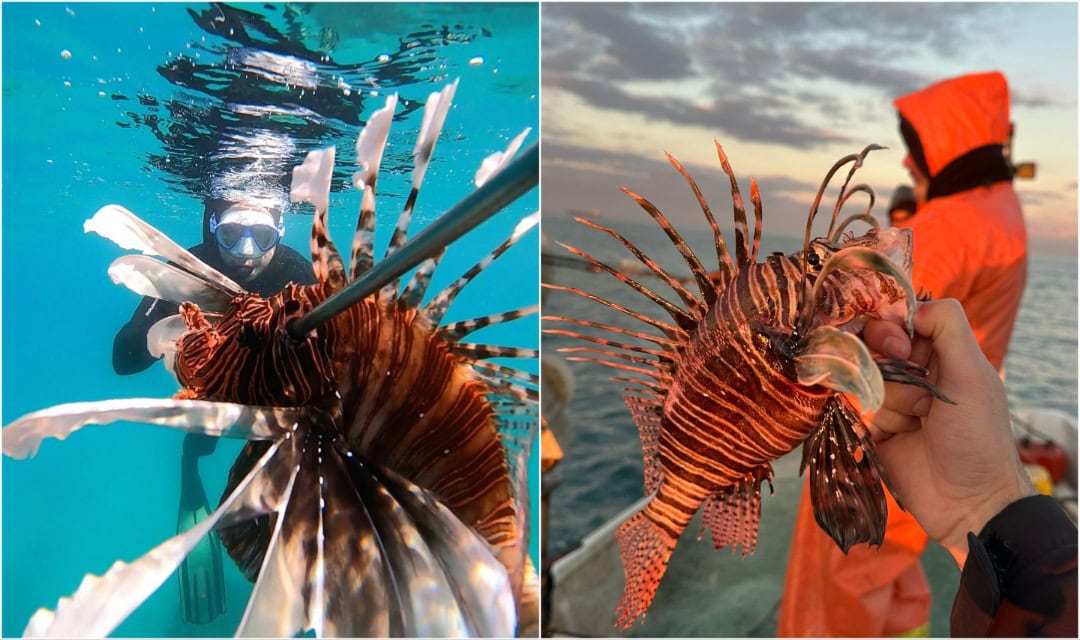
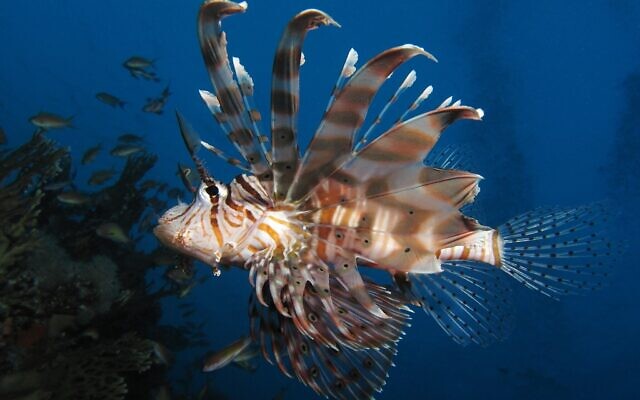
The lionfish was first spotted off Israel’s coast at the start of the previous decade. It measures just 30 to 40 centimeters (12″-16″) long, “but it is a very aggressive predator,” says Guy Rubinstein, director of the Fisheries Division at the Agriculture Ministry. “It preys on small fish, destroys their habitats, and takes over territories.”
“Its distribution is expanding,” he continued. “In areas where there used to be lobster colonies, you see that the lobsters have disappeared and lionfish have taken their place. When you catch a lionfish and cut it open, you find at least 10 small fish it has swallowed.”
“They like to live in rocky areas,” Rubinstein said, “but recently more and more lionfish have also been showing up in the nets of trawlers, which are dragged only over sand. That means they are everywhere.”
A single spawning by a female lionfish can yield 30,000 eggs. Studies have shown that in territories taken over by lionfish, local fish populations have declined by about 80%.
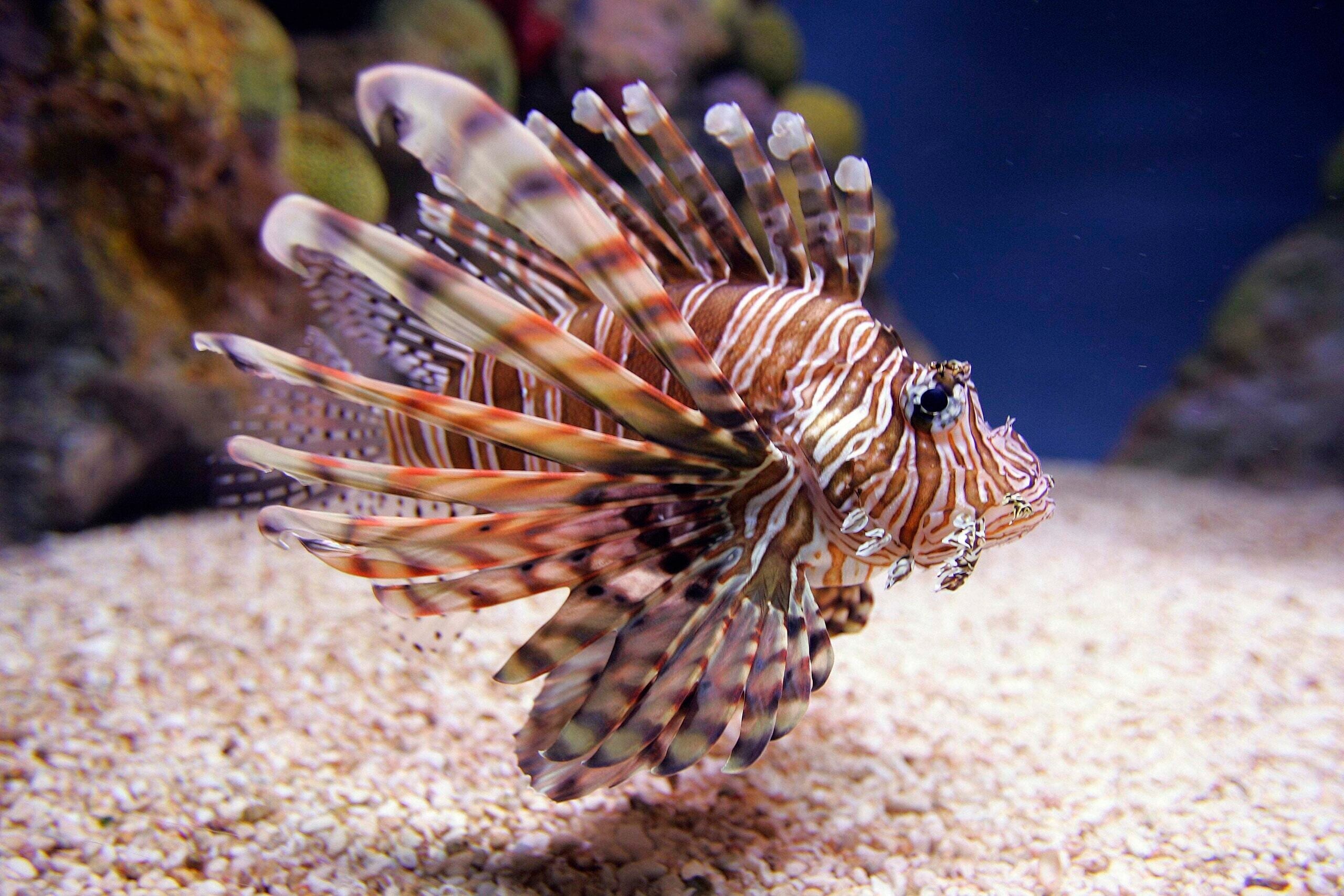
“This is a very problematic invasive species,” said Dr. Youval Arbel, deputy director of Zalul. “Everywhere it has been allowed to reproduce, in the Caribbean or the Mediterranean, there has been severe damage.”
“At a certain point, we came to the Agriculture Ministry and said, ‘Let’s do something,’” Arbel recalled. “That suited them because it is clear to everyone that there is a problem.”
The proposal to act against the lionfish addressed two challenges the Agriculture Ministry faces: managing the invasive fish and managing the fishermen.
In its role as the regulator responsible for overseeing and supervising marine fishing, the Agriculture Ministry is caught between two poles.
On one side are the environmentalists, led by the Society for the Protection of Nature in Israel, who demand more and more fishing restrictions in order to prevent harm to the web of marine life. On the other side are the fishermen, who demand more freedom of action and argue that their impact on the marine ecosystem is negligible.
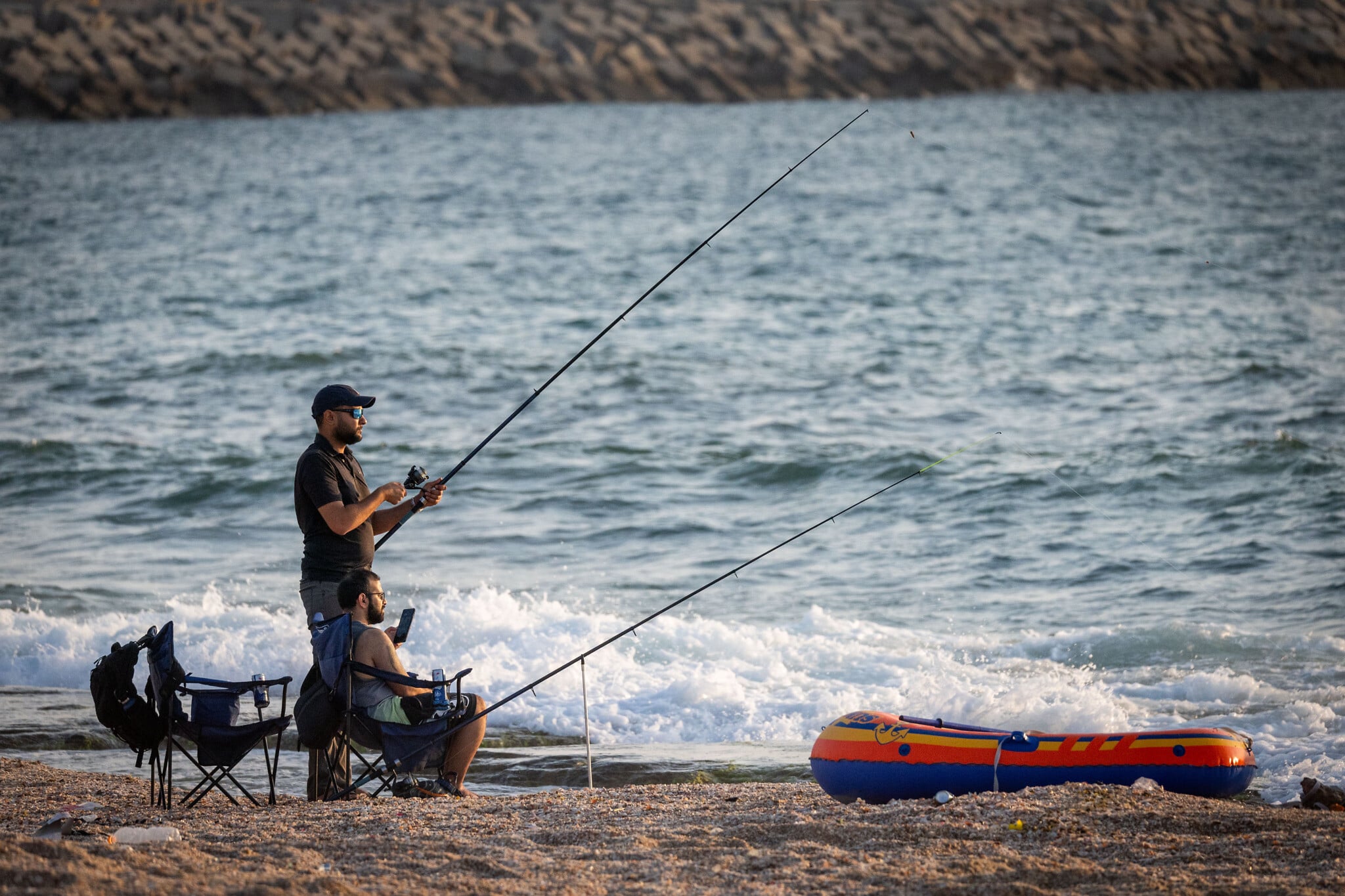
At this time of the year, the conflict becomes sharper because it is the fish breeding season. In ordinary years, throughout June, Israel enforces a strict nationwide fishing ban, meaning merely entering the sea with fishing equipment is prohibited and could cost a fisherman a heavy fine. This frustrates the fishermen, and the friction between them and the ministry increases.
Then an idea emerged: allow the fishermen to enter the sea and indulge their passion for fishing, provided they only target lionfish. It offers a contribution to the ecological balance alongside satisfied fishermen. Two birds with one stone.
“The fishermen are angry at us about many things, but here we think they should be given some relief and encouraged to remove more lionfish from the sea,” Arbel says. “And this can also reduce some of the pressure on groupers and other species we want to protect.”
“This is the first time we are encouraging the selective fishing of an invasive species,” Rubinstein says. “The fishermen want it and enjoy it, and if I can allow them to do it, then why not? Especially since this way I am directing the fishing effort toward the lionfish instead of the species we do not want harmed.”
When asked whether this culling is even effective — given that experience on land shows that terrestrial species culled by shooting often reproduce at an accelerated rate in response — Rubinstein concedes that it is a valid concern.
“That is a good question. We still do not know,” he admits. “I am working on the assumption that even if the culling does not prove effective, it does no harm, and at least there is a benefit with the fishermen.”
“These days, a study is being conducted by Dr. Shevy Rothman of the Steinhardt Museum of Natural History and Tel Aviv University, who is researching the effectiveness of the culling,” he added. “After a year or two of observations and comparisons between areas where culling is carried out and areas where it is not, we will know whether it works.”
“In any case, in the meantime, trust and cooperation have been built with the fishermen, and they get the feeling that they are not enemies of the sea,” he concluded.
Alon Rothschild, biodiversity and marine policy manager at the Society for the Protection of Nature in Israel, praised the lionfish-culling initiative, but with several caveats: “Culling lionfish is, in principle, a welcome action. It can make a local and limited contribution to the ecosystem, alongside providing enjoyment for the fishermen.”
“But it is important to remember two things,” Rothschild notes. “The first is that over time, their population is expected to renew itself quickly. The second is that you cannot cull lionfish with one hand, and with the other allow the fishing of species such as grouper and meagre and expect the ecosystem to recover.”
The Agriculture Ministry and Zalul, in cooperation with the Sport Fishing Association, have attempted to give lionfish hunting a festival atmosphere to excite the fishermen. A dedicated website for the event was launched, and competitions were announced in several categories — the longest lionfish, the fisherman who caught the most lionfish in a day, and, the best recipe.
At the same time, WhatsApp groups were opened where fishermen are asked to upload photos and real-time reports, which also serves the purpose of collecting information about the distribution of lionfish in the sea.
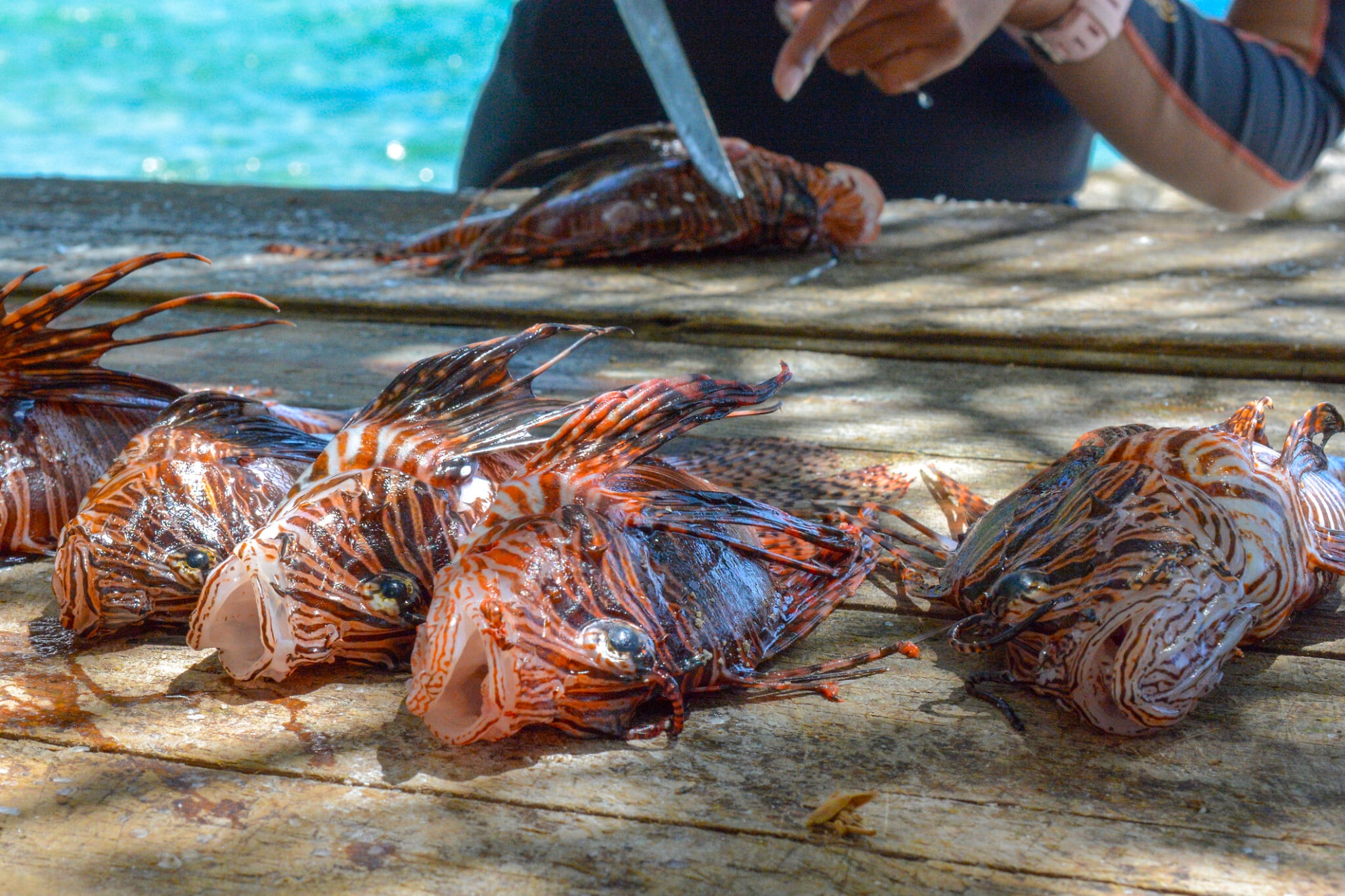
In ordinary times, the lionfish is not a preferred target for most fishermen. One reason is the mane of 18 spines that adorns its head. The spines contain venom, and being pricked by one is a highly painful event.
Experienced fishermen know how to cut off the spines immediately after catching the fish to neutralize the danger. Once the spines are removed, it is considered a delicious and healthy fish that is highly popular in kitchens worldwide.
“The advantage of the lionfish is that it is kosher and tasty, and we hope that the current move will help create a circle of consumption around it,” Arbel said.
“The public is not sufficiently aware of its advantages,” he continues. “People mistakenly think it is poisonous, but once fishermen have an incentive to take it out of the sea, we hope this will help turn it into a more popular fish, one with more of a market, so that whoever catches it as part of their haul will be able to make a living from it.”
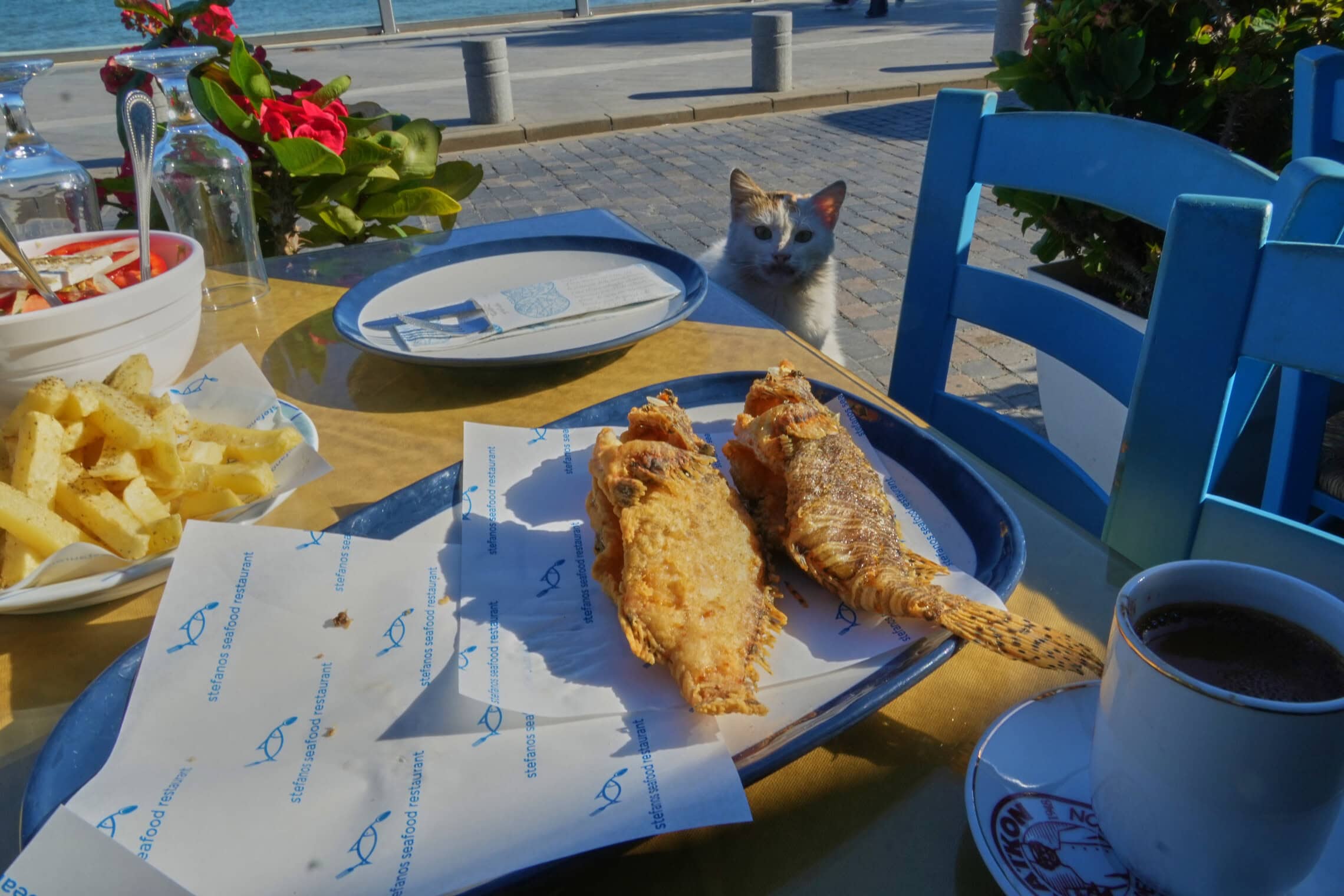
Arbel himself has already had the chance to try the delicacy. “Yes, it is tasty,” he said. “And I am someone who does not eat much fish. People who eat grouper say it is similar. I ate it fried in butter after it had sat a bit in garlic and lemon.”
Addressing the potential discomfort of an environmental organization actively encouraging the hunting of fish, Arbel acknowledges the internal dilemma.
“There were thoughts about that among us,” he says. “There were people at Zalul who saw it negatively, but in environmental ethics, you have to weigh one thing against another. We are acting out of the understanding that we are doing good for the ecology of the Mediterranean when we remove this fish, which is causing very severe damage to ecological diversity. That outweighs the other considerations.”
These deliberations were also expressed in a paragraph written by Zalul staff on the project’s dedicated website: “It is important for us to emphasize: The Zalul Association does not support fishing, but is engaged solely in saving the local population of Mediterranean Sea fish.”
“The competition is for one month,” Rubinstein says. “It is a pilot, and if we see that it works well, perhaps we will give it a framework going forward as well.”
As for whether the lionfish is the only invasive species currently in the crosshairs, Rubinstein points to the silver-cheeked toadfish, a toxic pufferfish known locally as “Abu Nafha.”
“Abu Nafha has causes a great deal of damage both to the ecosystem and to the fishermen, but the problem is that it has no economic value because it is highly poisonous if you do not clean it properly. Nobody wants to deal with it,” he says.
“If we conclude that culling is effective,” Rubinstein points out, “perhaps in the future we will have to pay hunters to fish for Abu Nafha, but right now we are not there yet.”

The Times of Israel Community.