

The scuffle shuffle: 8 things to know for October 2
From battling Gaza to bickering over how to deal with Gaza to feuding with Lebanon and gearing up for a donnybrook over Khan al-Ahmar, there’s no shortage of what to fight about
 Add ToI as a Preferred Source on Google
Joshua Davidovich is The Times of Israel's Deputy Editor
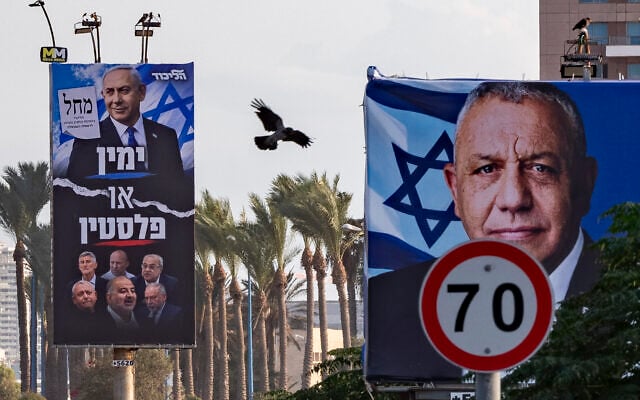
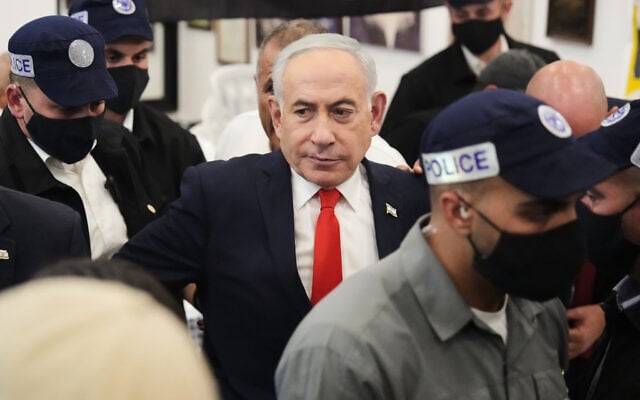
1. Headed for the polls? With the fall holidays over, politicians are apparently wasting no time in putting pressure on Netanyahu over early election scuttlebutt.
- Yedioth reports that coalition leaders sent a message to the prime minister in recent days that he needs to let them know if he’s planning on calling early elections before the start of the winter session, which kicks off in two weeks.
- Rumors have been flying that early elections are in the offing, with Netanyahu looking for a new mandate to preempt his legal woes and threatening he may do so if a deal is not reached between Yisrael Beytenu and the Haredi parties over drafting the ultra-Orthodox into the army.
- Not everybody in the coalition is happy about going to elections, especially parties that stand to lose out.
- “Netanyahu will decide to dismantle the most right-government there is. We stopped his last attempt to move up elections but this time it’s in his hands. [Avigdor] Liberman and the ultra-Orthodox can come to deal on the draft law, but they’ve sent a message that they will do so only after Netanyahu decides if he wants to move up elections. It’s clear to everyone in the coalition that Bibi will set the election date in coordination with what is good for his investigations,” the paper quotes a senior member of the coalition saying.
- The paper doesn’t say who is behind the quote, but given the fact that they are proud of its right-leaning slant and are neither Haredi or Liberman, it’s clear the speaker is either Jewish Home head Naftali Bennett or one of his deputies.
2. The messianic vs. the leftist: Elections haven’t even been called and coalition members are already bickering, particularly Education Minister Bennett and Defense Minister Liberman over Gaza.
- On Tuesday morning, Liberman responds to an attack on his leadership from Bennett by telling Israel Radio that “Bennett doesn’t care — neither about education nor about security. As far as I’m concerned the man has been deleted; starting tomorrow he simply does not exist.”
- Similar comments are made to Army Radio and Yedioth, calling Bennett a “messianic right-wing zealot.”
- Bennett, responding specifically to the Yedioth comments, says on Facebook that Liberman’s comments are “weak and leftist.”
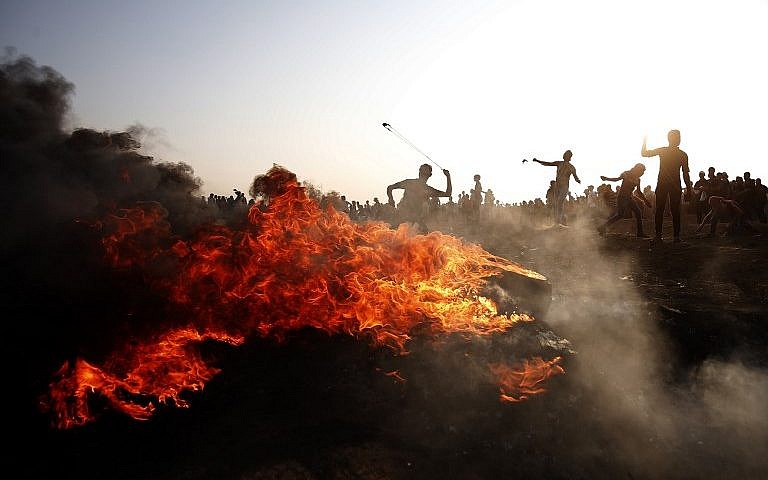
3. Crossed the Rubicon? Bennett’s goading not withstanding, many pundits and others still fear Israel and Gaza are on a collision course for a fourth war in a decade, with daily riots on the border.
- “Israeli intelligence is trying to figure out now if the growing and worsening border riots means that Hamas has crossed the Rubicon and decided to bring about an extreme military crisis — which it thinks will cause Israel, the US and the Palestinian Authority to change their approach and get rid of the blockade without Hamas having to give up military strength or its place in the inter-Palestinian arena,” Yedioth’s Alex Fishman writes.
- Fishman also claims that Hamas is paying the rioters with Iranian money in an effort to make the border disturbances so constant as to normalize them and lull the IDF into complacency, and wonders if the IDF and Israel’s political leadership will do anything but wait for deterrence to totally disintegrate and go in to “crush their bones” again.
- In Haaretz, Marylin Garson, who lived in Gaza for several years, writes for the op-ed section that removing the blockade could solve all Israel’s problem and help take Hamas down a notch.
- “The blockade gives Hamas a free hand, and escalation affirms them as the interlocutor of violence. De-escalation would speak past them. Peace would put them out of business,” she writes with somewhat rose-tinted glasses.
4. No rockets, we swear (but don’t check the wharf): Lebanon on Monday gave a tour of suspected Hezbollah missile sites to prove the terror group is not storing rockets in the center of Beirut.
- The Lebanese claim is covered in the Israeli press, but met with some skepticism. Yedioth headlines its story on the tour “Lebanon’s show,” using a word that telegraphs some dismissiveness. Pro-Netanyahu Israel Hayom calls it a “propaganda tour.”
- Haaretz, which leads off with Beirut’s claim that Netanyahu’s allegation is meant to serve as a false casus belli, writes that Lebanon took the diplomats and reporters to “at least one of the three suspect sites.”
- However, news organizations with reporters in Lebanon, including local Lebanese outlets, report that the tour included three sites: a soccer field, a seemingly abandoned warehouse and a golf course. The golf course was included by mistake, since it was not included in Netanyahu’s map of suspected missile sites, Lebanon’s Foreign Ministry says.
- Unincluded was an actual third site from Netanyahu’s map, a dock on the waterfront of the Ouzai neighborhood, a Hezbollah stronghold, though the Washington Post reports that “officials said they were sure there weren’t any missiles there either.”
- “The diplomats, speaking on condition they not be identified, observed that the tour seemed inconclusive given that one of the sites was excluded. Moreover, the diplomats said, the map displayed by Netanyahu was too indistinct to ascertain the exact locations of the purported missile sites,” the Washington Post reports.
5. Bedwetting before bulldozers: Time is growing increasingly short for the West Bank Bedouin village of Khan al-Ahmar, which stands to be torn down by Israeli forces any day despite an international outcry.
- Haaretz reports, “No one knows when and how the structures will actually be destroyed. The residents of the village … say the children are suffering from nightmares, insomnia and bedwetting.”
- October 1 was the deadline given by the Civil Administration for villagers to leave of their own volition, but nobody has, setting up a showdown in the days to come.
- The Independent reports that dozens of villagers and activists have set up a protest tent in the middle of the village to await the bulldozer.
- “Ordering us to destroy our own homes is like telling us to bury ourselves with our own hands,” a father of seven living tells the British daily. “We are not soldiers, we don’t have tanks, we can’t stop them but we will resist and sleep under the sky if needs be. The women and children are very scared.”
6. Scant coverage: Though the issue has gained massive international attention, it’s barely covered in Israel’s Hebrew press, which is focused on things further away, like the Indonesian tsunami or the Nobel Prize for Medicine.
- Israel Hayom manages to dredge up an Israeli tour guide in Indonesia to get a bit of local flavor into its reporting on the deadly tsunami: “We’re in a different area than was hit, but even here the major disaster is felt,” the guide says.
7. Feeling threatened by leftists: NPR reports on Israel’s Shin Bet defending its practice of questioning or detaining left-wing activists at Israel’s borders, with a seven-page document that says the measure is necessary “to prevent domestic and international left-wing activists from encouraging Israelis and Palestinians to gather in West Bank areas ‘and use violence against Jewish residents and security forces.’”
- The American broadcaster quotes Dan Yakir, head lawyer for the Association for Civil Rights in Israel, who calls the position paper “one of the most shameful and dangerous documents ever issued from one of the state authorities.”
- “Apparently, the Shin Bet believes that participation in a demonstration or a tour in the West Bank constitutes an existential threat to the State of Israel,” he’s quoted saying.
8. Crack in the Trump-Netanyahu alliance? In Al-Monitor, former peace negotiator Yossi Beilin looks at US President Donald Trump’s recent comments in support of a two-state solution and sees the administration possibly moving away from Netanyahu’s positions.
- “The closeness between the two leaders on the Iranian issue is strategic in nature. On the Palestinian one, it is tactical, and it rests on very thin ice,” he writes. “The minute there is any talk of significant movement on this front, the ice will crack. This year’s UNGA meeting could signal a shift in the tripartite power balance. If the Trump team convinces Abbas to accept US mediation with Israel in light of the president’s comment favoring two states, a clearer picture will emerge. While Trump will not revoke his decision to move the US Embassy to Jerusalem, the Palestinians may be swayed by a US commitment in principle to recognize a Palestinian capital called Al-Quds (the Arabic name for Jerusalem) within the framework of a peace agreement, and by US willingness to rescind all the budgetary sanctions imposed on them in recent months.”
- As my colleague Jacob Magid points out, though, the headline on the piece “Is Trump moving toward Abbas” may be a bit much.
He said one thing about two states! How does this warrant an analysis with a headline like this?? https://t.co/qgWZhX2JsF
— Jacob Magid (@JacobMagid) October 1, 2018





The Times of Israel Community.