

Trump Jerusalem shift seen as propelled by campaign pledge
Some White House officials say decision based more on commitment to donors than foreign policy concerns
 Add ToI as a Preferred Source on Google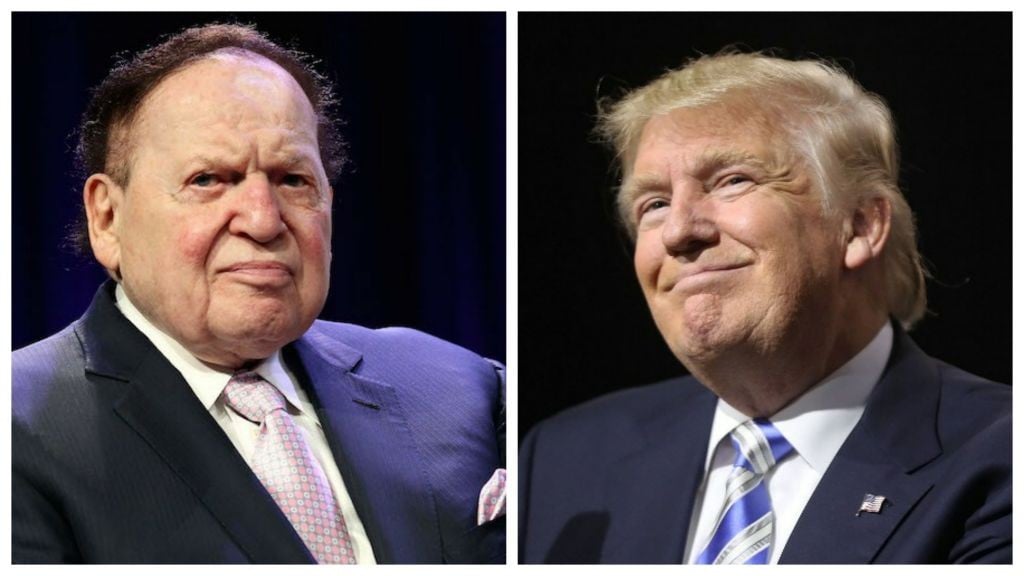
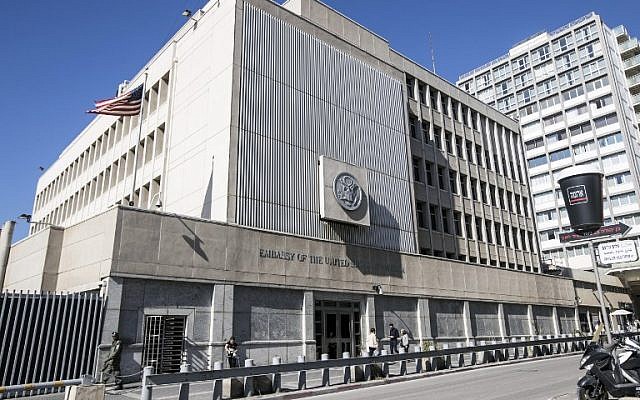
US President Donald Trump’s determination to declare Jerusalem the capital of Israel and move the American Embassy there was largely driven by a desire to fulfill a campaign pledge and align his policy with the wishes of wealthy backers, despite opposition from senior officials in his administration, according to a report Wednesday.
White House officials say the change in longstanding US policy was largely steered by Trump’s desire to appear “pro-Israel” to his donor base, reportedly disregarding warnings from US Secretary of State Rex Tillerson, Defense Secretary James Mattis and CIA Director Mike Pompeo.
“The decision wasn’t driven by the peace process,” one senior official told the Washington Post. “The decision was driven by his campaign promise.”
According to the report, policy advisers said the president did not seem to have a full grasp of Middle East politics, or the potential ramifications of such a move.
In March, Trump told legal scholar Alan Dershowitz he was determined to fulfill his campaign pledge, regardless of the backlash.
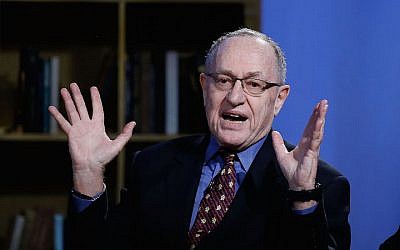
“What he said to me was, ‘I’m going to do it. Every other president has promised, and all of them didn’t keep their promises,'” Dershowitz told the Post. “He said there would be criticism of him but that he wanted to keep his promise.”
Among the powerful allies who encouraged Trump to make the controversial announcement on Wednesday were Vice President Mike Pence and Republican mega-donor Sheldon Adelson, who contributed over $20 million to his campaign in 2016.
At a White House dinner earlier this year, Adelson made the embassy move a main topic of conversation.
According to the Post, in the months that followed that dinner, Adelson brought up the issue with Trump advisers several times, expressing frustration that the embassy had yet to be moved.
Both Pence and Adelson were determined to coach Trump on the issue and its importance to right-wing Jews and evangelical Christians.
But Trump was advised against the controversial announcement on Wednesday by many in his administration, including top-ranking officials.
“It’s insane. We’re all resistant,” one source who recently spoke to the president about it told The Post. “He doesn’t realize what all he could trigger by doing this.”
Tillerson, Mattis and Pompeo all protested the decision in private, while Trump’s peace envoys — Special Representative for International Negotiations Jason Greenblatt and his son-in-law and senior policy adviser Jared Kushner — reportedly supported the move but advised him to delay relocating the US embassy to Jerusalem.
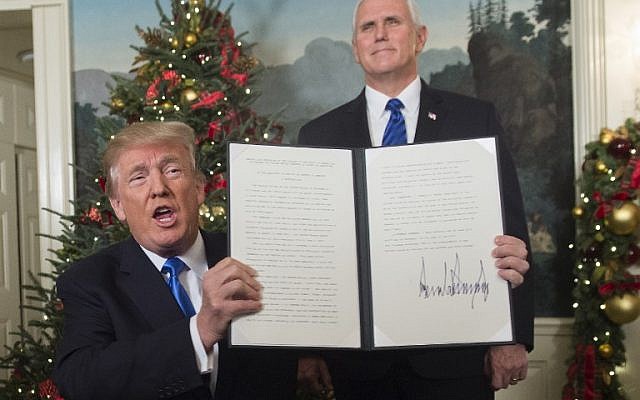
Announcing his decision on Wednesday, Trump repeated several times that he was “delivering” on a campaign promise.
“While previous presidents have made this a major campaign promise, they failed to deliver. Today, I am delivering,” he said.
Prime Minister Benjamin Netanyahu hailed the Trump’s decision as “historic,” while Palestinian Authority President Mahmoud Abbas said it marked the end of Washington’s role as a sponsor for Israel-Palestinian peace talks.
Muslim and Arab nations also fumed. Turkey called the decision “irresponsible” and illegal. Iran said it would “provoke Muslims and inflame a new intifada.”
Israel’s neighbors Jordan and Egypt both warned the decision violated international law and agreements, and could have highly negative consequences.
Widespread unrest was expected in the West Bank, Gaza and East Jerusalem following the announcement, and could potentially spread throughout the region.
Agencies contributed to this report.




The Times of Israel Community.