

Tunnel through the tension
The Hebrew-language media discusses the expected ramifications of Israel’s deadly strike on an underground Gaza terrorist passage
 Add ToI as a Preferred Source on Google
Adiv Sterman is a breaking news editor at The Times of Israel.
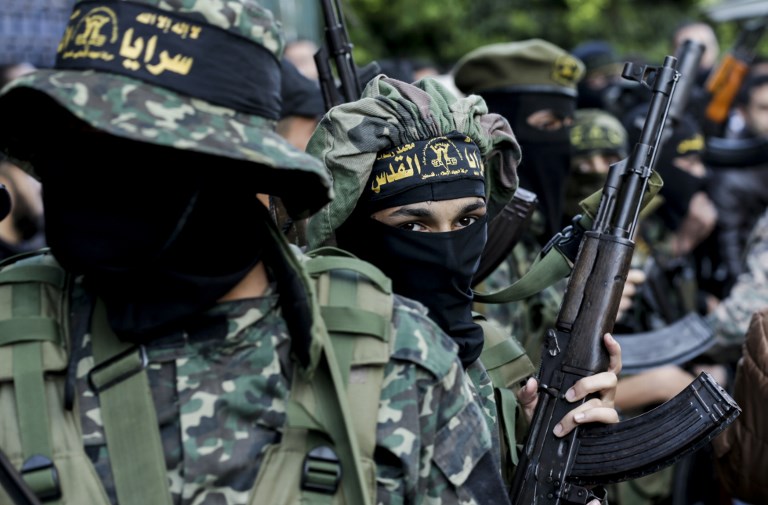
With tensions between Israel and Palestinian terrorist groups at a nerve-wracking high over the destruction of an attack tunnel by the IDF, the Hebrew-language media frets about the effect the incident might have on regional stability.
“The strike on the Islamic Jihad’s attack tunnel, as well as the resulting large number of casualties, leave the relative calm in the south faced with its biggest challenge since Operation Protective Edge [the 2014 war fought between Israel and Gaza-based Hamas],” Israel Hayom’s Yoav Limor writes. At least seven Palestinians were killed as the tunnel was destroyed, including two senior terrorist commanders, and another were 12 injured.
“From the Palestinians’ perspective, the incident has escalated from a local one to a national one; [terror] operatives and social media called for revenge.”
Limor, however, asserts that Hamas, which controls the Gaza Strip, is most likely uninterested in stoking the flames of violence and entering into another round of fighting with Israel. Nevertheless, he continues, it was Islamic Jihad that suffered a major blow, and the Iran-backed group will ultimately have to decide between swallowing its pride and bending its will to the Hamas rulers of the Strip, or retaliating against Israel in a move that might quickly deteriorate into another major confrontation in the Strip.
Haaretz’s military and defense analyst Amos Harel argues that from Israel’s perspective, the assault on the attack tunnel was unexpectedly a “too-successful operation,” which might accidentally lead to the collapse of the fragile Palestinian unity deal that is supposed to be implemented over the coming weeks, and worse, may harm the Jewish state’s efforts to deploy new tools aimed at discovering and destroying tunnels along the Gaza border fence.
“Even though the Israeli government has publicly distanced itself from the rapprochement between the Palestinian Authority and Hamas, it does not want to be seen as actively thwarting the deal, due to its relations with Egypt [which is sponsoring the talks between the two Palestinian factions],” Harel writes. “At the same time, Israel needs about a year in order to complete the construction of the ‘obstacle,’ which is supposed to block the ability to dig tunnels in the future and allow for the discovery by advanced sensors of existing tunnels and those being erected.”
Harel argues that while Israel has every justification to protect its citizens from impending terrorist attacks through tunnels from across the Gaza border, the country’s leadership seems to lack a long-term strategic plan on how to avert periodic violent escalations with the terrorist groups in the Strip.
The analyses in Yedioth Aharonoth concerning the tunnel strike are fairly similar in tone and content to those in both competing Hebrew-language outlets. But Yedioth, which is not known for its love of Prime Minister Benjamin Netanyahu or his family, focuses heavily on a different topic: the new accusations of mistreatment being leveled against Sara Netanyahu by past employees at her residence.
“A salary of even NIS 100 an hour is not worth what one goes through with the psycho,” the paper quotes a former unnamed worker at the Prime Minister’s Residence as saying of Sara Netanyahu. The quote, which is attributed to a co-worker of another employee who filed a lawsuit against the prime minister’s wife, is plastered strategically across the middle of Yedioth’s front page, even though the validity of the new barrage of claims concerning Sara Netanyahu has not yet been established.
Among the former employee’s complaints about Netanyahu were allegedly not being allowed to take leave when one of her children was sick, and being forced to use the bathroom outside the main building. She also claimed that the prime minister’s oldest son, Yair Netanyahu, would conduct cleanliness inspections.
Meanwhile, back in Haaretz, the typically left-wing paper’s main editorial criticizes the apparent efforts to “de-politicize” the upcoming central event in Tel Aviv marking 22 years since the assassination of prime minister Yitzhak Rabin by far-right activist Yigal Amir.
“There is no one who doubts that we are ‘one nation,’ [as the organizers of the event stated in their ads,] but Rabin was not murdered because he thought otherwise,” the editorial states. “Rabin was murdered because he strove for peace between us and the Palestinians, and because he recognized what more and more Israelis love to deny: The price of peace is [giving up] the Palestinian territories [in the West Bank].” The editorial demands that “left-wingers” stop denying their ideology, since, the paper argues, “everything is political, sucking up to the world does not pay, and cowardice does not draw crowds, neither to political events nor to the ballot box.”








The Times of Israel Community.