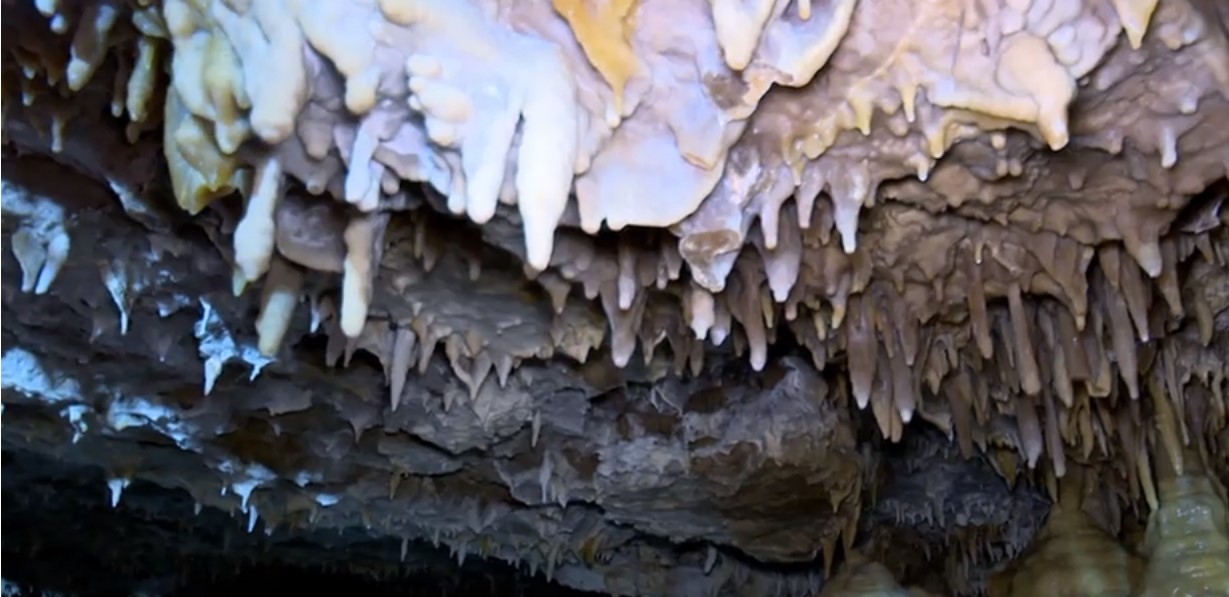
A newly discovered underground stalactite cave on the outskirts of Jerusalem, May 25, 2018. (Screen capture: Hadashot News)
Work crews digging a new uphill water pipeline to Jerusalem chanced upon an unusual and ancient underground stalactite cave, Hadashot television news reported Friday.
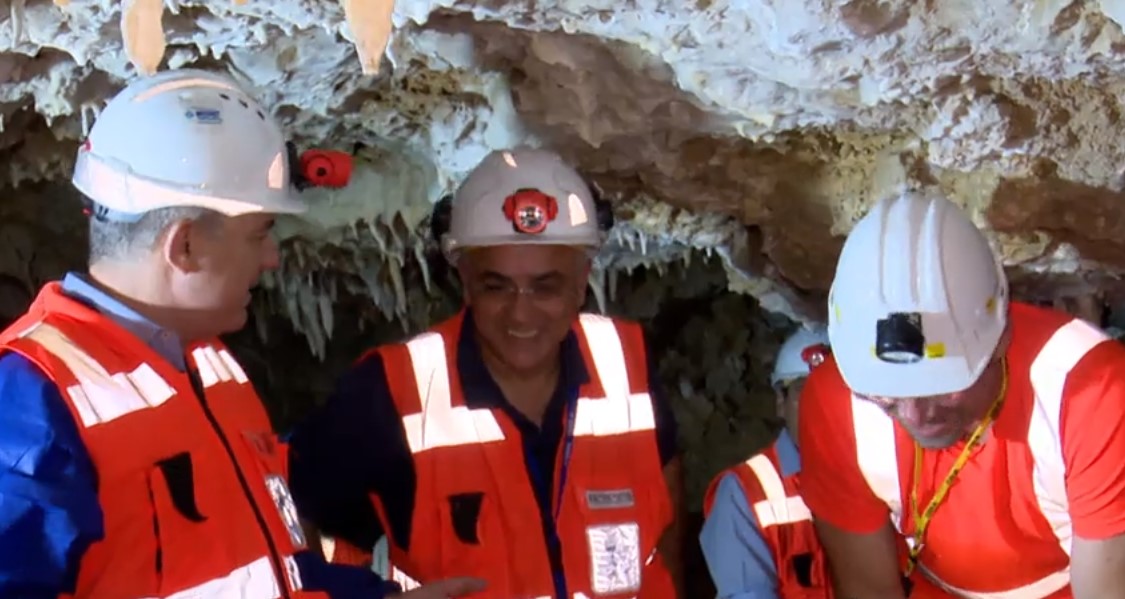
The cave, some 280 meters (900 feet) below ground, is 14 meters (46 feet) long and was found earlier this week by Water Authority workers just outside (and under) the capital’s city limits.
Stalactites are formed by the slow dripping of water that deposits tiny amounts of material — in this case limestone and dolomite — in underground caves over many thousands of years, forming beautiful cones along the ceilings and floors of caves.
In the case of the newfound cave, the water dripping through it was clean and fresh, workers reported. The television report showed one worker drinking from a puddle on the floor.
Water Authority workers in a newly discovered underground stalactite cave on the outskirts of Jerusalem, May 25, 2018. (Screen capture: Hadashot News)
The tunnel is due to be completed in 2020 and will supply water to Jerusalem and the Palestinian Authority for the next 50 years.
Get The Times of Israel's Daily Editionby email and never miss our top stories
The cave was found while digging a 13.5 kilometer (8.4 mile) section of the tunnel between Ksalon, near Beit Shemesh, and Ein Kerem in the capital’s southwest.
“On Sunday, while digging, we found this large cavity,” the project supervisor told Hadashot news. “We knew we could not continue.”
Digging has been halted while the Nature and Parks Authority and other agencies document and explore the stalactite cave.
Advertisement
The cave will be permanently sealed in a month and a half and the digging will continue, officials said.
Help us report truthfully on social media
As a multimedia journalist, my job is to take the quality, fact-based journalism produced by The Times of Israel newsroom and make it accessible across every platform — from Instagram posts to podcasts to short-form videos.
This is how many, especially young people, consume news these days. But misinformation is rampant on social media. Our team at ToI produces accurate, responsible short-form reporting on Israel and the Jewish world.
If you believe in the importance of factual social media journalism, please consider joining our reader support group, The Times of Israel Community. Your financial support is essential to sustain responsible multimedia reporting.
We’re really pleased that you’ve read X Times of Israel articles in the past month.
That’s why we started the Times of Israel - to provide discerning readers like you with must-read coverage of Israel and the Jewish world.
So now we have a request. Unlike other news outlets, we haven’t put up a paywall. But as the journalism we do is costly, we invite readers for whom The Times of Israel has become important to help support our work by joining The Times of Israel Community.
For as little as $6 a month you can help support our quality journalism while enjoying The Times of Israel AD-FREE, as well as accessing exclusive content available only to Times of Israel Community members.
Thank you, David Horovitz, Founding Editor of The Times of Israel


 Add ToI as a Preferred Source on Google