

‘Waltz with Bashir’ illustrator’s creativity on exhibit in Tel Aviv
‘Illustrations: David Polonsky’ offers glimpse at how the artist helped craft the successful film, as well as his work on an Anne Frank graphic novel and various other projects
 Add ToI as a Preferred Source on Google
Jessica Steinberg, The Times of Israel's culture and lifestyles editor, covers the Sabra scene from south to north and back to the center
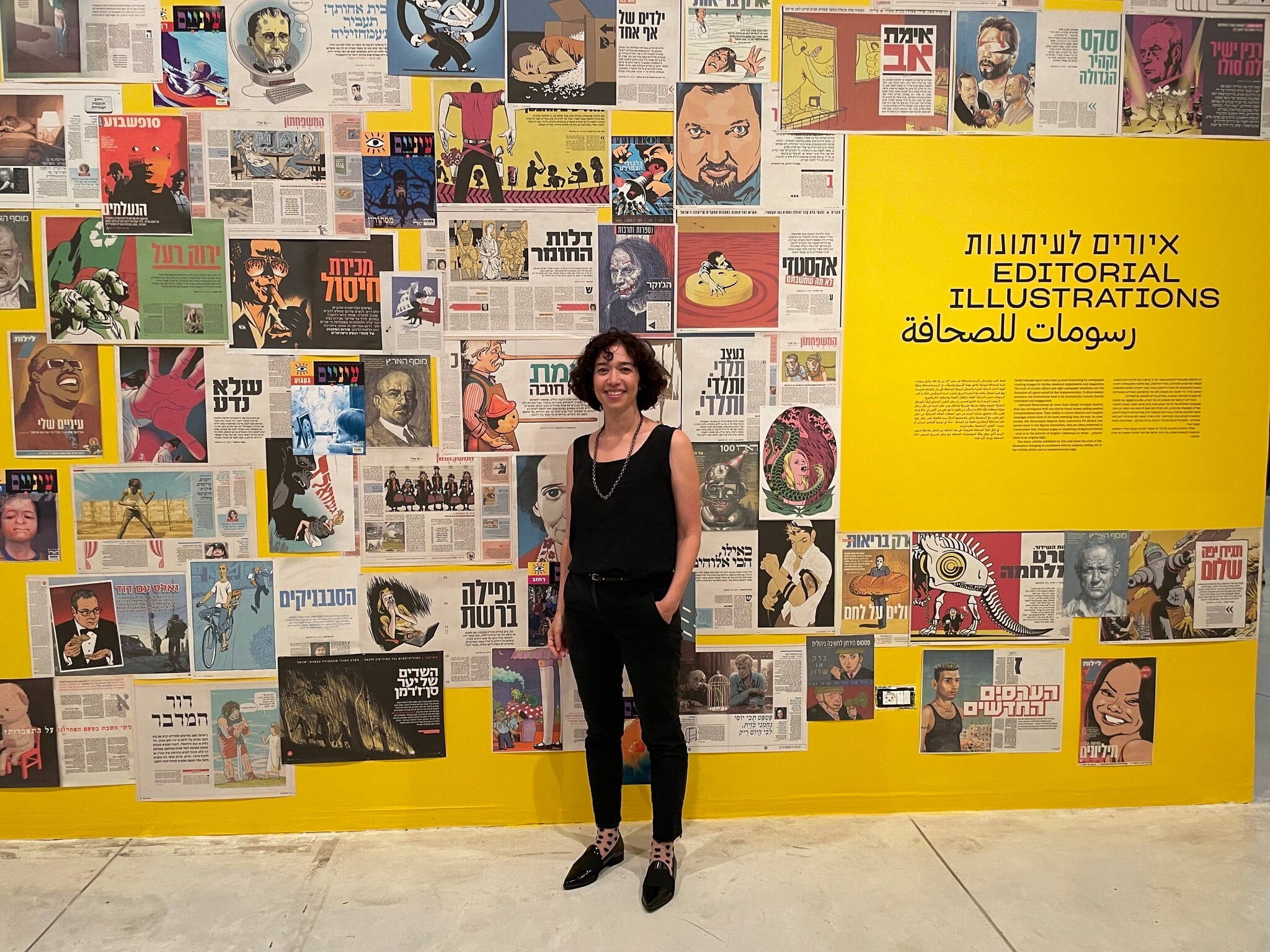
It wasn’t too hard for curator Tal Lanir to convince illustrator David Polonsky, the artist behind “Waltz with Bashir” and the graphic novel “Where is Anne Frank?” to agree to a solo show at the Tel Aviv Museum of Art.
But it took some time to figure out what to actually hang on the walls, given that Polonsky creates all of his illustrated and animated works on a computer.
“It’s unusual for the museum,” said Lanir. “There’s no original drawings here, really, except for some from his children’s book. The rest are digital prints we did on fine art paper, but they’re prints, not originals.”
“Illustrations: David Polonsky” is exhibited through February 18, 2023, in the museum’s Agnes and Beny Steinmetz Wing for Architecture and Design of the Herta and Paul Amir Building.
A fan and lifelong lover of comics herself, Lanir begins the exhibit with an in-depth look at Polonsky’s immense animation work on “Waltz With Bashir,” the film by Ari Folman about the director’s own memories of the 1982 Lebanon War.
Polonsky did 90% of the illustrations for the 2008 film, an amount of work unheard of in animated films, said Lanir. But Folman had very little money for “Waltz with Bashir,” and Polonsky had to get creative.
In order to portray Polonsky’s work on the film, Lanir “studied his way of thinking,” learning how he puts himself into a character to see how that person acts in order to illustrate the figure.
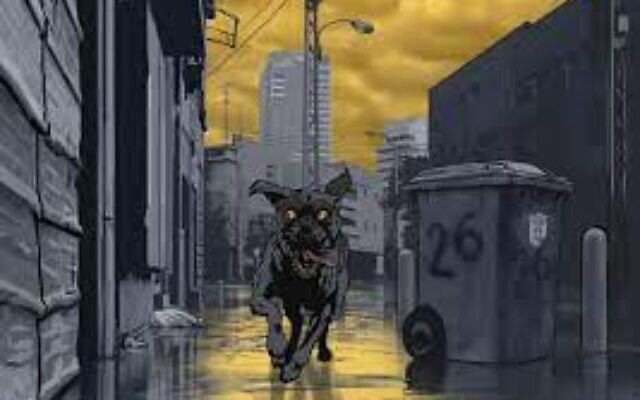
She begins with the film’s iconic first scene, and how Polonsky created the pack of dogs shown running and barking through the streets of Tel Aviv, exhibiting his storyboard and sketches, his literary references and his progression from concept to the final work.
The film includes Folman’s interviews of friends and other soldiers who served in the war, with most looking very similar in the animated film to their actual appearance — but some asked Folman not to base their character’s look in the film on their real-life appearance, and Lanir displays how Polonsky changed and shape-shifted those characters.
From there, Lanir moves on to the second, larger gallery, with different sections dedicated to Polonsky’s other, varied projects.
The illustrator studied at Bezalel where he was the “star pupil,” said Lanir, and from there began working in television, where he met Folman, his partner on many subsequent projects.
“Every one of his creations is a different style,” said Lanir.
She shows his children’s book, “The Heart-Shaped Leaf” by Shira Geffen, a fable about a little girl named Alona with charming illustrations that offer unusual angles and perspectives not often seen in children’s books.
Another section is dedicated to Polonsky’s work on the graphic novel adaptation of “Anne Frank: The Graphic Diary,” also written with Folman.
“He relates to her as a character, trying to think as she does,” said Lanir, showing an exhibit case full of sketches and source material that served as inspiration for Polonsky while working on the graphic novel.
A long, narrow vitrine in the middle of the gallery is filled with quirky toys and figurines made by Polonsky, sometimes out of leftover gum containers or other recycled bits and pieces, recreating characters he’s thinking about and working on at the moment.
The exhibit includes examples of Polonsky’s work on the historical drama “Legend of Destruction,” Gidi Dar’s 2021 animated film about the destruction of Jerusalem by the Romans, while Lanir also offers plenty of space for Polonsky’s work on the 2013 “The Congress,” the live-action/animated science fiction drama film written and directed by Folman and starring Robin Wright.
The film was a huge box office flop but highly appreciated by critics for its creative storytelling and technical thrills.
A final wall is filled with prints of Polonsky’s newspaper caricatures and political cartoons, offering more insights into his thought process and illustrations, his particular way of looking at the world and the people in it.










The Times of Israel Community.