

Bennett tests negative for COVID after exposure, will remain in isolation
PM and staff take precaution after sharing plane with a positive case on flight back from UAE
 Add ToI as a Preferred Source on Google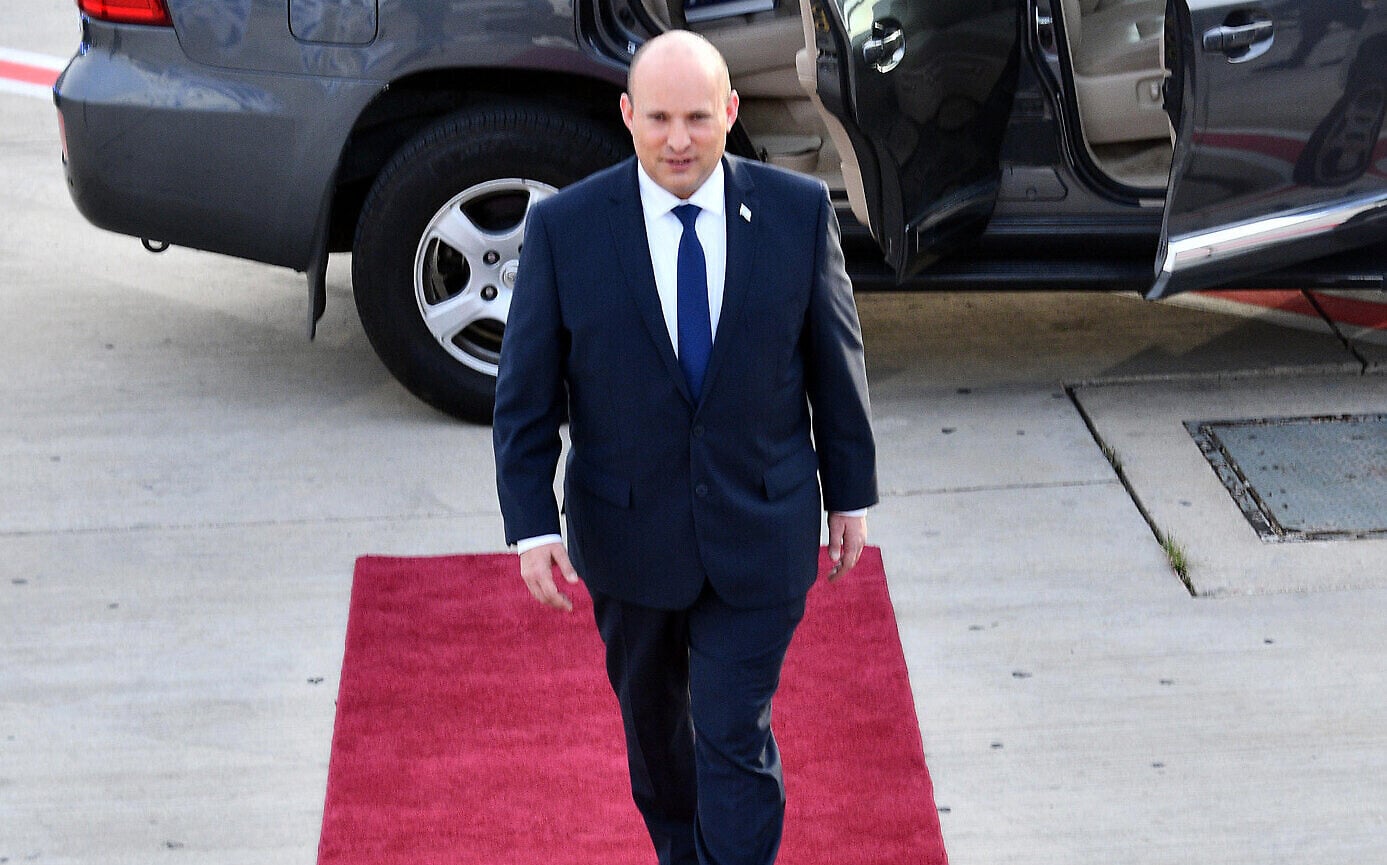
Prime Minister Naftali Bennett tested negative for COVID-19 Tuesday, after a passenger on his flight back to Israel from the United Arab Emirates tested positive for the coronavirus a day earlier.
In line with the latest coronavirus regulations, Bennett and his office staff will remain in quarantine until they receive a negative result from a PCR test on Thursday.
All passengers arriving at Ben Gurion Airport are tested upon landing.
Bennett arrived back in Israel on Monday after his landmark trip as the first Israeli prime minister to visit the Gulf nation.
He flew to the UAE with a scaled-down delegation that did not include journalists because of concerns about the spread of the Omicron variant of the coronavirus.
Bennett has been quarantined since his arrival back in Israel, although he was present in the Knesset on Monday evening where he attended the plenum in an isolation booth after the opposition refused to offset coalition votes.
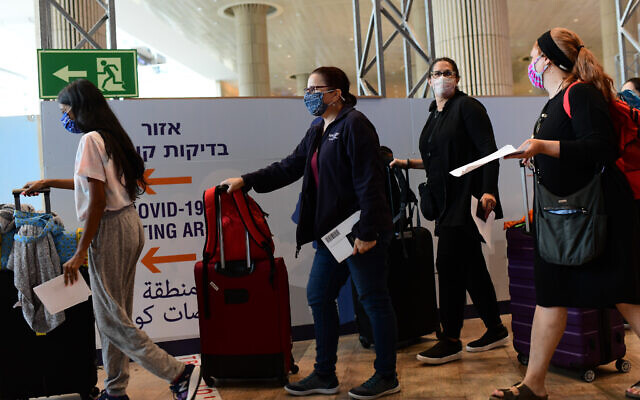
The government has tightened travel restrictions and quarantine requirements due to fears of the Omicron strain.
Although Israel’s skies ostensibly remain open, foreign tourists are banned from entry, and the list of red countries — to which travel is banned — is updated daily, a move that could reduce flights abroad by making it difficult to plan trips in advance.
Israelis have been urged to refrain from nonessential travel. However, numerous ministers and lawmakers from both the opposition and coalition have been in the United States for a conference in recent days, and Bennett’s wife and children recently went on vacation.









The Times of Israel Community.