

Challenged from right on security, PM may face his worst case election scenario
The prime minister has always preferred to campaign on existential issues instead of economic or social policy. This time those issues may be his weakness

 Add ToI as a Preferred Source on Google
Raoul Wootliff is a former Times of Israel political correspondent and Daily Briefing podcast producer.
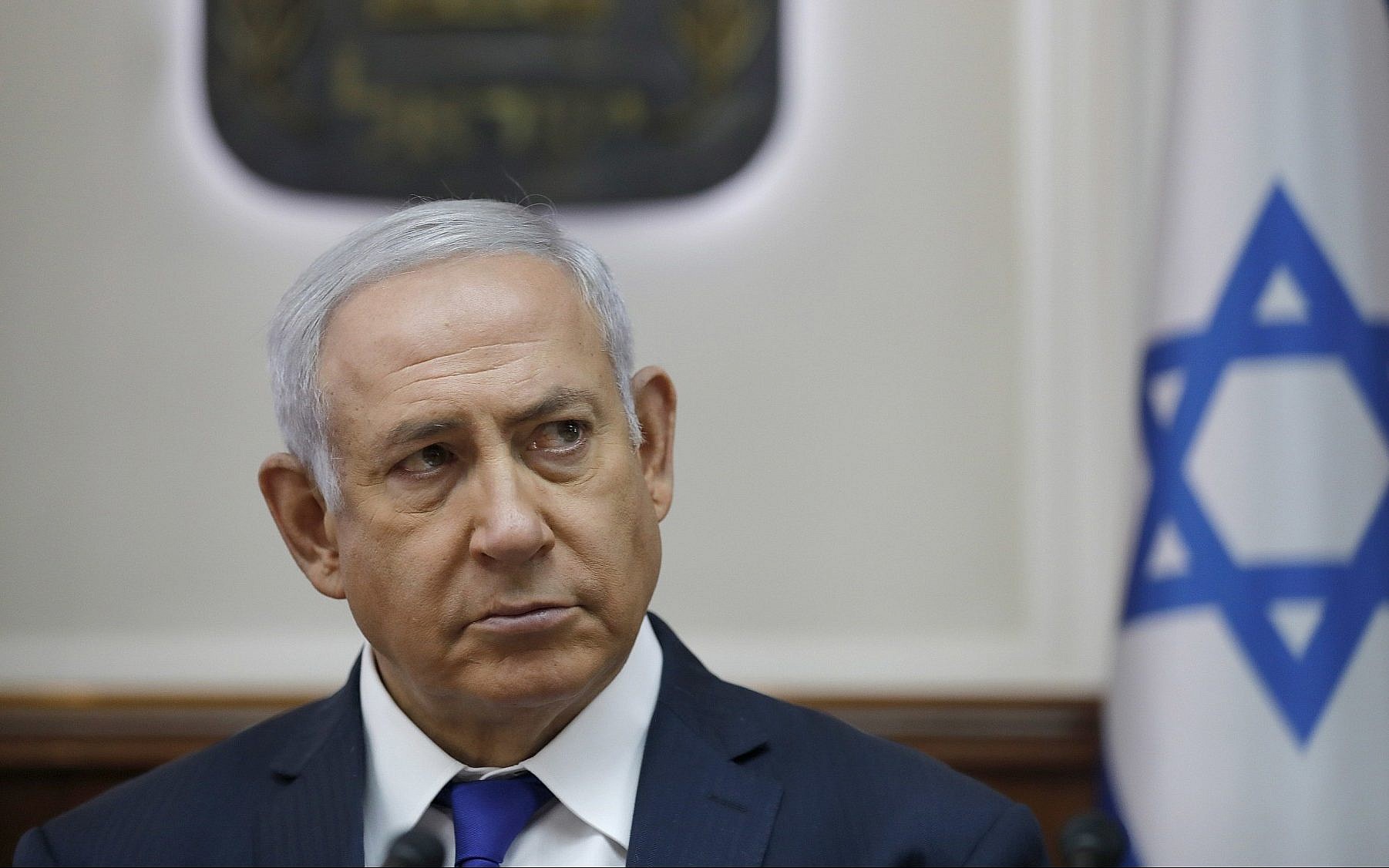
The 34th government of Israel has, like most of its predecessors, faced numerous coalition crises that have at times threatened to bring it down and force early elections. But while an array of different parties and leaders have on several occasions brought the coalition to the brink, there has never been a doubt that Prime Minister Benjamin Netanyahu was the true and perhaps only real broker with the power to bring it back.
This week’s dramatic military and political developments have turned the balance of power on its head, with junior coalition partners Yisrael Beytenu and Jewish Home calling the shots on Netanyahu, and putting him firmly on the back foot.
During the 2013 elections, two election cycles ago, Israelis for the first time in many years seemed to tire of the existential issues that had traditionally defined elections. Barely anyone talked about the Israeli-Palestinian conflict. Long-simmering social tensions over the rising cost of living and the economic burdens of the underemployed ultra-Orthodox community were going to finally get their due.
Netanyahu struggled to maintain momentum in that election and had to join forces with Yisrael Beytenu in order to secure enough support to win the most votes and retain power.
The Knesset’s new arrivals that year — Bennett and Yair Lapid — swept into government by championing middle-class concerns. As members of the coalition, Bennett’s Jewish Home party and Lapid’s Yesh Atid worked on a number of social and economic initiatives, including efforts to lower dairy prices and curb rising housing costs.
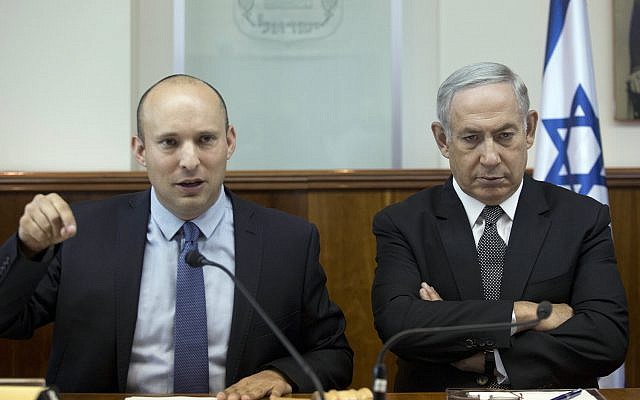
Though Jewish Home vehemently opposed Palestinian statehood and Yesh Atid supported it, both agreed that ultra-Orthodox men should be drafted into the army and integrated into the workforce.
Less than two years later, the partnership broke up over the very issues that the parties had downplayed. Bickering over peace talks began in the spring, and the shouts only grew louder after the 2014 summer war with Hamas.
In announcing that the coalition had faltered, Netanyahu pitched his bid for the 2015 elections to be run on security issues, citing three areas of disagreement: building in East Jerusalem, demanding Palestinian recognition of Israel’s Jewish character and maintaining a strong stance against Iran.

Netanyahu singled out Lapid and Hatnuah party chair Tzipi Livni for their criticism of government policy after firing them from their cabinet posts. The next government, the prime minister vowed, would be like the previous one — a stable coalition of hawkish, conservative parties.
Following the collapse of peace negotiations, the kidnapping and murder of three teenagers in June 2014, the 50-day war in Gaza over the summer and a spate of violent attacks in Jerusalem, politicians focused once again on the security issues that had always preoccupied them.

Meanwhile, Likud’s historic chief rival, the left-wing Labor party, returned to its dovish roots, electing as chairman Isaac Herzog, a former corporate lawyer who strongly supports peace talks with the Palestinians. Under his leadership, the Zionist Union insisted a Palestinian state was in Israel’s strategic interest (though it promised not to make any move that compromised the country’s security).
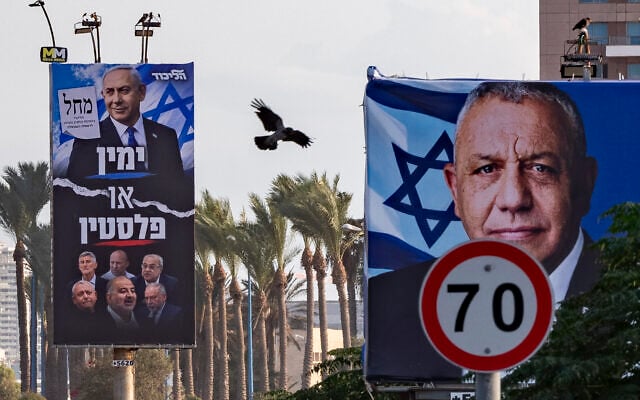
While Netanyahu said he accepted Palestinian statehood in principle, he warned it could not at the time be accomplished safely. Painting his opponents as weak on security and declaring “It’s us or them,” Netanyahu succeeded in marketing himself as the strong-on-defense candidate.
That was then. This time, he will not be able to do the same.
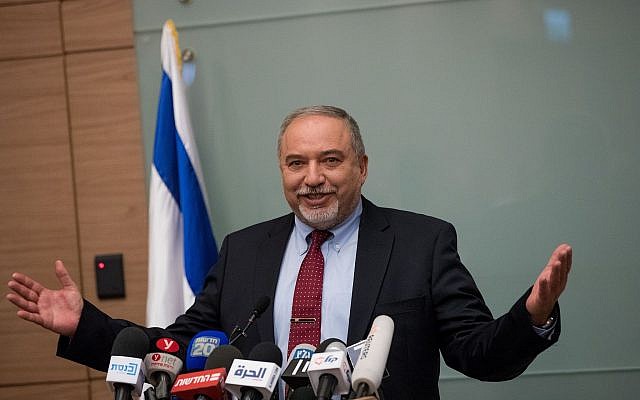
Yisrael Beytenu leader Avigdor Liberman’s resignation as defense minister on Wednesday and Jewish Home chair Naftali Bennett’s ultimatum that he must inherit the post has put the prime minister in an unfamiliar box, with few escape options.
On Friday, with Netanyahu reluctant to appoint Bennett and Jewish Home seemingly determined to leave the coalition, the prime minister appeared to be in denial.
In a laconic statement, he said he would meet with coalition leaders early next week and hoped they would “act responsibly and not make a historic mistake in overthrowing a right-wing government.”
Liberman said Wednesday that his decision to quit came in light of the ceasefire reportedly agreed on Tuesday between Israel and Palestinian terror groups in Gaza, following an unprecedented two-day barrage of over 400 rockets fired by Hamas and other terror groups toward Israel.
“What happened yesterday, the ceasefire, together with the deal with Hamas, is a capitulation to terror. There is no other way of explaining it,” Liberman charged, saying that he had disagreed with the prime minister’s decision to accept the truce and had argued for a tougher response.
He even predicted that right-wing voters would “see through the other parties’ hypocrisy” and reward his Yisrael Beytenu party with 20 Knesset seats.
Bennet said he had demanded to be appointed defense minister after Liberman resigned the post because he believed he could make Israel “win” again.
“The greatest danger to Israel is that we’ve started to think there’s no solution to terrorism, to the terrorists, to the rockets, that there’s nothing to be done, that it’s impossible to win,” Bennett said in a emphatic speech on Thursday.
“I wouldn’t be leaving the position of education minister if it wasn’t for the fact that Israel is in a deep crisis,” he said.
A serious challenge from the right, particularly on security issues, is one that Netanyahu will not relish. In fact, it is a scenario he may be dreading.



The Times of Israel Community.