

Down the rabbi hole
The race for the chief rabbi spot finally nears an end, but not without one last volley of commentators to explain why we should care
- See more Times of Israel on Google - add us as a Preferred Source
Joshua Davidovich is The Times of Israel's Deputy Editor
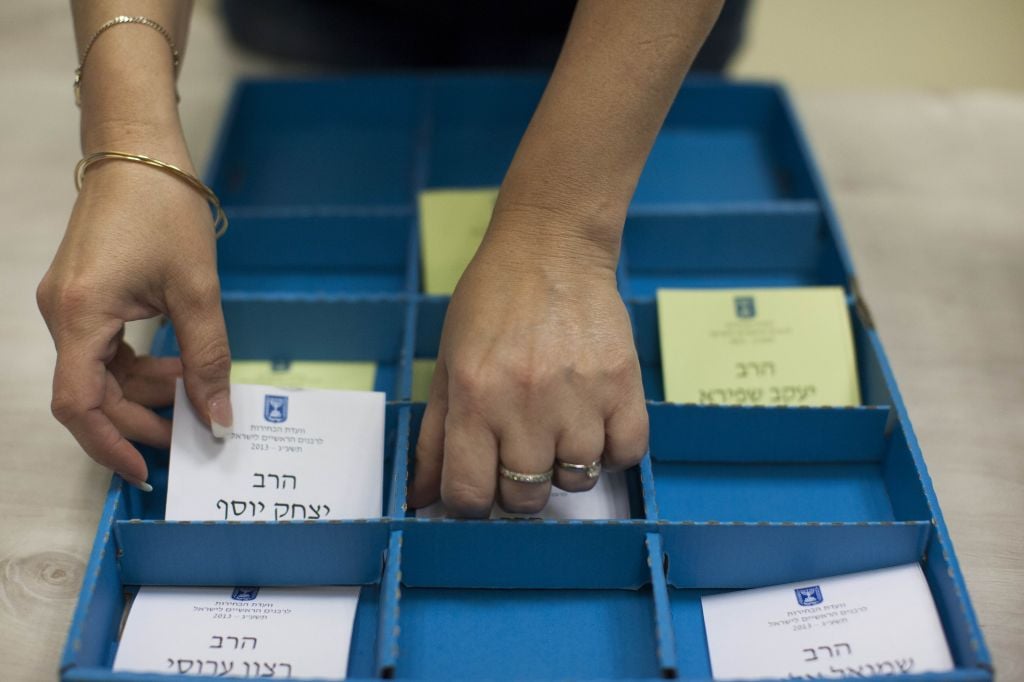
The royal threesome is mercifully out of the top spot in most Israeli papers Wednesday, replaced by a sea of big, gray beautiful beards.
Maariv’s front page is just three rabbis short of a quorum in its coverage of the hotly contested chief rabbi race, which will be decided Wednesday. Shalom Yerushalmi is appreciative that soon the rumors, mudslinging and backstabbing that marked the campaign will be over, and the chosen chief rabbis can get down to the business of backstabbing, mudslinging and rumors. (I kid, I kid.)
“The violent campaign for the rabbinate will end tonight with Hasidic dancing around the two winners, though some will cry bitter tears. There will be many implications for political and civilian life. The institution of the rabbinate is in a rut,” he writes, adding that the Shas party’s political fortunes may rise or fall with the fate of the son of spiritual leader Ovadia Yosef. “If Rabbi [Yitzhak] Yosef stays outside, Shas can chalk up another terrible defeat for itself, after their failure at the ballot box and failure at entering the government. [Party head] Aryeh Deri will be forced out of town. Maybe he’ll find shelter in Opochka.”
In Israel Hayom, Yehuda Shlezinger writes that the vote will be a major milestone in determining the identity of the Jewish people, not to put any pressure on the voters or anything.
“This is the day of a test whose results will become evident in the coming years on topics that touch each and every one of us, for example, marriage, divorce, circumcision, kashrut, conversion and even the price of vegetables in the next year, which will be affected by the Shmita [sabbatical, or fallow] year. This is the day the test will be set, and above all, this is the day that will determine the identity of Judaism, its ties… and if the state will follow the path of Beit Shamai [who were known to be strict interpreters of Jewish law] or Beit Hillel [who were known to be more lenient], between religious and secular and between secular and traditional.”
While the vote for the chief rabbi is in the hands of a select few, Haaretz says it has some good news for peaceniks worried that a vote over a deal with the Palestinians will be put to a general referendum. A poll commissioned by the paper finds that 55% would be for a peace deal with the Palestinians, according to the headline. A deeper look into the story, though, reveals the doves might not have much to celebrate after all. According to the actual poll, only 39% would be for a deal, and 16% think they might be for a deal. 20% are against, 5% are maybe against, and a whopping 20% don’t know. Why do so many not know? Because the question fails to put forward the actual parameters of a possible peace deal, asking only if the respondents would agree with a deal that Netanyahu agrees to.
The paper’s Jonathan Lis writes that Minister Naftali Bennett’s demand that a basic law mandating a referendum be passed or he won’t support the budget is nothing more than a political trick designed to get him some PR: “Bennett won’t topple the government, and he won’t vote against the budget. Nor will a Basic Law essentially change the current legal situation. Bennett’s bill, like the existing law, applies only to lands under Israeli sovereignty, meaning a decision to evacuate settlements would not require a referendum. The public would be asked to express its opinion only if the government decided to withdraw from Jerusalem, the Golan Heights, or parts of Israel that might be included in land swaps.”
‘Darkness in my eyes’
Yedioth Ahronoth leave politics aside on its front page, filling half of it with a picture of a British woman who gave birth a couple days ago and the other half with a lawyer and his daughter shot to death in broad daylight in a central Jerusalem shopping center.
The paper profiles the killer, writing that he is a security guard and that his lawyer says he has a mental illness. “I didn’t mean to shoot them,” the 40-year-old divorced man from Maaleh Adumim is quoted in the paper saying. “I didn’t mean to kill them. We argued and suddenly there was darkness in my eyes. I don’t know what happened to me.”
The shooting is likely to fire up once again the debate over who should be allowed to carry a gun and when. Maariv reports that a new law designed to limit the amount of time security guards can hold guns is stuck, though the story does not explain where, only that Knesset Interior Committee head Miri Regev is pissed at the police and public security minister for holding it up:
“Since the beginning of the Knesset session, I’ve convened four meeting on the subject,” she tells the paper. “Every time I hear promises on top of promises, but the only result is another murder and another murder by security guards with guns.”
Yedioth’s Alex Fishman takes the US to task for refusing to get involved in the Syrian civil war, following the publication of a letter in which Pentagon head Martin Dempsey says action in Syria would be too costly: “You don’t need to read between the lines to understand that the Pentagon is doing everything it can to nix any idea that comes up around Obama to take action on Syria, even limited in nature, to say nothing of Iran.”
Haaretz’s Eyal Meged marks the anniversary of the Second Lebanon War by taking aim at former prime minister Ehud Olmert for depicting the near draw, in which Israel lost scores of its best, as the most successful of Israel’s wars: “This boastful arrogance is so infuriating and nauseating as to make any comment unnecessary, were it not for the fact that it expresses a tendency, common among politicians in these parts, to take advantage of the brevity of the public’s memory — which is even more taxed in summer — to turn their most horrible, resounding failures into thriving accomplishments.”









The Times of Israel Community.