

Haredi extremists pay grants to draft evaders after their release from military prison
Group linked to Jerusalem Faction hands one dodger NIS 60,000, says ‘the goal is to strengthen all yeshiva students so they won’t be afraid to go to jail’
 Add ToI as a Preferred Source on Google
Sam Sokol is a former political correspondent at The Times of Israel. He was previously a reporter for the Jerusalem Post, Jewish Telegraphic Agency and Haaretz. He is the author of "Putin’s Hybrid War and the Jews"
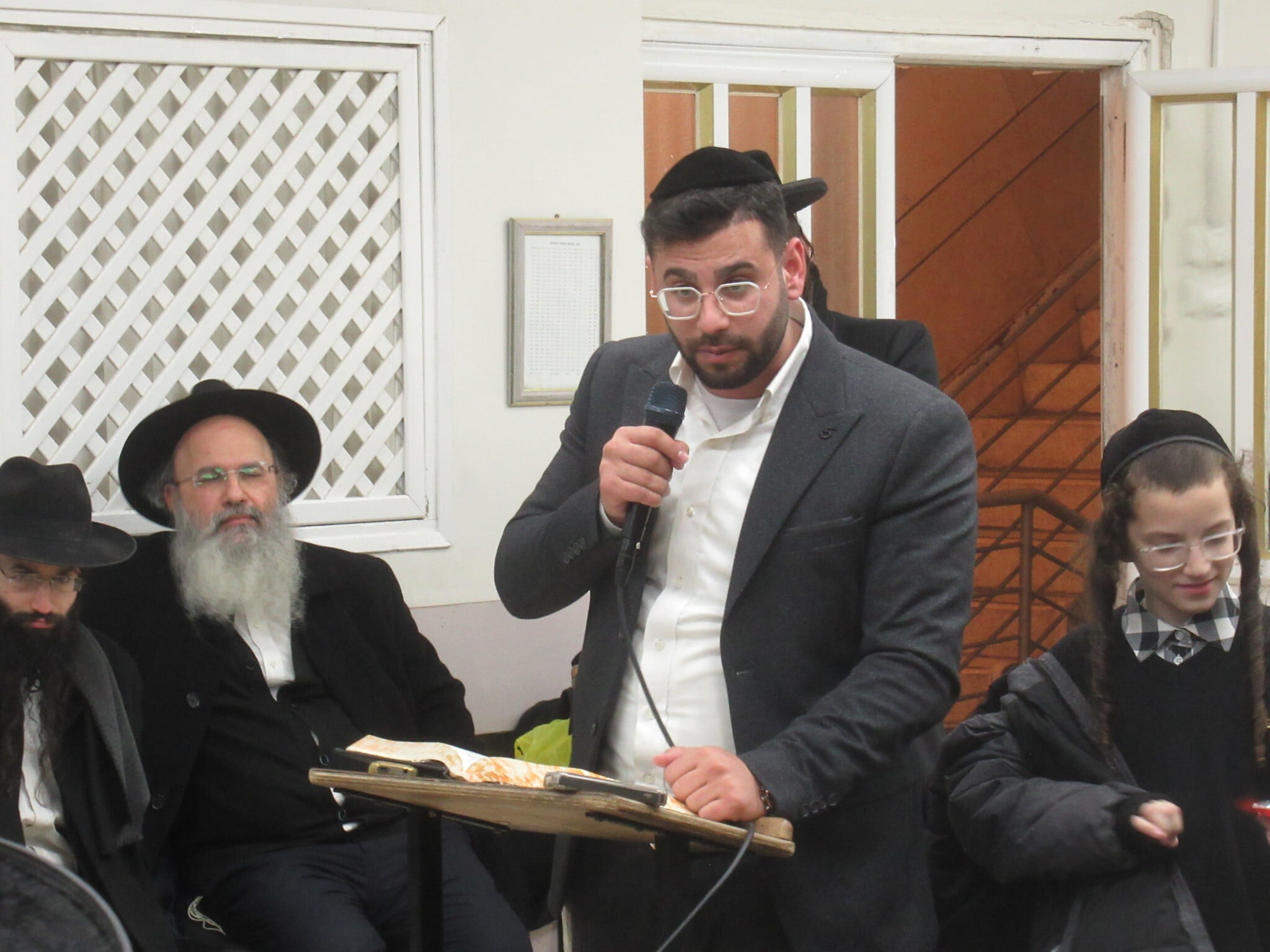
In recent months, as lawmakers have struggled over a proposed law regulating ultra-Orthodox military conscription, activists affiliated with some of the Haredi community’s most extreme sects have been distributing tens of thousands of shekels to yeshiva students arrested for draft evasion in a community-wide effort to discourage enlistment.
The issue made headlines across Israel last week when an organization affiliated with the hardline Jerusalem Faction calling itself “Notnim Gav” (Got Your Back) announced that it had held a “ceremony of appreciation” to celebrate the release of yeshiva student Meir Yonah after 18 days in military prison.
An extremist ultra-Orthodox group numbering some 60,000 members, the Jerusalem Faction regularly demonstrates raucously against the military enlistment of yeshiva students.
According to the group, Yonah was presented at the event with NIS 60,000 ($19,500) by rabbis and activists who had “decided to express the Haredi public’s appreciation for those who sacrifice themselves in a unique way.”
It added that the grant was significantly higher than that offered to other draft evaders — who often receive NIS 1,000 ($323) per day from the Satmar Hasidic sect.
“We wish donors would contribute for every young man. Furthermore, we tried to launch a grant program for every detainee but for various reasons, it hasn’t materialized yet,” a spokesman for the group lamented in an email.
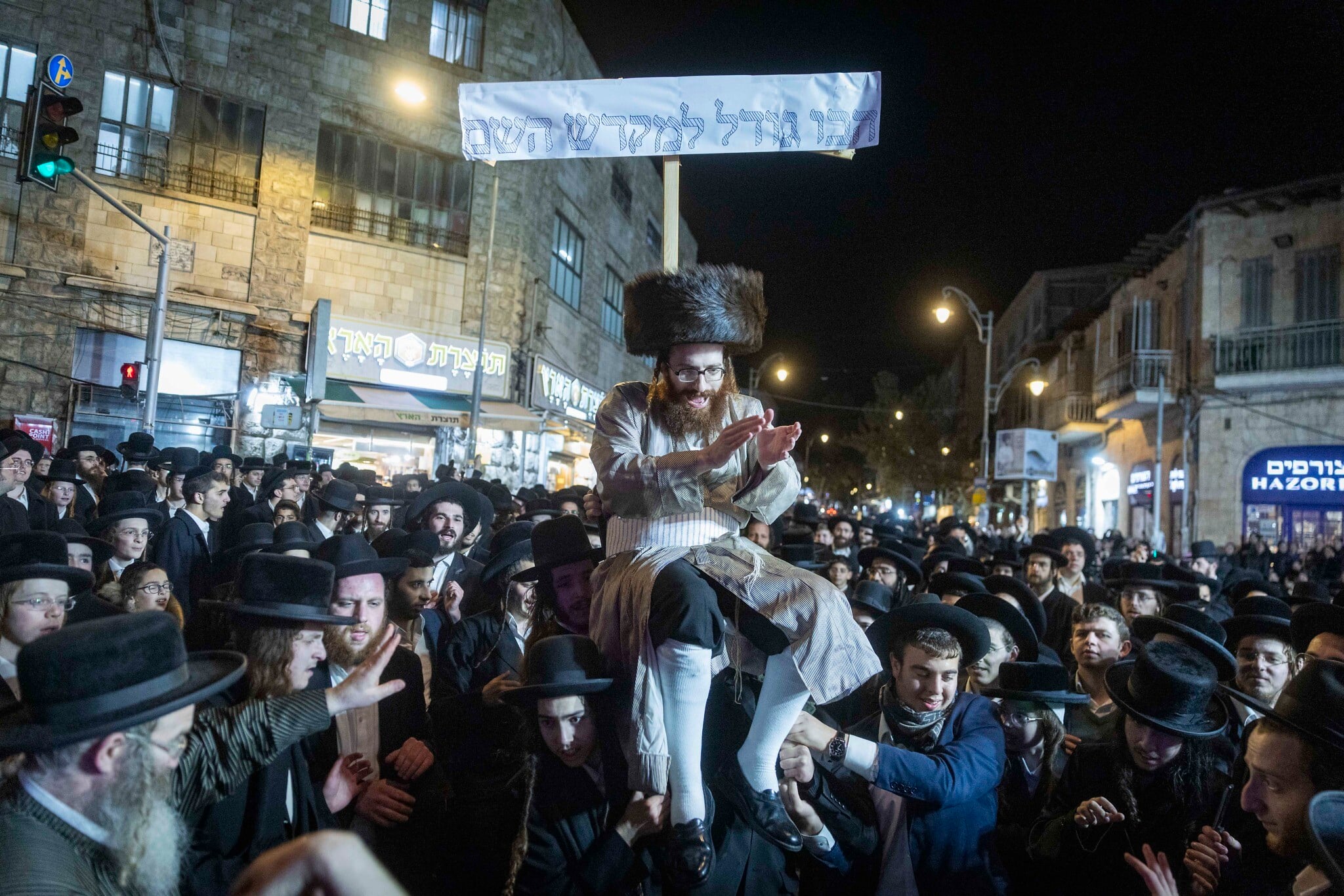
Speaking with The Times of Israel, representatives of the Jerusalem Faction described a variety of activities meant to support draft dodgers and their families, including legal aid, certificates of appreciation and other initiatives whose goal is to “encourage the youth” to stay in yeshiva.
“The truth is, it usually doesn’t start with us,” said Notnim Gav activist Naftali Schlesinger, explaining that other Haredi groups or philanthropists will sometimes approach them to facilitate the transfer of funds but so far there has not been an organized effort.
“We wanted there to be one. For now, there isn’t,” Schlesinger continued, claiming that only six or seven young men have received cash grants so far.
“The goal is generally to strengthen all the yeshiva students who haven’t yet gone to jail. If they see that there are people who appreciate them to the point that they sometimes agree to give money for it, then it strengthens everyone. It’s not necessarily always for the boy himself.”
Among Notnim Gav’s programs are anti-enlistment hotlines in English and Hebrew, regular protests outside of enlistment centers and even a raffle for yeshiva students who refuse conscription orders. (Another organization also affiliated with the Jerusalem Faction runs a “national alert system” to mobilize the community when the Israel Defense Forces engages in enforcement activities against Haredi draft dodgers.)
Encouraging evasion
Under Israeli law, someone inciting others to evade service during wartime is liable to a prison term of 15 years. Asked if he was concerned about legal repercussions, Schlesinger was sanguine, declaring that if the authorities want “they can frame any average citizen for 5 to 10 criminal things they’ve done” but that he sees his activities as low risk.
Some 80,000 ultra-Orthodox men aged between 18 and 24 are currently believed to be eligible for military service, but have not enlisted.
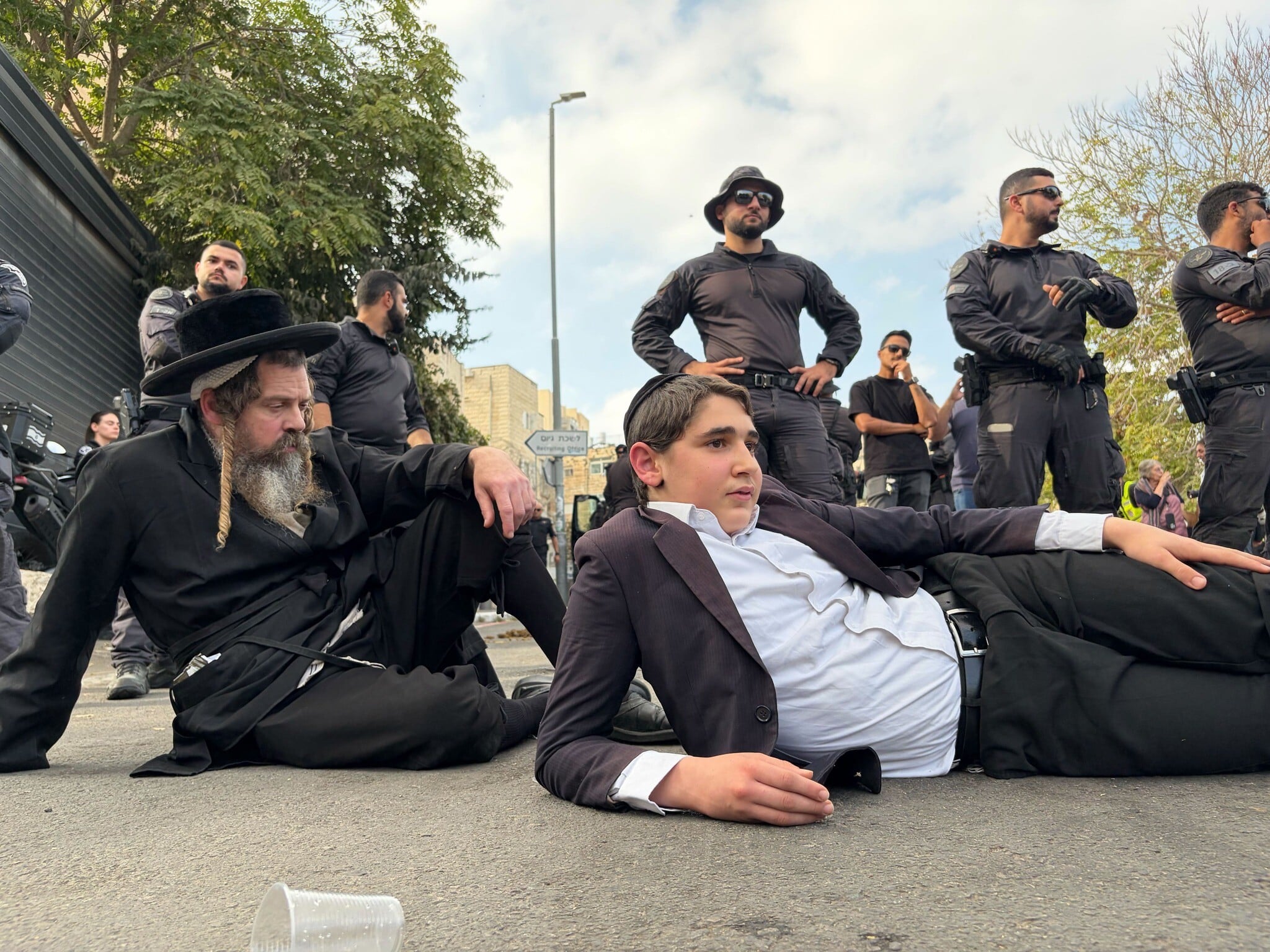
Another Notnim Gav activist who asked only to be identified as Moshe described a support network for evaders and their families ranging from offering legal aid to providing the families of incarcerated yeshiva students with food, fruit platters and certificates of appreciation signed by a rabbi.
“There is no encouragement of evasion here,” he said. “On the contrary, we give [yeshiva students] support and backup for doing what he understands is the right thing to do.”
Asked about the legality of the group’s activities, Ran Cohen Rochverger, the IDF’s former chief military defense counsel, said that they “raise a heavy suspicion of the offense of incitement to evasion under Section 109 of the Penal Law,” calling the payment to Yonah “an institutionalized mechanism defining a financial ‘tariff’ for breaking the law.”
The linkage between the sum granted and the length of time spent in prison makes the payment appear to be “criminal remuneration intended to serve as a direct incentive and solicitation for other designated soldiers to avoid reporting for duty,” he continued — noting, however, that “on a practical level, prosecution for this offense involves significant evidentiary and legal complexities.”
“Enforcement authorities in Israel are often reluctant to enter this sensitive minefield out of concern that prosecution will be interpreted as religious persecution and create a snowball effect that increases evasion rather than deterring it,” Rochverger stated.
A lack of enforcement
Indeed, the police and Attorney General’s Office have declined to take action against a growing ecosystem of anti-conscription organizations that has flourished since the High Court of Justice ruled in 2024 that that decades-long blanket exemptions from army duty traditionally afforded to full-time Haredi yeshiva students were illegal.
These include an advice helpline linked to former Jerusalem Affairs minister Meir Porush (United Torah Judaism), which a Times of Israel investigation found was counseling callers to “just ignore” summonses to the IDF’s recruitment bureau, as well as a call center operated by the “Vaad HaYeshivot” (Yeshiva Committee) which insists that yeshiva students “not report [to the army] under any circumstances.”
In addition, the IDF has claimed that police have been systematically preventing Military Police from arresting draft evaders in ultra-Orthodox neighborhoods, asserting that, “in practice, Military Police officers do not receive, as a general rule, clearance from Israel Police to carry out operations in Haredi or mixed neighborhoods.”
Army officials also noted that according to police policy, “members of the Haredi community detained in random arrests by the police — who turn out during the detention to be deserters or evaders — are in fact released.”
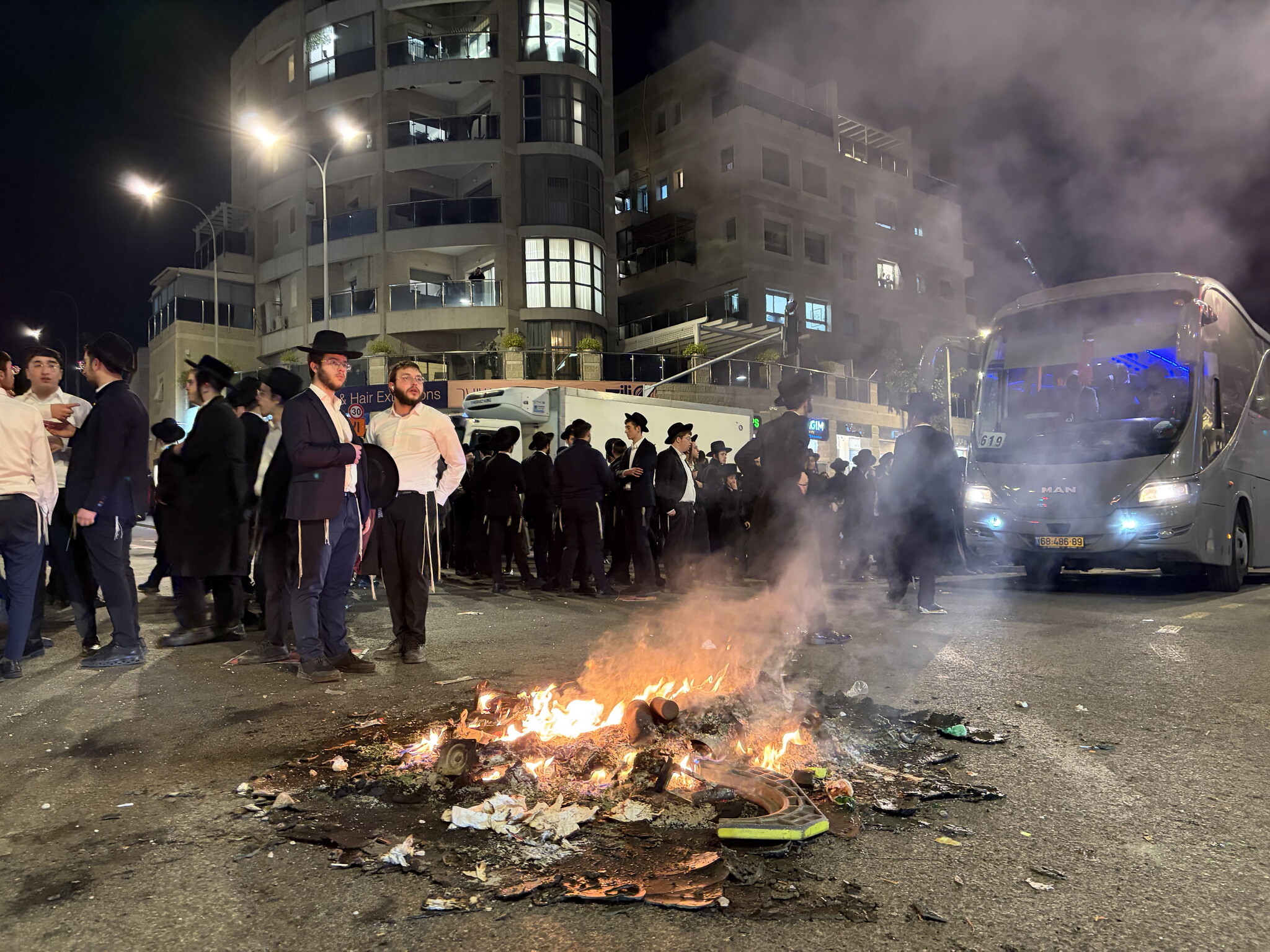
According to the Haaretz daily, police are concerned about the potential for riots in response to increased enforcement operations against draft evaders.
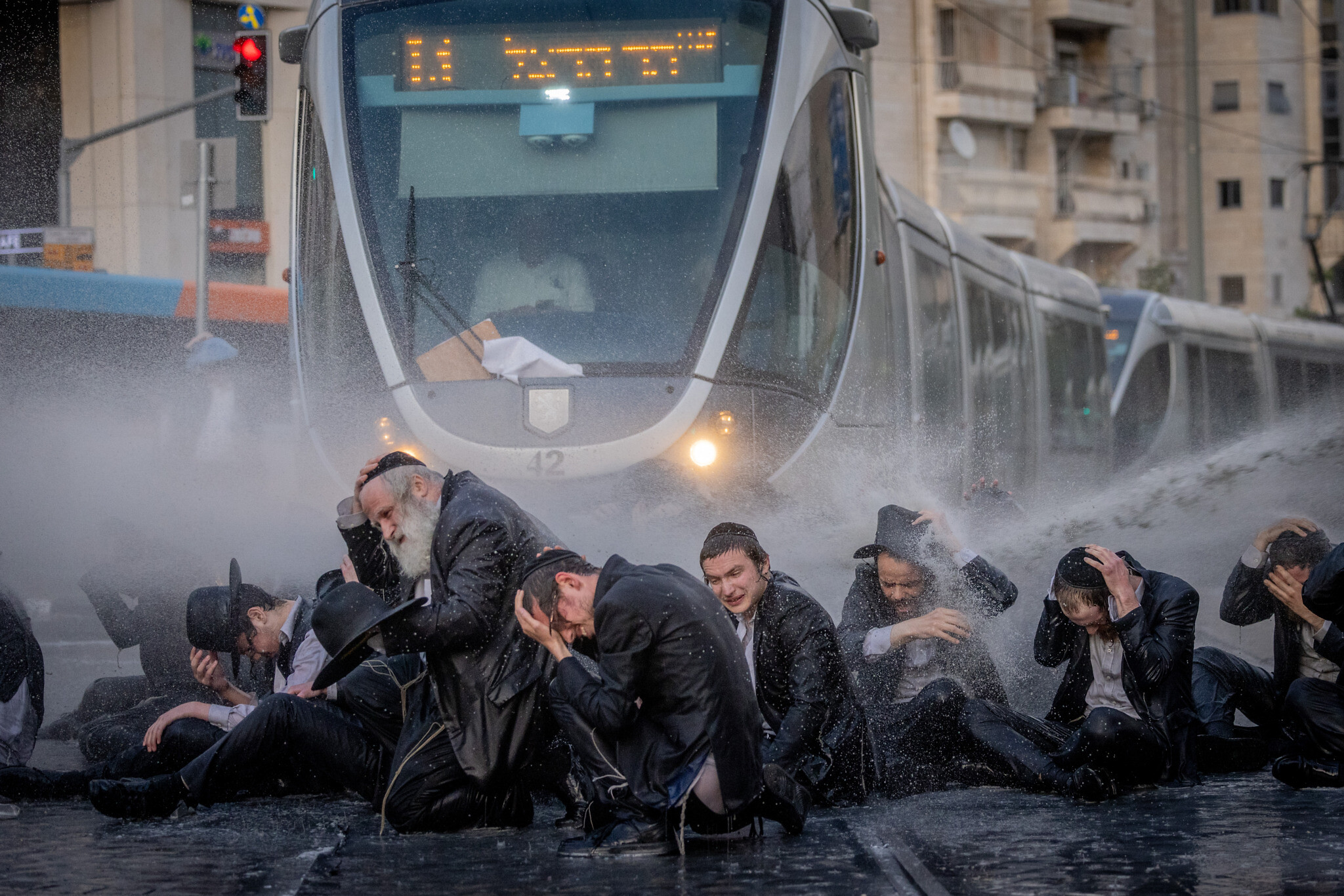
A number of recent Haredi protests have turned violent, leading to injuries, property damage, and even death, with critics alleging that the police’s response to such behavior has been inconsistent and insufficient.
“In the State of Israel, there is a law, and those who need to enforce the law are the legal authorities and the police, which they aren’t doing,” complained Yisrael Beytenu MK Evgeny Sova, whose right-wing party last year filed a criminal complaint against several senior Haredi rabbis for encouraging evasion.
“Neither the Military Police nor the IDF are enforcing [the law] against all the draft evaders, those who dodge service, and those who incite against enlistment” and “as long as there is no [command] from the top giving a clear directive to stop not just the evaders, but also those inciting evasion, nothing will change,” Sova charged.
Lobbying the Americans
In addition to encouraging draft evaders at home and pushing hard for legislation to exempt yeshiva students from military service, the Haredi leadership is taking the fight abroad.

Top Haredi rabbis have already gone to United States to raise money from local Jews to support yeshivas whose budgets have been cut since the High Court’s ruling, but now the ultra-Orthodox community is attempting to enlist American politicians directly in a bid to pressure Prime Minister Benjamin Netanyahu’s government to soften proposed sanctions preventing yeshiva students exempted from service from traveling abroad.
According to the Ynet news site, late last year UTJ MK Meir Porush met with senior rabbinic leaders in the US to convince them to push American politicians to get involved in the issue ahead of the 2026 congressional midterm elections.
This has led, so far, to letters from two congressmen, Rep. Mike Lawler (Republican of New York) and Rep. Pat Ryan (Democrat of New York), calling on Netanyahu not to impose sanctions on yeshiva students.
“The international opposition to the harming of Torah scholars in Israel even crosses party lines in the US,” said Porush in a statement.
“This is another expression of the uncompromising struggle we will wage in every way possible against the arrests and sanctions targeting yeshiva students and kollel scholars,” he declared, adding that additional steps would be taken abroad to address what he called the “violation” of the Haredi community’s “fundamental rights.”
Charlie Summers contributed to this report.





The Times of Israel Community.