

As Haredi protests spiral into perilous chaos, police are often nowhere to be found
Cops appear to be taking hands-off approach to unrest, allowing demonstrations to turn violent while employing excessive force once they do respond, souring already tense ties

 Add ToI as a Preferred Source on Google
Sam Sokol is a former political correspondent at The Times of Israel. He was previously a reporter for the Jerusalem Post, Jewish Telegraphic Agency and Haaretz. He is the author of "Putin’s Hybrid War and the Jews"
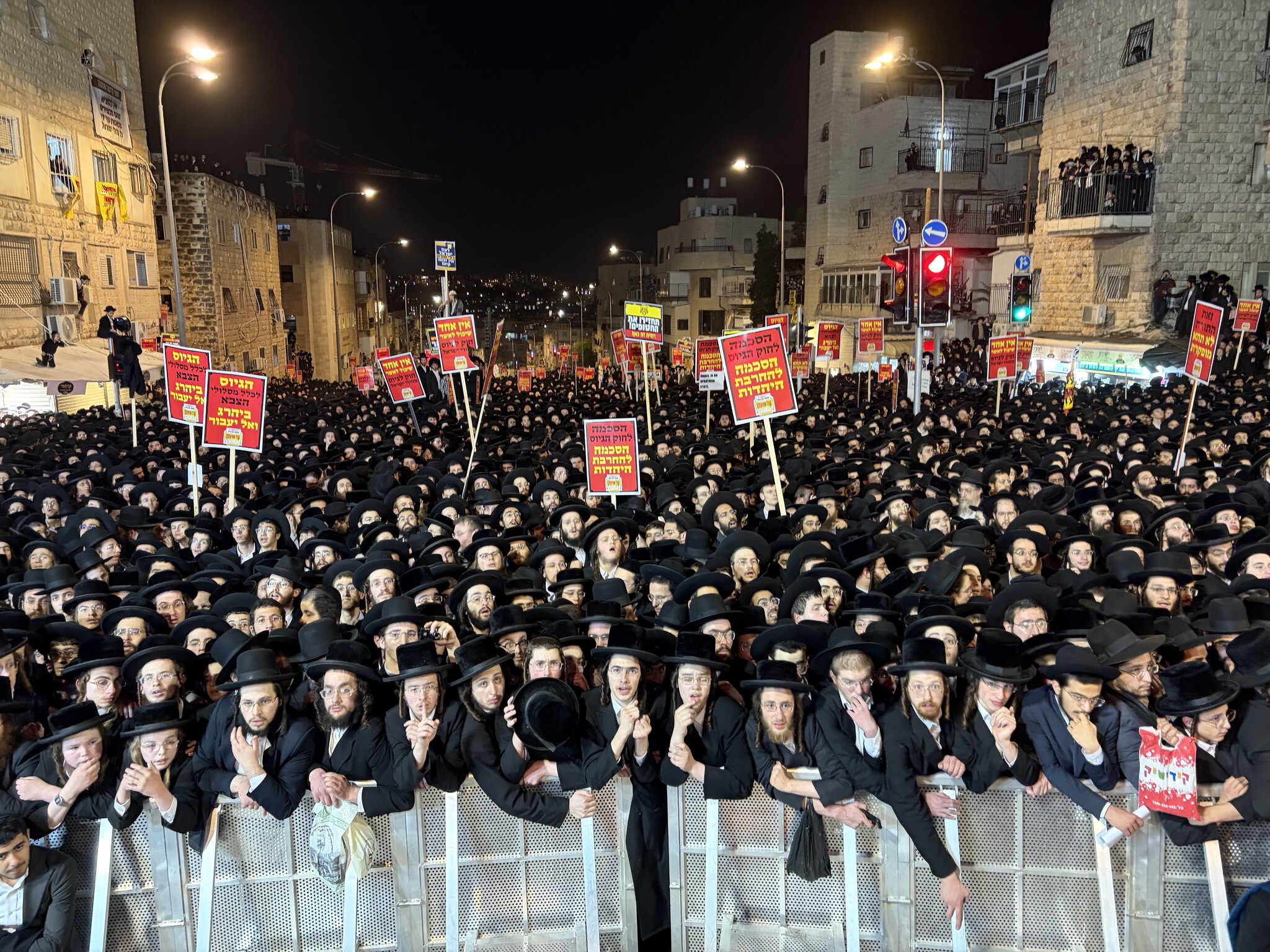
On the evening of January 6, tens of thousands of ultra-Orthodox men gathered in Jerusalem’s Romema neighborhood for a massive demonstration to protest the military draft.
Standing under a giant banner declaring that it was “better to die than to transgress,” speaker after speaker assailed the state and the army, likening efforts to boost Haredi enlistment to the atrocities of the Holocaust, and pledged that “under no circumstances will yeshiva students be conscripted.”
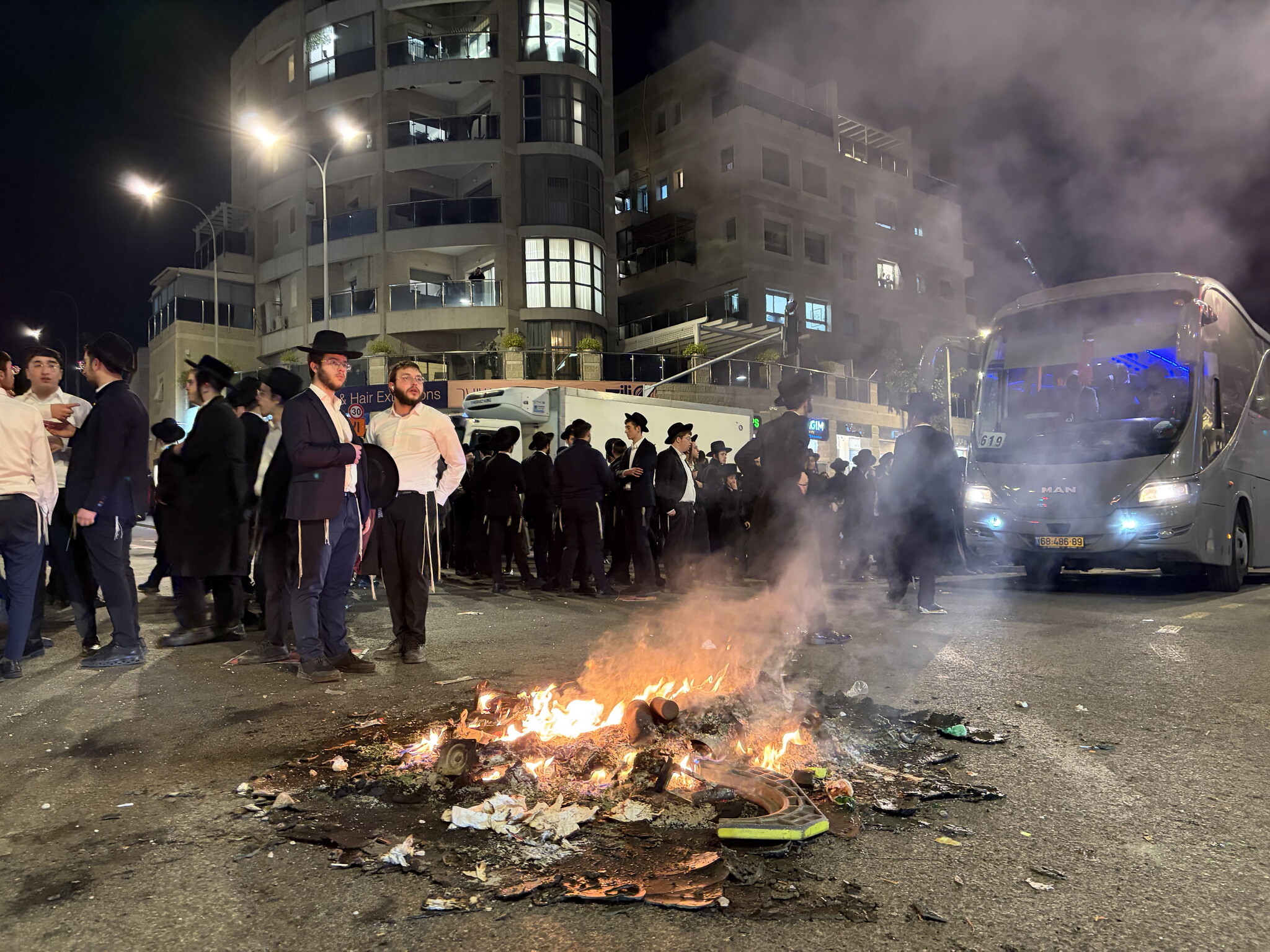
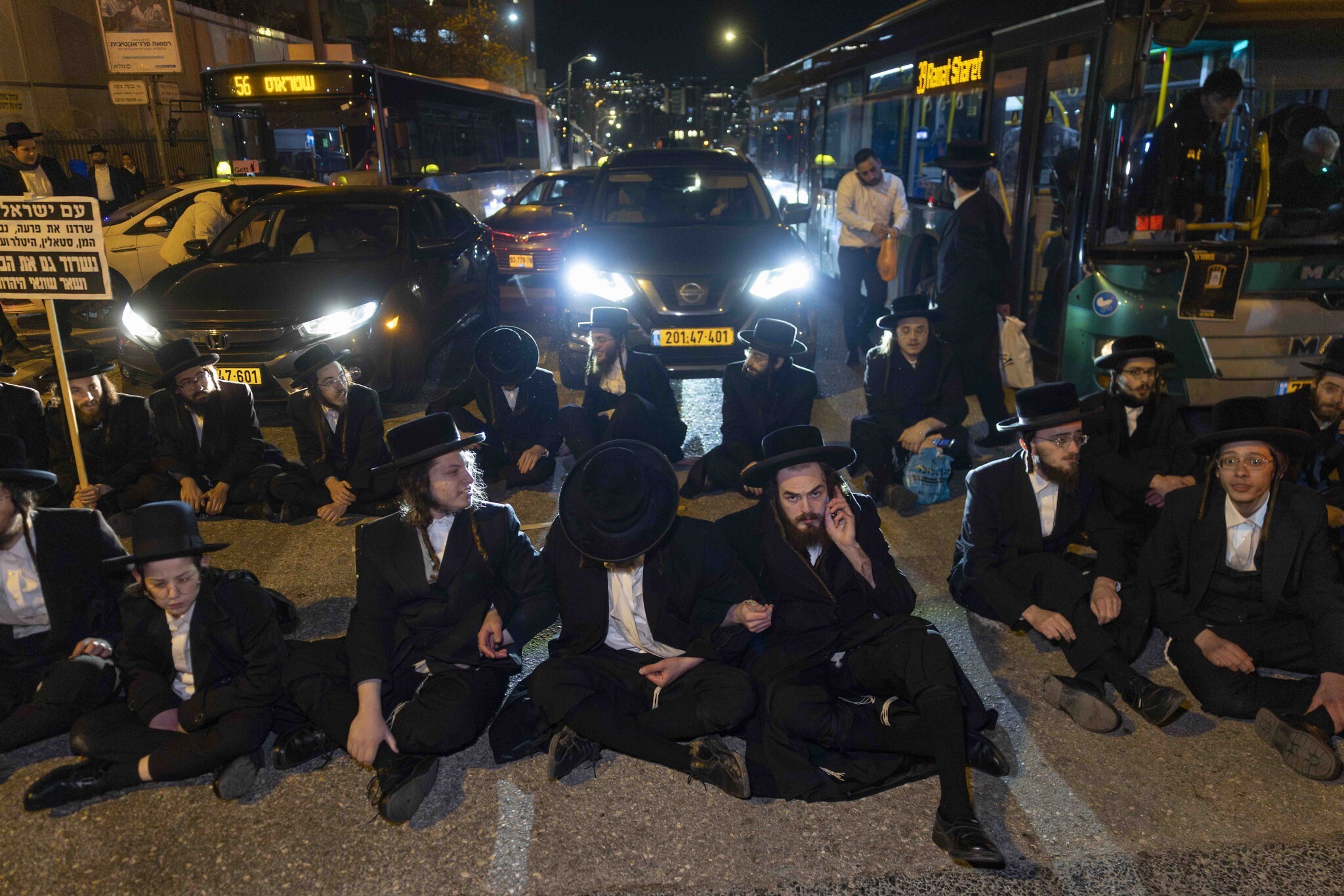
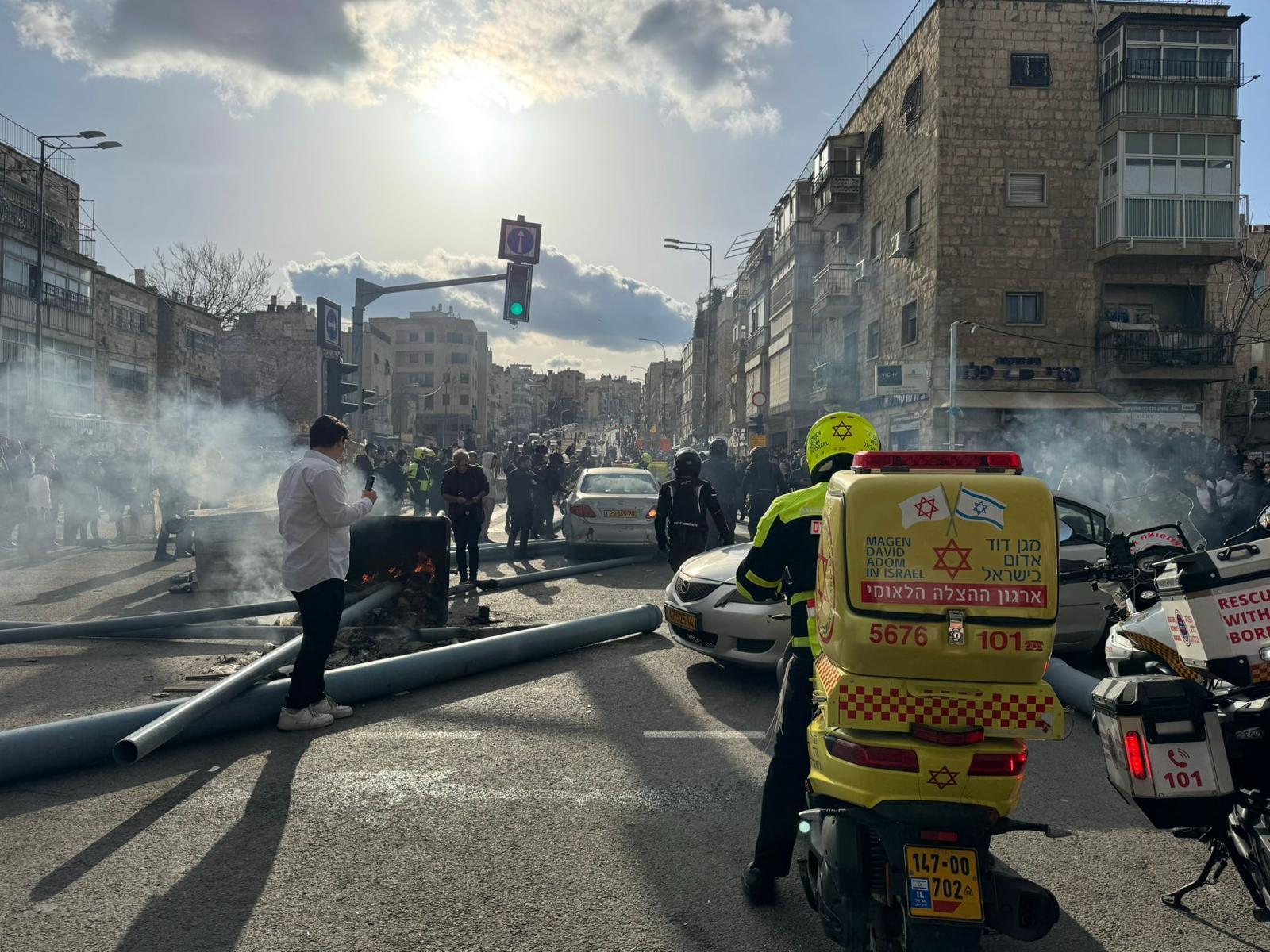
Outside of the main protest area, large groups of Haredi teenagers and boys wandered the pamphlet-littered streets, setting fires for several blocks along a stretch of Yirmiyahu Street, the neighborhood’s main drag.
At the busy intersection with Shamgar Street, another major road, they blocked traffic in one direction with a flaming dumpster and in the other with their own bodies.
Noticeably absent from the chaos, which was observed firsthand by this Times of Israel reporter, was the presence of any police. Only much later, as medics tried desperately to save the life of a teenage boy who had been dragged for blocks under a bus that ran through the intersection, did security forces show up, many of them in riot gear.
Large protests such as the one in which 14-year-old Yosef Eisenthal was killed have become commonplace in the ultra-Orthodox community, with extremists and their supporters regularly blocking roads or even carrying out violent attacks as they demonstrate against army conscription or other instances of what they see as unwarranted state meddling in the community.
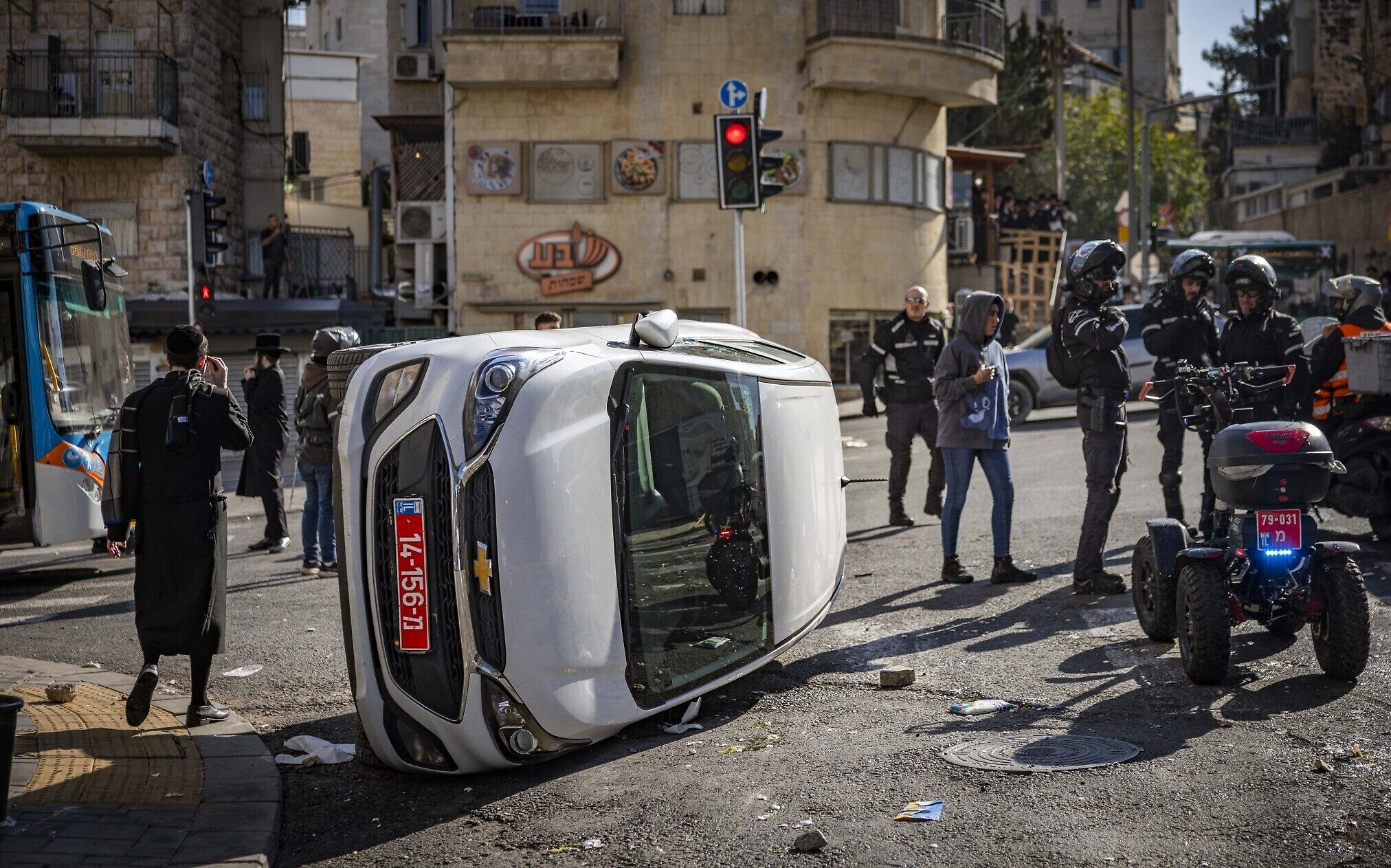
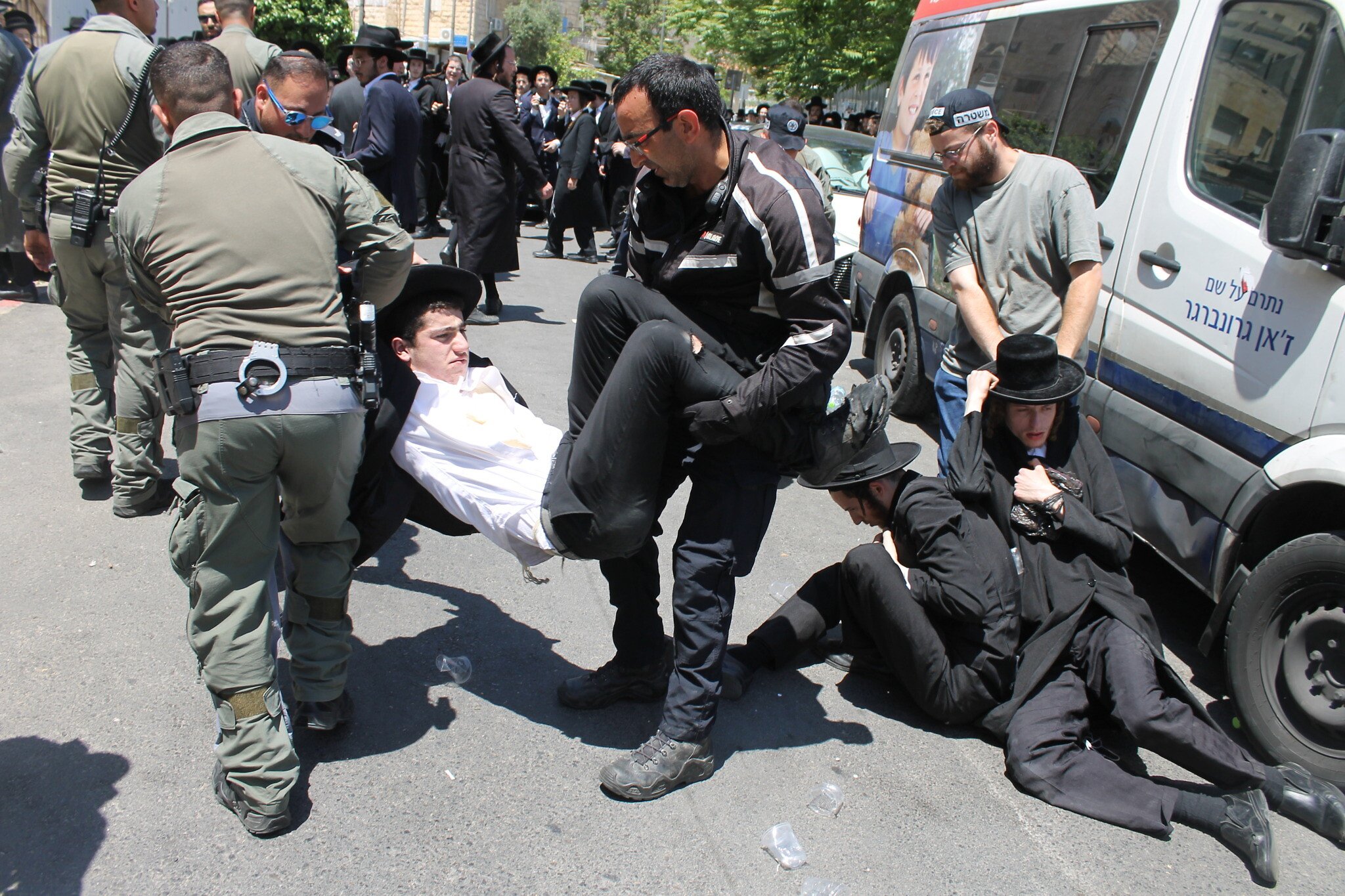
But despite the disturbances to public order that can put lives at risk, the police response to such behavior has been inconsistent. They have been accused by observers of taking a hands-off approach, sometimes deploying at minimal levels or staying away altogether, in stark contrast to their heavy presence at anti-government protests or other demonstrations by non-Haredi communities.
When police do eventually get involved, it’s often with excessive force, observers say.
“This is not acceptable in terms of the level of policing that residents of Jerusalem deserve. There’s nothing that justifies this mayhem in Jerusalem’s capital,” said Yael Litmanovitz, an expert on policing at the Israel Democracy Institute.
According to reports and video footage from the January 6 protest, the Kavim-operated city bus that eventually hit and killed Eisenthal had stopped short of the blocked intersection when it was surrounded by a mob of young Haredi men who pounded on the side of the vehicle and threw objects at it.
Driver Fakhri Khatib, who is under house arrest and faces charges of negligent homicide, said he called the emergency police hotline to request help before driving through the crowd.
Graphic video from the scene showed the bus driving through the intersection with a person being dragged underneath the vehicle as bystanders screamed.
An eyewitness, standing across the street from a melting plastic waste bin, told The Times of Israel that those hit by the bus had been blocking its progress.
It took several minutes before this reporter saw police officers who had been stationed several blocks away show up and begin attempting to control the crowd.
The Israel Police later said its forces were “working to disperse” the protesters, who it said had “thrown objects and eggs at police officers, set fire to bins, blocked vehicles and attacked journalists.”
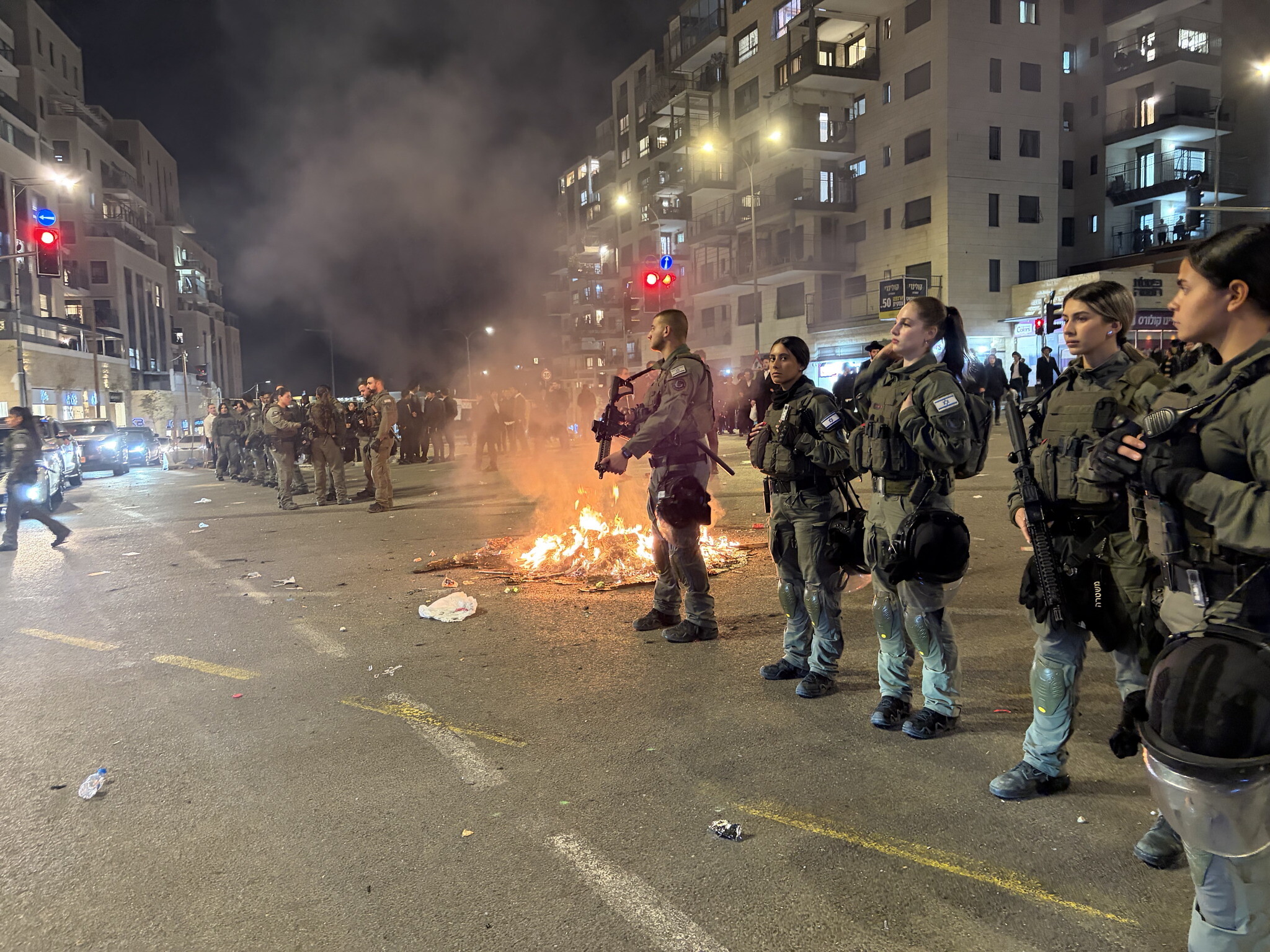
“The Israel Police stresses that violent rioting, blocking traffic arteries and attacking vehicles cross a red line, endanger lives and could end in great tragedy,” the police said in a statement, which did not explain why police forces had allowed things to escalate as they did.
Mahdi Atoun, who heads the Kavim labor union, noted that the incident came amid a string of attacks on Arab bus drivers in Jerusalem by religious and nationalist youths.
Khatib had been “terrified because there have been many cases of Haredim attacking Arab drivers in Jerusalem,” said Atoun, who has been in touch with the driver since the incident, calling him a “purehearted” man who was “devastated by what happened.”
“This is what drivers always go through during protests,” he told The Times of Israel. The demonstrators, he said, “start protesting about something, but then they turn it into something else entirely. They take out all their frustrations on the driver; we always go through this.”
Even if Khatib had called for help, police were usually sluggish in their response, Atoun charged, accusing them of “treating bus drivers with negligence.”
“I’ve been in this industry for nine years. I don’t ever remember the police arriving on time,” he said. “You call them and they arrive after 45 minutes or an hour — after the driver has been attacked or beaten.”
עשרות מפגינים חרדים מקיפים ניידת משטרה, שלטענתם ניסתה לעצור שלושה עריקים בירושלים@daniel_grovais pic.twitter.com/yhc9HBlS68
— גלצ (@GLZRadio) December 18, 2025
A police spokesperson said the force had acted professionally and denied discriminating among groups when enforcing the law.
“Police operated on the ground with both overt and undercover forces in accordance with professional and dynamic situational assessments. Force deployment and operational methods are determined accordingly to address incidents of violence and life-threatening situations,” a police statement read.
Others have also complained about the lack of enforcement against Haredi lawbreakers and the absence of police at demonstrations until after they have already turned violent.
Deadly consequences
In December, only four rioters were arrested after hundreds of young Haredi men clashed with police in Jerusalem amid tensions over efforts to collar draft dodgers, injuring 13 officers and overturning a cruiser.
On January 8, extremist Haredi protesters broke into an IDF conference on its ultra-Orthodox Hasmonean Brigade in the city of Bnei Brak, attacking troops and their parents with seeming impunity.
Days later, the deaths of two babies at an unlicensed daycare in Jerusalem sparked rioting in the capital and elsewhere by ultra-Orthodox extremists opposed to authorities’ plans to perform autopsies on the bodies.
During those riots, at which 11 people were arrested, participants were filmed setting fires, attacking a car and a bus, shoving a man onto the street, and blocking traffic.
One protester was injured when he was run over by a car he was sitting directly in front of, and in central Israel a teen was killed after being hit by a bus on an intercity highway lined with protesters who had previously been blocking the road.
In the wake of the deaths, Rabbi Dov Lando and the Satmar rebbe, two of the most influential Haredi leaders, called on their followers to stop attending demonstrations.
Among those caught in the chaos of the anti-autopsy demonstrations was Dov Lipman, a former Yesh Atid lawmaker and member of the modern Haredi community, who captured video showing protesters attacking a driver who swerved around a demonstration near the High Court of Justice.
“They were surrounding cars, including mine. I got this pathway opened up on a sidewalk that got me out of it. Then I turned back, and another guy got out of it. They attacked his car. You see a guy in my video punching him in the face,” Lipman recalled.
“All I kept thinking to myself was, Where’s the police? We’re a block away from the Knesset.”
An ultra-Orthodox protester punches a driver across the street from the government quarter in Jerusalem last Tuesday. Credit @DovLipman pic.twitter.com/DtwSNwpSm8
— Sam Sokol (@SamuelSokol) January 27, 2026
Lipman recalled a spate of Haredi protests that took place in Beit Shemesh over a decade ago, following efforts to end extremist attacks on women deemed dressed “immodestly,” in which police would set up riot control equipment but remain off to the side and allow demonstrators to block roads.
“[The police] literally used to use my parking lot as a staging area,” said the former Beit Shemesh resident. “We would see the water cannons and even sometimes horses.”
Lipman described the police’s attitude as “Let’s give them time to let off their steam,” but criticized the approach, saying it “causes terrible disruptions to people’s lives and only generates more hatred toward them.”
When officers would finally intervene it was with “extreme violence,” he said.
“There is clearly a lack of policing in the proper way, which should be the moment anybody is blocking a road and interfering with people’s lives in any manner they get arrested,” the former MK said.
Without arrests and prosecutions, he argued, perpetrators “get let out within hours, and they come back as heroes.”
Litmanovitz, of the IDI, also took issue with what she said was under-policing combined with over-policing.
“It’s not a protest when you’re setting trash cans on fire and there’s nothing else happening. But it’s completely under-policing if there’s no one there to keep the order, to protect innocent bystanders who could have been hurt,” she said.
Police did not specifically address questions about tactics, but insisted it did not treat different groups differently.
“The Israel Police does not distinguish between sectors or populations when enforcing the law,” it said in a statement. “[Last] week alone, approximately 15 rioters were arrested in Jerusalem for engaging in violence or illegally blocking traffic arteries. We act with determination against anyone who chooses to turn a protest into lawlessness.”
‘When you see police, cross the street’
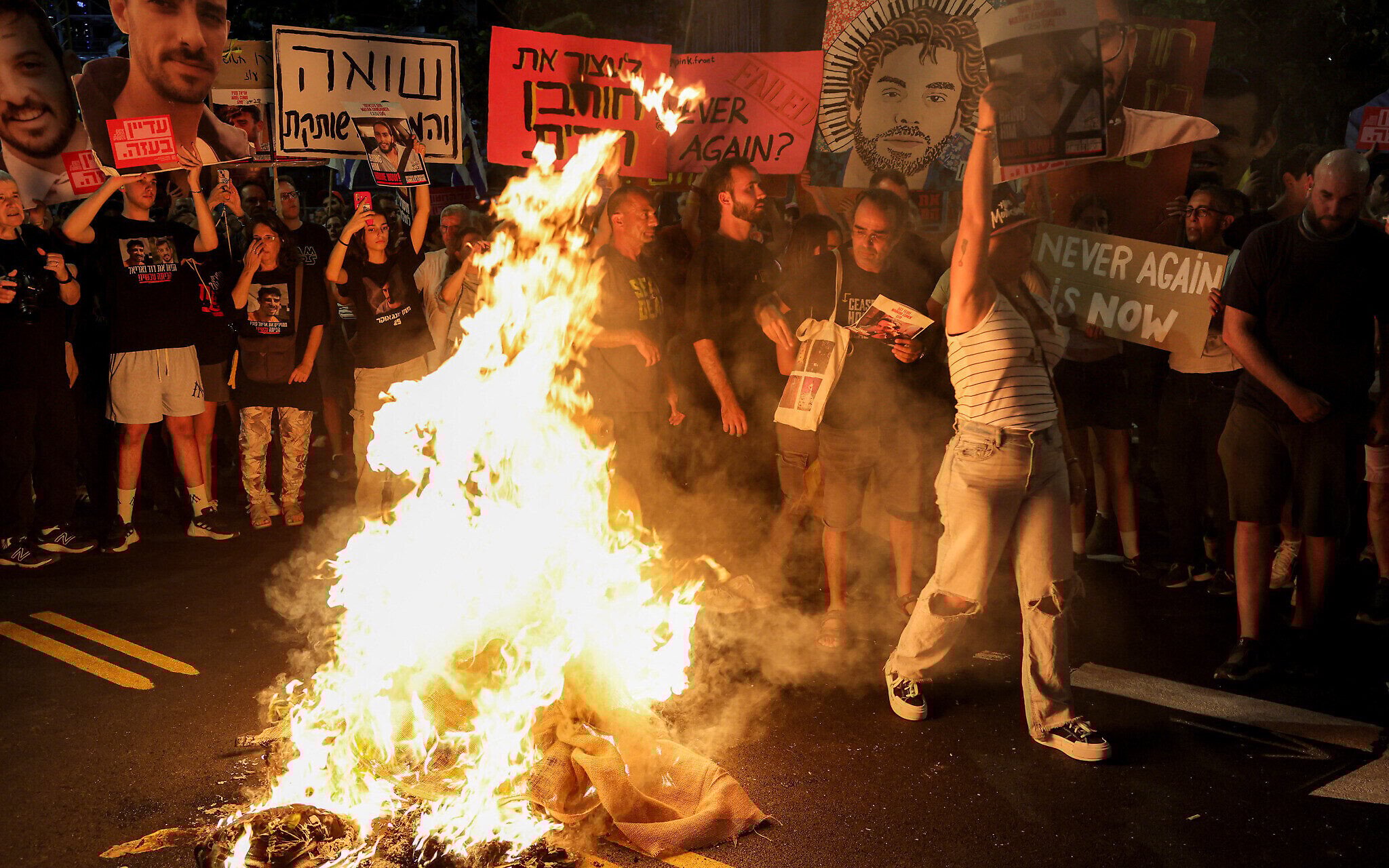
Finance Minister Bezalel Smotrich has denounced “the reckless and violent road blockades by extremist Haredi groups.” But he also maintains that law enforcement had “normalized” such actions by taking too soft an approach toward anti-government protests that became a regular fixture on Kaplan Street in central Tel Aviv in recent years, which also employ road blockages as part of their pressure campaigns.
In fact, Israeli groups from settlers to farmers to peaceniks have blocked major arteries for decades to bring attention to their protests. But Prof. Simon Perry, a 30-year veteran of the Israel Police who now teaches criminology at Hebrew University, said police often have a harder time dealing with Haredi demonstrators than any other group because the ultra-Orthodox do not accept the authority of the state, making coordination more difficult.
While both Haredi protesters and anti-government demonstrators regularly employ wildcat tactics that contravene police orders, including setting fires on roads, with Haredim there is usually little chance of dialogue bringing about a peaceful resolution, according to Perry.
That being the case, it is important to intervene early when things begin to spiral out of control because “the situation deteriorates very quickly,” he said.
“If there are organized arrangements with the police and Haredi groups — and not all Haredi groups are extremist — and if there is an agreement with the police or with Haredim for an organized protest with their own marshals and everything is fine, then it’s perfectly fine for the police not to intervene,” Perry said.
“But from the moment the process turns from a quiet protest into a riot, the police must intervene quickly. Don’t wait, because it will just lead to more rioting, one after another, and it will only be a more severe escalation,” including potential police violence.
Police have been accused of using excessive force against both anti-government demonstrators and the ultra-Orthodox, but there is a long history of distrust between the Haredi community and the police.

“I used to tell my children that when you see police, ‘just go on the other side of the street. Never, never talk to police, never encounter them,'” said former United Torah Judaism MK Moshe Roth. “If you are a Haredi, then you should be careful.”
Roth accused law enforcement of engaging in collective punishment and resorting to “the macho option of excessive force and retaliation to punish the community.”
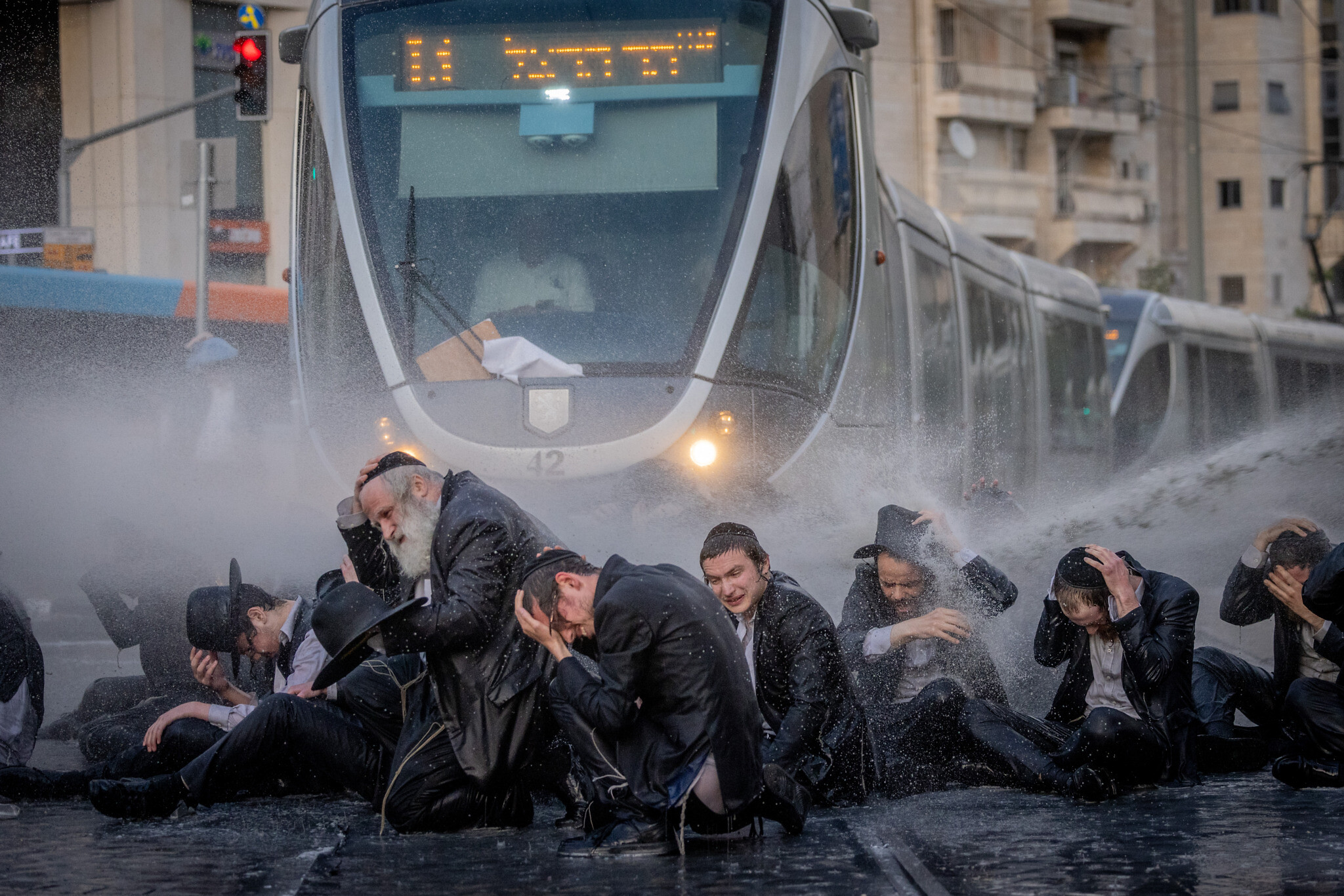
Like many Haredim, he also complained about the use of water cannons shooting “Skunk,” a foul-smelling liquid, against ultra-Orthodox protesters, accusing police of using excessive force against some people “just because they look Haredi.”
Amnon Alkalai, a former senior police official, surmised that the lack of enforcement could stem from the government, which came to power in an alliance with the Haredi political parties and is advancing Haredi-friendly legislation of military draft exemptions aimed at keeping their support.
The politicization of enforcement is especially concerning when the Haredi leadership’s extreme rhetoric against military conscription for their constituencies “receives a certain legitimacy — even if only tacitly — from the government,” said Alkalai.
When the government “supposedly acts to advance conscription” but does not take significant steps against draft evasion nor against those chanting “‘We’d rather die than enlist’ and other extreme slogans,” it leads to a “perception that the government has less interest in enforcing the law against Haredim and more interest in accommodating them,” he said.
In the end, the police have to work to build credibility and trust with the Haredi community, minimize political interference in decision-making, and make sure that forces are ready on a moment’s notice to prevent the escalation of riots, Alkalai said.
Litmanovitz agreed that police need to learn from their management of recent protests and reconsider how they deal with Haredi demonstrations.
“I think that there needs to be a larger takeaway from this because these things keep happening, which means that something in the handling of the protest isn’t good enough,” she said. “The police need to be rethinking how they’re preparing themselves for these types of events.”









The Times of Israel Community.