

High Court gives government 45 days to draw up sanctions for Haredi draft dodgers
In fierce rebuke, Justice Sohlberg accuses ultra-Orthodox of abandoning ‘their brothers in time of need,’ points to ‘families torn apart, reservists who lost livelihoods’ during war
 Add ToI as a Preferred Source on Google
Jeremy Sharon is The Times of Israel’s legal affairs and settlements reporter
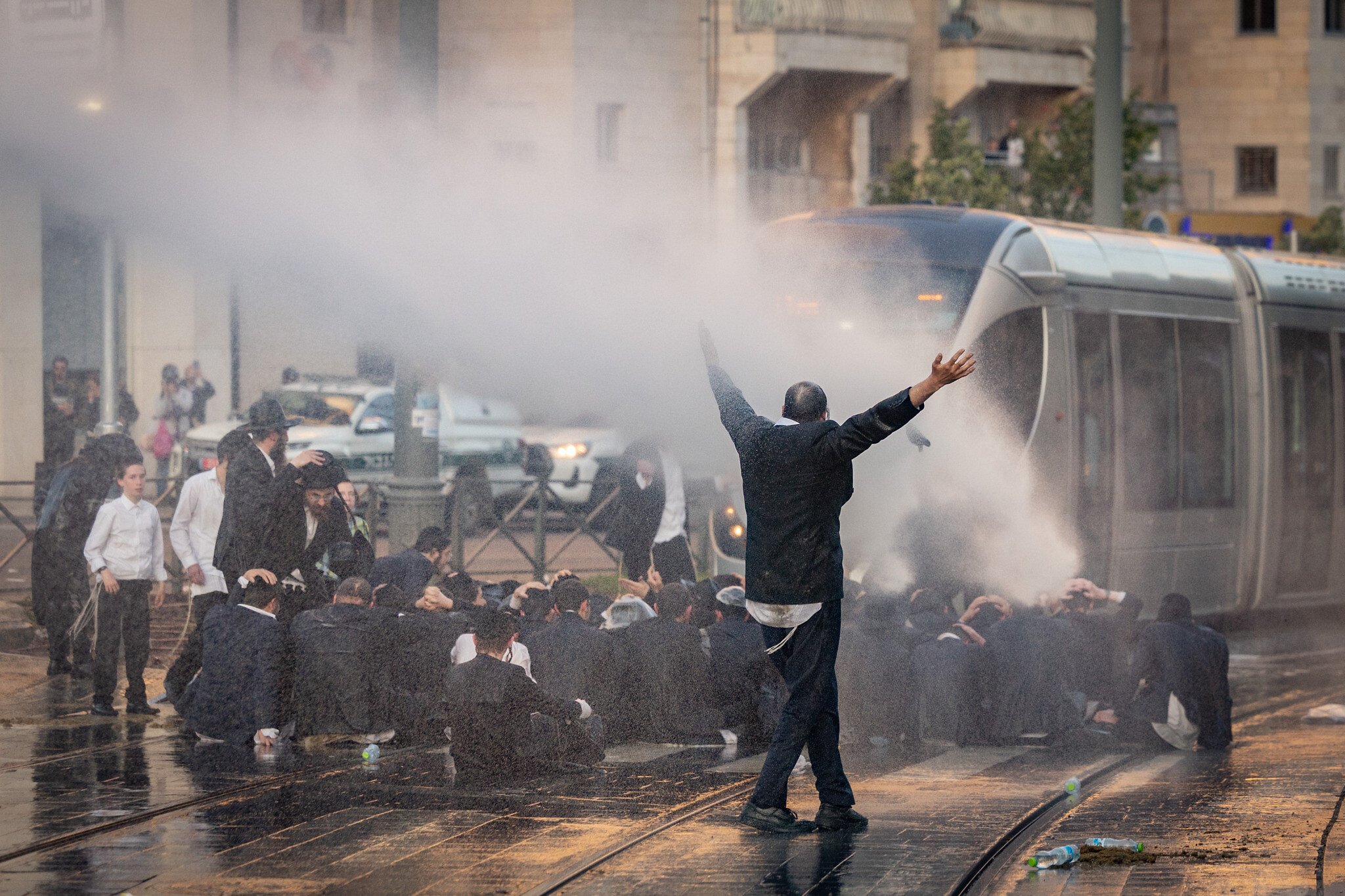
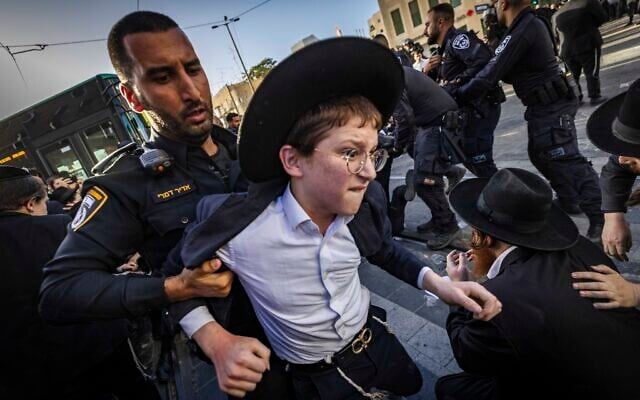
In a ruling that delivered a stinging rebuke to both the ultra-Orthodox community and the government, the High Court of Justice on Wednesday ordered the government to draw up effective enforcement measures, including criminal proceedings, against ultra-Orthodox yeshiva students who have refused to comply with IDF conscription orders.
In a unanimous decision, the court accused the government and state agencies of having almost “totally shirked” their responsibilities to enforce the law when it came to Haredi draft dodgers, which the court said constituted a violation of the state’s obligation to enforce its laws, and selective enforcement.
The court instructed the government to begin criminal proceedings against ultra-Orthodox men already deemed legally to be draft dodgers as quickly as possible, and to draw up within 45 days civil and economic enforcement measures deemed to have a high chance of success against all those refusing to comply with conscription orders.
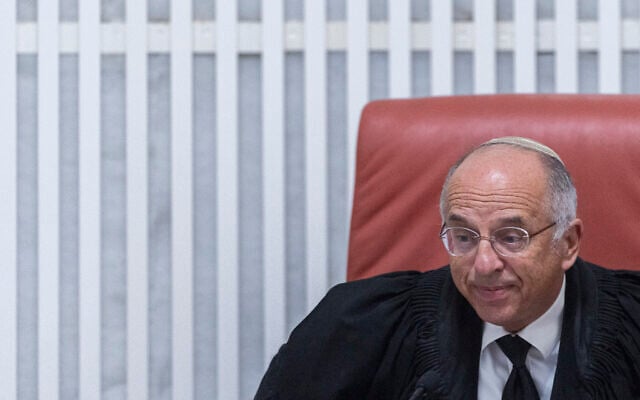
Supreme Court Deputy President Noam Sohlberg wrote the unanimous opinion for the court, and castigated the ultra-Orthodox community for its ongoing refusal to share in the burden of military service.
Sohlberg asserted that the security situation during the war was “a matter of life and death,” and drew on scripture and the words of rabbis held in the highest esteem by the Haredi community to demonstrate the critical importance of defending the country even alongside the value of studying Torah.
“We are talking about ethical and human principles which are so clear and simple that someone who was asking about whether Jewish law supported them would say ‘I don’t even need a Biblical verse, it’s just logical,’” wrote Sohlberg.
MK Yisrael Eichler of the ultra-Orthodox Agudat Yisrael party described the court as an “evil regime… trying to drag the country into a civil war against the Haredim,” and accused it of having “staged an anti-Jewish coup d’état.”
Meanwhile, Opposition Leader Yair Lapid welcomed the ruling, which he said determined that “the mass draft-dodging operation funded by the coalition is illegal and prohibited by law.”
In June 2023, the clauses in the Law for Security Service allowing for blanket military service exemptions for ultra-Orthodox yeshiva students expired, and a year later the High Court ruled that the government was therefore obligated to begin drafting them.
Few yeshiva students have enlisted since then, with just 2.3% of those currently required to enlist having done so, prompting government watchdog groups and others to petition the court demanding enforcement.
The government is currently trying to pass new legislation to reinstate blanket military service exemptions for ultra-Orthodox yeshiva students, but is facing significant opposition from the Haredi political parties — which insist the concessions to their community are not deep enough — and rebels in the Likud party who argue that the law will not help the IDF meet the requirements for thousands of new combat soldiers.
In Wednesday’s ruling, Sohlberg noted that the IDF has said it needs some 12,000 new soldiers, of whom half need to be combat soldiers. Some 80,000 ultra-Orthodox men aged between 18 and 24 are currently believed to be eligible for military service, but have not enlisted
Sohlberg wrote that the lack of combat soldiers available to the military has been manifest during the current war with Hamas in Gaza by the vast number of reserve soldiers called up for active duty; legislation passed by the government raising the age of exemption from reserve duty; speeding up the enlistment of young men from the religious Zionist community and from pre-military academies; and unsuccessful efforts by the government to lengthen the period of mandatory service by four months.
The justice wrote that judicial intervention when the government is not enforcing the law is limited to instances when the government has either totally shirked its responsibility to do so, or is refraining in an unreasonable manner from enforcing the law.
Sohlberg said the government was very close to this state of affairs, and warned that its failure to enforce the law could undermine the rule of law in general, and in particular could also negatively impact the motivation of the rest of the Israeli public to enlist in the IDF.
He added that the court was simply instructing the government to fulfill its obligation to enforce the law and setting guidelines for how to do so, but that it was not at this stage issuing specific steps to take.
He warned, however, that if the government continued to neglect its obligations to enforce the law, the court might need to issue more specific orders.
The justice also insisted that the fact that the government is currently trying to legislate a new draft exemption bill for ultra-Orthodox yeshiva students is irrelevant to the obligation to enforce the law as it currently stands, especially when it has not demonstrated how its new law will be more effective than previous legislation.
Sohlberg cited a statement by the ultra-Orthodox Rabbi Chaim Soloveitchik who said, ‘It would be better for someone who does not know when to put down the gemara [Talmud] to not have opened it’
Addressing the Haredi community directly, Sohlberg cited a statement by the ultra-Orthodox Rabbi Chaim Soloveitchik who said, “It would be better for someone who does not know when to put down the gemara [Talmud] to not have opened it,” in reference to claims by the Haredi community that Torah study outweighs the need to perform military service.
And, noting a High Court ruling in 2017 striking down blanket exemptions for ultra-Orthodox yeshiva students in which he was one of the judges on the panel, Sohlberg said that despite the passage of many years, including two years of intense war, Haredi men were still not enlisting.
“A severe and terrible war broke out. Many were killed; thousands were injured, both physically and mentally. Families were torn apart, reservists lost their livelihoods; many soldiers and civilians will carry with them the scars that this period left on them for the rest of their lives. We have all gone through a severe shock, as individuals and as a community,” wrote Sohlberg.
“Many members of the Haredi public, for their part, do not respond to the obligation – both legal and moral – to lend a hand to their brothers in times of need,” he continued, adding: “The current state of affairs, of mass, deliberate and ongoing violation of the law, with such a severe violation of equality – is unacceptable, especially given the pressing, necessary security need to recruit additional conscript soldiers.”
And he implicitly blasted the government for continuing to resist drafting Haredi men.
“Far too many of those engaged in the [political] work continue to exempt [the ultra-Orthodox as they did before, without hearing the cry of those carrying the burden [of military service] and those close to them, and without providing a proper response to the enormous security challenges.”
Sam Sokol contributed to this report.







The Times of Israel Community.