

Israelis split on joining possible US strike on Iran, survey finds
Poll shows half back Israeli action only if Iran attacks first, while 44% support immediate involvement; public also divided on US military aid, Board of Peace, state of democracy
 Add ToI as a Preferred Source on Google
Stav Levaton is a military reporter for The Times of Israel

Israelis are almost evenly split over whether the country should take part in a potential US attack on Iran, according to a new survey published Tuesday by the Israel Democracy Institute, conducted amid heightened tensions with the Islamic Republic.
The poll — conducted January 25-29 among a representative sample of 755 Jewish and Arab adults — found that 50 percent of respondents believe Israel should only strike Iran if Tehran attacks Israel first, while 44% support direct military participation with Washington against the Islamic Republic from the outset.
Among Jewish respondents, support for Israeli participation in an attack on Iran was somewhat higher, with 48% backing involvement from the beginning, compared to 46% who favored joining only in response to an Iranian attack. Arab respondents, by contrast, showed a much clearer preference for conditional involvement: 67% said Israel should participate only if Iran attacks Israel.
Political orientation also emerged as a key dividing factor. In the Jewish sample, majorities on the political left (63%) and in the center (55%) supported participation only if Iran strikes first, while on the right, a majority (55%) favored direct involvement from the outset.
Concerns over reducing US military aid
The survey also examined public reactions to Prime Minister Benjamin Netanyahu’s announcement that Israel intends to taper off US military aid to zero over the next decade, with the premier saying he wants Israel to be “as independent as possible.”
A plurality of Israelis expressed concern: 49% said ending American aid would harm Israel’s security, while 39.5% said it would not.
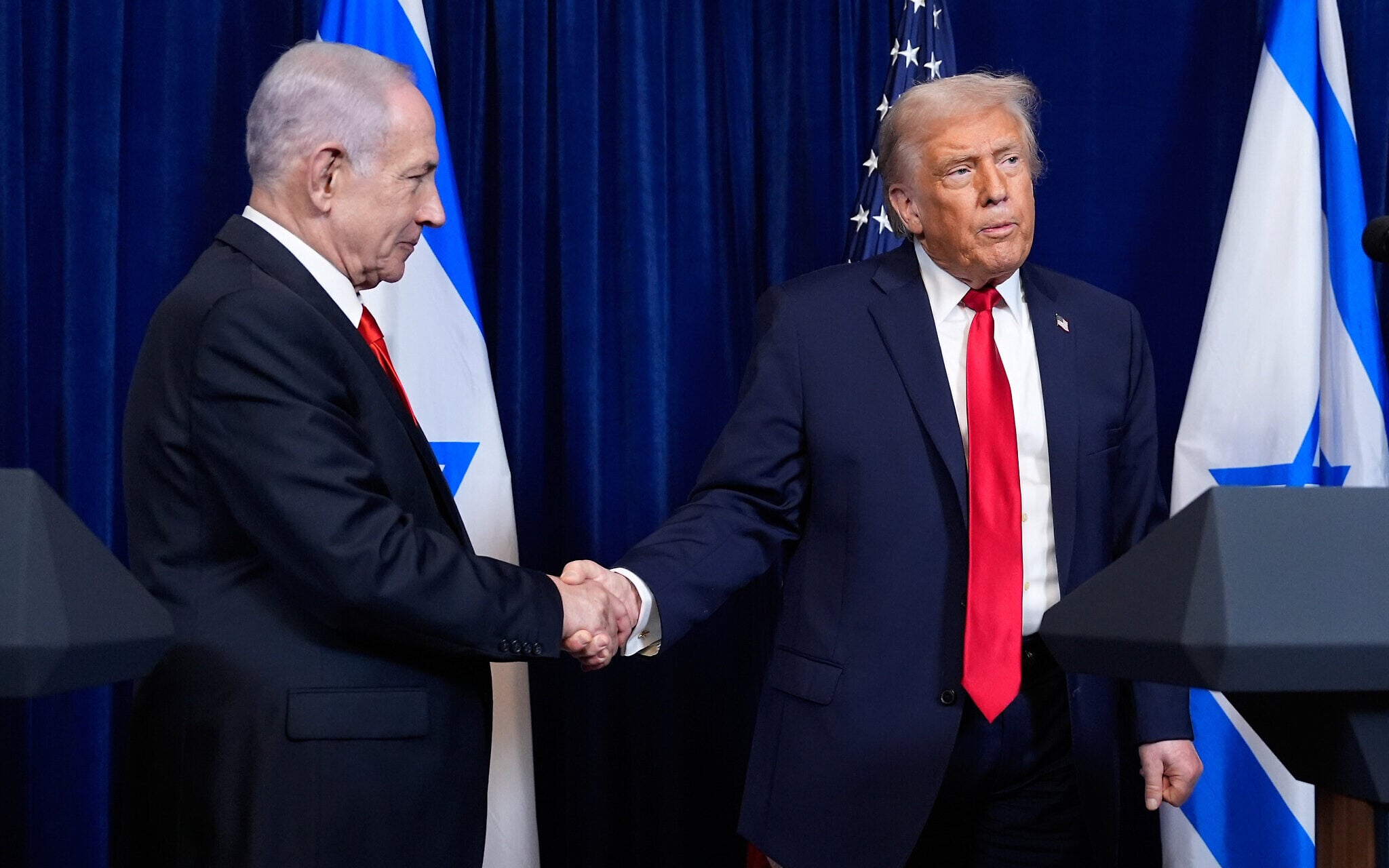
Greater portions in both the Jewish and Arab samples leaned toward seeing the move as damaging, though political differences again were sharp. Across most Jewish political camps, majorities believed ending aid would harm security. Only among those who identified as being fully on the right were opinions reversed, with only 30% believing that it would harm Israel’s security.
Board of Peace draws mixed support
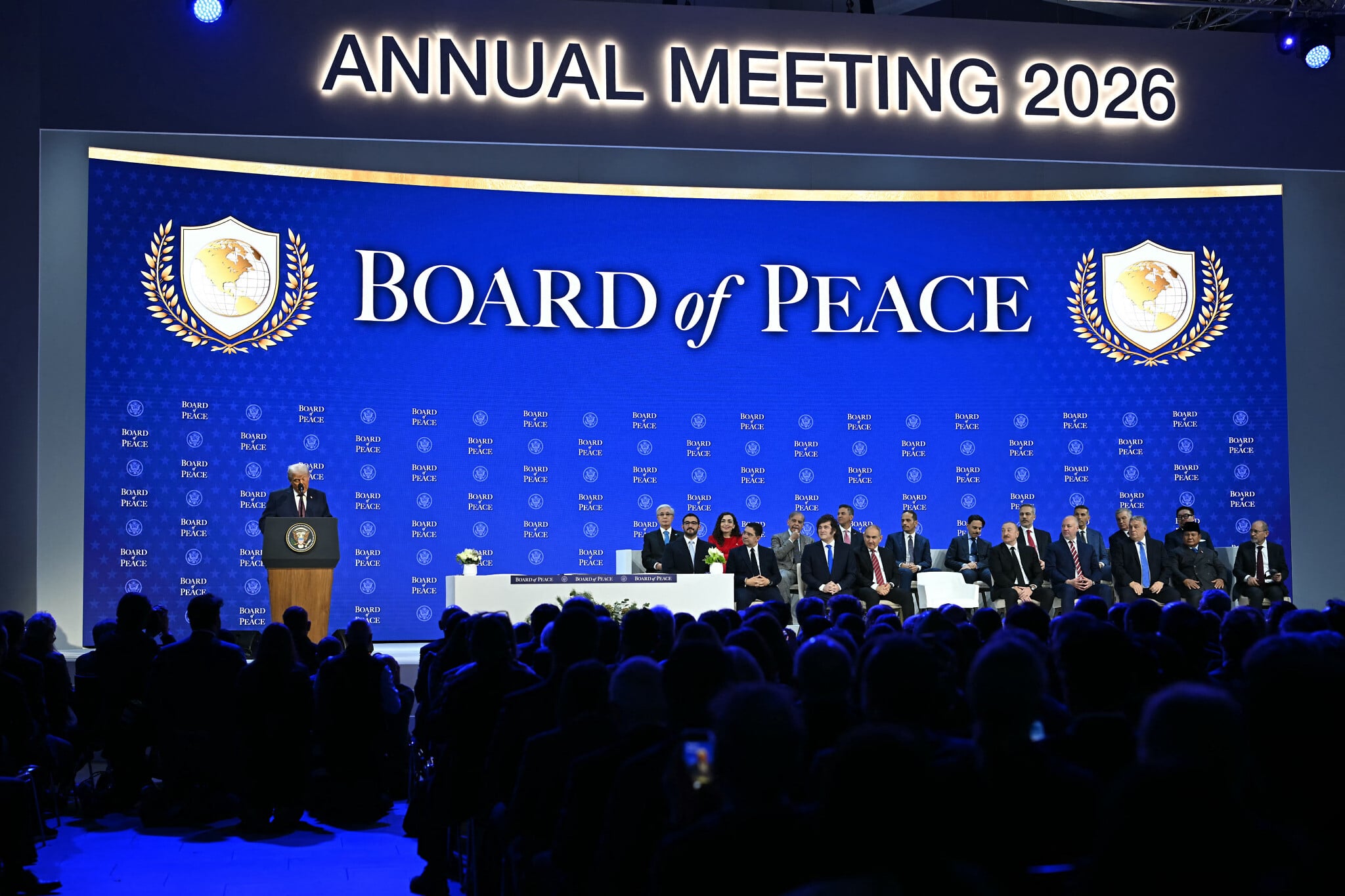
The poll also asked about whether Netanyahu should join US President Donald Trump’s newly established Board of Peace, which includes representatives from Turkey and Qatar, despite Israeli opposition to their inclusion.
In the total sample, 51% supported Netanyahu joining the US-led global oversight panel for Gaza, while 30% were against it. A notably large portion (19%) said they did not know, driven in part by a particularly high rate of uncertainty among Arab respondents.
More than half of Jews favored Netanyahu joining, while Arab respondents were more divided, with only 31% in favor and 38% opposed.
When respondents were asked whether the Board of Peace could help rebuild Gaza while maintaining Israel’s security, Jews and Arabs again differed. While a majority of Jews (54%) believed it could not help, the largest share of Arabs (42%) believed it could.
Rising optimism, but deep Jewish-Arab divides
Additionally, the survey found a rise in optimism about Israel’s future across four areas: democratic rule, national security, the economy, and social cohesion.
The largest increase was in optimism about the future of the country’s security, which rose by 7 percentage points from the month prior to 45%, while optimism about social cohesion rose by 4 points to 24%. Optimism about democratic rule rose more modestly, by 2 points to 44%.
The share of Israelis optimistic about the economy reached its highest level (35%) since the institute began tracking that measure, rising by five points.
Still, the poll underscored deep divides between Jews and Arabs on all topics. On national security, a majority of Jews (52%) expressed optimism, compared with only 11% of Arab respondents — the widest gap recorded across the four categories.

Among Jewish respondents, optimism was also strongly tied to political alignment, with those on the right significantly more hopeful than Israelis in other political camps.
Divide over Barak’s democracy warning
Finally, the survey addressed former Supreme Court president Aharon Barak’s recent assertion that Israel is “no longer a liberal democracy.”
Israelis were closely split: 49.5% agreed with Barak, while 45% disagreed.
Among Jews, the balance tilted slightly toward disagreement, with 49% rejecting Barak’s claim and 47% agreeing. Among Arabs, a clear majority (60%) agreed, while only 25% disagreed.
Political identity again played a central role: overwhelming majorities on the left and in the center agreed with Barak, while only among those fully on the right did a strong majority disagree.







The Times of Israel Community.